

The future of transportation is finally here. If you’ve ever dreamed about driving your car straight into the sky, that dream is becoming reality. In 2026, the first fully functional flying car, the ALEF Model A, is set to transform urban mobility forever. With its cutting-edge design, legal road approval, and vertical takeoff capabilities, this vehicle is unlike anything we’ve ever seen before.
In this post, we’ll dive into the specs, design, and revolutionary technology of the ALEF Model A, as well as compare it to other flying car innovations like the Klein Vision Aircar. By the end, you’ll understand why flying cars are no longer just science fiction—they are becoming a tangible reality.
Flying Cars Are Finally Real
When you watch today’s technological breakthroughs, it’s hard not to be amazed. Only a decade ago, flying cars were confined to TV shows and sci-fi movies. Now, companies like ALEF Aeronautics are making them a reality.
The ALEF Model A isn’t just a concept or prototype. It’s legally allowed to drive on public roads and take off vertically, making it the first vehicle of its kind in the real world. Imagine leaving traffic jams behind by switching to flight mode and hovering over the congestion. This is urban mobility reimagined.

Why the ALEF Model A is Different
Unlike past flying car concepts, which often failed due to safety concerns, high costs, and technical limitations, the ALEF Model A has passed rigorous licensing and regulatory standards. It’s the culmination of nearly a decade of development by ALEF Aeronautics, based in San Monteo, California.
The vehicle is fully electric, more energy-efficient than many electric cars, and represents a cleaner, quieter alternative to traditional transportation.
Design & Specifications That Defy Expectations
The ALEF Model A is a marvel of engineering and futuristic design. Its body is a blend of car and vertical takeoff aircraft, about the size of a large sedan, and weighing only 850 pounds. Let’s break down its standout features.
Aerodynamic Carbon Fiber Mesh Body
The ALEF Model A uses a carbon fiber mesh structure. This design allows air to flow through the vehicle, reducing drag during flight, lowering overall weight, and accommodating eight internal rotors. These rotors are hidden inside the body, making the car:
- Safe
- Quiet
- Street-friendly
Vertical Takeoff & Flight Mechanics
One of the most innovative features is its ability to take off vertically like a multi-rotor drone. The ALEF Model A’s entire body rotates 90° to transition from vertical ascent to forward horizontal flight. Think of it like rotating your hand from flat to vertical—the car shifts orientation in the air for efficient flight.
- Flight speed: 110 mph
- Flight range: ~110 miles
- Payload: ~200 lb (passenger + luggage)
The vehicle achieves this with eight rotors, four on each side, which lift it effortlessly without a runway or helipad.
Advanced Cabin & Passenger Comfort
The ALEF Model A cabin uses a gimbal system to keep passengers level during flight. The bubble-style windows provide 360° visibility, essential for navigating three-dimensional urban airspace. Although it seats only two passengers, the interior prioritizes comfort and clarity, creating a futuristic yet practical experience.
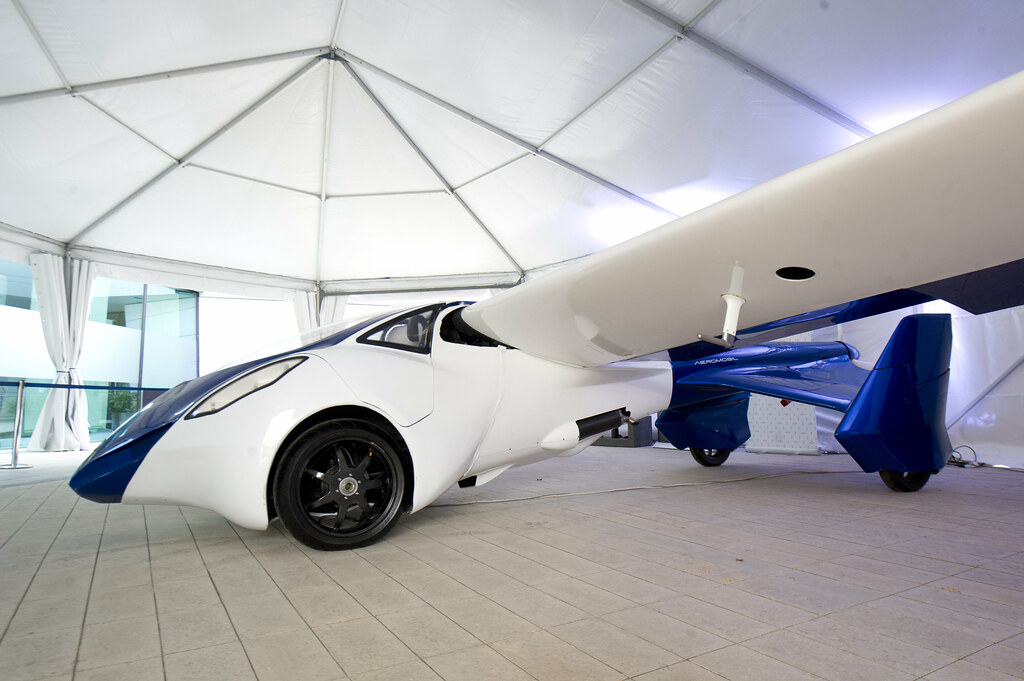
Road Mode Capabilities
Even though flying is the headline feature, the ALEF Model A is first and foremost a street-legal electric car.
Electric Motors & Driving Specs
- Four electric motors, one per wheel, provide four-wheel-drive capability.
- Driving range: ~200 miles
- Top speed: 25 mph (urban-friendly)
- Wheels: Slim, lightweight, similar to bicycle tires
Despite being a flying car, it is compatible with standard road infrastructure and parking systems. It requires only a basic drone pilot license for flight.
Safety Features in Car Mode
Safety is a priority:
- Responsive braking system
- Obstacle detection sensors
- Stability system to prevent tipping
The car’s lightweight yet durable exterior withstands minor impacts without affecting flight performance.
Flight Mode Features & Innovations
Flying is where the ALEF Model A truly shines. Recent tests in California showcased its ability to take off vertically, hover, and fly over traffic—all legally on public roads.
Vertical Takeoff and Hovering
The eight internal rotors lift the vehicle straight up. The mesh body allows airflow to pass through, reducing drag and weight. Unlike helicopters, the ALEF Model A does not require a runway, making it ideal for urban environments.
Flight Safety Systems
Safety is critical in low-altitude urban flight:
- Distributed electric propulsion for redundancy
- Obstacle detection & automatic collision avoidance
- Glide landing mode & parachute system
- Real-time system monitoring
These features ensure a safe and reliable flight experience, even in challenging conditions.

Limitations & Considerations
Despite its innovation, the ALEF Model A has some limitations:
- Single-passenger payload: 200 lb
- Daytime flight only
- Cannot fly over densely populated areas
- Short-range urban flights
The company is developing two-seat and hydrogen-powered versions, expected by 2035, for longer distances and higher payloads.
Cost & Pre-Orders
The ALEF Model A is currently priced at around $300,000. Early adopters can reserve their vehicle with a refundable deposit of $150 or priority access for $1,500.
Production is expected to start soon, depending on regulatory approval and real-world testing.
Competitor Spotlight: Klein Vision Aircar
ALEF isn’t alone in the flying car race. Klein Vision Aircar, based in Slovakia, has developed a transforming road-air vehicle.
Aircar Features
- Switches from car to aircraft in ~3 minutes
- Road speed: 100 mph
- Flight speed: 170 mph
- Flight range: 370 miles
- Altitude: Up to 8,200 ft
- Engine: Gasoline-powered with propeller lift
The Aircar requires only a driver’s license for road mode and a basic pilot license for flight. Its fast transformation and accessible licensing make it a practical competitor.
Flying Cars and the Future of Urban Mobility
Both ALEF Aeronautics and Klein Vision are reshaping transportation. Flying cars promise to:
- Reduce traffic congestion
- Cut commute times in half
- Open new possibilities for urban travel
However, challenges remain:
- Technical & engineering hurdles
- Strict safety regulations
- High production costs
Despite these, progress is moving steadily, and we may soon see flying cars coexisting with regular traffic.
Regulatory and Safety Challenges
Flying cars operate under ultralight aircraft regulations, but authorities must create new frameworks for:
- Personal flight licensing
- Low-altitude airspace management
- Safety certification & collision prevention
The ALEF Model A already has FAA-approved limited testing, signaling that authorities are starting to adapt.
Public Adoption & Cost Considerations
High costs (~$300,000) limit accessibility, but technological advances and mass production may make flying cars more affordable. Partnerships with aerospace suppliers and production agreements aim to scale manufacturing and reduce costs over time.

Conclusion: The Sky Is No Longer the Limit
The ALEF Model A and Klein Vision Aircar are ushering in a new era of transportation. Flying cars are no longer science fiction—they are here, ready to transform urban travel.
While challenges remain, the technological breakthroughs in vertical takeoff, electric propulsion, and urban-friendly flight systems are proof that the impossible is becoming possible.
The question now isn’t if flying cars will become common—it’s when.
So, what would you do if you could commute in a flying car? Could it really change your daily routine? The future of urban mobility is closer than you think.
FAQs
1. What is the ALEF Model A flying car?
The ALEF Model A is the world’s first fully functional flying car 2026 model that is legally allowed to drive on public roads and take off vertically. It combines electric car technology with vertical flight capabilities, creating a new era of urban transportation.
2. How does the ALEF Model A take off?
The ALEF Model A uses eight internal rotors and a lightweight carbon fiber mesh body to lift vertically from the ground. This vertical takeoff system allows it to hover over traffic and fly without requiring a runway or helipad.
3. Is the ALEF Model A legal to drive on roads?
Yes! Unlike most flying car prototypes, the ALEF Model A is road-legal and meets all necessary safety standards. It functions like a standard electric car when driving on public streets.
4. How fast can the ALEF Model A fly?
The ALEF Model A can reach a top flight speed of 110 mph and has a flight range of approximately 110 miles, making it ideal for short urban and regional trips.
5. How many passengers can the ALEF Model A carry?
Currently, the ALEF Model A is designed for one passenger, with a payload capacity of 200 lb. The company is developing two-seat versions for higher capacity in the future.
6. How is the ALEF Model A powered?
The vehicle is fully electric, using distributed electric propulsion across its eight rotors. This design reduces energy consumption, makes it quieter, and is environmentally friendly compared to gas-powered vehicles.
7. Does the ALEF Model A require a pilot license?
Yes, to operate the ALEF Model A in flight mode, a basic drone pilot license is required. Road mode operation requires a standard driver’s license.
8. Can the ALEF Model A fly over cities?
Currently, the ALEF Model A cannot fly over densely populated city centers. Flights are restricted to daytime and approved low-density areas due to safety regulations.
9. How much does the ALEF Model A cost?
The ALEF Model A is priced at approximately $300,000, with pre-orders requiring a refundable deposit of $150 or priority access for $1,500.
10. How does the ALEF Model A switch between car and flight modes?
The ALEF Model A uses a rotating body system, allowing it to shift from vertical takeoff to forward horizontal flight. The vehicle transitions seamlessly while maintaining stability for passengers.
11. What safety features does the ALEF Model A have?
Safety features include distributed electric propulsion, obstacle detection, automatic collision avoidance, glide landing mode, and a full vehicle parachute system, ensuring maximum safety during flight and road driving.
12. How does the ALEF Model A compare to the Klein Vision Aircar?
The Klein Vision Aircar transforms from car to aircraft in about 3 minutes and has a longer flight range of 370 miles. The ALEF Model A, however, offers fully electric vertical takeoff and is road-legal, optimized for short urban commutes.
13. When will the ALEF Model A be available for delivery?
Production is expected to begin later this year, with prototype deliveries anticipated next year, depending on real-world testing and regulatory approvals.
14. What are the main limitations of the ALEF Model A?
Limitations include a single-passenger payload of 200 lb, short-range flights, daytime-only operation, and restricted urban flight zones. These are expected to improve in future versions.
15. Are flying cars like the ALEF Model A the future of urban mobility?
Yes. Companies like ALEF Aeronautics and Klein Vision are leading the flying car 2026 revolution, which could reduce traffic congestion, cut commute times, and open new possibilities for urban travel in the near future.
Read More:
- Elon Musk Finally LAUNCH 2,000 Tesla Robotaxi CyberCab Rides! Unsupervised AI SHOCKED Waymo
- SpaceX finally Catching Both Starship and Booster in mid-air! Flight 13 will be Crazy
- Tesla Cybertruck undergoes interior mod that many owners wanted
- Tesla analyst breaks down delivery report: ‘A step in the right direction’
- Tesla Q4 delivery numbers are better than they initially look: analyst