
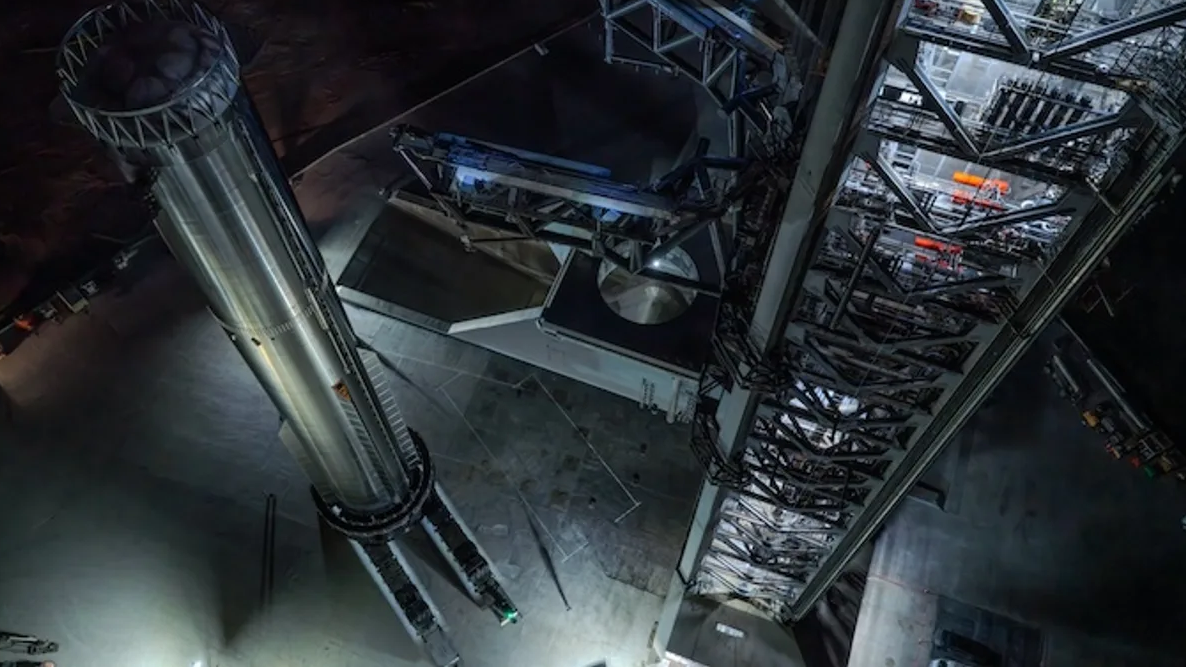
Starship Flight 14 Will Change the Space Industry Forever Begin Making Revenue: For years, SpaceX Starship has represented one of the most ambitious engineering projects in modern aerospace. Built around the idea of a fully reusable super-heavy launch system, Starship was initially viewed primarily as an experimental vehicle designed to demonstrate whether enormous rockets could eventually be reused at unprecedented scale.
But Starship Flight 14 represents a potentially important change in that story. Instead of focusing exclusively on vehicle testing, the mission is described as a step toward using Starship for operational satellite deployment. With next-generation Starlink V3 satellites planned as the payload, Starship could begin moving from an experimental development program toward a system capable of supporting a commercial space infrastructure.
The Commercial Turning Point for Starship
Earlier integrated Starship flights primarily focused on proving the vehicle itself. Engineers have used flight testing to evaluate Raptor engine performance, stage separation, thermal protection, orbital operations, and atmospheric reentry.
Flight 14 introduces a different objective: delivering useful hardware into orbit.
Deploying Operational Starlink Satellites
The planned deployment of Starlink V3 satellites is significant because these spacecraft are intended to contribute directly to SpaceX’s satellite internet network rather than simply serve as test articles or mass simulators.
If successfully deployed, each operational satellite could immediately become part of the broader Starlink infrastructure after completing its required orbital operations.
This creates an important distinction:
- Test payloads primarily generate engineering data.
- Operational payloads can generate direct utility.
- Commercial satellite deployment can connect Starship development with SpaceX’s broader business model.
The transition means Starship could eventually become an important tool for expanding the Starlink constellation while simultaneously demonstrating its own capabilities.
Starlink V3 Could Change Satellite Capacity
One of the biggest reasons Starship is important to the Starlink program is payload capacity.
SpaceX has historically relied heavily on Falcon 9 to launch Starlink satellites. Falcon 9 has proven highly effective for deploying relatively compact spacecraft, but its payload fairing naturally places constraints on the size, mass, and configuration of satellites.
Starship is designed around a dramatically larger payload environment.
Starlink V2 Mini vs. Starlink V3
The difference between satellite generations illustrates the potential impact of Starship.
| Feature | Starlink V2 Mini | Starlink V3 |
|---|---|---|
| Primary Launch Vehicle | Falcon 9 | Starship |
| Design | Compact | Larger-scale architecture |
| Payload Constraints | Falcon 9 fairing | Large Starship payload bay |
| Network Capacity | Lower per satellite | Much higher potential capacity |
| Antenna Systems | Smaller | Larger phased-array architecture |
| Network Expansion | Incremental | Potentially much larger per launch |
The source material describes Starlink V3 as potentially delivering around 1 Tbps of throughput per satellite, compared with substantially lower capacity for earlier-generation spacecraft.
That additional capacity could make each Starship launch significantly more valuable to the Starlink network.
Why Starship’s Payload Bay Matters
The significance of Starship isn’t only about launching heavier satellites.
Its large payload volume could allow engineers to design spacecraft around performance rather than extreme launch constraints.
Traditional satellite designers often have to optimize every component to fit inside a rocket’s fairing. Large solar arrays, antennas, propulsion systems, and other hardware must be folded or compressed for launch.
A New Philosophy for Satellite Design
A much larger payload bay could allow future spacecraft to become:
- Larger
- More powerful
- More capable
- Potentially easier to manufacture
- Less constrained by launch packaging
Starship’s large payload volume therefore has implications beyond Starlink. It could influence the design of communications satellites, scientific spacecraft, space telescopes, and future orbital infrastructure.
Transforming the Economics of Space Launch
The most important long-term objective behind Starship is its potential impact on launch economics.
Falcon 9 demonstrated how partial reusability could reduce launch costs by recovering and reusing the first stage. Starship takes the concept further by targeting reuse of both the Super Heavy booster and Starship upper stage.
From Partial Reusability to Full Reusability
The basic comparison is straightforward:
Traditional Rocket: Expendable hardware and high recurring costs.
Falcon 9: Reusable booster with expendable upper-stage hardware.
Starship: Designed around full-system reusability.
If Starship eventually achieves rapid turnaround and high flight frequency, its economics could look fundamentally different from traditional launch systems.
Instead of treating the rocket as a largely disposable asset, SpaceX could potentially operate Starship more like a reusable transportation system.
More Satellites Per Launch
Another major advantage is the potential amount of payload that can be carried in one mission.
A Falcon 9 Starlink launch typically deploys a comparatively large group of compact satellites. Starship, because of its substantially greater payload capability, is designed to carry much larger payloads.
Massive Bandwidth Expansion
If Starship can routinely deploy large numbers of high-capacity Starlink V3 satellites, one launch could add an enormous amount of potential network capacity.
That creates a powerful feedback loop:
More Starship launches → More Starlink satellites → More network capacity → More customers and applications → Greater commercial infrastructure.
This is why Flight 14 can be viewed as more than another rocket test. It potentially connects Starship’s transportation capabilities directly to SpaceX’s satellite communications business.
What Flight 14 Could Mean for the Space Industry
The consequences of operational Starship missions could extend well beyond SpaceX.
Commercial satellite companies, governments, scientific institutions, and defense organizations could all benefit from access to a launch system capable of transporting substantially larger payloads.
Unlocking Large-Scale Space Infrastructure
For decades, spacecraft engineers have operated under strict launch constraints. Satellites have been engineered to be lightweight, compact, and capable of surviving the limitations of relatively small payload fairings.
A much larger reusable launch system could change those priorities.
Engineers could potentially build larger orbital structures, more capable spacecraft, and higher-power satellite systems without optimizing every component around extremely restrictive launch dimensions.
Implications for the Moon and Mars
Starship’s commercial development also supports SpaceX’s longer-term ambitions beyond Earth orbit.
Before Starship can become a reliable transportation platform for lunar missions or Mars exploration, it must demonstrate repeatable orbital operations, payload deployment, propulsion performance, reentry, and recovery.
Operational satellite missions provide valuable experience in precisely these areas.
The technologies required for commercial orbital transportation overlap with many of the capabilities needed for future deep-space missions.
Building an Orbital Transportation Network
If Starship eventually becomes capable of frequent launches and reliable recovery, spaceflight could move toward a model based on high-frequency transportation infrastructure.
That could support:
- Large satellite constellations
- Space stations
- Scientific observatories
- Lunar infrastructure
- Commercial orbital platforms
- Future Mars missions
The Beginning of a New Starship Era
Starship Flight 14 represents an important conceptual transition in the evolution of SpaceX’s launch system.
The program began as a massive engineering experiment focused on proving whether a fully reusable super-heavy rocket could survive launch, spaceflight, atmospheric reentry, and recovery.
The next stage is different.
With operational Starlink V3 satellites, Starship has the potential to demonstrate that the vehicle can perform useful commercial work while continuing to mature technologically.
The real significance of Flight 14 therefore isn’t simply whether a rocket reaches orbit. It is whether Starship can begin connecting reusable launch technology with a functioning commercial space economy.
If SpaceX succeeds in making Starship reliable, reusable, and capable of frequent payload deployment, the economics of accessing orbit could change substantially.
Flight 14 could mark the moment Starship begins moving from a spectacular engineering project toward a genuine commercial transportation platform—one capable of carrying massive amounts of hardware into space and supporting the next generation of orbital infrastructure.
FAQs
1. What is Starship Flight 14?
Starship Flight 14 is an upcoming SpaceX Starship mission intended to advance the vehicle’s orbital capabilities while carrying an operational payload, including next-generation Starlink satellites as described in the source material.
2. Why is Starship Flight 14 important?
Flight 14 is significant because it represents a potential shift from primarily testing Starship hardware toward using the vehicle for useful commercial missions and satellite deployment.
3. What payload will Starship Flight 14 carry?
The mission is described as carrying Starlink V3 satellites, SpaceX’s next-generation satellite architecture designed to provide substantially greater network capacity.
4. What are Starlink V3 satellites?
Starlink V3 satellites are larger and more capable spacecraft designed to take advantage of Starship’s much greater payload capacity compared with Falcon 9.
5. How much bandwidth can a Starlink V3 satellite provide?
The supplied material describes Starlink V3 as potentially providing around 1 Tbps of throughput per satellite, although actual network performance can depend on deployment configuration and operating conditions.
6. How is Starship different from Falcon 9?
Falcon 9 uses a reusable first stage, while Starship is designed for full reusability, with both the Super Heavy booster and Starship upper stage intended to be recovered and reused.
7. Could Starship reduce the cost of launching satellites?
One of Starship’s central objectives is to substantially reduce the cost per kilogram to orbit through high payload capacity, reusable hardware, and potentially high launch frequency.
8. Why does Starship have an advantage for Starlink?
Starship’s large payload capacity could allow SpaceX to launch larger and more capable satellites and deploy significantly more network capacity per mission than smaller launch vehicles.
9. What is the “Pez dispenser” system?
The Pez dispenser is a nickname for a proposed Starship payload deployment mechanism designed to release Starlink satellites from the spacecraft’s payload section while in orbit.
10. Will Starship Flight 14 generate revenue?
An operational Starlink payload creates a potential connection between Starship launches and SpaceX’s commercial satellite business. However, the amount of revenue generated by an individual mission depends on successful deployment, satellite activation, and subsequent network operations.
11. How could Starship affect the satellite industry?
A much larger and potentially reusable launch vehicle could allow satellite manufacturers to develop larger, heavier, and more capable spacecraft without facing the same payload-volume restrictions associated with smaller rockets.
12. Could Starship help expand Starlink’s coverage?
Yes. Deploying additional high-capacity Starlink satellites can expand the network’s available capacity and support services for homes, businesses, aircraft, ships, and compatible mobile devices.
13. What does Flight 14 mean for future Moon missions?
Operational orbital missions can help SpaceX develop experience with payload deployment, orbital operations, propulsion, reentry, and vehicle recovery—capabilities that are also relevant to future lunar missions.
14. Could Starship eventually support Mars missions?
SpaceX has proposed using Starship as a transportation system for future Mars exploration and settlement efforts. Before that becomes practical, the vehicle would need to demonstrate reliable and repeatable orbital operations, reusability, and long-duration deep-space capabilities.
15. Is Starship Flight 14 the beginning of commercial Starship operations?
Flight 14 can be viewed as a potential commercial turning point if Starship successfully deploys operational satellites. However, sustained commercial operations would require repeated successful missions, reliable recovery, high launch cadence, and continued maturation of the vehicle.
Read More: