
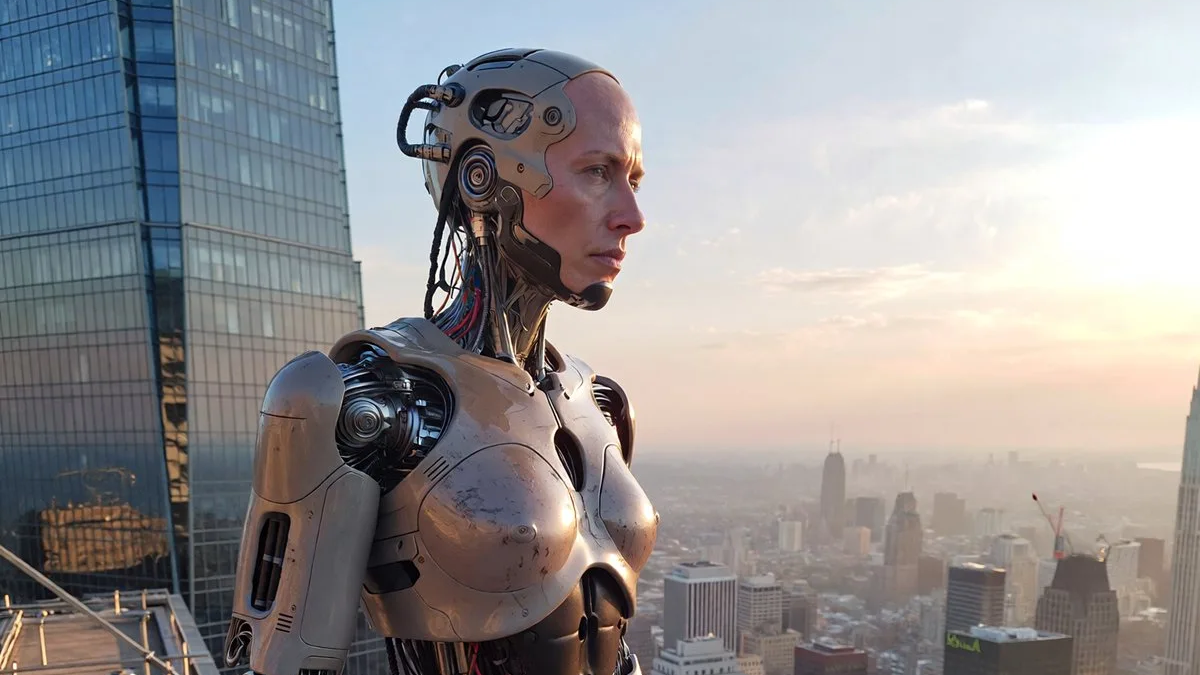
Tesla Bot Gen 3 2027 Delivery Plan REVEALED! Elon Drops BIG Update: The future of humanoid robotics is arriving faster than ever, and Tesla Optimus Gen 3 is emerging as one of the most anticipated developments in the global robotics industry. As artificial intelligence continues to transform manufacturing, logistics, and everyday life, Tesla is working toward a new generation of humanoid robots designed to perform practical tasks with minimal human intervention.
However, excitement surrounding Tesla’s humanoid robot has also created speculation about its commercial availability. Recent media reports suggested that Tesla could launch a public pre-order program in December 2026, potentially allowing consumers to reserve their own Optimus robots.
But Elon Musk and Tesla have made the situation clearer: there is currently no officially announced public reservation date or consumer deposit schedule. Instead, Tesla is following a more measured commercial strategy, with initial external company deliveries targeted for late 2027.
This approach suggests that Tesla wants to establish reliability, improve autonomous capabilities, and validate its technology in industrial environments before bringing Optimus to ordinary households.
Tesla Optimus Gen 3: Why 2027 Could Be a Major Turning Point
Tesla’s humanoid robotics program is entering an important development phase. The company is no longer focused exclusively on demonstrating that a robot can walk, maintain balance, or pick up objects.
Those capabilities are only the foundation.

The bigger challenge is developing a humanoid robot that can independently understand instructions, recognize objects, make decisions, and complete complicated assignments in real-world environments.
Optimus Gen 3 is expected to represent an important step toward achieving these capabilities.
Tesla’s long-term vision involves robots that can operate inside factories, warehouses, commercial facilities, and eventually residential properties.
However, successfully transitioning from impressive demonstrations to dependable commercial operations will require substantial improvements in artificial intelligence, mechanical engineering, and real-world task execution.
1. What Tesla Optimus Gen 3 Must Achieve
The next generation of Optimus must demonstrate something far more important than basic movement: complete task autonomy.
A robot that can pick up an object when instructed is useful, but a robot capable of identifying an object, deciding where it belongs, transporting it, and completing the entire workflow independently is considerably more valuable.
Advanced Factory Automation
Tesla’s factories could become important testing environments for Optimus Gen 3.
Potential industrial applications include:
- Sorting components and manufacturing materials.
- Transporting parts between workstations.
- Loading and unloading production equipment.
- Organizing factory inventory.
- Supplying assembly lines with necessary components.
- Performing repetitive material-handling assignments.
These applications could help manufacturers reduce repetitive manual work while improving operational efficiency.
Multi-Step Task Execution
One of the most important improvements will be the ability to perform multiple connected actions without requiring constant human instructions.
For example, Tesla wants its robots to identify a particular component, locate it, pick it up, transport it to another workstation, verify its position, and continue with the next assignment.
This ability to complete entire workflows could distinguish genuinely useful humanoid robots from machines designed primarily for demonstrations.
The Challenge of Human-Level Hand Dexterity
Household automation represents another major opportunity for Optimus.
Tesla’s long-term ambitions include robots capable of collecting scattered objects, loading dishwashers, cleaning surfaces, organizing groceries, and responding to spoken instructions.
However, achieving these capabilities requires sophisticated robotic hands.
Human hands contain an extraordinary combination of joints, tendons, muscles, and sensory feedback systems. Replicating this level of precision using mechanical components remains one of robotics engineering’s biggest challenges.
Human-level dexterity will therefore be a critical benchmark for Optimus Gen 3.
2. Tesla’s Competitors Are Already Testing Humanoid Robots
Tesla is not alone in pursuing commercially useful humanoid robotics. Several competing companies are already deploying their machines in industrial environments.
These real-world operations provide valuable benchmarks for evaluating the progress of the industry.
Figure AI and BMW
Figure AI has established an important industrial partnership with BMW.
During an 11-month deployment of its Figure 02 humanoid robot at BMW’s Spartanburg facility, the robot reportedly accumulated more than 1,250 operating hours.
It also handled over 90,000 sheet metal parts, supporting production activities associated with more than 30,000 BMW X3 vehicles.
BMW subsequently expanded its humanoid robotics trials with Figure 03, exploring additional applications such as component sequencing.
These developments demonstrate how humanoid robots could gradually become part of modern automobile manufacturing.
Agility Robotics and Digit
Agility Robotics has developed Digit, a humanoid robot designed primarily for logistics and warehouse operations.
By late 2026, the company reported that Digit had successfully handled more than 100,000 totes, achieving approximately 98% on-task accuracy in commercial warehouse applications.
This highlights an important point: successful humanoid robots do not necessarily need to perform every human activity.
They can create significant value by becoming exceptionally reliable at specific repetitive assignments.
Boston Dynamics and Electric Atlas
Boston Dynamics is another major competitor.
Its electric Atlas platform is being developed for advanced industrial applications, with Hyundai supporting efforts to integrate humanoid robotics into future manufacturing environments.
The company’s broader industrial roadmap includes an ambitious target of deploying as many as 25,000 units across global manufacturing operations.
China’s Growing Robotics Industry
China is also investing heavily in embodied artificial intelligence and humanoid robotics.
Investment in the country’s embodied AI sector reportedly surpassed $13 billion across hundreds of deals in 2026.
The competition is increasingly shifting toward autonomous decision-making, physical intelligence, machine adaptability, and real-world learning.
For Tesla, this means that developing a capable robot is only part of the challenge. The company must also compete on reliability, production costs, and commercial scalability.
3. Tesla Optimus Academy: Building a Continuously Learning Robot Fleet
One of the most interesting concepts associated with Tesla’s robotics ambitions is the Optimus Academy.
The central idea is to create a large training fleet containing approximately 10,000 to 20,000 robots.
Instead of teaching every robot individual skills independently, Tesla could use a centralized artificial intelligence training system to share knowledge across the entire fleet.
For example, imagine one Optimus robot learning how to organize components inside a Fremont factory.
After the system processes that experience, the knowledge could potentially be transferred to other robots operating in different locations.
The same principle could eventually support household applications.
A robot learning to recognize objects, grasp unfamiliar materials, and organize inventory in an industrial environment could use similar capabilities in residential settings.
Why Collective Learning Matters
Traditional automation systems often require extensive programming whenever manufacturers introduce new tasks.
A continuously improving robotic intelligence system could reduce that limitation.
Potential advantages include:
- Faster skill development.
- Shared learning between robots.
- Improved object recognition.
- Better adaptation to unfamiliar environments.
- Reduced dependence on manually programmed workflows.
However, achieving reliable autonomous learning at scale will require substantial improvements in training infrastructure, computing resources, and physical-world validation.
4. Tesla’s 20,000 Robots Per Week Production Ambition
Tesla’s long-term manufacturing ambitions are extremely aggressive.
The company has discussed scaling Optimus production toward approximately 20,000 robots per week.
Reaching that level would require a completely different industrial supply chain compared with conventional automotive manufacturing.
Humanoid robots contain sophisticated actuators, precision gears, sensors, electrical systems, structural components, and advanced computing hardware.
Producing thousands of units daily would require reliable access to all these components.
Structural Aluminum
Lightweight aluminum alloys are essential for robotic frames, limbs, and structural assemblies.
Using lightweight materials helps reduce energy consumption while allowing robots to move efficiently.
Copper and Rare Earth Materials
Electric motors depend on high-quality electrical components and specialized materials.
Copper is important for wiring systems and electrical connections, while rare earth elements such as neodymium and dysprosium are used in high-performance permanent magnets.
Securing consistent supplies will become increasingly important as production expands.
Precision Manufacturing Bottlenecks
Access to raw materials alone will not solve Tesla’s supply chain challenges.
Specialized extrusion, rolling, machining, and precision-fabrication facilities are necessary to transform raw materials into robotic components.
These manufacturing capabilities must consistently meet strict engineering tolerances.
Consequently, Tesla’s ability to scale Optimus will depend on building a dependable network of suppliers and advanced manufacturing facilities.
5. When Will Tesla Optimus Gen 3 Be Available to Buy?
The biggest question for consumers is simple: When can ordinary people purchase an Optimus robot?
Based on the timeline outlined in the supplied update, Tesla is targeting late 2027 for initial external company deliveries.
This does not mean that a general consumer launch will automatically happen during the same period.
Tesla appears focused on industrial validation and commercial partnerships before expanding availability to individual customers.
There is also no officially confirmed public pre-order date or consumer deposit schedule.
Therefore, reports suggesting that consumers can reserve Optimus in December 2026 should not be treated as confirmed purchasing information.
The most important milestones to watch include:
- Successful development of Optimus Gen 3.
- Expansion of internal factory deployments.
- Improvements in autonomous task execution.
- Initial deliveries to external business customers.
- Greater production capacity and supply chain readiness.
- Potential expansion into consumer applications.
Final Thoughts: Can Tesla Optimus Transform the Future of Robotics?
Tesla Optimus Gen 3 represents a potentially transformative development in artificial intelligence and industrial automation.
However, the real measure of success will not be how impressive the robot looks during a demonstration.
It will be whether Optimus can independently complete entire assignments, repeatedly perform them safely, and deliver measurable economic value.
Competitors such as Figure AI, Agility Robotics, and Boston Dynamics are already gaining valuable experience through real-world deployments.
Tesla must therefore demonstrate that its combination of artificial intelligence, manufacturing expertise, and large-scale production capabilities can deliver a competitive advantage.
Late 2027 could become an important milestone for Tesla Optimus, particularly if the company successfully begins external business deliveries.
Ultimately, the biggest question remains: Can Tesla build a humanoid robot that works reliably in the real world rather than simply performing impressive demonstrations?
If Tesla achieves that goal, Optimus could become one of the most significant developments in the future of automation.
FAQs
1. What is Tesla Optimus Gen 3?
Tesla Optimus Gen 3 is Tesla’s next-generation humanoid robot designed to perform human-like tasks using advanced artificial intelligence, robotics, and autonomous technology.
2. When will Tesla Optimus Gen 3 be available?
Tesla is targeting late 2027 for its initial external company deliveries. However, the general consumer launch date has not been officially confirmed.
3. Can consumers pre-order Tesla Optimus in December 2026?
No official public pre-order date or consumer deposit schedule has been announced. Reports suggesting December 2026 reservations remain unconfirmed.
4. What can Tesla Optimus Gen 3 do?
Tesla Optimus Gen 3 is being developed to perform factory automation, material handling, object sorting, inventory organization, and household tasks such as cleaning and loading dishwashers.
5. What makes Tesla Optimus Gen 3 different from previous generations?
The biggest improvement is expected to involve advanced autonomous task execution, improved hand dexterity, and the ability to complete complex multi-step assignments without constant human assistance.
6. How much will Tesla Optimus Gen 3 cost?
Tesla has not officially announced the final price of Optimus Gen 3. Its future retail price will depend on manufacturing costs, production capacity, and hardware development.
7. Will Tesla Optimus Gen 3 work in homes?
Yes, household automation is part of Tesla’s long-term vision. Potential applications include collecting objects, organizing groceries, cleaning surfaces, and loading dishwashers.
8. What is the Tesla Optimus Academy?
The Optimus Academy concept involves training thousands of robots to perform different tasks. A shared AI learning system could allow robots to transfer newly learned skills across the entire fleet.
9. How many Tesla Optimus robots does Tesla want to produce per week?
Tesla has discussed a long-term production ambition of approximately 20,000 humanoid robots per week, requiring advanced manufacturing facilities and reliable supply chains.
10. How does Tesla Optimus compare with Figure AI robots?
Tesla Optimus aims to become a versatile humanoid robot for factories and households, while Figure AI has demonstrated industrial applications through its partnership with BMW. Both companies are advancing commercial humanoid robotics.
11. What is the biggest challenge facing Tesla Optimus Gen 3?
The biggest challenges include human-level hand dexterity, autonomous decision-making, object recognition, and reliable real-world task execution.
12. Will Tesla Optimus replace factory workers?
Tesla Optimus could automate repetitive and physically demanding activities. Initially, humanoid robots are expected to support human workers by handling specific manufacturing and material-handling tasks.
13. What materials are required to manufacture Tesla Optimus robots?
Important materials include aluminum, copper, neodymium, and dysprosium. These materials are essential for lightweight structures, electrical systems, motors, and permanent magnets.
14. Why is late 2027 important for Tesla Optimus?
Late 2027 is Tesla’s target for initial external company deliveries. This milestone could mark the transition from internal testing toward broader commercial applications.
15. Can Tesla Optimus Gen 3 transform the future of robotics?
Yes, Tesla Optimus Gen 3 could transform industrial automation and household robotics through advanced AI, improved dexterity, autonomous operation, and large-scale manufacturing.
Read More:
- Elon Musk’s Grok Bot is picking up the phone now, and the first calls are wild
- SpaceX moves to challenge AT&T, Verizon with Qualcomm-powered 5G
- Elon Musk hilariously comments on Midterm election results
- Tesla registrations in Germany nearly quadruple in October
- Musk’s Tesla and SpaceX decline after Democratic Midterm sweep