
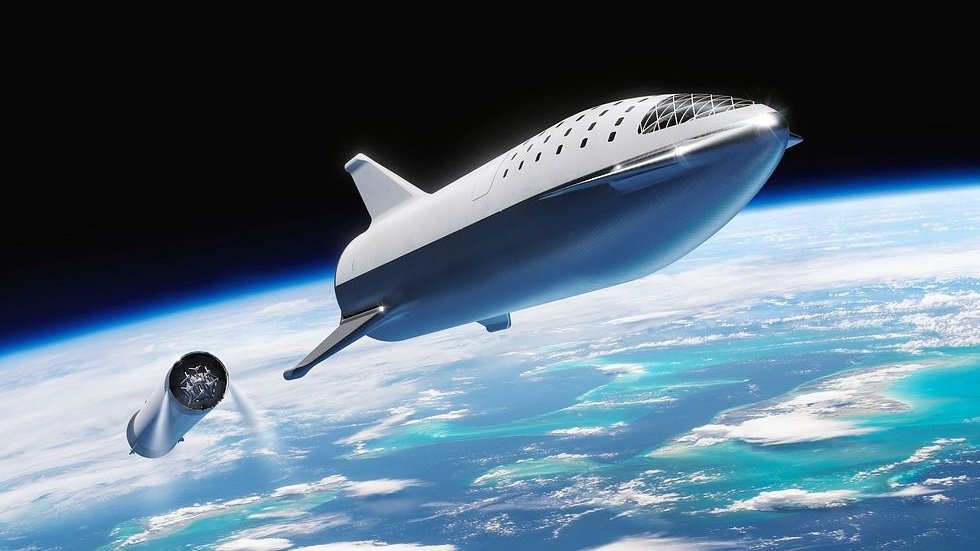
SpaceX just officially revealed Starship Flight 15 Launch This Week: The aerospace industry is entering another exciting chapter as SpaceX and Blue Origin accelerate their next-generation rocket development programs. While SpaceX is preparing for the highly anticipated Starship Flight 15 mission, Blue Origin is introducing major upgrades to its New Glenn rocket, including a powerful third stage and an entirely new rocket engine family.
Starship Flight 15 could become a historic milestone for the space industry. The mission aims to achieve the first-ever recovery of both the Starship upper stage and Super Heavy booster using SpaceX’s innovative mechanical launch tower catch system. Meanwhile, Blue Origin is expanding its heavy-lift capabilities with the new GS3 third stage and Northstar rocket engine.
These developments demonstrate how competition between major aerospace companies is driving innovation in rocket reusability, orbital transportation, manufacturing efficiency, and deep-space exploration.
SpaceX Starship Flight 15: Aiming for the First Full System Catch
SpaceX has updated the launch schedule for its upcoming Starship Flight 15 mission, with the launch window scheduled to open from November 13 through November 19, 2026. Operations are targeting a daily launch window beginning at 4:45 p.m. Central Standard Time.
This mission represents a significant step toward SpaceX’s long-term goal of developing a fully reusable orbital transportation system.
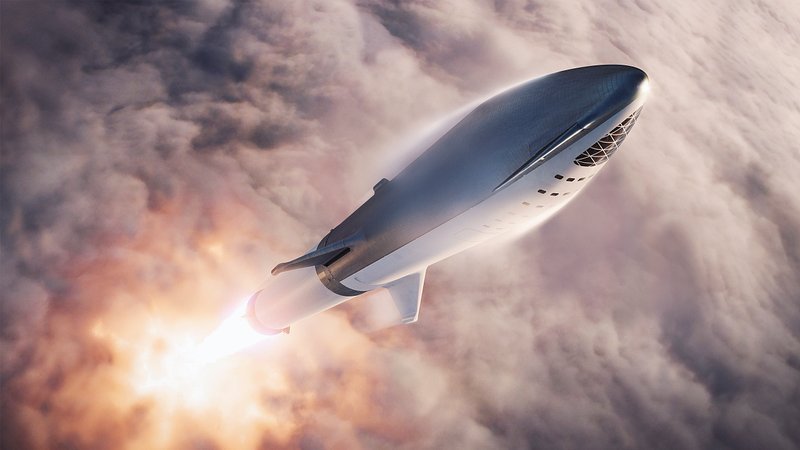
Unlike previous test flights, Flight 15 is designed to attempt the recovery of both major Starship components. The Super Heavy booster will return to the launch site for a mechanical catch, while the Starship upper stage will attempt its own controlled return, subject to the health of its critical systems.
If successful, this milestone would demonstrate a new level of rocket recovery capability.
Why the Double Catch Matters
SpaceX has already demonstrated the ability to catch returning Super Heavy boosters using its launch tower infrastructure. However, recovering both the booster and upper stage during the same mission would represent another major achievement.
The mechanical catch system eliminates the need for traditional landing legs and could simplify rocket refurbishment and turnaround operations.
For SpaceX, the objective is not simply to recover rockets. It is to make rapid reusability practical enough to support frequent launches, lower operational costs, and eventually large-scale transportation beyond Earth.
Elon Musk has repeatedly emphasized that fully reusable rockets are essential to making humanity a multi-planetary civilization.
Starship Flight 15 Mission Profile and Technical Details
The upcoming mission includes several important technical objectives designed to evaluate Starship’s orbital capabilities and recovery systems.
1. Orbital Flight Target
Starship Flight 15 is targeting an orbit approximately 275 kilometers above Earth. During its planned orbital mission, the spacecraft is expected to complete up to 14 orbits over approximately 22 hours.
This extended flight profile will allow engineers to evaluate vehicle performance, orbital operations, and the systems required for a controlled return.
The mission is also expected to include Starlink payload deployment, demonstrating Starship’s potential role in future satellite transportation.
2. Super Heavy Booster Recovery
The V3 Super Heavy booster will perform its standard launch sequence, including:
- Powerful engine ignition and liftoff.
- Ascent through Earth’s atmosphere.
- Successful stage separation.
- Boostback burn toward the launch site.
- Controlled atmospheric descent.
- Final mechanical catch using the launch tower.
The booster recovery attempt is particularly important because it involves the V3 hardware configuration.
A successful catch would provide valuable information about the performance of the upgraded booster and its compatibility with SpaceX’s recovery infrastructure.
3. Starship Upper Stage Return
The upper stage recovery attempt represents one of the mission’s most challenging objectives.
After completing its orbital operations, Starship will need to perform a carefully controlled return maneuver. However, SpaceX will only proceed with the recovery attempt if flight controllers determine that essential thermal protection and guidance systems are functioning properly.
This safety-focused decision process is critical because the spacecraft must survive extreme temperatures and aerodynamic forces during atmospheric re-entry.
Starship Flight 15 Introduces Major Heat Shield Improvements
One of the biggest challenges facing SpaceX is developing a thermal protection system capable of surviving repeated atmospheric re-entries.
During re-entry, Starship experiences extreme heating that can damage or dislodge heat shield tiles. Lessons learned from Flight 14 have influenced several improvements planned for Flight 15.
Enhanced Heat Shield Tile Retention
SpaceX has introduced additional mechanical fasteners in vulnerable heat shield areas.
These improvements are designed to prevent tiles from separating during high-dynamic-pressure portions of flight.
Improved tile retention is essential because even small gaps in the thermal protection system can expose the spacecraft structure to dangerous temperatures.
Curved Heat Shield Tiles
Another important upgrade involves the increased use of curved heat shield tiles.
These specialized geometries are designed to reduce plasma flow paths between adjacent tiles and minimize aerodynamic heating in vulnerable gaps.
The objective is to improve thermal protection while maintaining a design suitable for future reusable Starship vehicles.
Advanced Heat Shield Monitoring
SpaceX also plans to use three camera-equipped satellites to monitor heat shield behavior during the mission.
These satellites will collect valuable visual information that engineers can use to evaluate tile performance and identify potential weaknesses.
The resulting data could help SpaceX improve future Starship designs and move closer to routine spacecraft reuse.
Blue Origin Delays New Glenn’s Next Launch to January 2027
While SpaceX prepares for Starship Flight 15, Blue Origin is making adjustments to its New Glenn launch schedule.
Following an upper-stage anomaly during its third mission and a subsequent static fire incident, the company has postponed its next New Glenn flight.
Blue Origin CEO Dave Limp reportedly informed employees that the upcoming launch would move from late December 2026 to January 2027.
The revised schedule gives engineering teams additional time to complete hardware construction, testing, and necessary technical evaluations.
Although launch delays can affect operational timelines, additional testing is important when introducing complex rocket systems.
Blue Origin is also using this development period to prepare major upgrades that could expand New Glenn’s capabilities for future commercial, scientific, and lunar missions.
Blue Origin Reveals GS3: A Powerful New Third Stage for New Glenn
One of Blue Origin’s most significant announcements is the introduction of an optional third stage called GS3.
The new stage is designed to expand New Glenn’s ability to transport payloads into demanding orbital destinations and high-energy trajectories.
Standing approximately 37 feet (11.28 meters) tall, GS3 will be housed within an interstage structure while preserving the rocket’s full payload fairing volume.
This configuration could make New Glenn more capable of handling missions that require additional orbital energy.
World’s Largest Composite Liquid Hydrogen Tank
Blue Origin has successfully qualified what is expected to be the largest composite liquid hydrogen tank designed to fly in space.
The tank underwent extensive cryogenic pressure testing over approximately two and a half hours.
Testing included 10 cycles and more than 10 minutes at 150% of its maximum expected operating pressure (MEOP).
This achievement is important because lightweight composite structures could help reduce vehicle mass while maintaining the strength required for demanding spaceflight operations.
GS3 Payload Capacity and Lunar Mission Potential
Blue Origin expects the GS3 stage to fly in prototype form by 2028.
Its primary advantage will be the ability to send payloads directly toward destinations such as geostationary orbit and trans-lunar injection trajectories.
The proposed configurations include:
| GS3 Configuration | Geostationary Orbit (GEO) | Trans-Lunar Injection (TLI) |
|---|---|---|
| 9×4 Configuration | ~14 metric tons | ~20 metric tons |
| 7×2 Configuration | ~8 metric tons | ~10 metric tons |
These capabilities could make New Glenn more versatile for commercial satellite deployments, large spacecraft, and future lunar exploration missions.
Blue Origin Introduces Northstar: Its Next-Generation Rocket Engine
Alongside GS3, Blue Origin has revealed a new rocket engine family called Northstar.
The engine is designed around a philosophy of simplifying rocket propulsion through fewer components, advanced manufacturing, and improved production efficiency.
Its design shares some broad engineering objectives with SpaceX’s Raptor 3, particularly the emphasis on reducing complexity and manufacturing requirements.
Northstar Engine Performance and Technology
Northstar uses an oxygen-rich staged combustion cycle and liquefied natural gas (LNG) as its fuel.
The engine is designed to produce approximately 715,000 pounds of thrust, equivalent to around 324 metric tons.
This level of thrust makes Northstar an important development in Blue Origin’s future propulsion strategy.
Advanced 3D Printing and Manufacturing Efficiency
One of Northstar’s most interesting characteristics is its manufacturing approach.
According to Blue Origin, more than 65% of the engine is additively manufactured using in-house 3D-printing technology.
The company also reports several improvements compared with its predecessor:
- Approximately 30% lower weight.
- Around 50% fewer components.
- Simplified manufacturing and assembly.
- Potential assembly timelines of less than one day per engine.
Reducing component count can simplify production, inspection, and maintenance while helping manufacturers increase production capacity.
If these improvements translate into operational performance, Northstar could become an important part of Blue Origin’s long-term rocket development strategy.
SpaceX vs. Blue Origin: The Future of Reusable Rockets
The latest announcements highlight two different approaches to advancing the commercial space industry.
SpaceX is concentrating on full-system rocket recovery, rapid reusability, and Starship’s potential as a high-capacity transportation platform.
Blue Origin, meanwhile, is expanding New Glenn’s mission capabilities through additional propulsion stages, lightweight composite tanks, and simplified rocket engine manufacturing.
Both strategies address important challenges in modern aerospace engineering.
SpaceX’s double-catch objective could help establish a new model for recovering orbital-class launch vehicles. Blue Origin’s GS3 and Northstar developments could increase payload flexibility and improve manufacturing efficiency.
The competition is particularly important for future lunar missions, commercial satellite deployment, and eventually human exploration of Mars.
Conclusion: A New Era of Space Exploration Is Taking Shape
The aerospace industry is approaching another major turning point as SpaceX and Blue Origin introduce technologies designed to transform rocket transportation.
Starship Flight 15 could become a historic mission if SpaceX successfully recovers both the Starship upper stage and Super Heavy booster using its mechanical launch tower catch system.
At the same time, Blue Origin is preparing for the next phase of New Glenn development with its GS3 third stage and Northstar rocket engine.
Although Blue Origin’s next New Glenn launch has moved to January 2027, its latest hardware announcements demonstrate the company’s long-term ambitions.
Ultimately, the future of space exploration will depend on more than powerful rockets. It will require reliable reusability, efficient manufacturing, affordable launches, and increasingly capable spacecraft.
With SpaceX pursuing full-system recovery and Blue Origin expanding its heavy-lift technology, the race to build the next generation of space transportation systems is becoming increasingly significant.
FAQs
1. When is SpaceX Starship Flight 15 scheduled to launch?
SpaceX Starship Flight 15 is scheduled to launch during the updated window of November 13 to November 19, 2026, with daily launch operations targeting 4:45 p.m. Central Standard Time.
2. What is the main objective of Starship Flight 15?
The primary objective of Starship Flight 15 is to achieve the first-ever full-system recovery by attempting to catch both the Starship upper stage and Super Heavy booster using SpaceX’s launch tower.
3. What is the Starship double-catch system?
The double-catch system is SpaceX’s recovery approach in which the Super Heavy booster and Starship upper stage return to the launch site and are caught by the mechanical arms of the launch tower.
4. How high will Starship Flight 15 orbit above Earth?
Starship Flight 15 is targeting an orbital altitude of approximately 275 kilometers above Earth. The spacecraft is expected to complete up to 14 orbits during its planned 22-hour mission.
5. What is the V3 Super Heavy booster?
The V3 Super Heavy booster is an upgraded version of SpaceX’s first-stage rocket designed to support Starship’s next-generation flight operations, improved performance, and booster recovery attempts.
6. Will Starship Flight 15 deploy Starlink satellites?
Yes, the mission is expected to include Starlink payload deployment as part of its orbital operations, demonstrating Starship’s potential for transporting large satellite payloads into space.
7. What heat shield improvements are included in Starship Flight 15?
Starship Flight 15 features several thermal protection system improvements, including additional mechanical fasteners, curved heat shield tiles, and enhanced monitoring to improve protection during atmospheric re-entry.
8. Why are curved heat shield tiles important for Starship?
Curved heat shield tiles are designed to minimize plasma flow paths and reduce aerodynamic heating through gaps between adjacent tiles, helping protect Starship during atmospheric re-entry.
9. How will SpaceX monitor Starship’s heat shield during Flight 15?
SpaceX plans to use three camera-equipped satellites to monitor heat shield behavior during the mission. The collected information will help engineers evaluate tile performance and identify potential weaknesses.
10. Why has Blue Origin delayed its next New Glenn launch?
Blue Origin has postponed its next New Glenn rocket launch to January 2027 following an upper-stage anomaly during its third mission and a subsequent static fire incident. The additional time will support hardware construction and testing.
11. What is Blue Origin’s new GS3 third stage?
The GS3 third stage is an optional 37-foot-tall (11.28-meter) rocket stage designed for New Glenn. It will expand the rocket’s ability to deliver payloads into high-energy orbits and trans-lunar trajectories.
12. What is the expected payload capacity of Blue Origin’s GS3 stage?
The GS3 stage is planned in two configurations. The 9×4 configuration targets approximately 14 metric tons to GEO and 20 metric tons to TLI, while the 7×2 configuration targets approximately 8 metric tons to GEO and 10 metric tons to TLI.
13. What is special about Blue Origin’s new composite hydrogen tank?
Blue Origin has qualified what is expected to be the largest composite liquid hydrogen tank designed to fly in space. It successfully completed cryogenic pressure testing, including more than 10 minutes at 150% of its maximum expected operating pressure.
14. What is Blue Origin’s Northstar rocket engine?
Northstar is Blue Origin’s next-generation rocket engine family. It uses an oxygen-rich staged combustion cycle with liquefied natural gas (LNG) fuel and is designed to produce approximately 715,000 pounds of thrust.
15. How does the Northstar engine improve rocket manufacturing efficiency?
Northstar uses advanced 3D-printing technology, with more than 65% of the engine additively manufactured. Blue Origin reports approximately 30% less weight and 50% fewer components than its predecessor, with an assembly timeline of less than one day per engine.
16. How are SpaceX and Blue Origin shaping the future of space exploration?
SpaceX is advancing fully reusable rockets through Starship’s double-catch recovery system, while Blue Origin is expanding heavy-lift capabilities through the GS3 third stage and Northstar engine. Both companies are developing technologies that could support commercial space transportation, satellite deployment, lunar exploration, and future missions to Mars.
Read More:
- New Tesla Battery Technology! Tesla Model 2 LFP vs NMC vs NCA — Fire Risk Truth Revealed
- Elon Musk Unveils $279 Tesla Pi Pad 2027’s SHOCKING Price & Production Plan
- Elon Musk spotlights the Starlink rescue that got through where no cell tower could
- SpaceX’s Anthropic deal has a catch, and Elon Musk just addressed it
- Elon Musk keeps justifying Tesla Cybertruck’s cancelation, but it’s confusing