
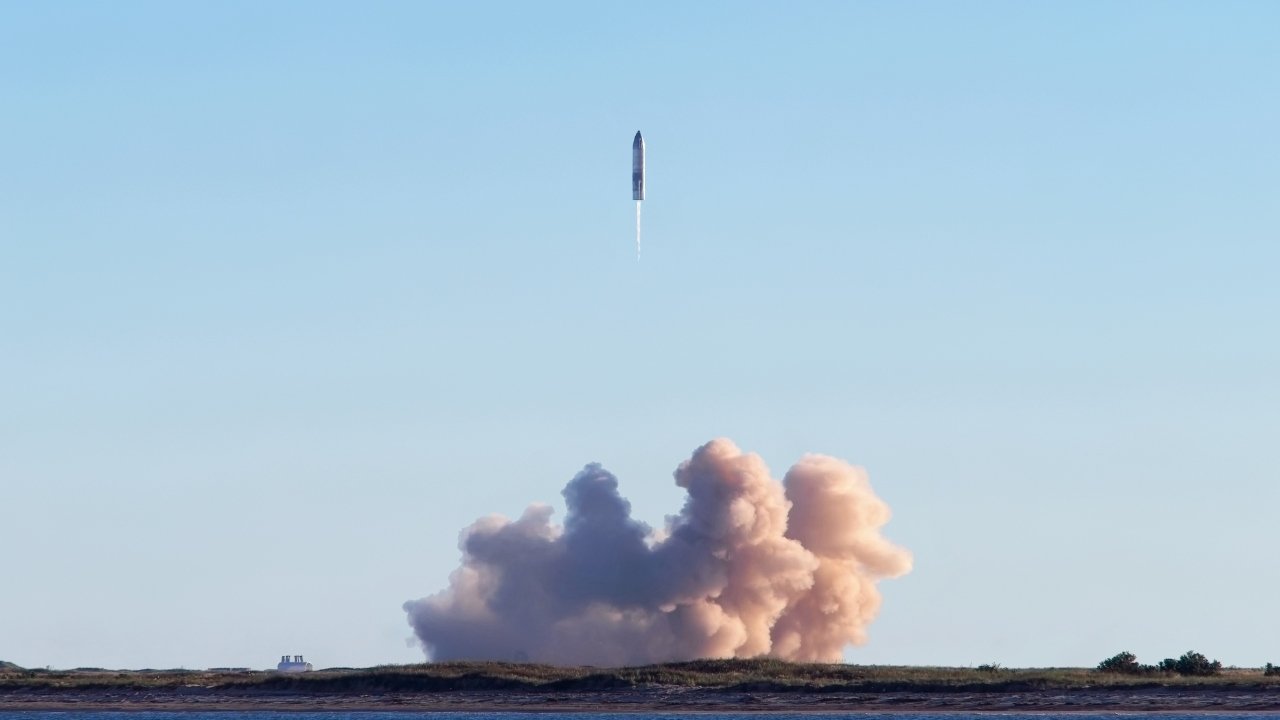
SpaceX Launching New Heat Shield on Starship for First Fully Orbital Return TMR: SpaceX is preparing for one of the most important milestones in modern aerospace engineering as it moves closer to Starship Flight 15. This mission represents a major test of the company’s long-term vision: creating a fully reusable rocket system capable of returning both its Super Heavy booster and Starship upper stage safely to Earth.
While SpaceX has already demonstrated impressive progress with its Super Heavy booster recovery technology, successfully bringing Starship back from orbit presents an entirely different engineering challenge. The spacecraft must survive extreme atmospheric temperatures, protect its structure from plasma exposure, and precisely maneuver toward the launch tower’s mechanical catching arms.
At the center of this ambitious mission is Ship 42 (S42), featuring significant improvements to its Thermal Protection System (TPS). These upgrades could help SpaceX overcome some of the biggest obstacles preventing Starship from becoming a fully reusable orbital transportation system.
Starship Flight 15: A Critical Test for SpaceX’s Full Reusability Vision
Starship Flight 15 is designed to demonstrate how far SpaceX has progressed toward recovering the complete launch vehicle.
Unlike earlier missions focused primarily on testing individual systems, this flight introduces an ambitious orbital return challenge. According to the supplied mission details, Ship 42 is expected to complete approximately 14 revolutions around Earth during a mission lasting more than 22 hours.
After completing its orbital journey, the spacecraft must begin its descent through Earth’s atmosphere at hypersonic speeds.
This is where the mission becomes particularly challenging.
During atmospheric re-entry, Starship encounters enormous aerodynamic forces and temperatures exceeding 1,500°C. Its heat shield must protect the stainless-steel structure and sensitive onboard systems from the intense thermal environment.
Even a relatively small failure could expose critical sections of the vehicle to dangerous temperatures.
Why Recovering Starship Is More Difficult Than Catching Super Heavy
SpaceX has already made significant progress recovering its Super Heavy booster using the launch tower’s mechanical arms, commonly known as chopsticks.
However, Starship’s upper stage faces a much more complicated journey.
The Super Heavy booster returns shortly after launch, with the recovery sequence taking approximately six to seven minutes. Starship, meanwhile, must travel into orbit, complete its extended mission, survive atmospheric re-entry, and return to the designated landing area.
Successfully catching both vehicles would represent a major achievement in reusable rocket technology.
SpaceX Introduces Major Heat Shield Upgrades on Ship 42
One of the biggest priorities for Starship Flight 15 is improving the spacecraft’s thermal protection.
Previous flight tests provided valuable information about the weaknesses of Starship’s ceramic heat shield. In particular, engineers have focused on preventing protective tiles from detaching and stopping superheated plasma from penetrating gaps between them.
Ship 42 reportedly incorporates several important improvements designed to address these problems.
Its heat shield contains more than 18,000 hexagonal ceramic tiles, creating a protective barrier across the spacecraft’s exterior.
1. Improved Ceramic Tile Retention System
One challenge experienced during previous Starship flights involved ceramic tiles becoming detached during launch.
Rocket launches generate intense vibration, aerodynamic pressure, and structural movement. These conditions can place enormous stress on fragile ceramic materials.
Although losing a tile does not automatically mean a spacecraft will fail, missing tiles can create vulnerable areas where extreme heat reaches the underlying metal structure.
For Flight 15, Ship 42 features additional tile retention hardware across important sections of its heat shield.
These improvements are intended to keep the ceramic protection securely attached throughout launch and atmospheric re-entry.
Better tile retention could significantly improve Starship’s chances of surviving the complete orbital return sequence.
2. Preventing Dangerous Plasma Penetration
Another major concern involves plasma ingress.
When Starship travels through Earth’s atmosphere at hypersonic speeds, the air surrounding its exterior becomes extremely hot and partially ionized, creating a plasma environment.
If this superheated gas enters the narrow gaps between ceramic tiles, it could travel behind the protective layer.
This creates a serious risk for underlying structural components, seals, and other important systems.
SpaceX is working to improve the heat shield’s ability to prevent this dangerous penetration.
The objective is to maintain a reliable thermal barrier even under the extreme conditions experienced during orbital re-entry.
3. New Curved Ceramic Tile Design
One of the most interesting developments on Ship 42 is the introduction of a new curved tile design.
Traditional hexagonal ceramic tiles are useful because their arrangement avoids creating long, continuous straight joints across the spacecraft’s surface.
However, the gaps between individual tiles remain potential pathways for thermal energy.
The updated curved geometry is designed to improve the thermal behavior around these joints and reduce heat transfer between adjacent tiles.
Even relatively small improvements can make a meaningful difference when a spacecraft experiences temperatures exceeding 1,500°C.
This redesign demonstrates how SpaceX is using information from previous flights to continuously improve Starship’s thermal protection technology.
4. Advanced In-Flight Heat Shield Monitoring
SpaceX is also exploring better ways to monitor the condition of Starship’s heat shield during flight.
According to the supplied mission information, the planned 26-satellite payload deployment includes three modified satellites equipped with specialized cameras.
These cameras are intended to capture visual information about Starship’s exterior during its mission.
This information could help engineers evaluate the condition of the heat shield and identify potential damage during the return journey.
Real-time or near-real-time visual monitoring would provide valuable information for determining whether the spacecraft is healthy enough to continue toward its landing sequence.
For SpaceX, this is an important step toward making Starship recovery safer and more predictable.
Why SpaceX May Choose Not to Catch Starship
Although Flight 15 represents an important recovery milestone, SpaceX is not expected to attempt a tower catch at any cost.
The spacecraft must meet strict flight-control and safety requirements before attempting a return to the launch tower.
If engineers identify problems with the heat shield, navigation, maneuvering systems, or landing capabilities, the company can prioritize a safer alternative recovery approach.
This decision reflects an important principle behind Starship development: vehicle safety and engineering data are more important than completing an aggressive recovery attempt.
A successful controlled landing or splashdown can still provide valuable information for future missions.
The Bigger Goal: Catching Both Starship and Super Heavy
The ultimate objective of Starship Flight 15 is connected to SpaceX’s broader ambition of achieving complete rocket reusability.
The company’s recovery architecture involves two separate vehicles returning to Earth during different stages of the same mission.
The Super Heavy booster returns within minutes after launch, while Starship continues its orbital journey before attempting its return more than 22 hours later.
Successfully recovering both stages would establish a major foundation for a reusable launch system.
Reducing Rocket Launch Costs
Traditional orbital rockets often discard expensive hardware after a single mission.
SpaceX wants to change this model by developing rockets that can be recovered, inspected, refurbished, and launched again.
The long-term vision involves reducing launch costs dramatically, potentially reaching just a few million dollars per flight under ambitious future operating assumptions.
The company also wants to increase launch frequency to hundreds or even thousands of missions annually.
Achieving these goals would make access to space more affordable and expand opportunities for satellite deployment, scientific research, and commercial space operations.
Supporting NASA’s Artemis Moon Missions
Starship’s development also has major implications for NASA’s Artemis program.
SpaceX is developing a Starship-based Human Landing System (HLS) intended to transport astronauts between lunar orbit and the Moon’s surface.
Making this system operational requires several technological achievements, including reliable spacecraft operations, thermal protection, orbital refueling, and reusable launch infrastructure.
A successful orbital return would contribute valuable engineering experience toward these future lunar missions.
Starship Flight 15 Could Change the Future of Space Transportation
Starship Flight 15 represents much more than another experimental rocket launch.
With Ship 42’s improved ceramic heat shield, enhanced tile retention mechanisms, curved tile geometry, and additional monitoring capabilities, SpaceX is attempting to solve some of the most difficult challenges in reusable spacecraft engineering.
The biggest question is whether Starship can survive the intense heat of atmospheric re-entry and return to Earth with enough structural integrity to complete a precision recovery.
If SpaceX successfully demonstrates the recovery of both Starship and Super Heavy, it would mark an extraordinary step toward a fully reusable orbital launch system.
Even if the company needs additional flights to achieve that objective, every mission provides important engineering data.
SpaceX’s ultimate ambition is clear: transform rockets from expensive, largely disposable launch vehicles into rapidly reusable transportation systems.
Starship Flight 15 could bring that vision one significant step closer to reality.
FAQs
1. What is SpaceX preparing to achieve with Starship Flight 15?
SpaceX is preparing to test Starship’s orbital return capabilities, including atmospheric re-entry, heat shield performance, and the potential recovery of both the Starship upper stage and Super Heavy booster.
2. What is special about Starship Ship 42 (S42)?
Ship 42 (S42) features several reported improvements to its Thermal Protection System (TPS), including enhanced ceramic tile retention, curved tile designs, and better protection against plasma penetration.
3. How many times will Starship orbit Earth during Flight 15?
According to the supplied mission details, Starship is expected to complete approximately 14 revolutions around Earth during an orbital mission lasting more than 22 hours.
4. How hot does Starship get during atmospheric re-entry?
Starship’s exterior can experience temperatures exceeding 1,500°C during atmospheric re-entry. Its ceramic heat shield protects the spacecraft’s underlying structure from extreme thermal conditions.
5. How many ceramic tiles does Starship Ship 42 have?
According to the supplied information, Ship 42’s heat shield contains more than 18,000 hexagonal ceramic tiles designed to protect the spacecraft during atmospheric re-entry.
6. Why is SpaceX upgrading Starship’s heat shield?
SpaceX is upgrading the Starship heat shield to address problems observed during previous test flights, particularly ceramic tile detachment and plasma penetration through gaps between protective tiles.
7. What is the new curved tile design on Starship?
The curved ceramic tile design is intended to improve thermal protection by reducing heat transfer around gaps between adjacent tiles, helping protect Starship during extreme atmospheric re-entry.
8. What is plasma ingress in Starship’s heat shield?
Plasma ingress occurs when extremely hot, ionized atmospheric gas penetrates gaps between ceramic tiles and potentially reaches the underlying spacecraft structure, threatening important components and protective systems.
9. How does SpaceX prevent Starship heat shield tiles from falling off?
SpaceX is introducing additional tile retention hardware in high-risk areas of Ship 42 to help secure ceramic tiles against launch vibrations, aerodynamic pressure, and other mechanical stresses.
10. How will SpaceX monitor Starship’s heat shield during Flight 15?
According to the supplied mission details, three modified satellites equipped with specialized cameras are intended to capture visual information about Starship’s heat shield during flight, providing valuable engineering data.
11. What are SpaceX’s Starship chopstick arms?
The chopstick arms are large mechanical structures attached to SpaceX’s launch tower. They are designed to catch and recover returning Starship vehicles and Super Heavy boosters.
12. Why is catching Starship more difficult than catching Super Heavy?
Catching Starship is more challenging because the upper stage must complete an orbital mission, survive hypersonic atmospheric re-entry, maintain structural integrity, and precisely maneuver toward the launch tower.
13. Will SpaceX catch both Starship and Super Heavy during Flight 15?
The mission’s ambitious recovery objective involves catching both stages. However, a Starship tower catch depends on the spacecraft’s condition and successful completion of critical flight-control, re-entry, and landing requirements.
14. How could Starship’s full reusability reduce space launch costs?
Full rocket reusability could reduce launch costs by allowing SpaceX to recover, refurbish, and reuse expensive rocket hardware instead of manufacturing entirely new vehicles for every mission.
15. Why is Starship important for NASA’s Artemis program?
Starship is being developed as NASA’s Human Landing System (HLS) to support astronaut transportation between lunar orbit and the Moon’s surface. Reliable reusability and orbital refueling are important parts of this ambitious lunar exploration architecture.
16. How could Starship Flight 15 change the future of space exploration?
Starship Flight 15 could advance fully reusable rocket technology by demonstrating improvements in heat shield performance, orbital re-entry, and vehicle recovery. These developments could eventually make space transportation more affordable, reliable, and accessible.
Read More:
- Tesla’s New 2027 Cybercab Gen 2 Is INSANE
- SpaceX’s $24B Starbase supercomputer plan slipped past a key roadblock
- Starlink Mini 2 arrives with one feature for true off-grid connectivity
- Nvidia’s board meets on Jensen Huang, and Elon Musk already has an answer
- SpaceX hid behind another name in the Arizona desert, and now it’s going big
2 thoughts on “SpaceX Launching New Heat Shield on Starship for First Fully Orbital Return TMR”