
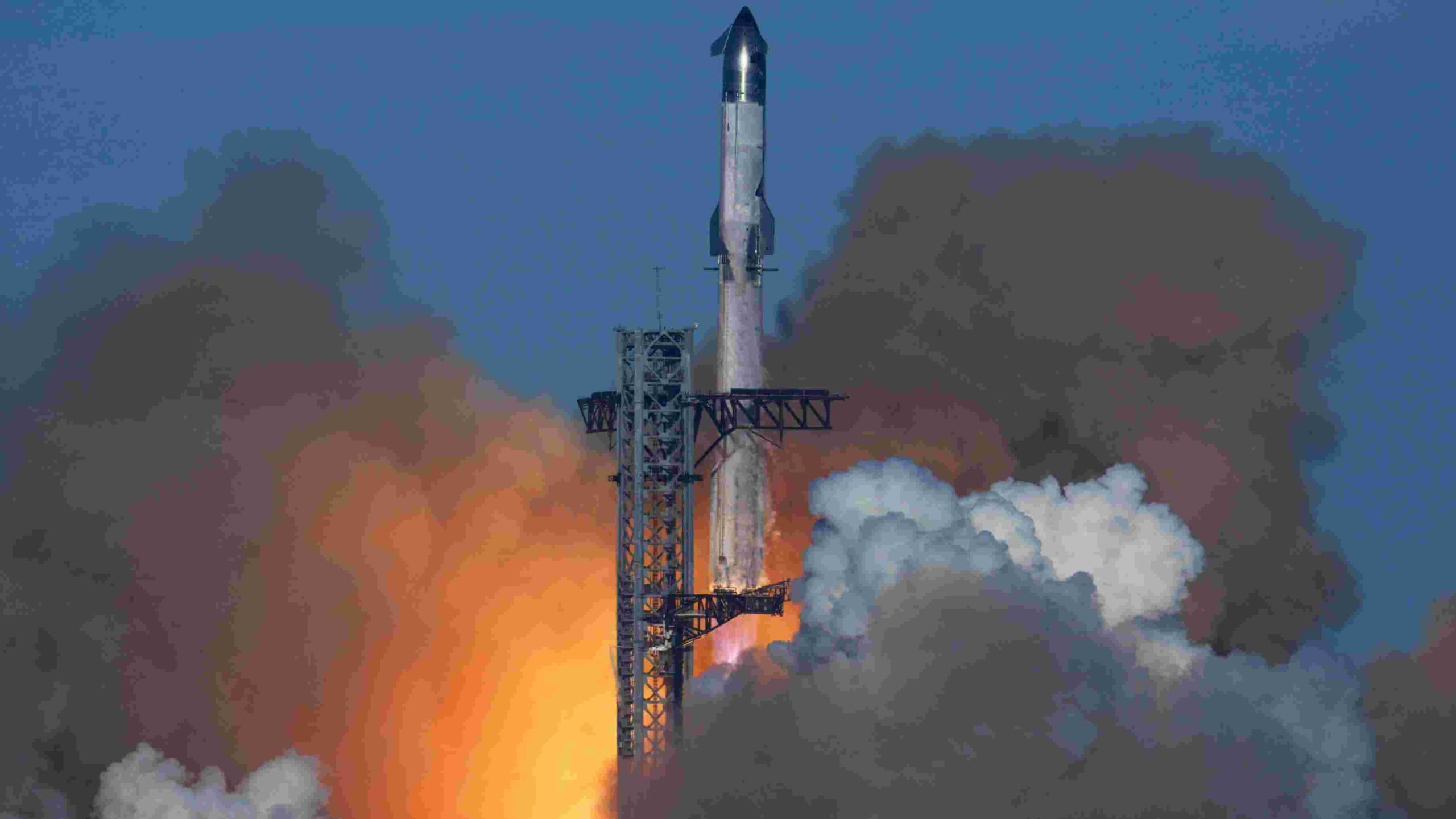
The global space industry is experiencing one of its most dramatic periods in recent memory. From SpaceX’s rapid acceleration toward Starship Flight 12, to a sudden leadership shakeup at United Launch Alliance (ULA), and multiple international rocket failures within a single day, the end of 2025 is proving to be anything but quiet.
As we approach 2026, the contrast between momentum and setback has never been clearer. Some organizations are charging ahead at record speed, while others are grappling with uncertainty, leadership transitions, and hard technical lessons. Let’s break down everything that’s happening and why it matters for the future of spaceflight.
The Countdown to Starship Flight 12 Intensifies
For spaceflight enthusiasts, the holiday season signals more than celebrations—it marks another step closer to Starship Flight 12. With Christmas and New Year approaching, SpaceX has shown no intention of slowing down, maintaining an intense pace of preparation as the year comes to a close.
Unlike many aerospace companies that scale back operations during the holidays, SpaceX continues to push forward, reinforcing its reputation for relentless execution and rapid iteration.
Booster 19 Marks a Major Production Breakthrough
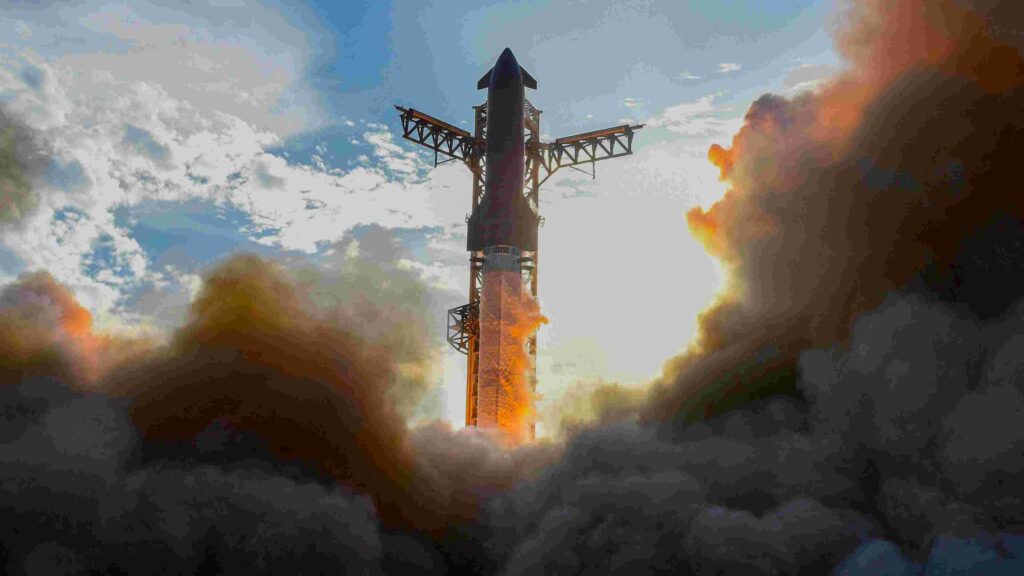
One of the most important milestones came on December 20th, when the final section of Booster 19 (B19) arrived at Mega Bay. This section, believed to be part of the methane tank, forms a critical structural connection between the hot staging section and the rest of the Super Heavy booster.
What makes this moment remarkable isn’t just the arrival—it’s the speed.
- B19 assembly completion time: 25 days
- B18 assembly completion time: 136 days
That means SpaceX completed this phase more than three and a half times faster than before.
Why This Matters
This dramatic improvement sends a powerful signal:
- Production bottlenecks have been addressed
- Integration workflows have been optimized
- Operational confidence has been restored after the B18 incident
Many expected SpaceX to recover eventually—but very few predicted such a rapid and decisive rebound.
Testing Timeline: Cryogenic Tests and Static Fire Ahead
Based on current progress, Booster 19 is expected to enter cryogenic testing in early January, followed by a static fire test in mid-January.
Of course, this timeline is not entirely independent. The readiness of Ship 39 (S39) will influence how quickly B19 moves through its testing campaign. Still, the possibility of a late January or early February launch window remains realistic.
That’s especially impressive considering how closely this mirrors the original schedule once envisioned for B18.
Ship 39: Why the Rollout Hasn’t Happened Yet
Recently, a road closure schedule between the production site and Massey test facility sparked speculation that S39 was about to roll out. However, that rollout never occurred.
What’s Going On with S39?
S39 has already completed full stacking, so its continued presence at the production site suggests:
- Additional inspections
- Monitoring systems checks
- Potential design refinements or modifications
Given the recent history with B18 and S36, SpaceX is clearly exercising extra caution. No one wants a repeat incident, especially at such a pivotal stage of the Starship program.
Upgrades at the Massey Test Site
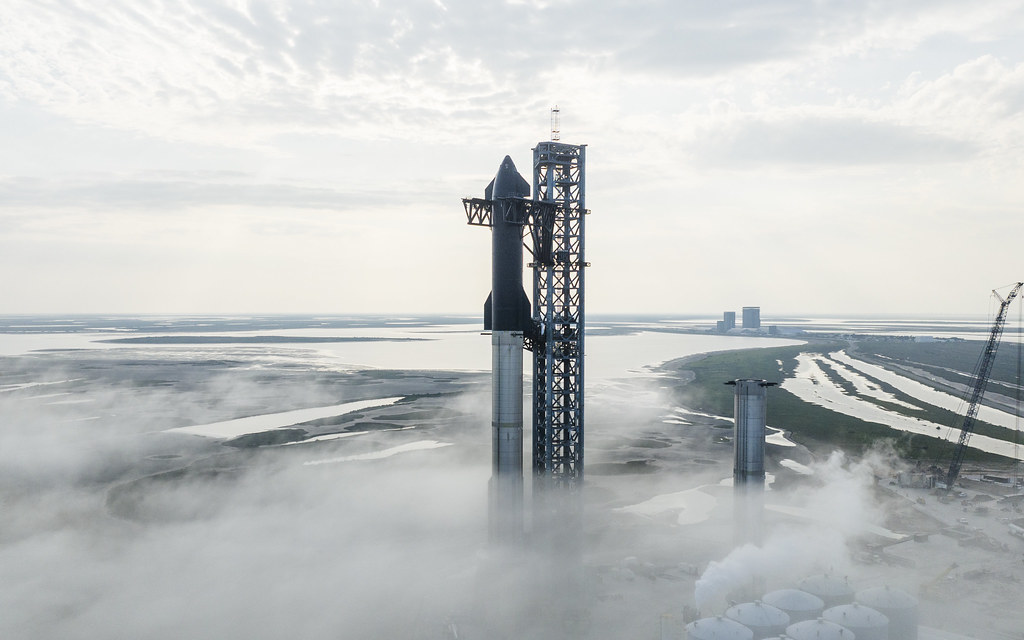
Another key reason for the delay lies not with S39 itself, but with the Massey test platform.
After completing installation of the Ship Quick Disconnect (SQD) system, SpaceX appears to be reinforcing the platform even further by adding a new static fire mount system.
What We Know So Far
- December 19th: First frame vertically stacked
- December 22nd: Second frame installed
- Only the frame structure is currently in place
- A large sail-like component has already arrived at the site
This system closely resembles components seen in 3D renders by Chrome Kiwi, suggesting a more robust and flexible testing configuration designed for future Starship campaigns.
While the final configuration remains unclear, answers will come quickly once assembly is complete.
Could S39 Still Test Before Year-End?
If work on the Massey platform is completed within the next few days, S39 could still roll out for cryogenic testing before the end of 2025.
That would be a powerful way to close the year—setting the stage for an aggressive testing campaign in early 2026.
Launch Site Upgrades: Smarter Chopsticks for the Future
At the launch site, SpaceX has shifted focus after extensive testing of the water deluge system. The next major upgrade involves a new actuator system for the chopsticks.
Why This Upgrade Is Important
The new actuator system is expected to deliver:
- Faster opening and closing speeds
- Smoother motion
- Greater flexibility
- Improved compatibility with future vehicles
This upgrade is especially significant as SpaceX prepares for Starship V3, which will require even more precise and capable ground systems.
Gigabay Construction: Building for Scale
Meanwhile, at the production site, construction of Gigabay continues at an impressive pace.
The steady addition of modules to the crane’s cable tower allows operations at increasingly higher altitudes, signaling consistent progress.
Projected Impact of Gigabay
- Expected to be operational by mid-2026
- Supports higher production rates
- Enables larger and more advanced Starship configurations
Together, these upgrades show that SpaceX isn’t just preparing for the next flight—it’s preparing for an entirely new era.
The Bigger Picture: Racing Toward the Starship V3 Era
All signs point to one conclusion:
SpaceX is racing against time—not just toward Starship Flight 12, but toward the dawn of the Starship V3 era.
The intensity of current operations reflects how much is riding on the upcoming flights. Each test, upgrade, and assembly milestone is a stepping stone toward routine, high-cadence interplanetary launch capability.
Shockwaves Across the Industry: Tory Bruno Steps Down from ULA
While SpaceX accelerates, the rest of the industry is facing turbulence. One of the biggest headlines came with the sudden resignation of Tory Bruno as CEO of United Launch Alliance (ULA).
After nearly 12 years at the helm, Bruno announced his departure in a brief message, thanking his team and highlighting ULA’s readiness for future missions.
Leadership Transition at ULA
- John Elbon, ULA’s COO, steps in as interim CEO
- A permanent replacement has not yet been announced
- Lockheed Martin confirmed Bruno is leaving for a new opportunity, not retirement
The sudden nature of the resignation caught many by surprise and introduces uncertainty during an already challenging period for ULA.
Tory Bruno’s Legacy and the Challenges He Faced
Bruno took over ULA in 2014, just as the company’s long-standing dominance in national security launches began to erode.
Key Challenges During His Tenure
- Rapid rise of SpaceX and Falcon rockets
- Loss of major military and government contracts
- Retirement of Delta IV Heavy in early 2024
- Phase-out of Atlas V due to reliance on Russian RD-180 engines
Vulcan Centaur was intended to be ULA’s comeback vehicle—but progress has been slow.
Vulcan Centaur: Promise and Limitations
Since early 2024, Vulcan has flown only three times.
While it successfully eliminates Russian engines, it introduces new challenges:
- Dependence on Blue Origin’s BE-4 engines
- Limited flexibility due to external engine supply
- Fully expendable design in a reusability-driven market
These factors have contributed to a low launch cadence, with only six missions planned in the near term.
Financial Pressure and an Uncertain Future
ULA has also faced persistent financial pressure. At various times, rumors have circulated about potential acquisitions involving Blue Origin or Sierra Space.
Although no deal has materialized, these rumors underscore the broader challenges confronting the joint venture.
With Bruno’s departure, the company’s future trajectory remains uncertain.
A Rough Day for Global Spaceflight: Two Rocket Failures
As if leadership turmoil wasn’t enough, the global launch industry suffered two major rocket failures within less than 24 hours.
Japan’s H3 Rocket Suffers Another Setback
On December 21st, Japan’s H3 rocket launched from Tanegashima carrying the Michibiki-5 navigation satellite.
While liftoff appeared normal, the second-stage engine failed to reignite, preventing the satellite from reaching orbit.
Key Details
- Mission declared a failure
- JAXA issued a public apology
- Investigation focuses on the LE-5B-3 engine
- All future H3 launches are now on hold
This marks the second failure for H3, after previously achieving five consecutive successes.
South Korea’s Innospace Loses Hanbit-Nano
Less than a day later, South Korean startup Innospace attempted the first orbital launch of its Hanbit-Nano rocket from Brazil’s Alcântara Space Center.
Approximately 30 seconds after liftoff, the rocket failed in a visible explosion.
Early Findings
- No injuries or ground damage
- Likely caused by strong vibrations leading to a fuel leak
- Mission aimed to deploy five small satellites
For a debut orbital attempt, the mission was ambitious—and the loss underscores how unforgiving rocket development can be.
The Harsh Reality of Spaceflight
These failures serve as a powerful reminder:
Access to space remains brutally difficult.
While companies like SpaceX push forward at unprecedented speed, many others are still learning hard lessons through failure. Progress in spaceflight is rarely linear, and success often comes only after repeated setbacks.
Final Thoughts: A Defining Moment for the Space Industry
As 2025 draws to a close, the space industry stands at a crossroads.
- SpaceX is accelerating toward Starship Flight 12 and beyond
- ULA faces leadership change amid mounting challenges
- Global launch providers continue to grapple with technical reality
The contrast between momentum and struggle has never been clearer. What happens next—especially in early 2026—will help define the future of space access for years to come.
Curiosity, imagination, and inspiration remain the driving forces behind humanity’s push beyond Earth. And as long as we keep looking up, the journey continues. 🚀
FAQs
1. What is Starship Flight 12 and why is it important?
Starship Flight 12 is an upcoming test flight in SpaceX’s Starship development program. It is important because it represents continued progress toward fully reusable, high-capacity launch systems needed for missions to the Moon, Mars, and beyond.
2. When is Starship Flight 12 expected to launch?
Based on current timelines, Starship Flight 12 could occur in late January or early February 2026, depending on testing progress and readiness of both the booster and ship.
3. What makes Booster 19 different from previous boosters?
Booster 19 (B19) was assembled dramatically faster than its predecessor. The final assembly phase took only 25 days, compared to 136 days for Booster 18, highlighting major improvements in SpaceX’s production efficiency.
4. What is cryogenic testing and why is it necessary?
Cryogenic testing involves filling rocket tanks with super-cold propellants to verify structural integrity, valves, and plumbing. It ensures the vehicle can safely handle real launch conditions.
5. Why hasn’t Ship 39 rolled out yet?
Although Ship 39 (S39) is fully stacked, it remains at the production site for additional inspections, monitoring, and possible modifications, reflecting SpaceX’s increased caution after recent incidents.
6. What upgrades are being made at the Massey test site?
SpaceX is installing a new static fire mount system at the Massey test platform, designed to provide stronger support and more flexibility for future Starship testing.
7. What are the Starship “chopsticks”?
The chopsticks are large mechanical arms on the launch tower used to lift, stack, and eventually catch Starship boosters and ships. They are central to SpaceX’s reusability strategy.
8. Why is SpaceX upgrading the chopstick actuator system?
The new actuator system will allow faster, smoother, and more precise movement, improving safety and preparing the launch site for Starship V3 and future vehicles.
9. What is Gigabay and why does it matter?
Gigabay is a massive new production facility under construction at Starbase. Once operational, it will enable higher production rates and support larger, more advanced Starship designs.
10. Why did Tory Bruno resign as CEO of ULA?
Tory Bruno stepped down after nearly 12 years as CEO. While no specific reason was publicly stated, official statements suggest he is leaving for a new opportunity, not retirement.
11. Who is leading ULA now?
John Elbon, ULA’s Chief Operating Officer, has been appointed interim CEO while the company searches for a permanent replacement.
12. What challenges is ULA currently facing?
ULA is dealing with low launch cadence, leadership transition, reliance on external engine suppliers, and competition from reusable rockets like SpaceX’s Falcon and Starship.
13. What happened to Japan’s H3 rocket?
On December 21st, Japan’s H3 rocket failed when its second-stage engine did not reignite, preventing the satellite from reaching orbit. All future H3 launches are paused pending investigation.
14. Why is the H3 failure significant for Japan’s space program?
The H3 rocket is meant to be a reliable, cost-effective launcher for Japan. A second failure raises concerns about technical reliability and program delays.
15. What went wrong with South Korea’s Hanbit-Nano rocket?
South Korean startup Innospace lost its Hanbit-Nano rocket about 30 seconds after liftoff. Early analysis suggests strong vibrations may have caused a fuel leak.
16. What do these recent rocket failures tell us about spaceflight?
They highlight that spaceflight remains extremely challenging. Even as leaders like SpaceX move quickly, many organizations still face steep technical hurdles on the path to reliable access to space.
Read More:
- Tesla FSD (Supervised) v14.2.2 starts rolling out
- Elon Musk’s Grok AI to be used in U.S. War Department’s bespoke AI platform
- Tesla FSD v14.2.2 is getting rave reviews from drivers
- Waymo sues Santa Monica over order to halt overnight charging sessions
- Tesla (TSLA) receives “Buy” rating and $551 PT from Canaccord Genuity
1 thought on “SpaceX is Rushing towards Starship Flight 12! Tory Bruno Left ULA! Double Rocket Failure”