
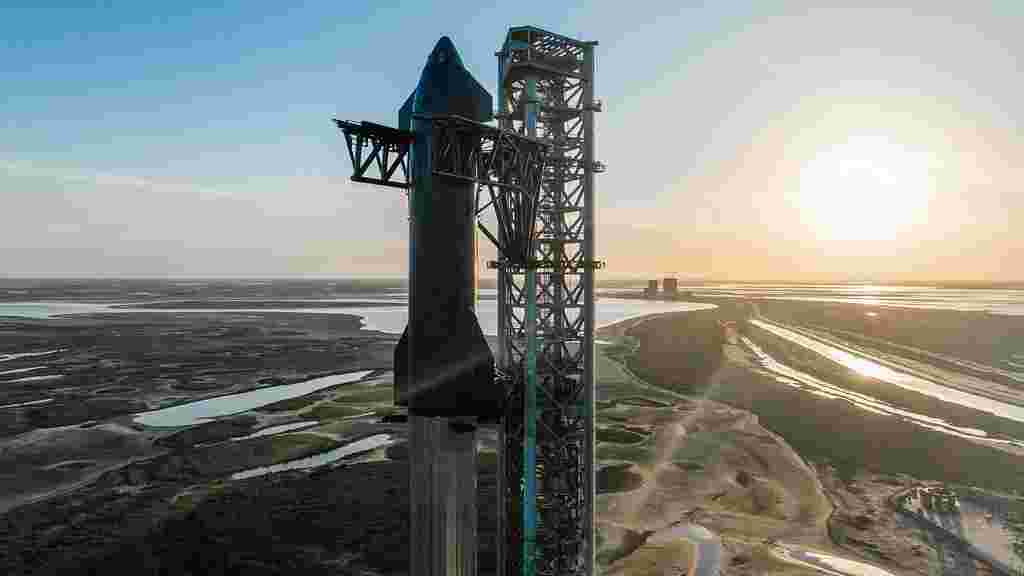
SpaceX has once again captured the attention of the global spaceflight community. A strange and mysterious new structure has appeared at Massey’s test site, positioned right next to Starship’s static fire stand—and it’s already sparking intense speculation. As SpaceX accelerates toward Starship Version 3 (V3), this new construction could represent one of the most important ground infrastructure upgrades in the program’s history.
In this in-depth, we’ll explore what this new structure likely is, why it matters, and how it fits into SpaceX’s ambitious plans for higher launch cadence, safer testing, and eventual Mars missions. We’ll also connect the dots between Ship 39, Raptor 3, pad upgrades, and on-site propellant production, revealing how Starbase is rapidly transforming into a fully industrialized launch complex.
SpaceX’s Starbase Is Entering a New Era
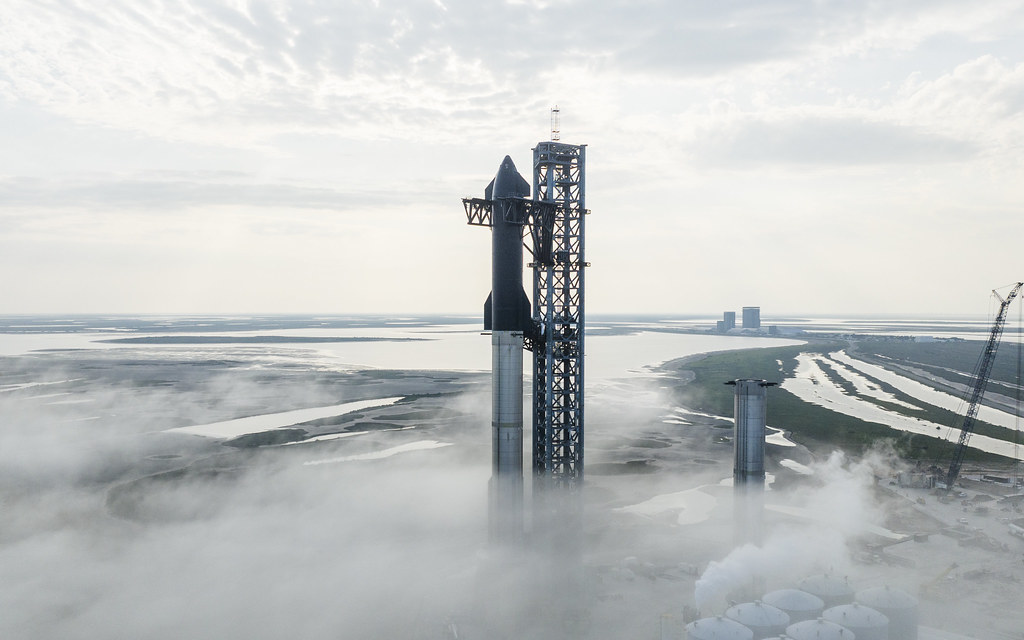
SpaceX’s Starbase complex in South Texas is no longer just an experimental testing ground. It is undergoing a carefully orchestrated transformation designed to support Starship V3, a vehicle configuration optimized for high reliability, rapid reuse, and frequent launches.
Across the site, upgrades are happening simultaneously:
- Launch Pad 1 is being torn down and rebuilt
- Launch Pad 2 is undergoing system-level testing
- Massey’s test site is evolving into a critical hub for ship-only testing
The newly constructed structure at Massey’s site is a clear signal that SpaceX is preparing for higher thrust, higher pressure, and more realistic test campaigns than ever before.
The Mysterious Structure at Massey’s Site
First Spotted: December 13
Observers first noticed the structure on December 13, when SpaceX began erecting a large vertical steel frame directly on top of the existing static fire test stand support—right next to the flame bucket.
That location is not accidental.
Being so close to the flame trench strongly suggests a direct connection to engine testing, particularly static fire operations involving the next-generation Raptor 3 engines.
Structural Design: Built for Extreme Loads
A Frame Designed for Violence (the Controlled Kind)
From available imagery, the structure features:
- A dense grid of steel members at the base
- A D-shaped profile when viewed from the side
- A rectangular appearance from the front
- Direct connections to the test stand legs
This design indicates it is built to handle extreme mechanical loads while also dampening vibration—a critical requirement during static fires where engines generate massive acoustic and thrust forces.
Why Vibration Control Matters
With Raptor 3, SpaceX is pushing:
- Higher chamber pressures
- Greater propellant flow rates
- Increased thrust per engine
That means stronger vibrations are transmitted into the test stand. This new structure likely adds structural stiffness and stability, reducing the risk of damage during prolonged or repeated tests.
Unfinished—but Intentionally Modular
The upper portion of the frame includes additional steel members and mounting points, but no pipes or interface hardware have been fully installed yet. This suggests:
- The system is modular
- Components can be added, removed, or upgraded
- SpaceX is still finalizing its exact configuration
Above the main vertical frame, another unusual steel assembly has appeared, likely intended as a mounting interface for fluid lines or mechanical systems.
December 20: Even More Mystery Appears
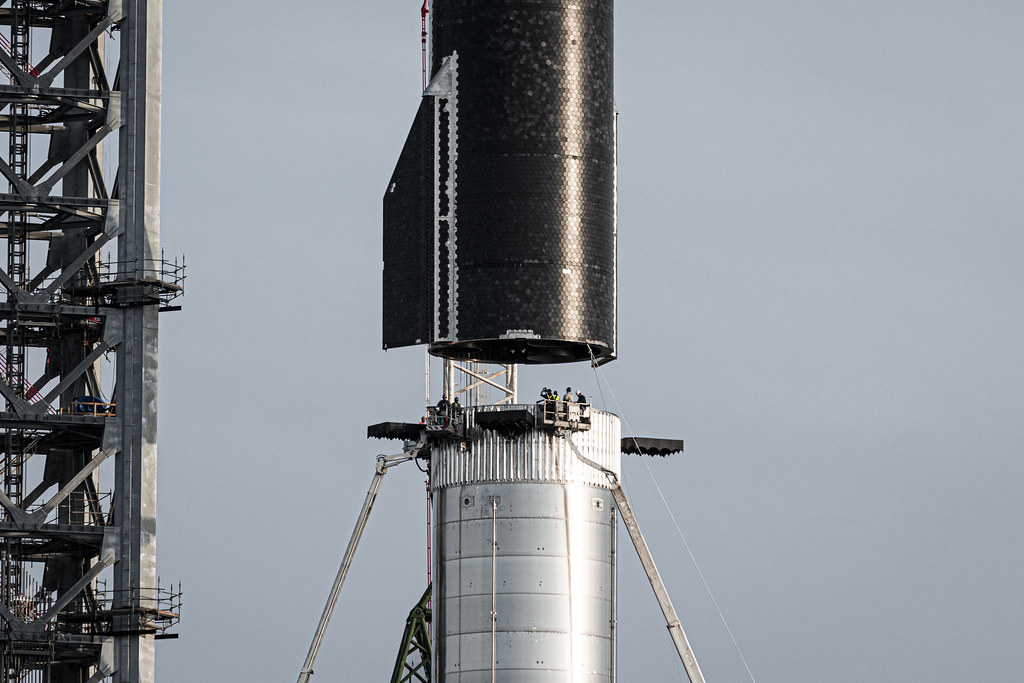
Just a week later, observers spotted another vertical gantry-like structure installed nearby—adding yet another layer of intrigue.
That same night, SpaceX transported a massive steel assembly under cover of darkness.
The Giant Truss Assembly
What Was Moved Overnight?
The transported structure consisted of:
- Multiple horizontal steel panels
- A central vertical beam
- Diagonal X-bracing for load reinforcement
Once upright, this structure is estimated to be:
- 10 to 15 meters tall
- Exceptionally wide
- Extremely heavy
Because of its size, it had to be moved horizontally using two self-propelled modular transporters, each equipped with hundreds of wheels.
So… What Is SpaceX Actually Building?
Theory #1: A Ship Quick Disconnect Gantry (V3)
The most widely accepted explanation is that this structure is a ship-side equivalent of the booster quick disconnect gantry at Pad 2, but rotated into a vertical orientation.
Its primary functions would include:
- Propellant loading
- Autogenous pressurization
- Cryogenic fluid interfaces
- Structural stabilization during static fires
Combined with the already installed Ship Quick Disconnect V3 system, this structure enables fully realistic ground testing of Starship’s interfaces.
Why This Matters for Starship V3
Starship V3 introduces major changes:
- Raptor 3 engines
- Higher operating pressures
- Increased flow rates
- New fueling and pressurization systems
Testing these systems requires ground infrastructure that matches flight conditions as closely as possible. This structure acts as the backbone for that effort.
Theory #2: Ground-Based Ship-to-Ship Refueling Tests
There’s another fascinating possibility.
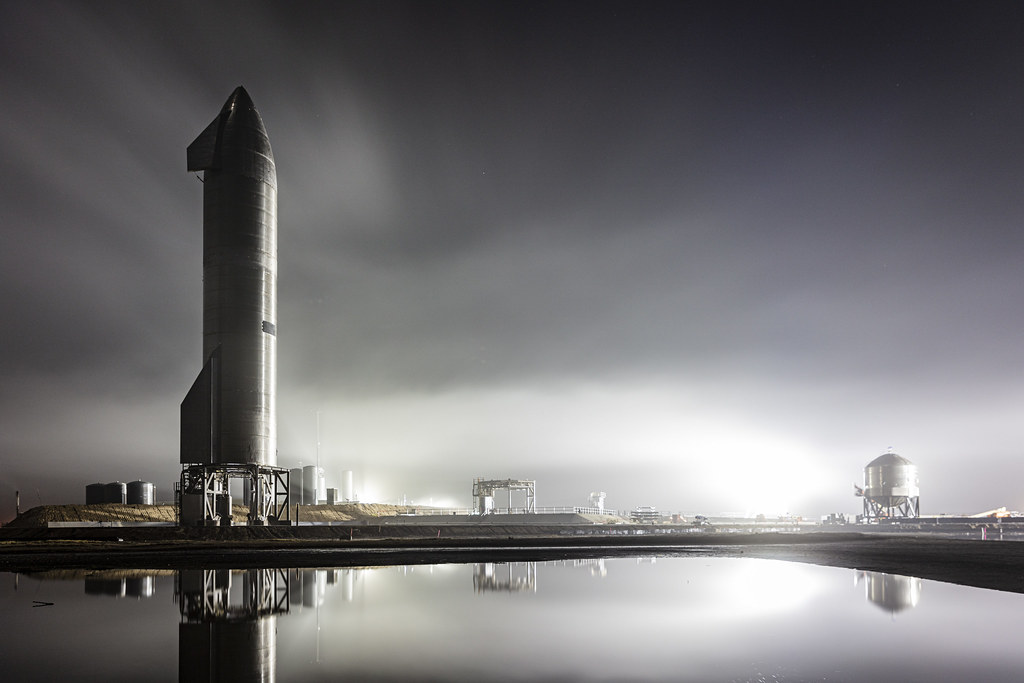
Several experts believe this structure could also support ship-to-ship refueling or docking tests, particularly for:
- Tanker Starships
- Orbital propellant depots
Why This Theory Makes Sense
- The structure appears tall enough to reach new refueling ports on Ship 39
- It aligns with SpaceX’s long-term plans for on-orbit refueling
- Ground testing first reduces risk before orbital demonstrations
If correct, SpaceX may begin ground-based refueling tests years ahead of full orbital demos, potentially as early as mid-2026.
Ship 39: The First True Starship V3
Testing Timeline
Ship 39 is progressing rapidly and is expected to undergo:
- Cryogenic pressure testing
- Return to production for engine installation
- Transport back to Massey’s site
- Static fire testing
This campaign is expected to peak in early January, making it one of the most comprehensive ship-only test sequences SpaceX has ever conducted.
Autogenous Pressurization Explained
One of the most important upgrades on Ship 39 is the addition of autogenous pressurization raceways.
What Does That Mean?
In simple terms:
- Starship uses gaseous methane and oxygen tapped from the engines
- These gases are fed back into the tanks
- This prevents a vacuum from forming as propellant is consumed
This system:
- Eliminates the need for external pressurant tanks
- Reduces mass
- Improves efficiency
It’s a critical technology for deep space missions.
Booster 19 and Pad 2 Upgrades
While Ship 39 dominates attention, Booster 19 is also moving quickly:
- Rapid stacking is underway
- Pressure testing at Massey’s site is expected soon
Meanwhile, Pad 2 continues its push toward operational readiness.
The Chopsticks Are Coming Back
On December 21, SpaceX transported a new chopstick actuator back to Pad 2.
Earlier in the month:
- The left actuator was removed
- It was shipped to Sanchez site for upgrades
- Now it’s returning for reinstallation
These actuators are critical for:
- Catching boosters
- Handling Starship
- Enabling rapid reuse
Pad 2’s Smarter Fueling Design
One major improvement at Pad 2 is the dual quick disconnect system:
- One for liquid methane
- One for liquid oxygen
This design:
- Improves reliability
- Reduces complexity
- Matches the needs of Booster V3
The Air Separation Unit (ASU): A Hidden Game-Changer
One of the most important upgrades at Starbase doesn’t involve rockets at all.
What Is the ASU?
The Air Separation Unit allows SpaceX to:
- Produce liquid oxygen
- Generate liquid nitrogen
- Create essential purge gases
All directly from the air.
Why the ASU Is Critical
Once operational in 2026, the ASU will:
- Reduce reliance on tanker trucks
- Cut costs dramatically
- Increase launch cadence
- Improve supply chain resilience
This is essential if SpaceX wants to achieve dozens—or even hundreds—of launches per year.
Starbase’s Biggest Transformation Yet
Since land acquisition began in 2014, Starbase has evolved rapidly. But 2026 represents a true turning point:
- From experimental test site
- To fully industrialized launch complex
Built specifically for Starship at scale.
Controversy: The Flight 7 Media Storm
Rapid growth brings scrutiny.
In December 2025, the Wall Street Journal reignited controversy over Flight 7, which occurred in January 2025.
The article alleged:
SpaceX’s Response
SpaceX responded publicly, stating:
- The report was misleading
- Information was incomplete
- No aircraft were ever at risk
- All debris remained within pre-coordinated hazard zones
Public safety, SpaceX emphasized, remains the top priority.
Final Thoughts: Ready to Fire
The new structure at Massey’s site is not just another steel frame. It represents:
- Safer static fires
- More realistic testing
- Higher launch cadence
- Preparation for orbital refueling
- A future beyond Earth orbit
As Ship 39 prepares for testing and Starship V3 edges closer to operational readiness, one thing is clear:
SpaceX isn’t just building rockets anymore—it’s building an ecosystem capable of sustaining humanity’s expansion into space.
And with these new test stand changes, Starship is officially getting ready to fire. 🚀
FAQs
1. What is the new structure SpaceX built at Massey’s site?
The new structure is believed to be a Starship V3 ship-side quick disconnect and test support gantry, designed to handle fueling, pressurization, and stabilization during static fire testing.
2. Why is the structure located next to the static fire stand?
Its position near the flame bucket and test stand strongly suggests it plays a direct role in engine testing, especially for high-thrust Raptor 3 static fires.
3. Is this structure related to Starship Version 3 (V3)?
Yes. The design and timing indicate it was built specifically to support Starship V3, which features new engines, higher pressures, and upgraded fueling systems.
4. What makes Starship V3 different from earlier versions?
Starship V3 includes Raptor 3 engines, improved autogenous pressurization, redesigned fuel interfaces, and infrastructure optimized for rapid reuse and high launch cadence.
5. What is a static fire test?
A static fire is a ground test where rocket engines are fired while the vehicle is securely held in place, allowing engineers to verify engine performance and system integrity.
6. Why does Raptor 3 require new ground infrastructure?
Raptor 3 operates at higher chamber pressures and propellant flow rates, creating stronger vibrations and loads that require reinforced and more advanced test structures.
7. What is autogenous pressurization on Starship?
Autogenous pressurization uses gaseous methane and oxygen from the engines to maintain tank pressure, eliminating the need for separate pressurant tanks.
8. How does autogenous pressurization benefit Starship?
It reduces vehicle mass, improves efficiency, and is essential for long-duration missions, including lunar and Mars operations.
9. Could this structure support ship-to-ship refueling tests?
Possibly. Some experts believe it may enable ground-based refueling or docking tests, which are crucial for future on-orbit propellant transfer missions.
10. What is Ship 39 and why is it important?
Ship 39 is the first true Starship V3 prototype and will undergo cryogenic testing, engine installation, and static fire testing, making it a major milestone.
11. When will Ship 39 perform its static fire test?
Static fire testing is expected in early January, following cryogenic pressure tests and engine installation, assuming no delays.
12. What role does Massey’s site play in Starship testing?
Massey’s site is becoming a key hub for ship-only testing, allowing SpaceX to test Starship systems independently from full launch pads.
13. What upgrades are happening at Launch Pad 2?
Pad 2 features redesigned quick disconnect systems, upgraded chopstick actuators, and improved ground support equipment for Starship and Super Heavy.
14. Why does Pad 2 use two quick disconnect systems?
Using separate quick disconnects for liquid methane and liquid oxygen improves reliability, safety, and fueling efficiency.
15. What is the Air Separation Unit (ASU) at Starbase?
The ASU is a facility that produces liquid oxygen, liquid nitrogen, and purge gases directly from air using cryogenic distillation.
16. Why is the ASU critical for SpaceX’s launch cadence?
It reduces dependence on tanker truck deliveries, lowers costs, and enables faster turnaround times for frequent Starship launches.
17. How does all of this support SpaceX’s Mars goals?
These upgrades enable rapid reuse, high launch frequency, and orbital refueling, all of which are essential for sustained missions to the Moon and Mars.
Read More:
- Tesla China quietly posts Robotaxi-related job listing
- Tesla starts showing how FSD will change lives in Europe
- Elon Musk and Tesla AI Director share insights after empty driver seat Robotaxi rides
- Elon Musk Announces All-New Solid State Battery For Tesla 2026
- Why The Tesla Robotaxi Will Take Over In 2026
2 thoughts on “SpaceX’s Official NEW V3 Starship Test Stand CHANGES to prevent Explosion…Ready to Fire”