
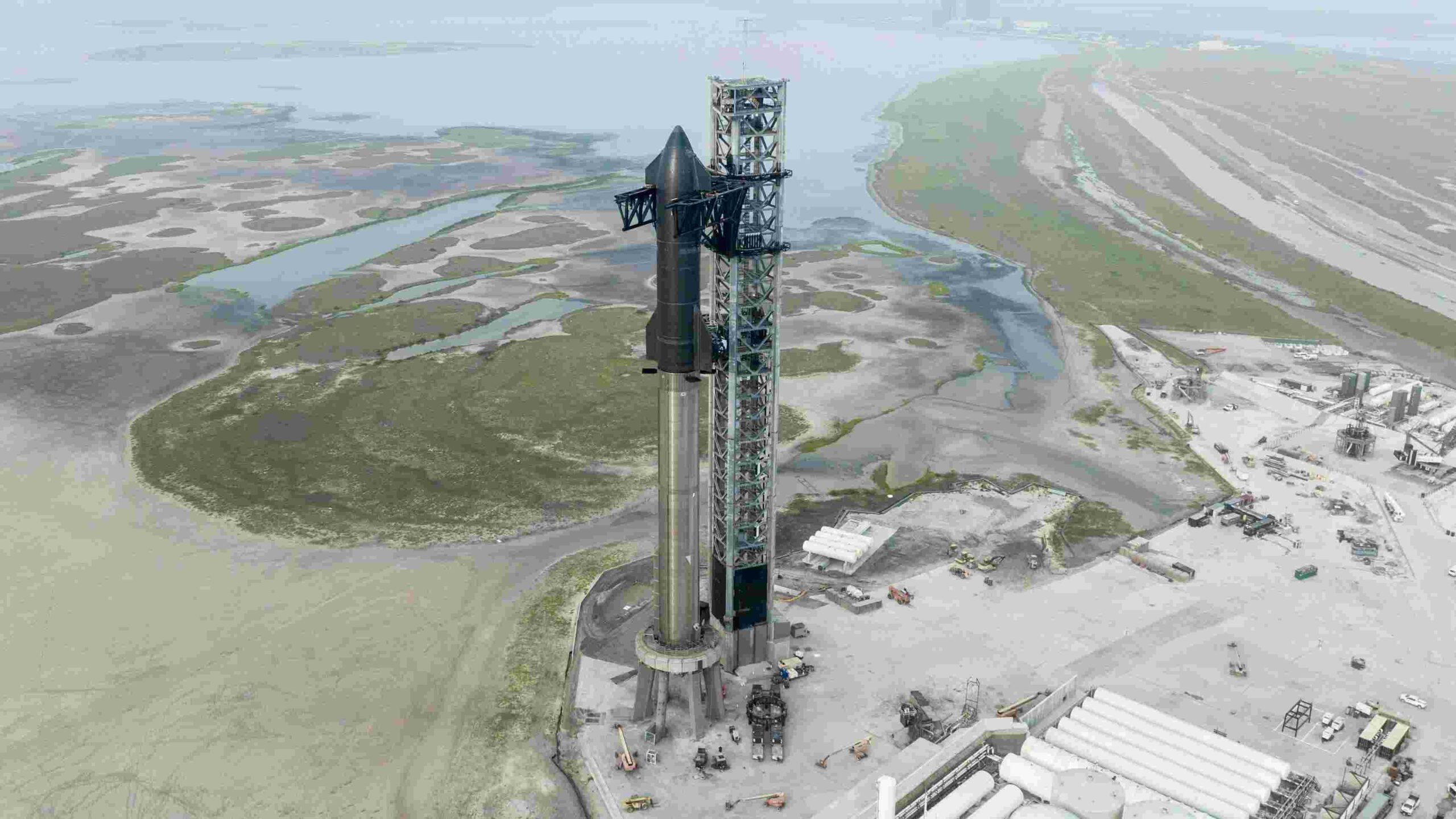
The year 2026 is rapidly emerging as a historic turning point in spaceflight. Long-discussed ambitions are no longer theoretical concepts or aspirational sketches—they are materializing into steel, hydraulics, and operational reality. At the very heart of this transformation lies SpaceX’s pursuit of full reusability, a goal that could permanently reshape how humanity accesses space.
Unlike anything attempted before, SpaceX is advancing toward recovering both stages of Starship using a robotic catching system, rather than traditional landings. This unprecedented challenge has driven sweeping upgrades to Starship’s catching infrastructure, particularly at Pad-2, where innovation is accelerating at remarkable speed. What was once experimental is now being refined into a system capable of routine execution.
So how close is SpaceX to making this revolutionary vision work? Let’s explore the engineering, philosophy, and infrastructure upgrades that are bringing full reusability within reach.
Why Full Reusability Is the Ultimate Spaceflight Goal
The importance of reusability in modern rocketry can hardly be overstated. Over the past decade, SpaceX has demonstrated—again and again—that rockets do not have to be discarded after a single flight. With Falcon 9, booster recovery evolved from a risky experiment into an industry-standard operation, fundamentally reshaping the economics of space launch.
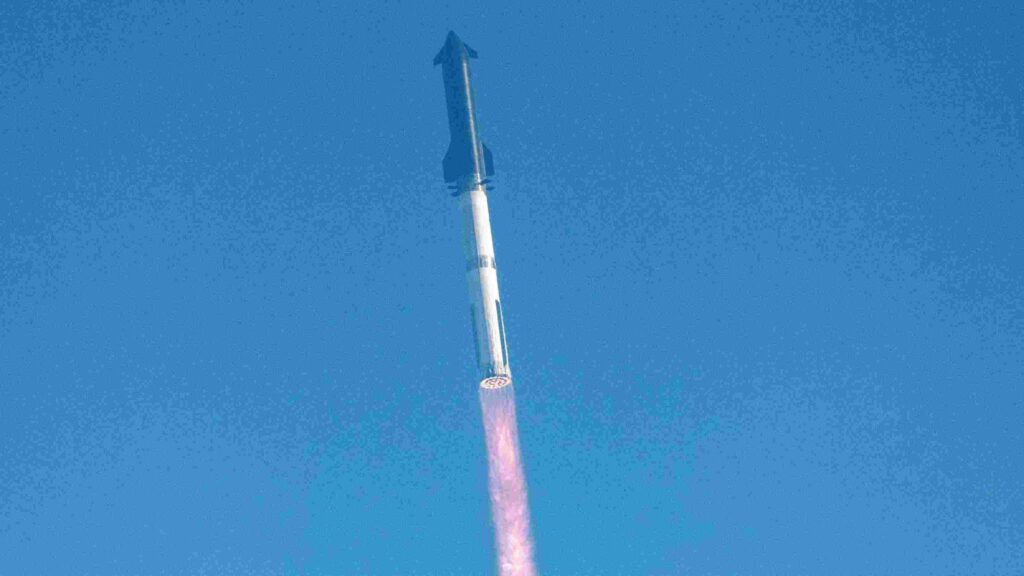
Yet Falcon 9 was never the final destination.
Partial reusability was only the proving ground. SpaceX’s true ambition has always been full reusability, the most demanding and transformative tier of launch system design. Achieving it would dramatically reduce launch costs, increase flight cadence, and enable mission flexibility at a scale never before seen in aerospace history.
Starship is the vehicle designed to make this leap possible.
Starship V3 and the Push Toward Catching Both Stages
For the upcoming Starship V3, catching the vehicle is no longer a side experiment—it is widely regarded as a core mission objective. However, before SpaceX can attempt to catch both stages, Starship must first complete a full orbital mission.
There are no shortcuts.
To return to the launch site, Starship must reach orbit, validate controlled reentry, and demonstrate pinpoint guidance accuracy. This means SpaceX will almost certainly require at least one additional flight beyond the initial V3 mission to fully validate orbital insertion and return dynamics.
In a best-case scenario, Flight 14 could mark the first attempt to catch the entire Starship stack. Even under optimistic assumptions, this milestone likely lies in early 2026, which explains why catching-related systems are receiving extraordinary attention during current construction efforts.
Pad-2’s Chopsticks: The Centerpiece of the Catching System
A Major Actuator Upgrade Signals Serious Progress
On December 21st, SpaceX transported a new actuator to Chopsticks Pad-2, and while the component was concealed beneath a black cover, its shape and proportions revealed major design changes.
Compared to earlier versions, the new actuator appears to:
- Feature more structural segments
- Include a larger end section
- Integrate upgraded hydraulic cylinders
These are not cosmetic refinements. They represent a substantial leap in capability.
Mounted between the carriage and the main chopstick arm, the actuator serves two critical functions:
- Opening and closing the chopstick arms
- Absorbing and dissipating energy during a catch
Catching a spacecraft midair demands that enormous kinetic energy be absorbed smoothly and instantly. Any abrupt load transfer could damage both the vehicle and the tower. These upgraded hydraulics dramatically improve SpaceX’s ability to manage those forces.
Hydraulics: The Silent Power Behind Mechazilla
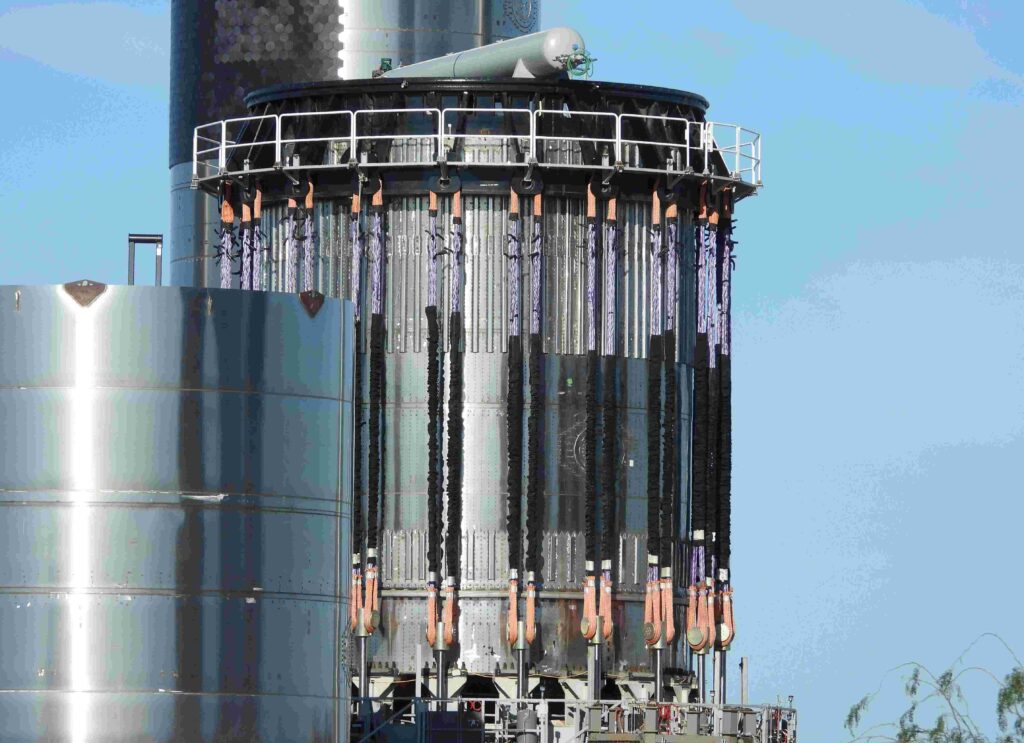
At the heart of the chopsticks’ evolution is hydraulic dominance. Large-scale hydraulic systems are capable of exerting forces strong enough to deform steel—making them ideal for handling vehicles weighing hundreds of tons.
Once raw force is no longer the limiting factor, SpaceX can shift its focus toward:
- Precision
- Responsiveness
- Fine control under extreme loads
This design philosophy is already visible across Starbase.
Shorter Chopstick Arms: Precision Over Reach
One of the most noticeable differences between Pad-2 and Pad-1 is arm length. The new chopsticks are intentionally shorter, a decision Elon Musk himself has supported.
Longer arms increase inertia, which slows response times and reduces precision. Shorter arms:
- Reduce rotational inertia
- Enable faster motion
- Improve alignment accuracy
- Enhance stability during capture
SpaceX later applied this lesson by shortening Pad-1’s arms as well, reinforcing the importance of agility over reach. When attempting one of the most difficult maneuvers in aerospace history, flexibility and reliability are non-negotiable.
“Catching a Fly with Chopsticks”—At Rocket Scale
SpaceX often compares the task of catching Starship to catching a fly with chopsticks. While the metaphor captures the precision required, it fails to convey the sheer scale of the challenge.
Starship returns from orbit:
- Weighing hundreds of tons
- After enduring extreme heat and structural stress
- While still traveling at significant speed
In the final seconds, the vehicle and chopsticks must function as a single integrated system, with:
- Second-level timing
- Millimeter-level alignment
- Instant stabilization
A failed catch could result in catastrophic damage, potentially halting operations for months. This is why the chopsticks must combine rigidity and adaptability—strength without flexibility would be just as dangerous as flexibility without strength.
A Two-Stage Catching Strategy: Pad-1 and Pad-2
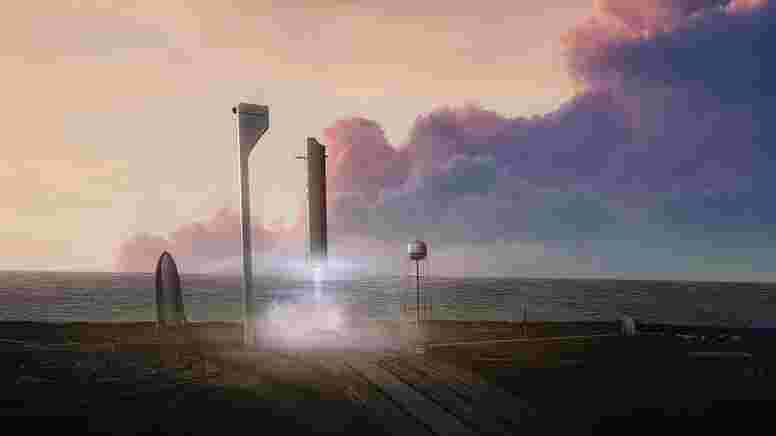
SpaceX is not relying on a single tower for everything. Because the company is pursuing a two-stage catching strategy, Chopsticks Pad-1 is also undergoing upgrades.
Pad-1 is expected to return to service early next year, possibly ahead of other new infrastructure. However, it will not mirror Pad-2 exactly.
Key differences include:
- Different catching interfaces
- Unique rails and pins
- Hardware optimized for Super Heavy, not the ship
Current indicators suggest:
- Pad-2 will specialize in catching the Starship upper stage
- Pad-1 will continue catching Super Heavy boosters
This division of labor improves efficiency and reduces complexity.
Is SpaceX Betting Everything on Mechazilla?
The short answer: No.
While robotic catching offers unmatched turnaround speed, SpaceX is maintaining landing flexibility. In Florida, Starship’s future includes drone-based landings, which offer several advantages:
- Reduced risk to critical ground infrastructure
- Flexible landing locations
- Optimized trajectories and propellant usage
- Support for missions requiring landing legs, such as lunar or planetary operations
Rather than contradicting robotic catching, these methods complement it.
For high-cadence Earth orbit missions, Mechazilla is unbeatable. For off-world missions or specialized profiles, traditional landings still make sense. Flexibility remains central to SpaceX’s philosophy.
Beyond the Chopsticks: Pad-2’s Generational Infrastructure Leap
While the catching system captures headlines, the most critical upgrades extend far beyond the arms themselves.
The Flame Trench: A Fundamental Shift in Pad Design
On Pad-1, SpaceX relied on a water-cooled steel plate paired with a six-legged orbital launch mount. While effective, it showed visible signs of thermal fatigue after just a few years and around ten launches.
Discoloration wasn’t cosmetic—it was a warning.
The new flame trench takes a completely different approach:
- Instead of absorbing thrust, it redirects it
- Exhaust energy is channeled away from sensitive systems
- Thermal and mechanical loads are dramatically reduced
Positioned below ground level, the trench confines and guides the plume, preventing it from washing over surrounding infrastructure.
Advanced Water Deluge and Flame Buckets
Integrated directly into the flame trench is a next-generation water delivery system. Small-diameter pipes form flame buckets that precisely match the trench geometry and are embedded in concrete for strength.
When activated:
- Water is delivered at extremely high pressure
- Heat and acoustic energy are aggressively suppressed
- Infrastructure longevity is dramatically improved
After successful testing at the Massey site, SpaceX deployed a dual flame bucket configuration, doubling capacity to handle Super Heavy’s 9,000+ tons of thrust.
The Redesigned Orbital Launch Mount
Above the trench, the orbital launch mount (OM) has been completely reimagined.
Instead of an open framework, the new OM is:
- Box-like and rigid
- Welded directly to the platform
- Optimized for alignment and structural integrity
While early speculation suggested modular replacement, SpaceX prioritized reliability over mobility. Redesigned hold-down clamps, improved opening mechanisms, and extensive shielding now protect sensitive components from plume impingement.
Large external manifolds dominate the structure, supporting expanded cooling systems. Heat management is no longer an afterthought—it’s a core design principle.
A Vision Built for High Cadence and Rapid Reuse
Taken together, these upgrades reveal a clear long-term strategy:
- Starship is becoming more powerful
- Launch cadence will increase dramatically
- Downtime is the true enemy
This philosophy extends beyond Starbase. At LC-39A, existing launch mount legs have already been demolished to make way for similar upgrades. Even Pad-1 continues to evolve following the V2 launch.
Unlike traditional rockets, Starship is designed not just to leave the pad, but to return to it. Infrastructure must support both directions of travel.
A New Era of Spaceflight Is Almost Here
At the center of this transformation is one of the boldest ideas ever attempted in aerospace history: catching a fully reusable orbital-class rocket with robotic arms.
It’s audacious—but so was landing boosters on drone ships.
SpaceX thrives in the space between audacity and execution. With each upgrade, uncertainty shrinks. With each test, capability grows. And with a target set for early 2026, this vision is no longer abstract.
For the first time, humanity is on the verge of watching a fully reusable orbital rocket be caught out of the sky and prepared to fly again.
FAQs
1. What is SpaceX’s Pad-2 catching system?
SpaceX’s Pad-2 catching system is a robotic recovery mechanism known as Mechazilla, designed to catch Starship midair using massive mechanical arms instead of traditional landings. This system is a key component of SpaceX’s plan for full rocket reusability.
2. Why does SpaceX want to catch Starship instead of landing it?
Catching Starship eliminates the need for landing legs, reduces vehicle mass, and enables much faster turnaround times. This allows Starship to be inspected, refueled, and prepared for reuse far more efficiently.
3. When will SpaceX attempt its first full Starship catch?
Under optimistic assumptions, SpaceX could attempt its first full Starship catch in early 2026, possibly around Flight 14, after completing orbital validation and controlled return tests.
4. What upgrades have been made to the Pad-2 chopsticks?
Pad-2 features shorter chopstick arms, upgraded hydraulic actuators, and improved shock absorption systems. These upgrades increase precision, responsiveness, and reliability during the catch.
5. What role do hydraulics play in catching Starship?
Hydraulics provide the immense force and fine control required to manage vehicles weighing hundreds of tons. They allow the chopsticks to absorb energy smoothly and stabilize Starship immediately after capture.
6. Why are the new chopstick arms shorter than before?
Shorter arms reduce inertia, allowing faster movement and greater precision. This design improves alignment accuracy and minimizes risk during the critical final seconds of a catch.
7. How accurate does Starship need to be for a successful catch?
Starship must achieve millimeter-level alignment and second-level timing during its final descent. Even small deviations could result in a failed catch.
8. Is Pad-1 also being upgraded for catching operations?
Yes. Pad-1 is undergoing renovations and is expected to continue catching Super Heavy boosters, while Pad-2 will likely be optimized for catching the Starship upper stage.
9. Are Super Heavy and Starship caught in the same way?
No. Super Heavy and Starship use different catching interfaces, requiring unique rails, pins, and hardware tailored to each vehicle’s structure and mass.
10. Is SpaceX relying only on robotic catching for Starship landings?
No. SpaceX maintains multiple landing strategies, including drone-based landings, especially for missions that require landing legs or flexible landing locations.
11. What is the purpose of the new flame trench at Pad-2?
The flame trench redirects exhaust energy away from critical infrastructure, reducing heat and mechanical stress and enabling higher launch cadence with less damage.
12. How does the water deluge system improve pad durability?
High-pressure water systems embedded in the flame trench suppress heat and acoustic energy, significantly extending the lifespan of pad components.
13. Why was the orbital launch mount redesigned?
The new orbital launch mount emphasizes rigidity, alignment, and heat protection, improving reliability and minimizing downtime between launches.
14. How powerful is the Super Heavy booster?
Super Heavy generates over 9,000 tons of thrust, making it one of the most powerful rockets ever built and necessitating major infrastructure upgrades.
15. How does full reusability change spaceflight economics?
Full reusability could dramatically lower launch costs, increase flight frequency, and make access to space more routine and scalable.
16. Why is 2026 considered a pivotal year for Starship?
By 2026, SpaceX aims to demonstrate orbital missions, controlled returns, and robotic catching, marking the transition from experimental testing to operational full reusability.
Read More:
- Tesla’s Elon Musk accepts invitation to Israel’s Smart Transportation Conference
- Tesla officially publishes Q4 2025 vehicle delivery consensus
- Tesla celebrates 9 million vehicles produced globally
- Tesla Cybercab is changing the look of Austin’s roads, and it’s not even in production yet
- Tesla China delivery centers look packed as 2025 comes to a close
1 thought on “SpaceX’s RADICAL Upgrades on Starship’s Pad-2 Catching System! New Era Comes Alive”