
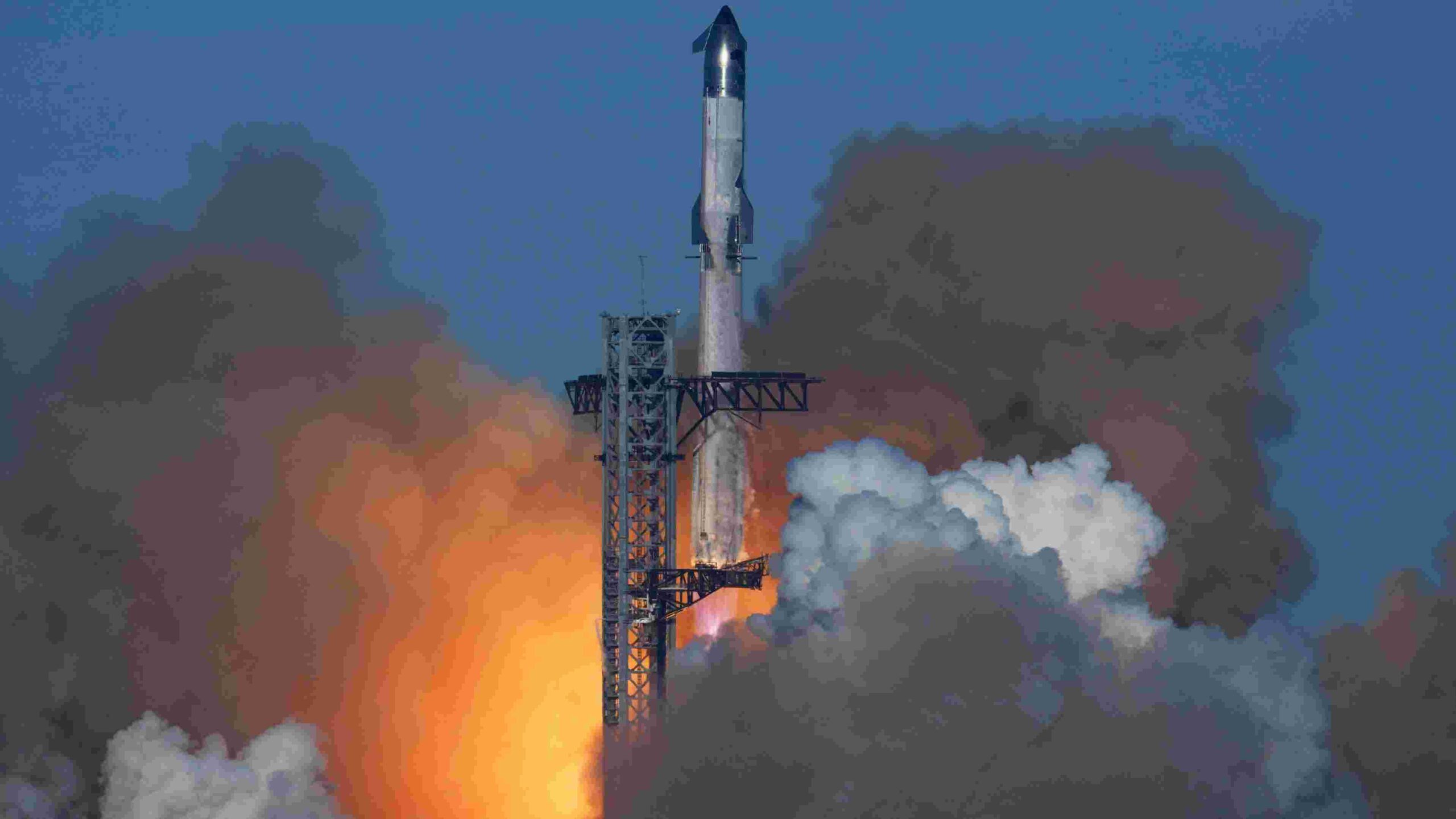
The year 2025 will be remembered as one of the most relentless, demanding, and extraordinary years in the history of SpaceX. Under immense technical, operational, and regulatory pressure, the company delivered achievements that many national space agencies might need decades to replicate. From record-breaking launch cadences to major Starship milestones, SpaceX didn’t just advance—it redefined what modern spaceflight looks like.
Each success in 2025 built upon the last, reinforcing SpaceX’s position as the undisputed leader of the global space industry. And now, as the calendar turns toward 2026, the groundwork laid this year sets the stage for even more ambitious objectives—commercial, scientific, and national.
To make these accomplishments easy to understand, this article breaks down everything SpaceX achieved in 2025 by system, from Starship and Falcon rockets to Dragon and Starlink. By the end, it becomes clear why 2026 could be even more explosive than what we just witnessed.
Starship in 2025: The Backbone of SpaceX’s Future
Starship Launch Cadence: Numbers That Tell a Story
Let’s start with the raw data—because the numbers alone are staggering.
In 2025, SpaceX successfully conducted five Starship test flights. This was a clear improvement over:
- Two flights in 2023
- Four flights in 2024
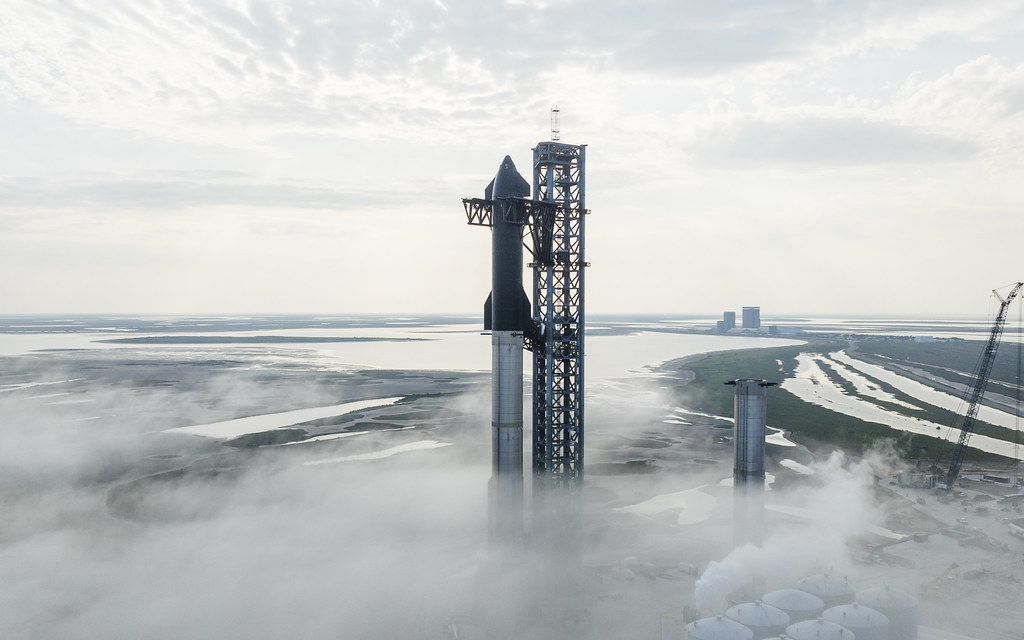
This upward trend did not happen by accident. Achieving this cadence required:
- Improved flight performance
- Enhanced data collection
- Faster and more effective post-flight analysis
- Streamlined regulatory coordination
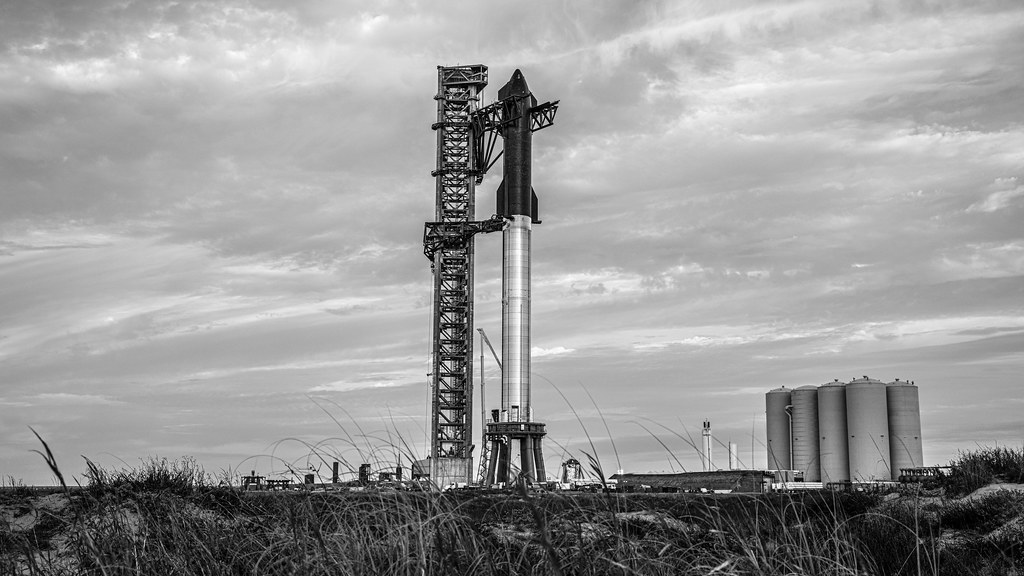
These five launches demonstrated that SpaceX is steadily moving toward operational reliability, a requirement for Starship’s role in orbital refueling, payload delivery, and deep space missions.
Superheavy Booster: From Experiment to Repeatability
Catching the Booster Was No Longer a Novelty
After the successful catch during Flight 5 in 2024, followed by a miss on Flight 6, one question remained:
👉 Can SpaceX do this consistently?
In 2025, SpaceX answered that question decisively.
During Flights 7 and 8, both Superheavy boosters were successfully caught by the Mechazilla launch tower arms. These weren’t lucky recoveries—they were controlled, precise, and repeatable.
Why These Catches Mattered
What made these recoveries truly impressive was the condition of the boosters:
- No major structural damage
- Improved landing accuracy
- Demonstrated system maturity
This marked a major leap toward rapid reusability, forming the foundation for future goals—including the much harder challenge of catching the Starship spacecraft itself.
Starship V2: Early Struggles, Real Progress
When Upgrades Didn’t Go as Planned
The transition to Starship V2 in 2025 was not smooth. Across three consecutive missions, the spacecraft experienced:
- Loss of control
- Early termination of flight
- Serious performance concerns
These setbacks raised legitimate doubts about whether V2 upgrades were delivering meaningful improvements.
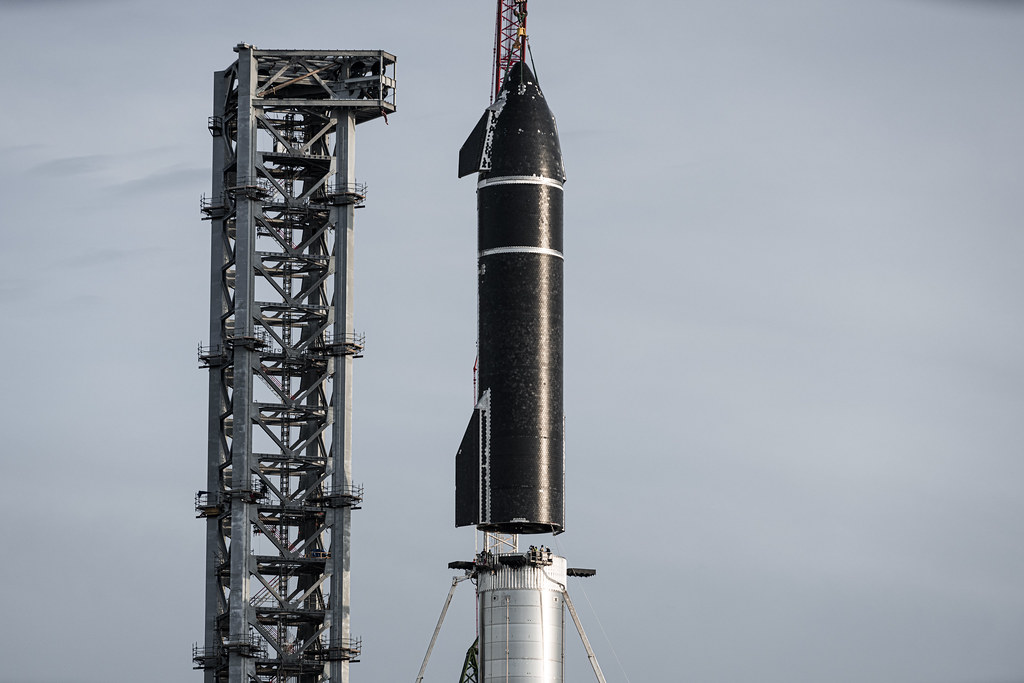
The SpaceX Response: Analyze, Iterate, Fly Again
True to form, SpaceX responded with:
- Deep failure analysis
- Rapid hardware revisions
- Updated software and control logic
By the final two Starship flights of 2025, the results were clear:
- Controlled atmospheric re-entry
- Successful ocean splashdowns
- Dramatic improvements over earlier attempts
Although challenges remained—such as heat shield oxidation—these missions were widely viewed as a strong foundation for Starship V3 and future ship recovery.
Raptor Engines and Reusability Breakthroughs
Partial Engine Reuse Becomes Reality
One of the most underrated achievements of 2025 was partial Raptor engine reuse, highlighted by Raptor Pi 314. This marked a critical step toward:
- Reduced refurbishment time
- Lower operational costs
- True booster reusability
Expanding the Flight Envelope
SpaceX didn’t stop there. Additional demonstrations included:
- Active flip maneuvers
- Landings at higher angles of attack
- Landings using fewer engines
Each test expanded Starship’s operational envelope and delivered invaluable data for future missions.
Heat Shield Testing and Thermal Protection Innovations
Stress Testing by Design
SpaceX continued its aggressive heat shield testing strategy by:
- Intentionally removing tiles
- Pushing thermal limits during re-entry
A new metallic thermal protection material was also tested, though oxidation issues suggest it may not be pursued further.
Crunch Wrap Technique
Instead, SpaceX made progress with the “crunch wrap” tile attachment method, improving:
- Tile durability
- Resistance to vibration
- Survivability during re-entry
These refinements are critical for achieving full Starship reusability.
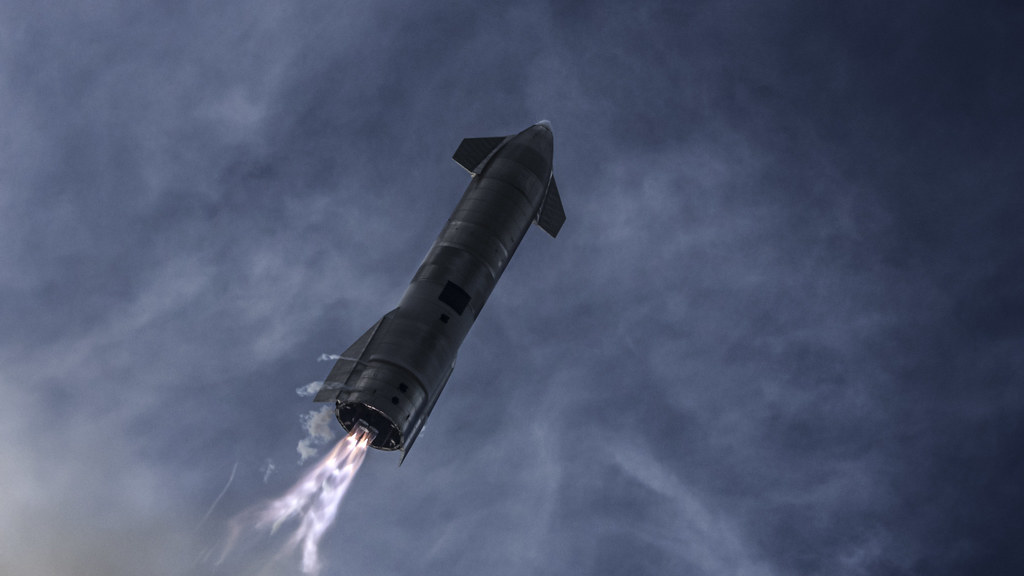
Payload Deployment and In-Space Engine Relight
A Fundamental Capability Proven
For the first time, Starship successfully deployed simulated payloads in orbit—and did it twice in a row. This conclusively proved Starship’s ability to:
- Carry payloads
- Deploy them in space
- Operate as a true orbital launch vehicle
In-Space Engine Relight
SpaceX also demonstrated in-space Raptor engine relight, a crucial prerequisite for:
- Orbital insertion
- On-orbit refueling
- Return-to-launch-site missions
- Deep space exploration
This achievement alone unlocks entire mission architectures planned for the coming decade.
Production and Infrastructure: Quietly Revolutionary
Recovery from S36 and B18 Incidents
The S36 and B18 failures caused severe damage at the Massey test site. Many expected months-long delays. Instead:
- SpaceX replaced damaged hardware rapidly
- Flight 7 launched on schedule in August
After the B18 failure, SpaceX produced Superheavy B19 in just 28 days—a record turnaround for the Starship program.
Why 28 Days Matters
This achievement eliminated one of the program’s biggest bottlenecks and proved that Starship production is scaling rapidly.
Gigabay, Starfactory, and Expansion Plans
Looking ahead:
- Gigabay construction is underway
- Starfactory is ramping up production
These facilities will support a much higher test cadence in 2026, enabling rapid iteration at an unprecedented scale.
Launch Site Expansion: Texas and Florida
SpaceX also made major progress across its launch infrastructure:
- Pad 2 at Starbase nearing readiness
- Pad 1 undergoing major upgrades
- Launch Complex 39A modified for Starship
- Launch Complex 37 acquired with Air Force approval
This dramatically expands Starship’s operational footprint.
Falcon 9 and Falcon Heavy: The Workhorses Deliver
Falcon Heavy’s Quiet Year
2025 saw no Falcon Heavy launches, but this does not signal retirement. Several high-profile missions are planned for the coming years.
Falcon 9 Breaks Records Again
Falcon 9 once again carried SpaceX:
- 165+ launches in 2025
- Nearly reached the ambitious 170-launch target
- Outperformed every other rocket globally
Falcon 9 has now become the most-launched rocket per year for multiple consecutive years.
Reuse Records Shattered
- Booster B1067 completed its 32nd flight
- Eight missions flown in 2025 alone
- The once-unthinkable 40-flight milestone now seems achievable
Dragon: Reliability When the World Needed It
While other crewed systems struggled, Dragon delivered seven flawless missions:
- Five crewed flights (NASA and private missions)
- Two cargo resupply missions
With Starliner delayed, Dream Chaser slipping, and other programs facing setbacks, Dragon became a critical stabilizing force for the ISS.
Starlink: Scale, Impact, and Financial Power
A Massive Constellation
In 2025, SpaceX:
- Surpassed 10,000 Starlink launches
- Maintained over 9,000 operational satellites
- Expanded coverage to remote and underserved regions
Explosive Subscriber Growth
Starlink passed:
- 8 million subscribers
- Then 9 million by year’s end
With Starlink V3 on the horizon and Starship supporting deployments, SpaceX is targeting 12,000 satellites in orbit next year.
The Financial Engine Behind Starship
Starlink revenue allows SpaceX to:
- Fund multiple large-scale programs
- Reinvest aggressively
- Accelerate Starship development
Why 2026 Could Be Even Bigger
Across all systems, SpaceX achieved in one year what many organizations struggle to accomplish in decades. These results highlight:
- Growing operational maturity
- Rapid iteration capability
- A widening competitive gap
With major competitive phases approaching in 2027, 2026 stands as a pivotal year of acceleration—and SpaceX is entering it at full speed.
Conclusion: A Historic Year, A Bigger Future
Was 2025 a success for the world’s most powerful rocket company?
By every measurable standard—the answer is yes.
From Starship breakthroughs to Falcon 9 dominance, Dragon reliability, and Starlink expansion, SpaceX has positioned itself not just ahead of competitors, but in a league of its own.
And if this year was extraordinary, 2026 may be downright unbelievable.
Curiosity, imagination, and inspiration will always follow—so long as we keep looking up. 🚀
FAQs
1. Why was 2025 such an important year for SpaceX?
2025 was critical because SpaceX achieved major milestones across Starship, Falcon 9, Dragon, and Starlink, reaching levels of progress that often take national space programs decades.
2. How many Starship launches did SpaceX complete in 2025?
SpaceX successfully conducted five Starship test flights in 2025, improving from four in 2024 and two in 2023.
3. What made the Superheavy booster catches in 2025 significant?
SpaceX successfully caught two Superheavy boosters using the Mechazilla arms, proving that booster recovery is repeatable and reliable, not just experimental.
4. Did Starship V2 perform as expected in 2025?
Early Starship V2 flights faced serious challenges, but later missions showed major improvements, including controlled re-entry and successful splashdowns.
5. Why is catching the Superheavy booster so important?
Catching the booster enables rapid reuse, lowers launch costs, and is essential for achieving high launch frequency in future missions.
6. What progress did SpaceX make with Raptor engines in 2025?
SpaceX demonstrated partial Raptor engine reuse, a crucial step toward fully reusable boosters and faster turnaround times.
7. Did Starship deploy payloads in space in 2025?
Yes. Starship successfully deployed simulated payloads in orbit twice, proving its ability to function as a true orbital launch vehicle.
8. Why is in-space engine relight so important for Starship?
In-space relight is required for orbital insertion, on-orbit refueling, returning to Starbase, and future deep space missions like Moon and Mars exploration.
9. How fast did SpaceX recover from the B18 failure?
SpaceX produced Superheavy B19 in just 28 days, setting a record turnaround time for the Starship program.
10. What infrastructure upgrades did SpaceX complete in 2025?
Key upgrades included:
- Progress on Pad 2 at Starbase
- Modifications to Pad 1
- Expansion at Launch Complex 39A
- Approval to operate Starship at Launch Complex 37
11. How many Falcon 9 launches did SpaceX complete in 2025?
SpaceX completed over 165 Falcon 9 launches, making it the most-launched rocket in the world for multiple consecutive years.
12. What reuse record did Falcon 9 break in 2025?
Booster B1067 flew 32 times, bringing SpaceX closer to the historic 40-flight reuse milestone.
13. How did Dragon perform in 2025?
Dragon completed seven flawless missions, including five crewed flights, providing unmatched reliability while other crew programs faced delays.
14. How large is the Starlink network as of the end of 2025?
SpaceX surpassed 10,000 Starlink launches, with over 9,000 satellites operational and nearly 9 million subscribers worldwide.
15. Why is 2026 expected to be even bigger for SpaceX?
With Starship maturing, production scaling, and Starlink funding growth, 2026 is expected to bring higher launch rates, real payload missions, and major breakthroughs, setting the stage for even larger goals beyond 2027.
Read More:
- Tesla revamped Semi spotted, insane 1.2 MW charging video releases
- Tesla targets production increase at Giga Berlin in 2026
- Tesla Supercharger network delivers record 6.7 TWh in 2025
- Tesla Giga Nevada celebrates production of 6 millionth drive unit
- Starlink achieves major milestones in 2025 progress report
2 thoughts on “SpaceX Achieved What NASA and China Couldn’t for Decades! 2026 even Crazier”