
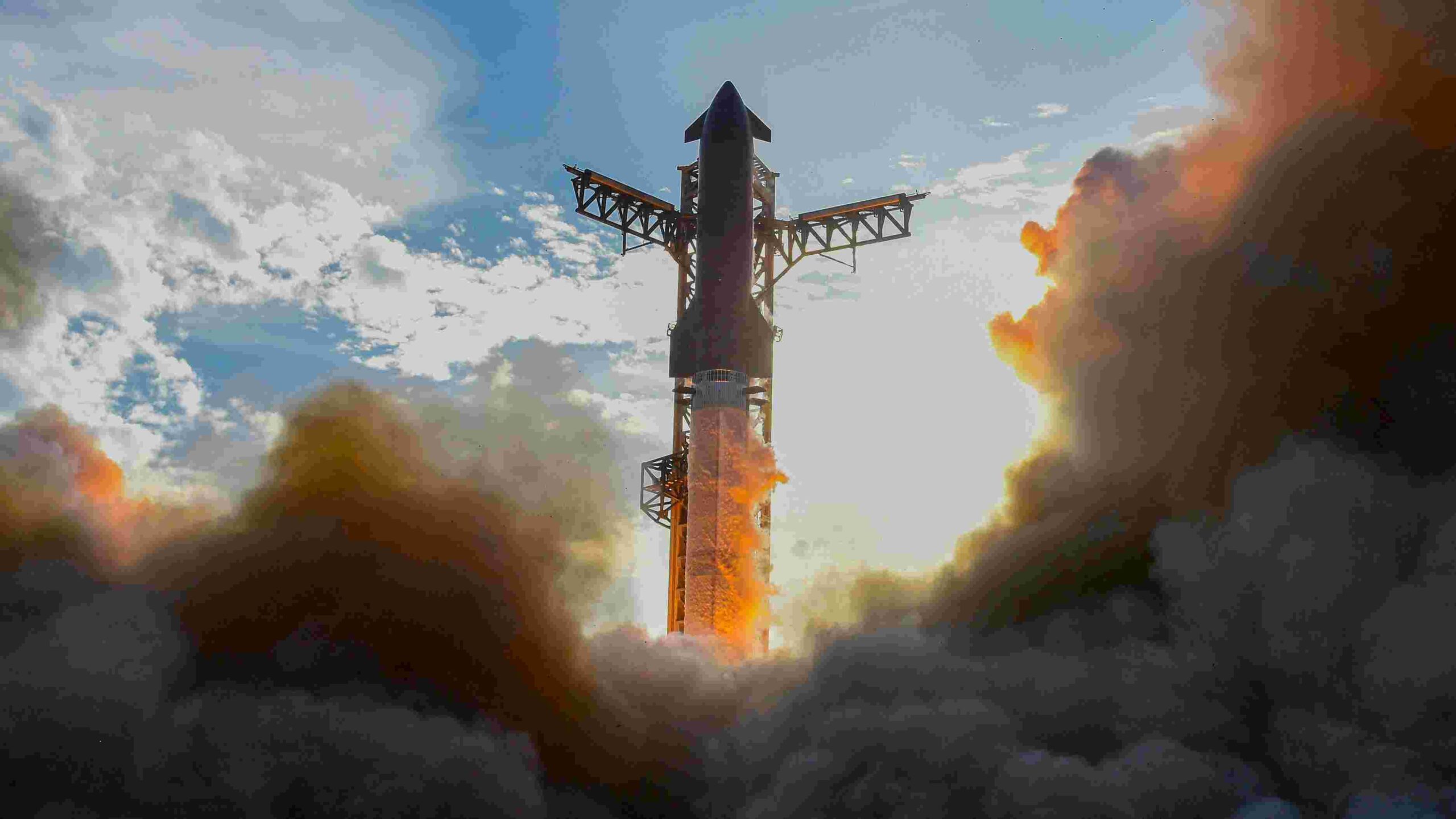
Humanity has always looked at the Moon as both a destination and a symbol. The phrase “one step to the Moon” captures a dream that has inspired scientists, engineers, and nations for decades. Yet despite countless studies, white papers, and mission architectures, a truly direct, single-step journey to the Moon has never been achieved. Every successful lunar mission so far has relied on complex, multi-phase strategies involving rendezvous, refueling, and multiple spacecraft.
Today, that long-standing limitation is being challenged once again—this time through the immense capabilities of SpaceX’s Starship and a bold emerging idea often referred to as Nova Starship. This concept could fundamentally change how humanity reaches the Moon and potentially give the United States a decisive edge over rivals like China.
In this article, we’ll explore why current lunar strategies fall short, how Starship compares to historic and modern super-heavy launch systems, and why a direct-to-the-Moon Starship could redefine the future of lunar exploration.
The Moon Race Isn’t Over—It Has Evolved
The United States famously won the Moon race during the Apollo era. That achievement remains one of the most celebrated technological victories in human history. However, assuming the race is “over” would be a critical mistake.
From Flags to Foundations
The original Moon race was about short visits, symbolic landings, and rapid returns. Today’s competition is fundamentally different. The new race is about:
- Long-term lunar settlement
- Permanent infrastructure
- Sustained human operations
- Strategic and geopolitical dominance
This shift dramatically raises the stakes. The nation that establishes reliable, scalable access to the Moon will control not just prestige, but future science, industry, and space-based resources.
Why Mission Architecture Matters More Than Ever
How humanity chooses to reach the Moon will directly shape what is possible once we get there. Mission architecture determines:
- How quickly infrastructure can be built
- How much cargo can be delivered
- How often crews can rotate
- How sustainable lunar operations become
Unfortunately, most modern lunar programs still rely on architectures rooted in the 1960s.
Apollo’s Legacy: Brilliant but Complex
The Apollo missions used a strategy called Lunar Orbit Rendezvous (LOR). This involved:
- Launching a command module and lunar lander together
- Separating in lunar orbit
- Descending to the surface
- Ascending back to orbit
- Rendezvousing again before returning to Earth
Given the technological limitations of the time, this was an extraordinary solution. However, it was never intended to support long-term lunar settlement.
Modern Programs, Same Old Problems
NASA’s Artemis Program
Despite massive advances in computing, materials, and automation, NASA’s Artemis program still follows a similar multi-phase approach:
- SLS (Space Launch System) launches the Orion crew capsule
- A separate commercial lander is launched independently
- Crew transfers occur in lunar orbit
These landers include:
- SpaceX’s Starship HLS
- Blue Origin’s Blue Moon lander
This architecture repeats many Apollo-era complexities while adding new ones—especially cost.
China’s Lunar Strategy
China’s planned crewed lunar missions are strikingly similar:
- Two Long March 10 launches
- One carries the crew spacecraft
- One carries the lunar lander
- Rendezvous and crew transfers in lunar orbit
Once again, complexity and risk multiply with each added step.
The Hidden Costs of Multi-Phase Missions
At first glance, dividing missions into specialized stages seems logical. In reality, it introduces serious drawbacks.
1. Increased Risk Through Complexity
Every additional phase means:
- More rendezvous maneuvers
- More docking operations
- More potential failure points
Orbital refueling adds even more uncertainty, especially when dealing with cryogenic propellants that boil off in space.
2. Coordination Challenges
Multi-phase missions require perfect coordination between:
- Multiple vehicles
- Multiple contractors
- Multiple organizations
Small scheduling errors can cascade into major mission delays.
3. Exploding Costs
Artemis illustrates this clearly:
- Tens of billions spent on SLS and Orion
- Additional contracts for landers
- Repeated delays and overruns
This approach is slow, expensive, and difficult to scale.
The Case for a Direct-to-the-Moon Solution
The ideal solution is simple in concept, though challenging in execution:
Go straight to the Moon with one unified vehicle.
To do that, humanity needs a spacecraft powerful enough to eliminate the need for refueling, rendezvous, and transfers.
Interestingly, this idea is not new.
NASA’s Forgotten Super Rocket: Nova
During the early space race, NASA studied a family of massive launch vehicles called Nova.
What Was Nova?
- Larger and more powerful than Saturn V
- Designed to deliver payloads directly to the Moon
- One concept, Nova 8L, used eight F-1 engines
Key figures:
- ~5,520 tons of thrust at liftoff
- ~68–75 tons delivered directly to the Moon
Despite its promise, Nova was never built. Saturn V was chosen instead due to political, financial, and technological constraints.
Why the Nova Concept Makes Sense Today
Today’s priorities are different:
- Speed
- Scale
- Sustainability
A direct lunar architecture suddenly looks very attractive again.
So which vehicle could realistically revive the Nova concept?
Starship: The Ultimate Nova Successor
No vehicle comes close to matching Starship’s potential.
Unmatched Thrust
- Raptor 2: ~230 tons per engine
- Raptor 3 (planned): ~280 tons
- Future versions: potentially 330 tons
With 33 engines, Starship already delivers:
- ~7,590 tons of thrust
- Planned upgrades: 9,240+ tons
- Future variants: over 10,000 tons
For comparison:
- Saturn V: ~3,450 tons
- Nova concepts: less than Starship’s future projections
Payload Power That Changes Everything
Nova aimed for ~75 tons to the Moon.
Starship aims for:
- 100–200 tons to orbit, fully reusable
- Even more in expendable mode
Even sending a fraction of that toward the Moon would match or exceed Nova’s goals.
This capacity enables:
- Heavy infrastructure delivery
- Rapid base construction
- Long-term habitation
The Lunar Starship Advantage
The lunar variant of Starship removes unnecessary components like:
- Heat shields
- Earth reentry hardware
This mass reduction directly increases:
- Efficiency
- Payload margins
Starship isn’t just a lander—it’s an entire lunar base in one vehicle.
What Would a True Nova Starship Require?
To eliminate orbital refueling, major changes would be needed.
1. Sacrificing Reusability for Performance
- Super Heavy booster would be expended
- Maximum thrust prioritized over recovery
- Upper stage sent directly toward the Moon
2. Adding Side Boosters
A Falcon Heavy–style configuration with two additional Super Heavy boosters could:
- Dramatically increase thrust
- Eliminate the need for orbital refueling
- Simplify mission timelines
3. A Third Stage Concept
Another idea involves adding a third stage inside Starship’s payload bay:
- Activates near the Moon
- Assists descent or return
- Could double as a lander
After landing, Starship itself could remain on the surface and be repurposed as:
- Living space
- Structural support
- Radiation shielding
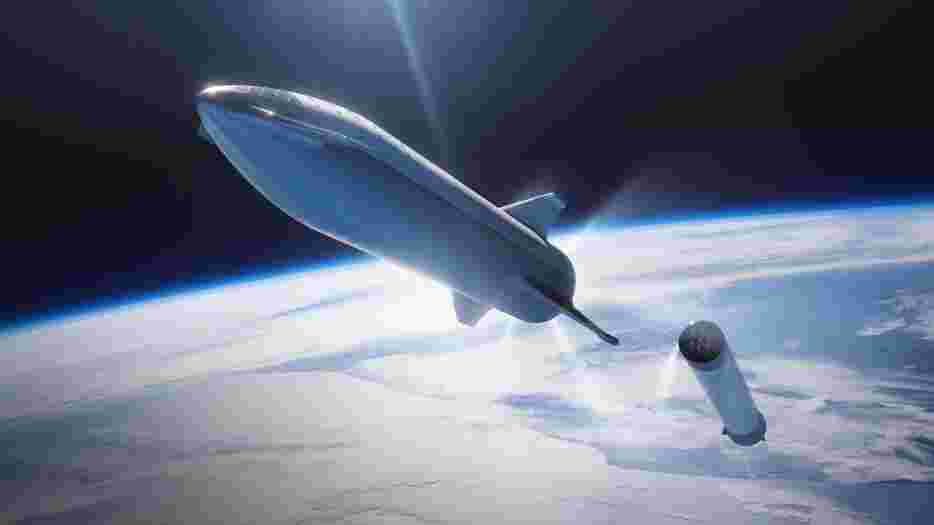
Is Nova Starship Realistic?
That remains an open question.
What is undeniable is that Starship’s flexibility allows it to adapt to almost any mission profile. No other system offers this combination of:
- Thrust
- Payload
- Scalability
- Architectural freedom
Starship vs China: Why Speed Matters
In the renewed lunar race, arriving first matters—but staying matters more.
A direct-to-the-Moon Starship could:
- Accelerate infrastructure deployment
- Reduce operational risk
- Establish dominance early
This is why Nova Starship is more than a concept—it’s a strategic possibility.
The Likely Path Forward
For now, orbital refueling remains SpaceX’s primary plan. It’s essential not just for the Moon, but for Mars and deep space exploration.
Even more radical ideas—like nuclear propulsion—are being discussed, though they require careful analysis and regulatory consideration.
Final Thoughts: A Turning Point in Lunar Exploration
Turning Nova Starship into reality would require:
- Bold engineering
- Rapid development
- Willingness to abandon old assumptions
But history shows that breakthroughs come from challenging conventions.
Starship has already rewritten the rules of spaceflight. Whether SpaceX chooses to pursue a true direct-to-the-Moon architecture could define the next chapter of human exploration.
One thing is certain: the Moon is no longer the finish line—it’s the foundation.
And this time, humanity may finally take that one giant step in a single leap. 🚀
FAQs
1. What is Nova Starship?
Nova Starship is a conceptual upgrade of SpaceX’s Starship designed to travel directly to the Moon without orbital refueling, inspired by NASA’s historic Nova rocket studies.
2. Why is a direct-to-the-Moon mission important?
A direct mission reduces complexity, risk, cost, and mission time, enabling faster deployment of lunar infrastructure and stronger long-term sustainability.
3. How is Nova Starship different from NASA’s Artemis architecture?
Unlike Artemis, which relies on multiple launches and lunar orbit rendezvous, Nova Starship aims for a single unified vehicle that travels straight to the Moon.
4. Does current Starship require orbital refueling to reach the Moon?
Yes. In its current configuration, Starship requires multiple refueling launches in Earth orbit to complete lunar missions.
5. Can Starship generate enough thrust for a direct lunar mission?
With future Raptor engine upgrades and possible booster enhancements, Starship could generate more thrust than Saturn V and even Nova-class concepts.
6. How much payload could Nova Starship deliver to the Moon?
Estimates suggest over 75 tons, potentially exceeding the original Nova rocket’s capabilities and far surpassing current lunar landers.
7. Why was NASA’s original Nova rocket never built?
NASA chose Saturn V due to political, budgetary, and technological constraints, even though Nova offered higher direct lunar payload capacity.
8. How does Starship compare to Saturn V?
Starship produces more than twice the thrust of Saturn V and offers dramatically higher payload capacity with partial or full reusability.
9. Would Nova Starship be reusable?
A direct-to-Moon Nova Starship would likely sacrifice reusability for performance, prioritizing mission success over booster recovery.
10. Could side boosters help Starship reach the Moon directly?
Yes. A Falcon Heavy–style configuration with additional Super Heavy boosters could eliminate the need for orbital refueling.
11. What role would Starship play after landing on the Moon?
Once landed, Starship could be repurposed as habitable space, radiation shielding, storage, and structural infrastructure for a lunar base.
12. How does China’s lunar program compare to Nova Starship?
China relies on multi-launch missions with orbital rendezvous, making Nova Starship potentially faster, simpler, and more scalable.
13. Is Nova Starship officially planned by SpaceX?
No. Nova Starship is currently a theoretical concept, though it aligns with Starship’s design flexibility and long-term vision.
14. What are the main technical challenges of Nova Starship?
Key challenges include propellant requirements, structural loads, engine performance, and abandoning full reusability.
15. Could nuclear propulsion be used with Starship?
Nuclear propulsion has been proposed, but its integration with Starship would require major regulatory, engineering, and safety considerations.
16. When could a direct-to-the-Moon Starship realistically fly?
If pursued aggressively, a direct lunar mission could be possible later this decade, though orbital refueling remains the near-term approach.
Read More:
- Tesla begins Cybertruck deliveries in a new region for the first time
- Tesla removes Autopilot as standard, receives criticism online
- Tesla Model S completes first ever FSD Cannonball Run with zero interventions
- Tesla makes dramatic change to Online Design Studio to show FSD plans
- SpaceX Ready to Rollout Starship Flight 12 Rocket for Testing after Completing Important Steps
2 thoughts on “SpaceX’s Genius Solution to send Starship Straight to the Moon! Better than NASA and China”