
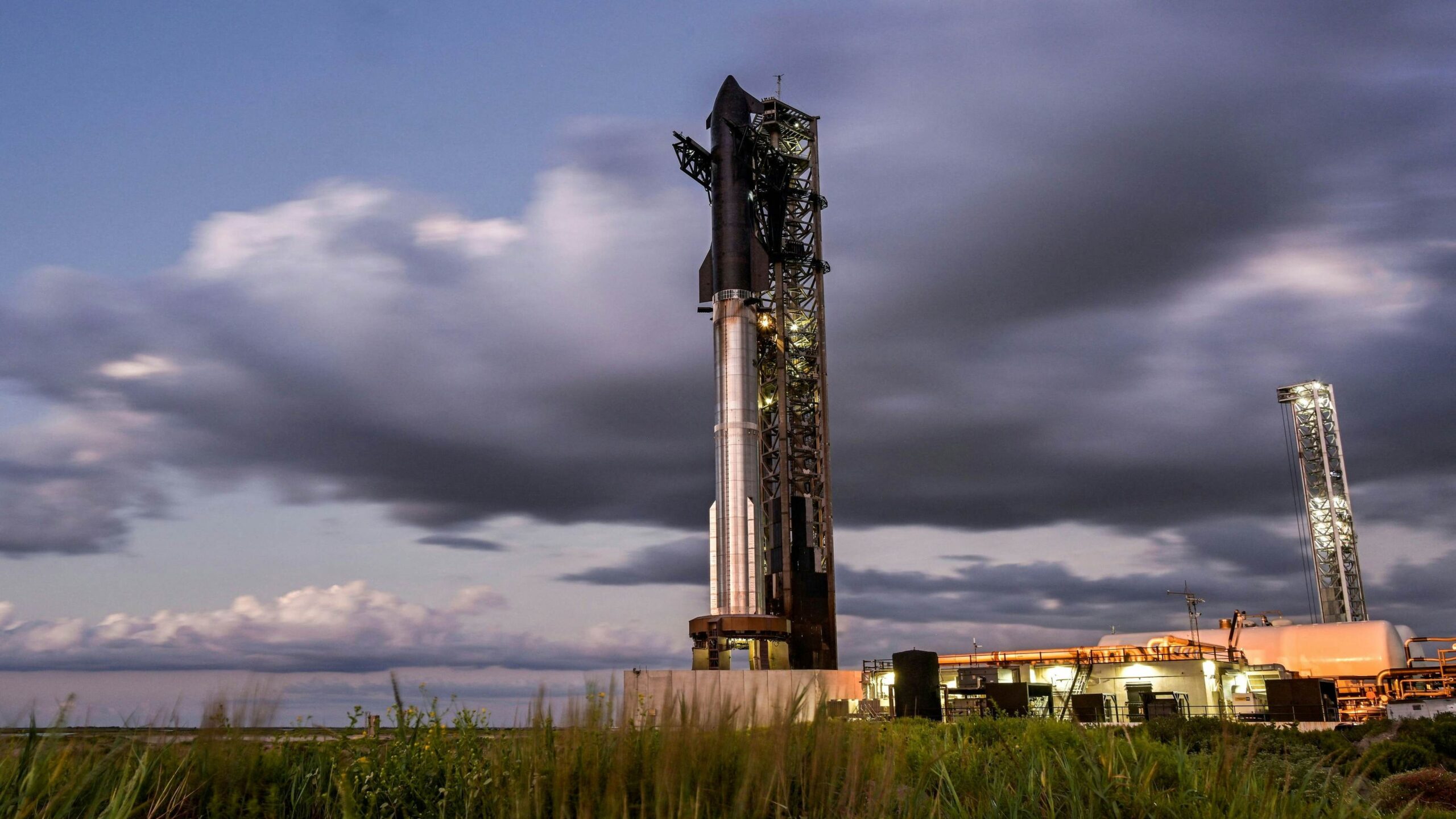
Standing next to Starship is perhaps the clearest way to truly grasp its immense scale. Photos and livestreams simply don’t do it justice. Someday, many of us may have the opportunity to see it in person — and when that moment arrives, the obvious question will be: just how large has Starship become?
In 2026, Elon Musk stunned the space community with a bold revelation: Starship V4 will be 10% to 20% longer than the current version. At first glance, that might sound incremental. In reality, it represents a dramatic leap in rocket engineering — pushing humanity closer to Mars and beyond.
Let’s break down what this means, how Starship has evolved, and why Starship V4 could redefine spaceflight forever.
Starship V3 in 2026: The Largest Rocket Ever Built
As of 2026, SpaceX’s Starship V3 stands at a staggering 124.4 meters (408 feet) tall.
- Super Heavy booster: 72.3 meters
- Starship upper stage: 52.1 meters
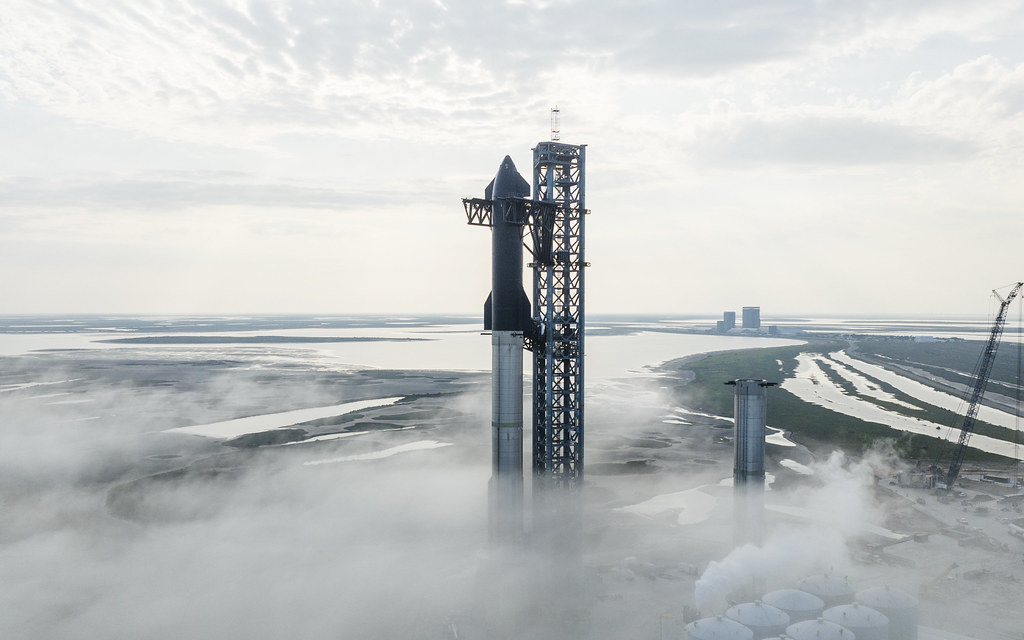
That makes it the largest rocket ever launched in history — surpassing even the legendary Saturn V that carried astronauts to the Moon.
What’s remarkable is that Starship already held this record in its earlier versions. Unlike other aerospace companies competing for size, SpaceX is competing with itself, repeatedly breaking its own records.
And now, with Starship V4 on the horizon, that record may soon be shattered again.
Starship V4: 10% to 20% Longer — What Does That Really Mean?
When Musk stated that Starship V4 will be 10% to 20% longer, the implications were enormous.
Starting from 124.4 meters:
- 10% increase → ~136.8 meters
- 20% increase → ~149.3 meters
That upper range approaches the long-discussed 150-meter milestone — a symbolic and engineering benchmark in rocket history.
Why 150 Meters Matters
One of the most ambitious rocket concepts ever proposed was Sea Dragon, a Cold War-era design intended to stand 150 meters tall and launch from the ocean. It was never built.
Now, Starship V4 may bring that vision into reality.
Not only would it eclipse Saturn V, but it would also dwarf modern heavy-lift vehicles like:
Even as those rockets evolve, Starship appears poised to remain in a league of its own.
Power Beyond Imagination: The Thrust Revolution
Size is impressive — but power defines capability.
Starship V3 Thrust
With its 33-engine Super Heavy booster powered by Raptor engines, Starship V3 delivers:
- Over 9,200 tons of thrust
- More than 20 million pounds of force
That already makes it the most powerful rocket ever built.
Enter Raptor 4
For Starship V4 to exceed 10,000 tons of thrust, a new engine variant — commonly referred to as Raptor 4 — may be required.
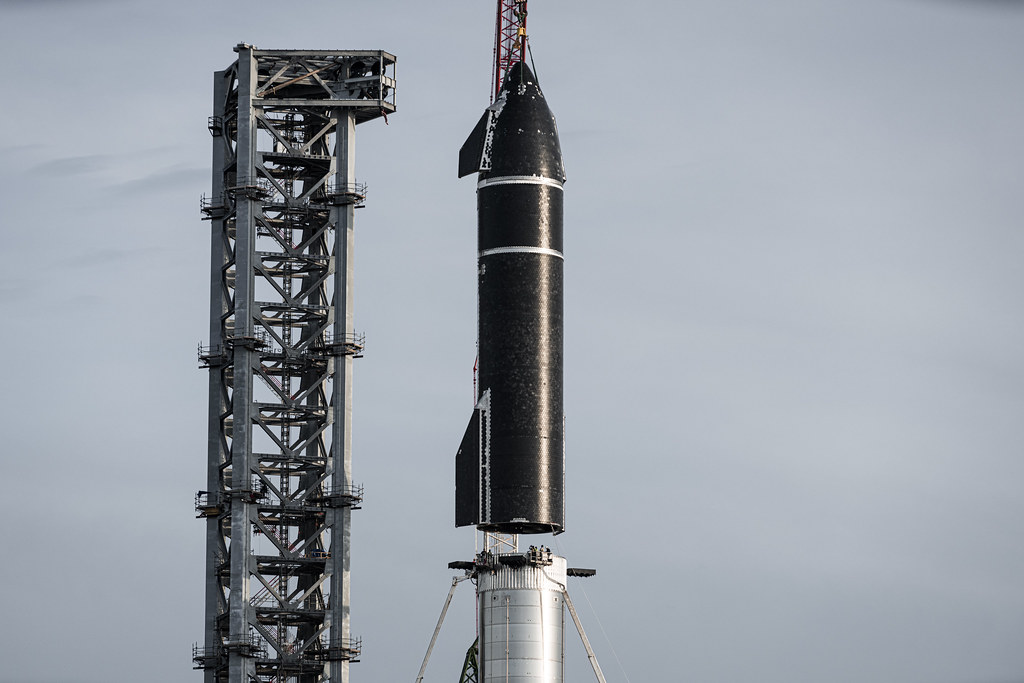
Musk has previously hinted at engines capable of producing 330 tons of thrust each.
If deployed across 33 engines:
- 10,890 tons of liftoff thrust
- More than 22 million pounds of force
And discussions continue about expanding the engine count to 35, 39, or more.
This isn’t just incremental improvement — it’s a propulsion revolution.
It’s Not Just Bigger — It’s Better
While headlines focus on size and thrust, Starship’s evolution is equally about reliability, simplicity, and reusability.
Hot Staging Redesign
Starship V3 introduced a longer, simplified hot staging system between the booster and ship.
Benefits include:
- Reduced mass
- Improved efficiency
- Enhanced reliability
- No need to jettison hardware before landing
This brings Starship closer to true full reusability, a core SpaceX objective.
Raptor 3: Simpler, Lighter, Stronger
The shift from earlier Raptor engines to Raptor 3 marked a major turning point:
- Fewer parts
- Reduced complexity
- Easier manufacturing
- Greater durability
For a rocket intended to fly frequently, simplicity equals survival.
Aerodynamic and Structural Improvements
Grid Fin Optimization
Starship V3 removed one grid fin and enlarged the remaining ones.
The result?
- Better aerodynamic control
- More precise landing
- Improved deceleration
- Enhanced catch points for tower recovery
This refinement supports SpaceX’s unique “chopstick” booster catch system.
Fuel Transfer Upgrades
A larger propellant transfer tube improves:
- Flip maneuvers during landing
- Engine restart reliability
- Smooth fuel flow
These subtle upgrades dramatically increase mission safety.
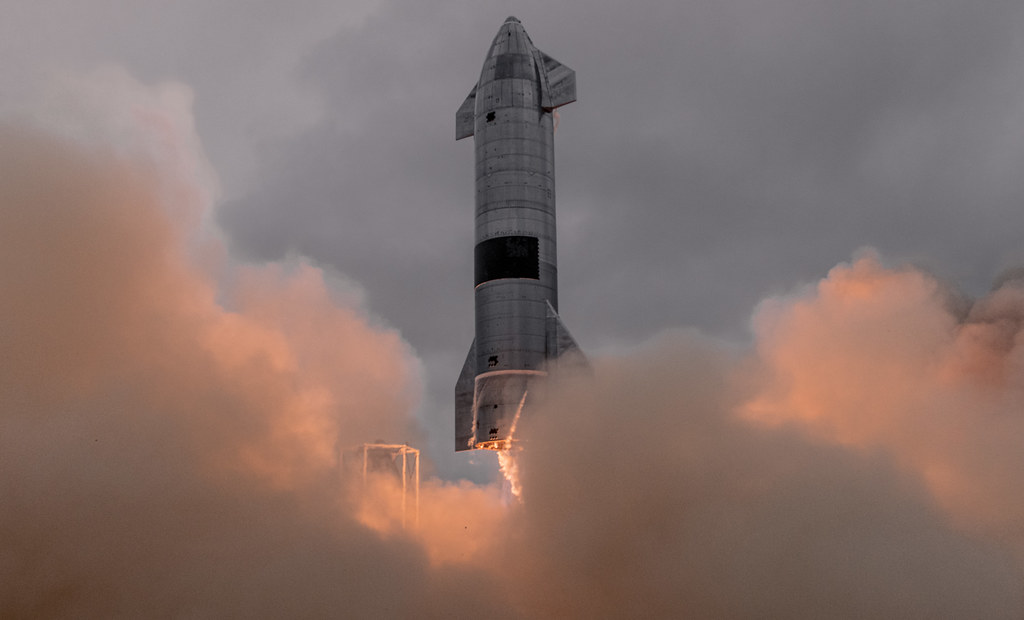
COPV Reinforcements
Composite Overwrapped Pressure Vessels (COPVs) faced criticism during earlier tests.
In V3:
- Strengthened construction
- Improved durability
- Enhanced reliability
These upgrades address key concerns raised during V2 flights.
Heat Shield: The Armor of Starship
Perhaps the most critical upgrade is the heat shield.
During V2 testing, issues included:
- Fuel leaks
- Oxidation
- Tile durability problems
Starship V3 introduced substantial improvements, strengthening its ability to survive atmospheric re-entry.
For a vehicle designed for rapid reuse — and eventually Mars return missions — a flawless heat shield is non-negotiable.
Starship V4’s Ultimate Goal: 200 Tons to Orbit
All these upgrades serve a central objective:
Delivering 200 Tons to Low Earth Orbit
While V3 may approach this number, V4 is being designed to exceed it reliably.
But what does 200 tons actually mean?
According to Musk’s Mars roadmap:
- 10 Starship launches per transfer window
- 200 tons each
- 1 million tons in low Earth orbit
- 250,000 tons delivered to Mars surface
Repeat across four windows — and you place 1 million tons on Mars, enough to build a city for 1 million people.
Without 200-ton capability, this vision slows dramatically.
With it, settlement becomes plausible.
Mars, Permanence, and the End of Flags-and-Footprints
Unlike 20th-century exploration, future missions won’t be temporary.
Humanity won’t arrive, explore, and depart.
It will remain.
Starship changes the equation by allowing:
- Massive infrastructure in single launches
- Compressed construction timelines
- Simplified logistics
- Reduced mission count
Even more revolutionary: Starship can land vertically and settle horizontally — potentially becoming part of the base itself.
Artemis 3 and Geopolitical Stakes
Starship’s development intersects with major global programs, including Artemis 3.
If Starship succeeds:
- It becomes NASA’s most advanced lunar lander
- It accelerates the return of humans to the Moon
- It outpaces traditional lander designs
Meanwhile, competition with China adds urgency to establishing permanent lunar and Martian footholds.
Scale and performance may become decisive advantages.
When Will Starship V4 Launch?
SpaceX’s earlier roadmap aligned:
- V1 → 2023–2024
- V2 → 2025
- V3 → 2025–2026
With V3 flying through 2026 and possibly early 2027, a 2027 debut for V4 appears plausible — a timeline Musk has referenced repeatedly.
If V3 defines operational capability, V4 marks operational maturity.
Its debut could align with:
- Artemis 3 lunar return
- SpaceX’s first uncrewed Mars mission
That convergence would represent a turning point in human spaceflight.
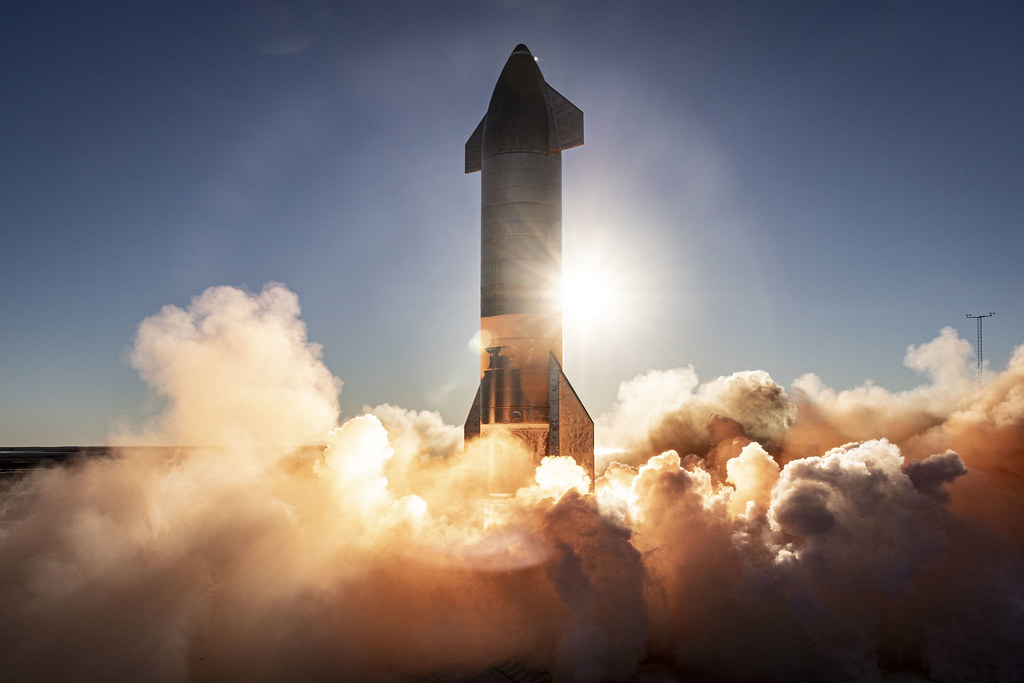
From Saturn V to Starship: A New Era Begins
In the 20th century, Saturn V carried humanity to the Moon as the most powerful rocket ever built.
In the 21st century, Starship may claim that mantle — not only to return to the Moon, but to stay, and to push onward to Mars.
We are living at the threshold of that transformation.
Why Starship V4 Changes Everything
Let’s summarize what makes Starship V4 revolutionary:
1. Unprecedented Size
Approaching 150 meters tall — the largest rocket ever conceived.
2. Record-Breaking Thrust
Potentially exceeding 10,000 tons at liftoff.
3. 200+ Ton Payload
The key to sustainable Mars colonization.
4. Full Reusability
Lower costs, rapid turnaround, airline-like operations.
5. Operational Maturity
Designed for reliability, manufacturability, and high flight cadence.
Final Thoughts: The Threshold of History
Starship V4 is not merely an upgrade. It is the next phase in a long-term strategy aimed at making humanity multiplanetary.
With each iteration — V1, V2, V3 — SpaceX has refined the vehicle’s:
- Size
- Thrust
- Heat protection
- Reliability
- Manufacturing efficiency
Now V4 promises to combine all those improvements into a system capable of sustained operations beyond Earth.
If history repeats itself, this rocket may become as iconic as Saturn V — but with a far more ambitious mission: not just visiting another world, but building one.
We are watching the early chapters of that story unfold in real time.
And if Elon Musk’s vision holds true, Starship V4 may be the vehicle that turns science fiction into daily reality.
The only question left is not if it will fly — but how soon we will see it rise.
FAQs
1. What is Starship V4?
Starship V4 is the upcoming upgraded version of SpaceX’s fully reusable Starship rocket system, designed to be bigger, more powerful, and capable of carrying over 200 tons to orbit.
2. Who announced Starship V4?
Starship V4 was announced by Elon Musk, the CEO and founder of SpaceX.
3. How tall will Starship V4 be?
Elon Musk stated that Starship V4 will be 10% to 20% longer than the current 124.4-meter Starship V3, meaning it could reach between 136 and nearly 150 meters tall.
4. Will Starship V4 be the tallest rocket ever built?
Yes. If it approaches 150 meters, Starship V4 will surpass the legendary Saturn V and become the tallest and most powerful rocket ever constructed.
5. How much thrust will Starship V4 produce?
Starship V4 could exceed 10,000 tons of thrust at liftoff, potentially reaching over 22 million pounds of force.
6. What engines will Starship V4 use?
It is expected to use an upgraded version of SpaceX’s Raptor engines, possibly referred to as Raptor 4, capable of producing around 330 tons of thrust per engine.
7. How many engines will Starship V4 have?
The Super Heavy booster currently uses 33 engines, but future versions could increase that number to 35, 39, or more.
8. What is Starship V4’s payload capacity?
Starship V4 is being designed to deliver over 200 tons to Low Earth Orbit (LEO), a key milestone for future Mars missions.
9. Why is 200 tons to orbit important?
The 200-ton benchmark is essential for SpaceX’s long-term plan to build sustainable infrastructure on Mars, enabling large-scale cargo transport in fewer launches.
10. When will Starship V4 launch?
While no official date has been confirmed, projections suggest a possible debut around 2027, following the operational testing phase of Starship V3.
11. How does Starship compare to NASA’s SLS?
Starship is significantly larger and more powerful than NASA’s Space Launch System, and it is designed to be fully reusable, unlike SLS.
12. What improvements does Starship V4 include besides size?
Beyond being taller, V4 is expected to feature improvements in engine efficiency, heat shield durability, reliability, and manufacturability.
13. Is Starship fully reusable?
Yes. Starship is designed to be fully reusable, including both the Super Heavy booster and the upper stage spacecraft.
14. How does Starship land after launch?
The Super Heavy booster returns to the launch site and is designed to be caught by mechanical arms on the launch tower, while the ship performs a controlled re-entry and landing maneuver.
15. Will Starship V4 be used for Artemis 3?
Starship is selected as a lunar lander for Artemis 3, NASA’s mission to return humans to the Moon. Future versions like V4 could enhance those capabilities.
16. How does Starship compare to New Glenn and Vulcan?
Starship is larger and more powerful than both New Glenn and Vulcan Centaur, particularly in total thrust and payload capacity.
17. What is the ultimate goal of Starship?
The ultimate goal is to make humanity multiplanetary by enabling affordable, large-scale missions to the Moon and Mars.
18. Why is Starship V4 considered a major milestone?
Starship V4 represents the transition from experimental development to operational maturity, with massive payload capacity, record-breaking thrust, and improved reliability — all critical for sustained lunar and Martian missions.
Read More:
- SpaceX and xAI tapped by Pentagon for autonomous drone contest
- Tesla Korea hiring AI Chip Engineers amid push for high-volume AI chips
- Starlink restrictions are hitting Russian battlefield comms: report
- Tesla hasn’t adopted Apple CarPlay yet for this shocking reason
- Tesla launches new Model 3 financing deal with awesome savings
1 thought on “Elon Musk Announced New Starship V4 “Bigger, Longer & Better” Stunned Everyone”