
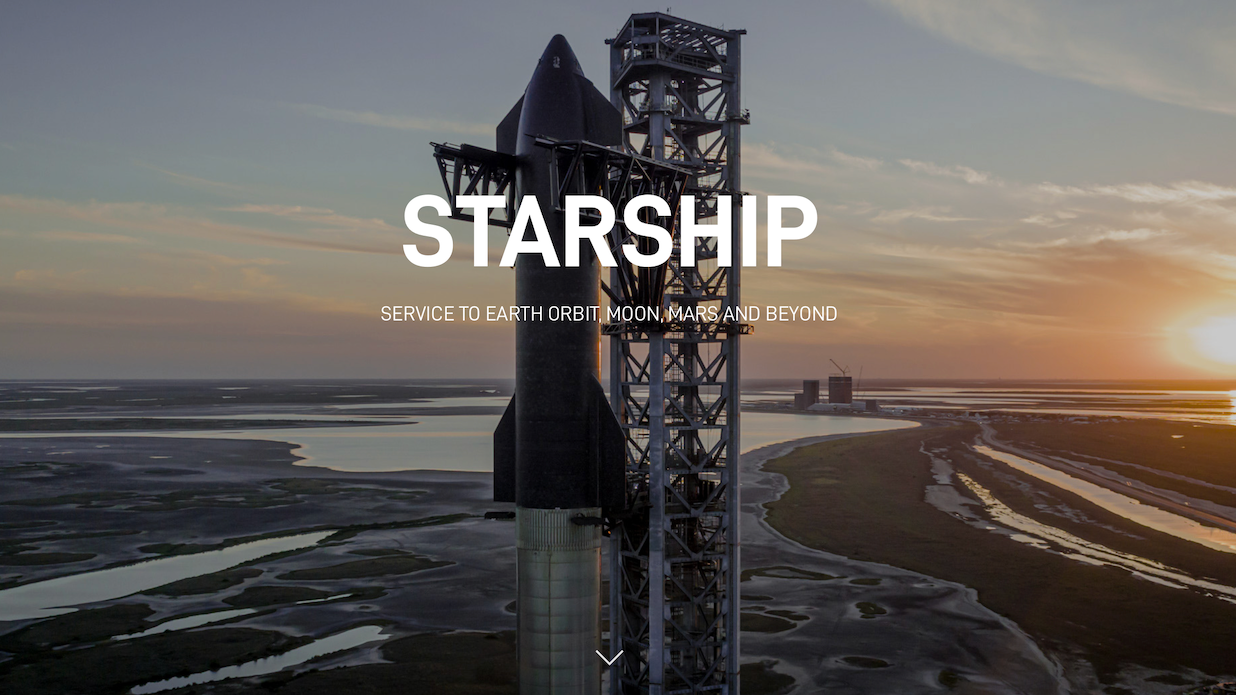
Elon Musk Revealed Unprecedented SpaceX Starship Launch Pace Plan! Dominating Era Begins: The number 10,000 is no small figure in the aerospace world. For SpaceX, it represents far more than a milestone—it symbolizes an entirely new era of spaceflight. While the company already shattered records with the most powerful rocket ever built, its ambitions now stretch beyond thrust and payload capacity.
What if a single rocket system could achieve 10,000 launches per year?
That is the bold long-term vision set by Elon Musk for SpaceX’s fully reusable Starship. If realized, this plan would fundamentally redefine orbital access, space exploration, and even global transportation.
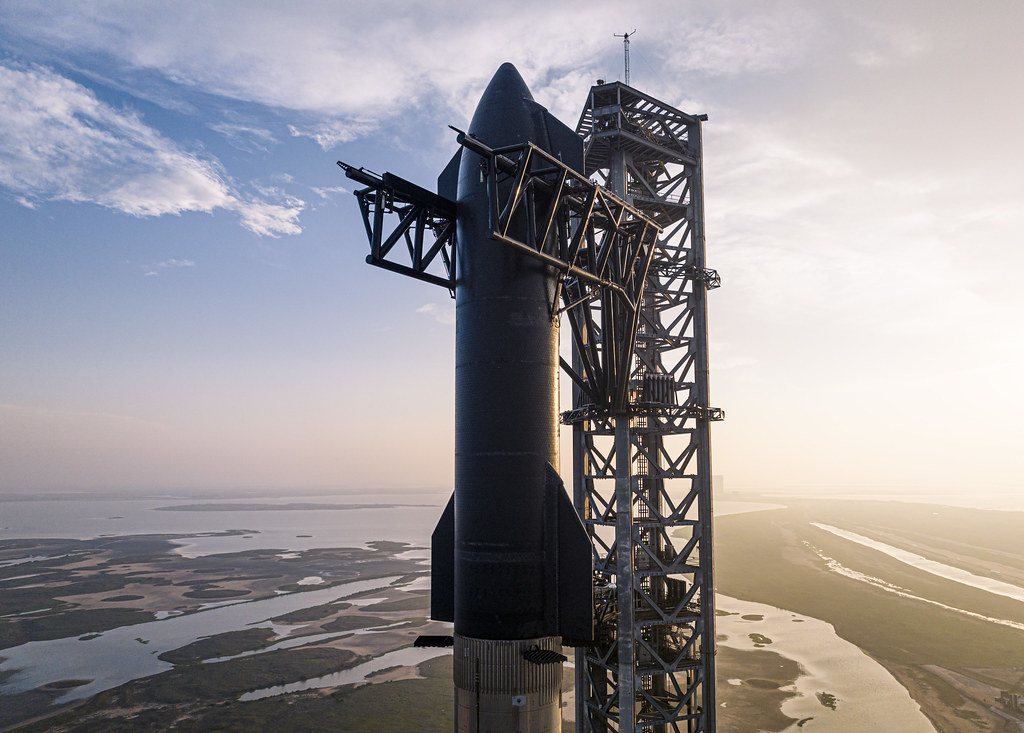
Let’s explore how SpaceX could turn this ambitious vision into reality—and what it means for the future of humanity.
Starship’s Steady Climb: From First Flight to Rapid Cadence
The journey began on April 20, 2023, when Starship lifted off for its first integrated test flight. Since then, progress has accelerated year after year:
- 2 flights in 2023
- 4 flights in 2024
- 5 flights in 2025
Rather than rushing development, SpaceX has followed a calculated approach—testing, learning, refining, and repeating. Over 1,000 days following Starship’s debut, SpaceX completed 385 launches across its entire fleet, including 10 additional Starship missions.
That averages to roughly one Starship launch every 100 days in the early phase. While that may sound slow compared to Musk’s ambitious goals, history shows that SpaceX typically starts cautiously before dramatically accelerating once reliability improves.
The real question isn’t whether Starship is progressing.
It’s how far that progress can go.
Launching Once Per Hour: A Radical Vision
In a statement that immediately captured global attention, Elon Musk declared:
“In about 3 years or so, Starship will launch more than once per hour.”
Let’s break down what that means.
- 1 launch per hour = 24 launches per day
- 24 launches per day = 8,760 launches per year
But Musk didn’t say once per hour—he said more than once per hour.
If Starship reaches:
- 2 launches per hour → ~17,520 launches per year
- 3 launches per hour → ~26,000 launches per year
Even at the conservative estimate of hourly launches, SpaceX would approach the symbolic 10,000 launches annually by around 2029–2030.
This is unprecedented in spaceflight history.
For decades, rockets have been treated as rare, high-cost, low-frequency machines. SpaceX aims to transform them into something closer to commercial aircraft operations—routine, reliable, and rapidly reusable.
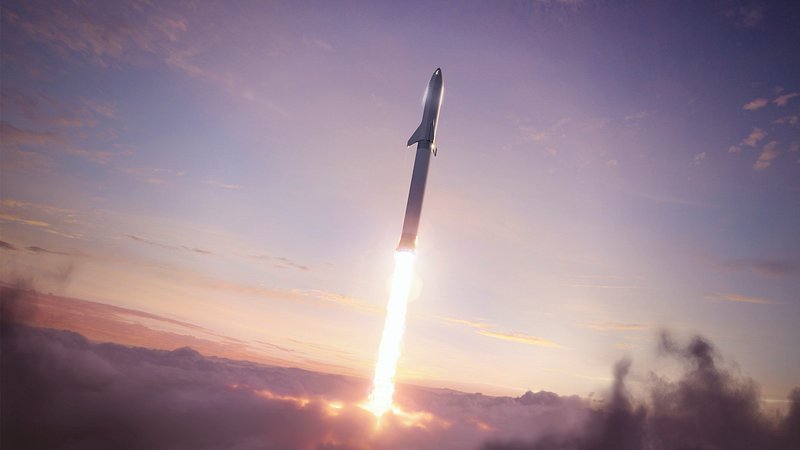
From Rockets to Airline Operations
When people hear “hourly departures,” they think of airplanes—not orbital launch vehicles.
Traditional rockets require:
- Months of preparation
- Expendable hardware
- Limited infrastructure
- Extensive refurbishment
Starship flips that model.
With full reusability—including the Super Heavy booster and the upper-stage ship—SpaceX is building a system designed for:
- Rapid turnaround
- Minimal refurbishment
- High production volume
- Standardized manufacturing
In essence, SpaceX wants to make rockets operate like aircraft.
The Payload Revolution: 1 Million Tons to Orbit
Starship Version 3 (V3) is expected to carry 100 tons per launch.
Now imagine:
- 100 tons × 10,000 launches per year
- = 1,000,000 tons delivered to orbit annually
To put this into perspective:
Humanity has launched far less total mass into space across the entire history of spaceflight than what Starship could theoretically deploy in just a single year at that cadence.
And that’s not the final goal.
Starship V4: Doubling the Power
SpaceX is already planning Starship V4, projected to carry up to 200 tons per launch.
At scale:
- 200 tons × 10,000 launches
- = 2 million tons to orbit per year
That level of mass delivery would surpass the total historical orbital mass launched by all nations combined—multiple times over.
This isn’t just incremental progress.
It’s exponential transformation.
Mars: The Real Driver Behind 10,000 Launches
The boldest ambition of Elon Musk is building a self-sustaining city on Mars capable of supporting 1 million people.
According to Musk’s estimates:
- ~1 million tons of cargo must be delivered to Mars.
- Habitats
- Life support
- Power systems
- Industrial equipment
- Vehicles
- Supplies
To achieve this:
- Mass must first be placed into Low Earth Orbit (LEO).
- Then transferred to Mars during launch windows.
- Multiple refueling launches are required.
Using a 200-ton Starship:
- 5,000 launches would place 1 million tons in orbit.
- Only about 250,000 tons could go to Mars per transfer campaign.
- Reaching 1 million tons on Mars requires roughly four campaigns.
Without extremely high launch cadence, building a Mars city would take decades longer.
This is why hourly launches are not just aspirational—they are structurally necessary for SpaceX’s long-term goals.
Starlink: Sustaining the Largest Satellite Network in History
Mars isn’t the only motivation.
SpaceX’s Starlink is already the largest satellite constellation ever deployed.
Future generations of Starlink satellites are expected to be:
- Larger
- Heavier
- More powerful
Eventually, Starship must replace the Falcon 9 and Falcon Heavy, assuming all commercial, government, crewed, and cargo missions.
That transition alone requires extremely high reliability and rapid turnaround capability.
Lunar Ambitions: A Permanent Moon Presence
Global interest in the Moon is surging once again.
Through partnerships and contracts, including work related to the Artemis program, SpaceX aims to support sustained lunar infrastructure.
A permanent lunar base requires:
- Continuous cargo delivery
- Habitats
- Power stations
- Consumables
- Construction equipment
Starship’s size combined with frequent launches could enable the fastest lunar infrastructure buildup in history—far outpacing international competitors.
Earth-to-Earth Transport: The Ultimate Disruptor
Beyond space exploration, SpaceX has proposed an Earth-to-Earth Starship transport system.
The concept:
- Travel between distant cities in under one hour.
- Intercontinental cargo transport at unprecedented speeds.
While regulatory and technical challenges remain enormous, this concept relies entirely on a fast, flexible, airline-style launch system.
Even military organizations have shown interest due to rapid global mobility advantages.
Can SpaceX Actually Produce 10,000 Starships Per Year?
Ambition must meet manufacturing reality.
Elon Musk suggested that at massive scale, SpaceX could produce up to 10,000 Starships per year.
That would mean:
- Building more than one vehicle every hour.
Currently, this is far beyond existing capabilities. For comparison, one booster previously took 28 days to complete.
So how could production increase so dramatically?
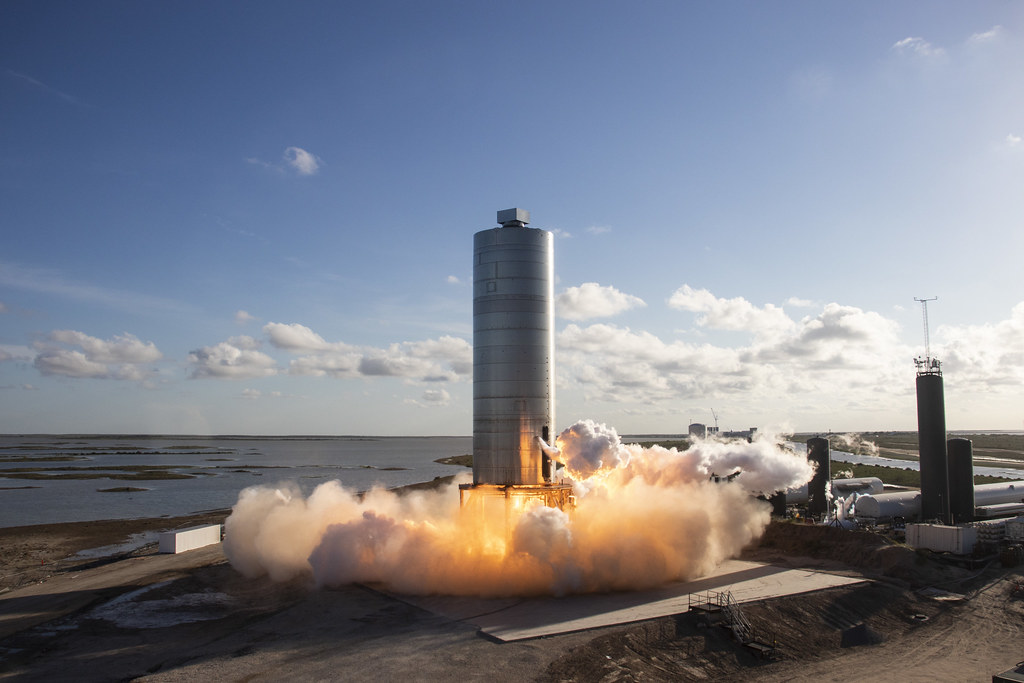
The Star Factory: Mass Production Meets Aerospace
At the heart of scaling lies the Star Factory at Starbase.
Key improvements include:
- Stainless steel sheet automation
- Ring forming and welding inside the factory
- Integrated section production
- Standardized rigs
- Linear assembly lines
- Specialized stations
Unlike traditional aerospace manufacturing—often bespoke and slow—Starship production increasingly resembles automotive or aircraft assembly lines.
This shift enables:
- Continuous flow production
- Faster fault detection
- Higher throughput
- Reduced inefficiencies
Gigabays and Mega Bays: Building at Scale
SpaceX is expanding infrastructure aggressively.
Planned and operational facilities include:
- Mega Bay 1 (boosters)
- Mega Bay 2 (ships)
- Gigabays at Starbase
- Gigabays in Florida
- Expanded launch pads
Each Gigabay is expected to:
- Cost roughly $250 million
- Support 15–30 vehicles simultaneously
- Handle structures near 120 meters tall
- Cover ~65,000 square meters
At scale, this production ecosystem would eclipse competitors like:
Crucially, Starship combines high output with full reusability—something expendable systems cannot match economically.
Launch Infrastructure: Pads for Continuous Operations
High production is meaningless without high launch capacity.
SpaceX is upgrading:
- Starbase Pad 1
- Starbase Pad 2
- Florida’s LC-39A
- Potential redevelopment of SLC-37
Currently, Falcon rockets dominate global launch frequency with just three pads. Starship’s expanded pad network could enable near-continuous operations—approaching aviation-style departure rates.
Skepticism vs. SpaceX’s Track Record
Skepticism is natural.
Hourly orbital launches sound unrealistic.
But SpaceX has repeatedly achieved what critics deemed impossible:
- First successful reusable orbital booster
- Landing rockets vertically
- Rapid booster reflights
- Dominating global launch market share
If historical patterns continue, today’s skepticism may become tomorrow’s reality.
The 10,000 Launch Era: What It Truly Means
If SpaceX achieves even a fraction of this goal, the implications are enormous:
- Massive orbital construction
- Affordable deep space missions
- Permanent lunar infrastructure
- Accelerated Mars colonization
- Global hypersonic transport
- Space-based industry expansion
The 10,000 launch benchmark is not just about numbers.
It represents the transformation of space from an exclusive frontier into a fully operational economic domain.
Final Thoughts: The Beginning of a Dominating Era
Elon Musk’s vision of more-than-hourly Starship launches may sound audacious—but it aligns perfectly with SpaceX’s long-term roadmap.
From steady early testing to Gigabay-scale manufacturing, from Mars colonization to Earth-to-Earth transport, every piece connects to one central theme:
Extreme launch cadence is the foundation of SpaceX’s future.
Will Starship truly reach 10,000 launches per year by 2030?
Only time will tell.
But if SpaceX’s history is any indicator, the era of rare rocket launches may soon be replaced by something extraordinary:
A sky where rockets rise as frequently as airplanes.
And when that day comes, humanity’s expansion into space will no longer be a distant dream—it will be an operational reality.
FAQs
1. What is Elon Musk’s 10,000 launch per year goal for Starship?
Elon Musk has stated that Starship could eventually launch more than once per hour, which could result in nearly or even more than 10,000 launches per year. This would represent an unprecedented operational pace in spaceflight history.
2. How many Starship launches has SpaceX completed so far?
Since its first integrated flight in 2023, SpaceX has gradually increased Starship’s flight cadence each year, conducting multiple test launches as part of an iterative development strategy.
3. What does “more than once per hour” actually mean?
Launching more than once per hour means at least 24 launches per day, which equals 8,760 launches annually. If the cadence increases to two launches per hour, annual flights could exceed 17,000.
4. Why does SpaceX want such a high launch cadence?
A high launch rate dramatically lowers costs per mission, increases orbital access, and enables large-scale projects such as Mars colonization, lunar bases, and mega satellite constellations.
5. How much payload can Starship carry per launch?
Starship Version 3 is expected to carry around 100 tons to orbit, while future versions like V4 may carry up to 200 tons per launch, doubling mass delivery capacity.
6. How much mass could Starship place into orbit annually?
At 10,000 launches per year with a 100-ton payload, Starship could deliver 1 million tons to orbit annually. With 200 tons per launch, that number could rise to 2 million tons per year.
7. Why is this important for Mars colonization?
Musk’s vision includes building a self-sustaining city on Mars requiring about 1 million tons of equipment and supplies. Achieving that goal requires thousands of launches and frequent Mars transfer campaigns.
8. How many launches would it take to send 1 million tons to Mars?
With a 200-ton payload capacity, approximately 5,000 launches would be needed just to place the required mass into low Earth orbit before transfer to Mars.
9. How does Starship compare to Falcon 9 and Falcon Heavy?
Starship is designed to eventually replace Falcon 9 and Falcon Heavy, offering significantly higher payload capacity and full reusability.
10. What role does Starlink play in this launch strategy?
The Starlink network requires continuous satellite deployment and upgrades. A higher launch cadence allows faster constellation expansion and maintenance.
11. Can SpaceX realistically produce 10,000 Starships per year?
While currently beyond production capacity, Elon Musk has suggested that at massive scale, production could eventually reach up to 10,000 ships annually, similar to aircraft manufacturing models.
12. What is the Star Factory?
The Star Factory is SpaceX’s high-efficiency production facility at Starbase, designed to streamline Starship manufacturing using standardized assembly lines and automated welding processes.
13. What are Gigabays and Mega Bays?
Gigabays and Mega Bays are massive integration buildings where Starship boosters and upper stages are assembled. They enable simultaneous construction of multiple vehicles to support high-volume output.
14. How would hourly launches change the space industry?
Hourly launches would transform spaceflight into a routine transportation system, reducing costs, increasing accessibility, and enabling industrial-scale orbital construction.
15. Is any other rocket capable of this launch frequency?
No current rocket system—including New Glenn, Vulcan Centaur, or Space Launch System—offers a combination of payload capacity and projected launch cadence comparable to Starship’s long-term goals.
16. What infrastructure upgrades are needed for 10,000 launches per year?
SpaceX must expand launch pads, build additional integration facilities, upgrade fueling systems, and improve rapid refurbishment processes to support near-continuous operations.
17. Could Starship be used for Earth-to-Earth transportation?
Yes. SpaceX has proposed using Starship for high-speed global transport, allowing passengers or cargo to travel between distant cities in under an hour—though regulatory and technical challenges remain.
18. When could Starship realistically reach this launch rate?
Elon Musk has suggested a timeline of 3 to 4 years for achieving more-than-hourly launches. However, most analysts expect gradual scaling through the late 2020s before such extreme cadence becomes feasible.
Read More:
- Tesla Megapack Megafactory in Texas advances with major property sale
- Tesla Giga Berlin makes a statement of solidarity amid IG Metall conflict
- Elon Musk denies Starlink’s price cuts are due to Amazon Kuiper
- xAI’s Grok approved for Pentagon classified systems: report
- Tesla looks to upgrade Matrix Headlights with new features
1 thought on “Elon Musk Revealed Unprecedented SpaceX Starship Launch Pace Plan! Dominating Era Begins”