
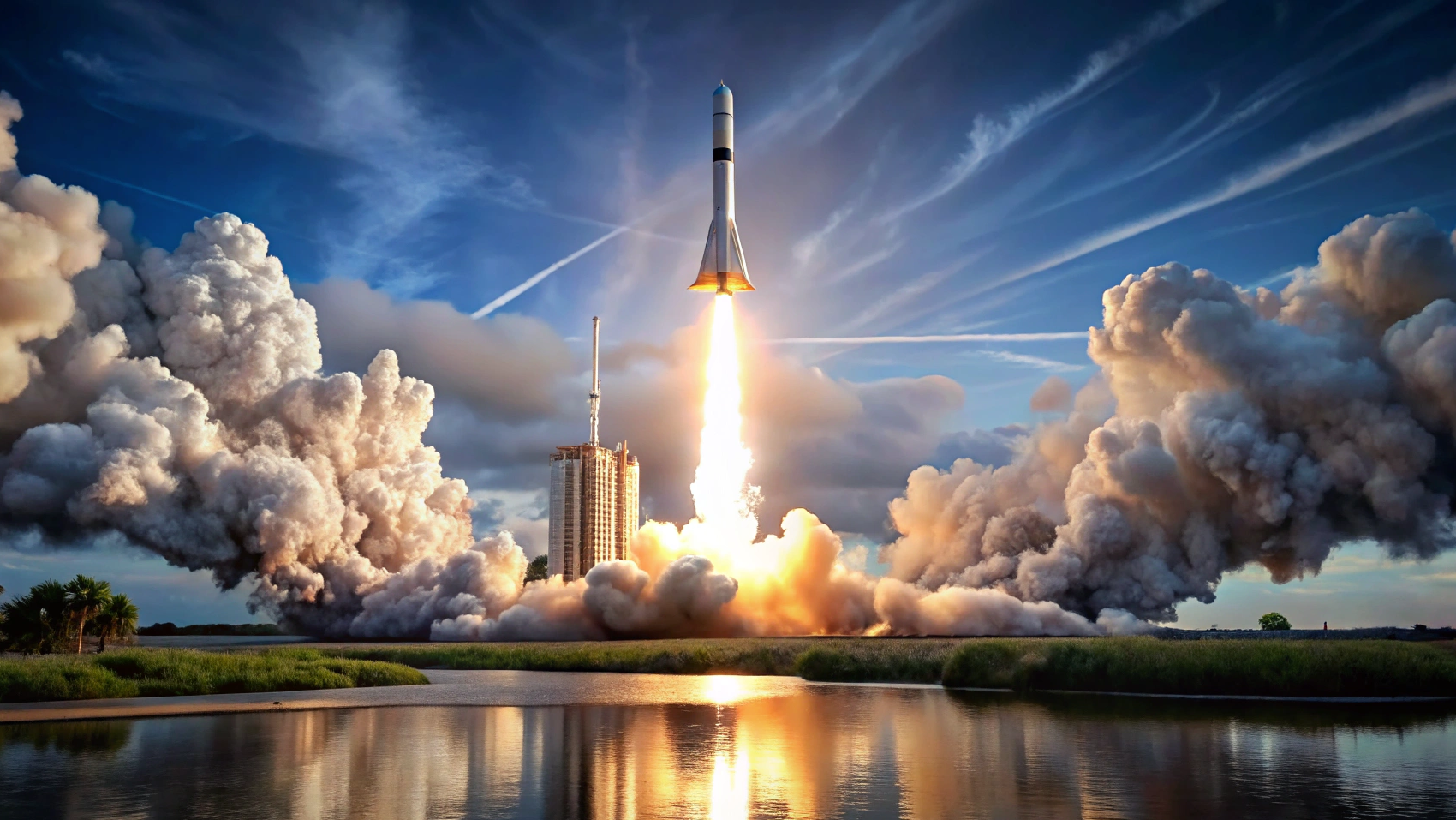
SpaceX has once again captured the imagination of space enthusiasts around the world. The recent events at Starbase, including the most powerful water deluge test ever conducted at Starship Pad 2, highlight not only engineering ingenuity but also the company’s relentless drive toward rapid, reusable spaceflight. This milestone is more than just a spectacle; it sets the stage for Starship Flight 12, potentially as soon as March, according to Elon Musk’s latest statements.
In this article, we break down the Pad 2 upgrades, the engineering behind the massive water deluge test, the preparation of booster B19, and what it all means for SpaceX’s aggressive launch cadence. Additionally, we explore commercial space station initiatives by Vast and the evolving landscape of reusable launch systems, including China’s Landspace program.
The Most Powerful Water Deluge Test in SpaceX History
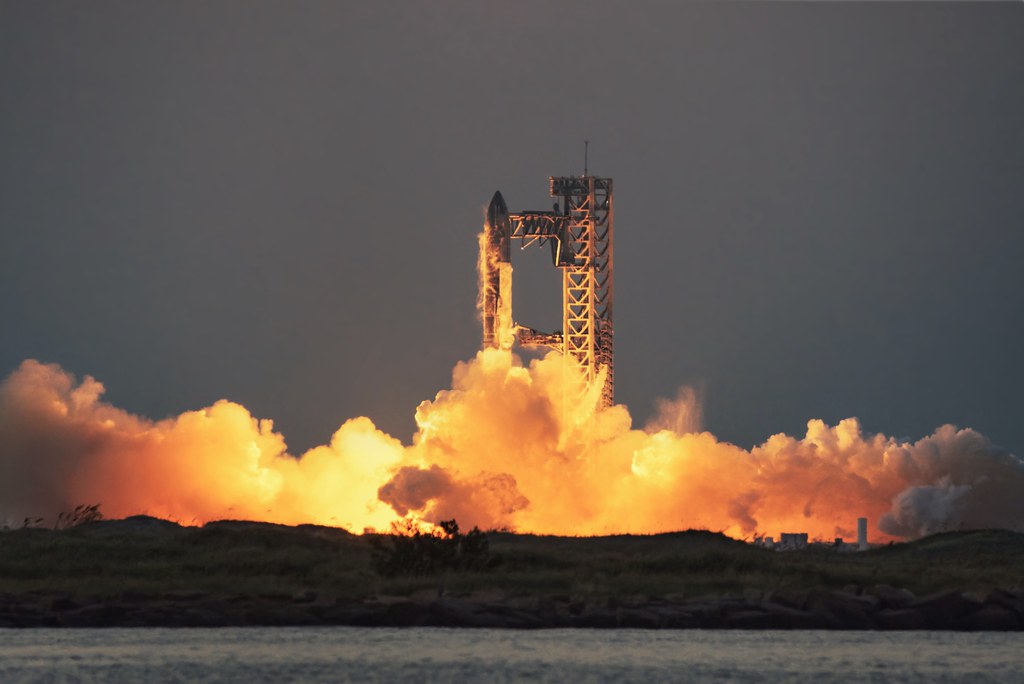
What we witnessed at Starbase was unprecedented. Starship Pad 2 underwent the most powerful water deluge test ever conducted, representing a major shift in SpaceX’s ground infrastructure strategy. Unlike earlier iterations, the deluge system now delivers water not only from below but from the upper OM (Orbital Mount) structure itself, creating a protective curtain over the launch table and surrounding hardware.
Why Water Deluge Systems Matter
Water deluge systems are far from cosmetic. They serve three critical purposes:
- Acoustic suppression – Engines generate tremendous overpressure during ignition. Without proper water cooling, vibrations can damage plumbing, electronics, and even structural components.
- Thermal protection – The immense heat from methane and liquid oxygen combustion requires precise mitigation to prevent structural degradation.
- Structural protection – Suppression systems shield the launch pad hardware from reflected exhaust energy, extending operational life and reducing refurbishment cycles.
The upgrade from Pad 1 to Pad 2 reflects lessons learned. Whereas Pad 1 used a steel plate to distribute exhaust loads, it experienced discoloration and minor hardware failures over multiple launches. Pad 2, by contrast, incorporates expanded flame trenches, lateral exhaust channels, and a deluge system both above and below the vehicle, improving protection across all surfaces.
B19 Booster and Engine Installation Progress
Inside Meabay at Starbase, booster B19 has been undergoing meticulous inspection and Raptor engine installation. Engine integration goes beyond simply bolting hardware into place; it requires precise calibration, alignment, and validation of numerous systems.
Static Fire: The Next Milestone
Before Flight 12 can proceed, B19 must complete a static fire test. During this test:
- Engines ignite while the booster remains secured to the pad.
- Engineers validate ignition sequencing, thrust vector control, propellant flow stability, and structural load distribution.
A successful static fire is a prerequisite for stacking B19 with Ship 39, the upper stage. It ensures the combined vehicle can withstand the extreme forces during liftoff and positions SpaceX to achieve a March launch window for Flight 12.
Pad 2 Upgrades: A New Era in Launch Infrastructure
Pad 2 is more than a launch mount—it’s an integral part of SpaceX’s reusable ecosystem. Several key upgrades were validated during the recent water deluge test:
- Quick disconnect tests for LOX and methane verified clean separation capability during liftoff.
- Chopsticks, the large mechanical arms for booster stacking, were raised and cycled to ensure the hydraulic and positioning systems operate without interference.
- Detonation suppression systems were validated to mitigate pressure spikes from methane and oxygen combustion.
- Booster quick disconnect gantry secured to reduce vulnerability to acoustic and thermal exposure.
These systems are critical for achieving rapid reusability and high-frequency launch cadence. Protecting upper deck components, particularly clamp arms and quick disconnects, ensures fewer maintenance cycles and shorter refurbishment periods.
Flame Trench and Deluge System Improvements
The Pad 2 flame trench channels exhaust laterally, reducing heat flux and acoustic stress on the launch mount. Water jets now cascade from above, creating a protective envelope that shields hardware during ignition. The runoff is substantial, highlighting both the system’s flow rate and capacity.
Without these enhancements, reflected exhaust could compromise expensive hardware and potentially delay the launch schedule. Pad 2’s geometric and volume improvements make it the most robust infrastructure SpaceX has ever built.
Flight Readiness: Synchronizing Booster and Ship 39
The success of Flight 12 depends on precise synchronization between B19 and Ship 39. While B19 is prepared to carry 33 Raptor engines capable of over 9,000 tons of thrust, Ship 39 must complete cryogenic proof testing.
Key considerations include:
- Interstage connections – ensuring proper alignment between booster and upper stage.
- Avionics synchronization – guaranteeing the control systems of booster and ship operate seamlessly.
- Umbilical interface checks – critical for safe propellant loading and telemetry during launch.
Timing is everything. Even if B19 is ready, any delay in Ship 39’s validation or turnaround operations could push the launch date. SpaceX aims to maintain the March Flight 12 window by carefully sequencing static fire, stacking, and wet dress rehearsals.
The Role of Rapid and Scalable Launch Pads
Pad 2 development began in early 2024 and took nearly two years to reach operational readiness. While impressive, such timelines are not compatible with airline-like launch cadence goals. Future pads, including the planned Space Launch Complex 37, will test SpaceX’s ability to replicate and streamline the Pad 2 design.
Key Considerations for Future Pads
- Construction velocity – Achieving pad readiness in 6–12 months is necessary for high-frequency operations.
- Design simplification – Fewer parts and modular systems reduce build time and maintenance burden.
- Modular mounts – Detachable orbital mounts could allow rapid replacement during refurbishment, preserving launch cadence.
The evolution of ground systems is as important as the vehicle itself. Reusable Starship operations require pads that are scalable, efficient, and able to withstand repeated high-thrust launches.
Commercial Space Stations: Vast and the Future of Private Orbital Platforms
SpaceX isn’t the only player advancing the commercial space frontier. Vast has emerged as a strong contender in NASA’s Commercial LEO Destinations program, designed to succeed the ISS.
Vast’s Strategic Advantage
Recently, NASA approved Vast to conduct a sixth private astronaut mission to the ISS, targeting summer 2027. This mission will last approximately 14 days and may carry up to four private astronauts.
- Transportation will utilize proven Falcon 9 and Dragon 2 spacecraft, ensuring continuity and reliability.
- This mission provides Vast with crucial operational experience in crew coordination, station interface management, and regulatory compliance.
- The company’s Haven 1 module will be deployed, marking a milestone in commercial orbital infrastructure.
Competition and Timing
Schedule discipline is crucial. With the ISS nearing retirement and other nations advancing their orbital platforms, Vast must convert ambition into sustainable presence in low Earth orbit. Private astronaut missions not only validate technology but also establish operational credibility.
Global Reusability Race: China’s Landspace Program
China is making significant strides in reusable launch systems. The Zuchi 3 rocket, developed by Landspace, represents the country’s most direct attempt at large-scale booster reuse.
Lessons from Early Launch Attempts
- Initial tests demonstrated propulsion and flight control capabilities, though booster recovery was not fully successful.
- A renewed launch and recovery attempt is planned for the second quarter of 2026.
- If successful, Landspace aims to attempt reflight as early as Q4 2026, utilizing a recovery sequence that includes high-altitude glide, attitude control maneuvers, grid fin deployment, and aerodynamic deceleration.
Strategic Implications
While China’s efforts mirror SpaceX’s Falcon 9 architecture, matching decades of SpaceX flight heritage remains a challenge. Nonetheless, Landspace’s focus on stainless steel and methylox propulsion draws inevitable comparisons with Starship. Reusability is no longer optional; it is a strategic imperative for reducing launch costs and increasing cadence.
Conclusion: Starship Flight 12 and the Future of Reusable Spaceflight
The recent Pad 2 water deluge test represents a pivotal moment for SpaceX. It validates the infrastructure required for high-thrust, high-cadence operations and positions the company for Flight 12 as early as March.
Key takeaways include:
- Pad 2 is an engineering marvel, protecting hardware from thermal, acoustic, and structural stress.
- B19 booster and Ship 39 synchronization is critical for maintaining the launch schedule.
- Future pad development will focus on modular, rapidly deployable designs to support reusable Starship operations.
- Global competition, including Vast’s commercial station and Landspace’s reusable rockets, underscores the need for operational efficiency and innovation.
SpaceX continues to push the boundaries of what’s possible in orbital launches, turning its Starbase infrastructure into a reusable ecosystem rather than static support. The coming months will be decisive: successful static fire, stacking, and wet dress rehearsals will determine if the ambitious March timeline for Flight 12 is achievable.
As Elon Musk has hinted, this is no longer speculative optimism—it’s conditional readiness. The next ignition will show whether preparation translates into the liftoff history enthusiasts have been waiting for.
FAQs
- What is Starship Flight 12 and when is it scheduled to launch?
Starship Flight 12 is the upcoming orbital launch of SpaceX’s Starship vehicle. Elon Musk has indicated a potential March 2026 launch, following successful preparation and testing of booster B19 and Ship 39. - What makes the Pad 2 water deluge test significant?
The Pad 2 water deluge test is the most powerful ever conducted at Starbase, protecting the launch mount, hardware, and vehicle from acoustic, thermal, and structural stress during ignition. - How does the Pad 2 deluge system differ from Pad 1?
Pad 2 features upper OM water jets, lateral flame trench channels, and increased flow capacity, improving acoustic suppression, thermal protection, and structural integrity compared to the steel plate system of Pad 1. - What is the purpose of booster B19 in Starship Flight 12?
Booster B19 will carry 33 Raptor engines capable of over 9,000 tons of thrust, providing the main lift force for Starship Flight 12 and undergoing static fire tests before integration with Ship 39. - What is a static fire test, and why is it important?
A static fire test ignites the engines while the vehicle is secured to the pad. It validates ignition sequencing, thrust vector control, propellant flow, and structural load distribution, ensuring safety before liftoff. - What upgrades have been made to Starship Pad 2?
Pad 2 upgrades include enhanced deluge systems, quick disconnect interfaces, chopsticks for stacking, detonation suppression systems, and reinforced flame trenches to support high-thrust Starship launches. - Why is acoustic suppression critical during Starship launches?
Starship engines generate extreme overpressure and vibrations, which can damage electronics, plumbing, and structural components. Acoustic suppression mitigates these effects, protecting the vehicle and pad. - What role does Ship 39 play in Flight 12?
Ship 39 is the upper stage of Starship, responsible for payload delivery. It must complete cryogenic proof testing, interstage alignment, and avionics synchronization before stacking with booster B19. - How does SpaceX plan to achieve rapid launch cadence?
SpaceX aims to streamline pad design, adopt modular components, and reduce downtime through reusable ground hardware, allowing frequent Starship launches. - What is Vast’s role in commercial space stations?
Vast is developing the Haven 1 module and will conduct a private astronaut mission to the ISS in 2027, gaining operational experience for future commercial orbital platforms. - How many astronauts will Vast’s ISS mission carry?
Up to four private astronauts may participate in the mission, with NASA and international partners reviewing and approving the crew before training begins. - What is Zuchi 3, and how is China advancing reusable rockets?
Zuchi 3 is a stainless steel methane-liquid oxygen launch vehicle by Landspace. It aims for booster reuse with high-altitude glide, grid fins, and re-entry burns, similar to SpaceX’s Falcon 9. - Has Landspace successfully recovered a booster yet?
Landspace’s initial launches achieved partial success in propulsion and flight control, but full booster recovery has not yet been completed. A second-quarter 2026 attempt is planned. - Why is modular pad design important for Starship launches?
Modular pads allow rapid replacement of worn components, faster maintenance, and higher launch cadence, ensuring the infrastructure keeps pace with Starship’s reusable operations. - What lessons has SpaceX learned from Pad 1?
Pad 1 experienced discoloration, clamp arm failures, and quick disconnect scorching over multiple launches, highlighting the need for improved geometry, volume, and deluge systems in Pad 2. - How does the global reusable launch race impact SpaceX?
Competitors like Vast and Landspace are accelerating development in crewed missions and reusable rockets. While SpaceX currently leads in flight heritage and cadence, the competition is pushing continuous innovation.
Read More:
- Tesla China extends its 7-year financing promotion once more
- The Boring Company wins key approval for Nashville Music City Loop
- Elon Musk’s Starbase, TX included in $84.6 million coastal funding round
- Starlink powers Europe’s first satellite-to-phone service with O2 partnership
- Tesla Megapack powers $1.1B AI data center project in Brazil
1 thought on “Elon Musk confirmed Starship Flight 12 Launch Date Sooner than Expected after Biggest Pad 2 Flood”