
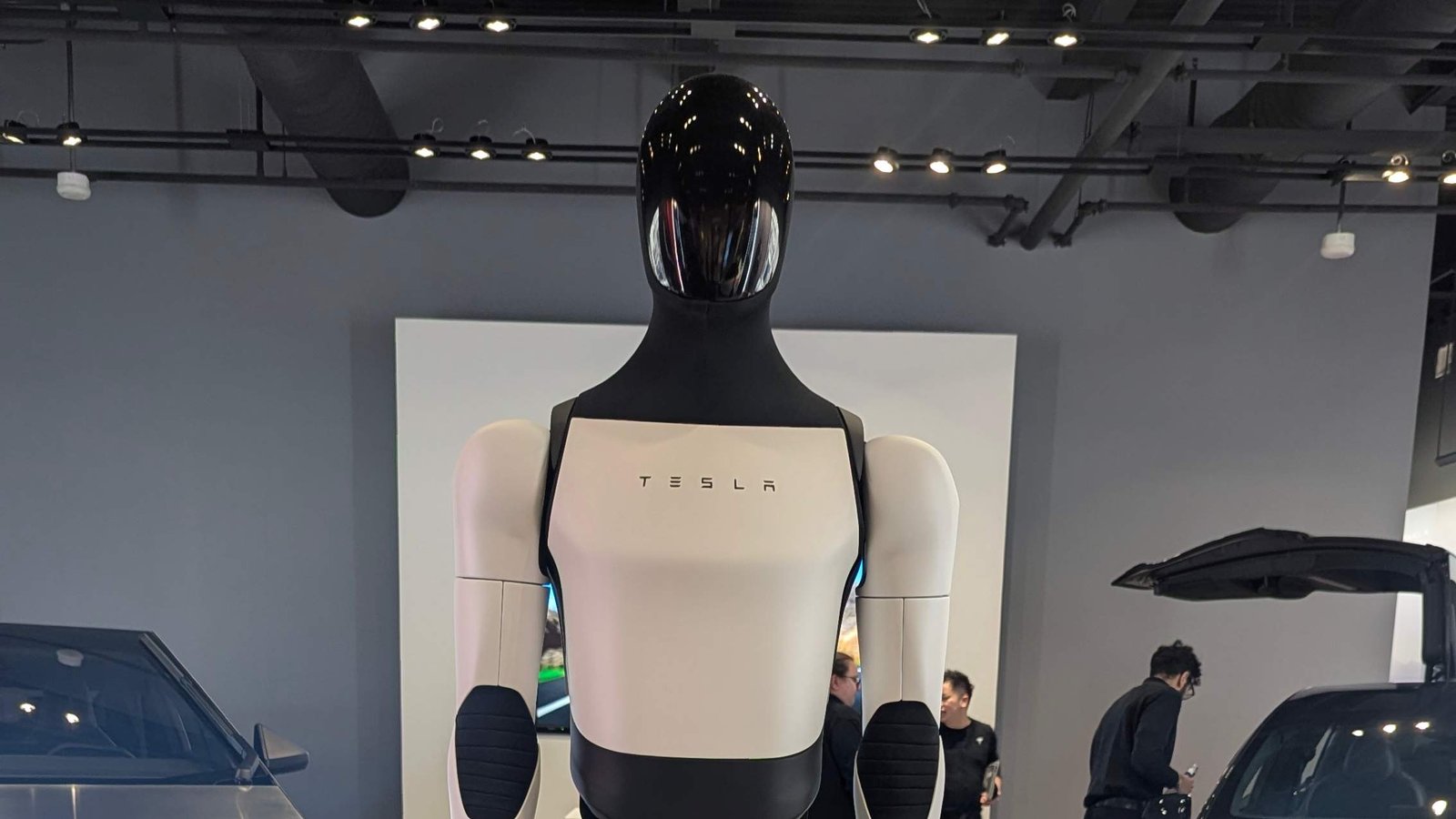
Tesla Bot Gen 3 Amazing Cooking & Cleaning Entire The House: Tesla is rapidly evolving beyond being an electric vehicle (EV) manufacturer. Today, the company is investing heavily in Artificial Intelligence (AI), humanoid robotics, and autonomous transportation, aiming to create a future where intelligent machines perform everyday tasks with minimal human intervention.
Two groundbreaking technologies are driving this transformation: Tesla Optimus Gen 3, a production-ready humanoid robot, and the Tesla Cybercab, a fully autonomous robotaxi. While many robotics companies focus on eye-catching demonstrations such as jumping or backflips, Tesla is concentrating on practical capabilities that people can use every day.
Imagine a robot that can cook meals, clean your home, organize your kitchen, carry groceries, fold clothes, and even assist elderly family members. That is exactly the future Tesla envisions with Optimus Gen 3.
In this article, we’ll explore the latest advancements in Tesla’s humanoid robot, its AI-powered learning system, and how Cybercab fits into Tesla’s larger physical automation ecosystem.
What Is Tesla Optimus Gen 3?
Tesla Optimus Gen 3 is the latest generation of Tesla’s humanoid robot designed for mass production and real-world applications. Unlike previous versions that mainly served as engineering prototypes, Gen 3 has been redesigned with manufacturing efficiency, affordability, and daily usefulness in mind.
Tesla plans to manufacture up to one million Optimus robots annually, making them available for homes, factories, warehouses, hospitals, and commercial businesses.
Key Capabilities of Optimus Gen 3
- Cooking meals
- Cleaning floors
- Washing dishes
- Folding laundry
- Carrying groceries
- Organizing household items
- Factory assembly tasks
- Warehouse logistics
- Elderly assistance
- Repetitive industrial work
The robot is expected to perform over 100 daily tasks, making it one of the most versatile humanoid robots ever developed.
Tesla Optimus V2.5 vs Optimus Gen 3
Tesla’s public demonstrations have mostly showcased Optimus Version 2.5, but according to Elon Musk, Gen 3 is a complete architectural redesign optimized for large-scale production.
Major Improvements in Optimus Gen 3
Natural Human-Like Walking
Earlier versions walked with a more robotic motion. Gen 3 introduces smoother movement and improved balance, allowing it to navigate homes and workplaces more naturally.
Production-Ready Design
Every component has been redesigned for faster manufacturing and lower production costs, making large-scale deployment possible.
Tesla AI5 Computer
The new onboard AI5 processor delivers faster decision-making and real-time motion control without relying on cloud computing.
22 Degrees of Freedom Hands
Perhaps the biggest upgrade is the highly dexterous robotic hand capable of performing delicate household tasks with remarkable precision.
Advanced Robotic Hands with 22 Degrees of Freedom
Walking is only one aspect of humanoid robotics. The real challenge is enabling robots to manipulate everyday objects safely and accurately.
Tesla has equipped Optimus Gen 3 with 22 Degrees of Freedom (22 DoF) in its hands, allowing movements that closely resemble the human hand.
Why 22 DoF Matters
The robot can independently control its:
- Fingers
- Thumb
- Wrist
- Grip strength
- Hand orientation
This allows Optimus to perform tasks that require both strength and precision.
Cooking Assistance
With its advanced hands, Optimus can:
- Hold frying pans securely
- Open refrigerators
- Stir food while cooking
- Pick up vegetables
- Operate kitchen appliances
- Crack eggs carefully
- Pour liquids into containers
Unlike industrial robots that simply repeat programmed movements, Optimus continuously adjusts its grip based on the object it is holding.
Cleaning the Entire House
One of Tesla’s biggest goals is creating a robot capable of handling routine household chores.
Optimus Gen 3 is expected to perform tasks such as:
- Vacuuming floors
- Sweeping rooms
- Wiping kitchen counters
- Washing dishes
- Organizing furniture
- Carrying laundry baskets
- Taking out trash
- Cleaning workspaces
These abilities make it an ideal home assistant for busy families and elderly individuals.
Intelligent Force Control
One major advantage of Optimus Gen 3 is its ability to automatically adjust grip pressure.
For example, it can:
- Hold a fragile wine glass
- Pick up an egg without breaking it
- Carry heavy cookware
- Lift grocery bags
- Handle electronic devices safely
This advanced force sensitivity allows the robot to transition between delicate and heavy-duty tasks without manual adjustments.
Tesla’s Custom Actuator Technology
Instead of using standard industrial motors, Tesla designs custom-built actuators specifically for different body parts.
Each joint has unique movement requirements, so Tesla optimized every actuator for maximum efficiency.
High-Torque Actuators
Located in the:
- Hips
- Spine
These powerful actuators help maintain balance while lifting heavy objects.
Smooth Motion Actuators
Installed in:
- Shoulders
- Elbows
These provide fluid movement while minimizing power consumption during continuous operation.
Precision Actuators
Used in:
- Fingers
- Wrists
These compact motors enable accurate positioning and tactile feedback, making delicate tasks possible.
Tesla AI5 Computer: The Brain of Optimus
Every intelligent robot needs a powerful brain, and that’s where the Tesla AI5 Computer comes in.
Rather than depending on cloud servers, Optimus processes nearly all critical information directly on the robot.
Why Local Processing Is Essential
Imagine the robot is:
- Carrying hot food
- Walking beside children
- Holding fragile dishes
- Climbing stairs
- Assisting elderly people
Even a one-second internet delay could create dangerous situations.
That’s why Tesla performs critical calculations locally using the AI5 computer.
AI5 Handles Real-Time Processing
The processor continuously analyzes:
- Object recognition
- Depth perception
- Camera images
- Body balance
- Force feedback
- Joint movement
- Obstacle detection
This enables Optimus to react instantly while working in dynamic environments.
Optimus Learns from Every Robot
Tesla’s greatest competitive advantage isn’t just hardware—it’s fleet learning.
Instead of manually programming every household task, Tesla allows thousands of robots to learn collectively.
This system is called the Optimus Academy.
How Fleet Learning Works
- Thousands of Optimus robots perform real-world tasks.
- Every success and failure is recorded.
- Motion, vision, and force data are uploaded.
- Tesla trains improved AI models.
- Software updates are sent wirelessly.
- Every robot instantly becomes smarter.
For example, if one robot discovers a more efficient way to load a dishwasher or clean a kitchen counter, every Optimus robot worldwide can receive that improvement through an over-the-air software update.
This creates a powerful AI data flywheel, allowing Optimus to improve continuously without replacing hardware.
While Tesla Optimus Gen 3 is designed to automate physical work, the Tesla Cybercab aims to revolutionize transportation. Unlike conventional cars, Cybercab is built as a fully autonomous robotaxi with no steering wheel or pedals, relying entirely on Tesla’s advanced Full Self-Driving (FSD) technology.
The Cybercab is engineered for high-utilization fleets, meaning it can operate almost continuously with minimal downtime. This makes it ideal for ride-hailing services and commercial transportation, where efficiency and low operating costs are essential.
Key Features of Tesla Cybercab
- Fully autonomous driving
- No steering wheel or pedals
- AI-powered navigation
- Optimized for fleet operations
- Lower maintenance requirements
- Self-monitoring safety systems
Revolutionary 48V Electrical Architecture
One of the biggest engineering upgrades in Cybercab is its 48-Volt electrical architecture.
Traditional passenger vehicles typically use 12V electrical systems, but modern autonomous vehicles require far more power to run computers, cameras, sensors, communication systems, and climate controls.
Benefits of the 48V System
Lower Electrical Current
Increasing voltage significantly reduces the electrical current required to deliver the same amount of power. This results in:
- Less heat generation
- Improved electrical efficiency
- Better reliability
- Reduced energy loss
Lighter Wiring
Tesla estimates the new electrical system can reduce wiring harness weight by 30–50%, saving a significant amount of copper in every vehicle.
The benefits include:
- Lower manufacturing costs
- Improved vehicle efficiency
- Easier assembly
- Reduced material usage
For a company planning to manufacture millions of autonomous vehicles, these savings become extremely significant.
Why Tesla Keeps the 400V Battery Platform
Although Tesla’s Cybertruck introduced an 800V architecture, Cybercab continues using Tesla’s proven 400V high-voltage platform.
This decision focuses on practicality rather than headline specifications.
Advantages of the 400V System
- Lower production costs
- Proven reliability
- Existing supply chain compatibility
- Shared components with Model 3 and Model Y
- Simplified maintenance
Since Cybercab fleets can charge during scheduled downtime at dedicated charging stations, ultra-fast charging is less important than reducing production costs.
Self-Cleaning Vision System
Unlike many autonomous vehicle manufacturers that depend on expensive LiDAR sensors, Tesla primarily uses AI-powered camera vision.
To ensure those cameras always have a clear view, Cybercab includes an intelligent self-cleaning camera system.
How It Works
Each external camera is equipped with:
- High-pressure air jets
- Cleaning fluid nozzles
- Automatic obstruction detection
If the AI detects dirt, dust, rain, or mud blocking a camera, it instantly activates the cleaning system without requiring human intervention.
This feature helps maintain maximum safety while reducing maintenance stops.
Designed for Easy Maintenance
Tesla has also engineered Cybercab for fast and inexpensive servicing.
Several thoughtful design improvements simplify repairs and reduce downtime.
Maintenance Features
- High-visibility orange coolant for easier leak detection
- Quick manual charging cable release
- Protective wheel ring covers that can be replaced easily
- Front tow access for roadside recovery
- USB-C wired charging ports for passengers
These practical upgrades may seem small individually, but together they help reduce fleet maintenance costs and increase vehicle availability.
Autonomous Safety Protocols
Safety remains one of Tesla’s highest priorities.
If Cybercab detects an internal hardware issue or system malfunction while operating, it follows a predefined safety procedure instead of stopping abruptly in traffic.
Automatic Emergency Actions
The vehicle can:
- Activate hazard lights
- Analyze surrounding traffic
- Pull over safely
- Notify Tesla’s remote operations system
- Transmit diagnostic information
- Drive itself to a Tesla service center when appropriate
This intelligent response minimizes disruptions while improving passenger and public safety.
Tesla’s Unified AI Ecosystem
The real innovation lies in how Optimus Gen 3 and Cybercab work as part of a shared AI ecosystem.
Tesla isn’t simply building a robot or a driverless car—it is creating a connected network of intelligent machines that continuously learn from real-world experience.
Shared AI Advantages
Both platforms benefit from:
- On-device AI processing
- Fleet-wide learning
- Over-the-air software updates
- Custom-designed hardware
- Scalable manufacturing
- Continuous performance improvements
Every robot and every vehicle contributes valuable data that helps improve the intelligence of the entire fleet.
This creates a powerful feedback loop where software becomes smarter over time without requiring major hardware changes.
Why Tesla’s Approach Is Different
Many robotics companies showcase robots performing impressive athletic stunts like flips or running courses.
Tesla, however, is focused on something much more practical—building robots that can solve everyday problems.
Instead of emphasizing entertainment, Tesla is investing in:
- Fine motor skills
- AI-powered decision-making
- Household assistance
- Industrial productivity
- Cost-efficient manufacturing
- Long-term reliability
This practical approach could make humanoid robots useful in millions of homes and businesses rather than remaining research projects.
The Future of Tesla Optimus Gen 3
As AI continues to improve, Tesla Optimus Gen 3 could eventually become one of the most valuable consumer technologies ever created.
Future versions may assist with:
- Daily household chores
- Elderly care
- Healthcare support
- Retail operations
- Hospitality services
- Manufacturing
- Warehouse automation
- Office maintenance
Combined with Tesla’s rapidly advancing AI systems, these robots could transform how people work and live over the coming decade.
Conclusion
Tesla Optimus Gen 3 represents a major leap forward in humanoid robotics. With 22 Degrees of Freedom robotic hands, custom-built actuators, the powerful Tesla AI5 computer, and an intelligent fleet learning system, Optimus is designed to perform meaningful real-world tasks such as cooking, cleaning, organizing, and assisting people.
At the same time, the Tesla Cybercab showcases Tesla’s vision for autonomous mobility through its 48V electrical architecture, self-cleaning camera system, optimized 400V platform, and intelligent fleet management features.
Together, these innovations demonstrate Tesla’s transformation from an electric vehicle manufacturer into a company focused on Artificial Intelligence, robotics, and physical automation. As these technologies mature and production scales, Tesla could fundamentally reshape transportation, manufacturing, and everyday life by bringing intelligent robots and autonomous vehicles into the mainstream.
FAQs
1. What is Tesla Bot Gen 3?
Tesla Bot Gen 3, also known as Tesla Optimus Gen 3, is Tesla’s latest humanoid robot designed to perform household chores, factory work, and repetitive physical tasks using advanced AI and robotics.
2. What household tasks can Tesla Optimus Gen 3 perform?
Tesla Optimus Gen 3 is designed to help with cooking, cleaning, washing dishes, folding laundry, organizing rooms, carrying groceries, and other everyday household activities.
3. What makes Tesla Optimus Gen 3 different from previous versions?
Gen 3 features a completely redesigned architecture with 22 Degrees of Freedom (DoF) hands, a more natural walking style, improved balance, advanced AI, and hardware optimized for mass production.
4. How do the 22 DoF robotic hands improve performance?
The 22 DoF hands provide greater flexibility and precision, allowing the robot to safely hold delicate objects, use kitchen tools, and perform detailed tasks similar to a human.
5. What is the Tesla AI5 computer?
The Tesla AI5 computer is the robot’s onboard AI processor that performs real-time vision analysis, object recognition, balance control, and motion planning without depending on cloud computing.
6. Can Tesla Optimus Gen 3 work without an internet connection?
Yes. Most critical functions, including movement, balance, and object handling, are processed locally by the AI5 computer, reducing delays and improving safety.
7. How does Tesla Bot continue learning over time?
Tesla uses a fleet-learning system called the Optimus Academy, where robots collect real-world data. Software improvements are then distributed to all robots through over-the-air (OTA) updates.
8. What is Tesla Cybercab?
Tesla Cybercab is a fully autonomous robotaxi designed without a steering wheel or pedals. It uses Tesla’s AI-powered driving technology to provide driverless transportation.
9. Why does Tesla Cybercab use a 48V electrical system?
The 48V architecture reduces electrical current, lowers heat generation, decreases wiring weight, improves efficiency, and helps lower manufacturing costs.
10. Does Tesla Cybercab use LiDAR technology?
No. Tesla primarily relies on camera-based computer vision and AI instead of LiDAR, using advanced neural networks to understand the surrounding environment.
11. How does Cybercab keep its cameras clean?
Cybercab features an automatic camera cleaning system that uses compressed air and cleaning fluid to remove dirt, dust, mud, or rain from camera lenses.
12. Is Tesla Optimus Gen 3 designed only for factories?
No. While it can work in factories and warehouses, Tesla also intends for Optimus Gen 3 to assist in homes, offices, retail stores, hospitals, and other environments.
13. What industries could benefit from Tesla Optimus Gen 3?
Potential industries include healthcare, manufacturing, logistics, hospitality, retail, warehousing, agriculture, and home services, where repetitive physical tasks can be automated.
14. How does Tesla improve the intelligence of its robots?
Tesla continuously trains its AI models using real-world operational data collected from thousands of robots, enabling faster learning and more accurate task execution.
15. When will Tesla Optimus Gen 3 be available?
Tesla has not announced an official consumer release date, but the company is working toward large-scale production to make Optimus available in the future.
16. Why is Tesla investing in humanoid robots and autonomous vehicles?
Tesla’s long-term vision is to create a unified AI-powered automation ecosystem where intelligent robots and autonomous vehicles work together to improve productivity, reduce labor shortages, and make everyday life more convenient.
Read More:
- $122B Terafab Elon Musk Is Ready to Take Over AI Chips
- Tesla is about to make parking in busy lots less stressful than ever
- Tesla expands ridesharing service in California to new hotspot
- Elon Musk handed Grok something no other AI company can get their hands on
- Tesla Mobile App gets a new feature that wrap fans are going to love