
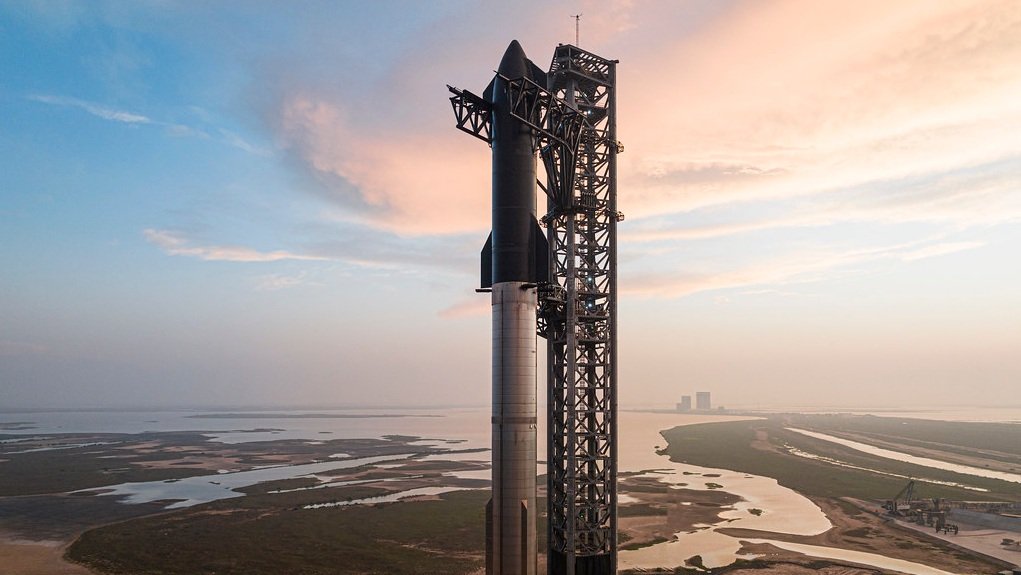
SpaceX canceled Starship Flight 13 Attempt 2, Launch Again Today: SpaceX once again grabbed the attention of the global aerospace community after announcing the scrub of Starship Flight 13 Attempt 2 just hours before liftoff. Thousands of space enthusiasts were eagerly watching the countdown at Starbase, Boca Chica, expecting another milestone in the development of the world’s most powerful launch system. However, with just over two hours remaining before launch, the company confirmed that the mission would be postponed and attempted again today.
While launch delays are nothing new in the space industry, this particular decision was driven by engineering priorities rather than simple weather concerns. SpaceX chose to delay the mission to ensure it could collect the highest quality scientific data from one of the most important experiments ever conducted on Starship’s Thermal Protection System (TPS).
In this article, we’ll explore why Flight 13 was delayed, the groundbreaking technologies being tested, and how this mission could shape the future of reusable spaceflight.
Why Did SpaceX Cancel Starship Flight 13 Attempt 2?
Before the scheduled launch, Booster 20 and Ship 40 had already completed major integrated pre-flight checks. These included inspections of:
- Mechazilla chopsticks
- Grid fin systems
- Detonation suppression equipment
- Fuel loading and vehicle readiness
Although poor weather over parts of Texas created visibility challenges, rain, lightning, and strong winds, the primary reason for the scrub was protecting a critical scientific experiment.
SpaceX needed crystal-clear skies so that ground-based tracking cameras could capture ultra-high-resolution footage of Starship during ascent. These visuals are essential for analyzing how the spacecraft’s heat shield behaves under extreme aerodynamic pressure.
Rather than risking incomplete data, SpaceX chose to postpone the launch until conditions would allow the experiment to be fully successful.
Flight 13’s Main Test Objectives
Unlike previous Starship missions that focused mainly on proving the vehicle could survive launch and re-entry, Flight 13 is centered on collecting engineering data.
The mission focuses on four major innovations:
1. High Dynamic Pressure (Max Q) Testing
SpaceX intentionally modified the flight profile so Starship experiences higher aerodynamic stress during ascent.
This allows engineers to observe how the spacecraft performs under conditions more similar to future operational missions.
2. Smart Heat Shield Tiles
For the first time ever, sensor-equipped ceramic heat shield tiles will fly on Starship.
These advanced tiles can measure:
- Mechanical strain
- Structural deformation
- Aerodynamic pressure
- Tile movement
Instead of relying only on computer simulations or wind tunnel testing, engineers will receive real flight data.
3. White Target Tiles for Optical Tracking
Several black heat shield tiles have been replaced with bright white target tiles.
These markers help:
- Ground cameras
- High-powered telescopes
- Space-based tracking systems
accurately monitor even tiny movements across Starship’s heat shield.
4. Redesigned Flaps and Aft Skirt
The metallic surfaces surrounding Starship’s rear flaps experience some of the highest temperatures during atmospheric re-entry.
Flight 13 includes:
- Improved flap attachment brackets
- New heat-resistant coverings
- Experimental tile layouts
- Enhanced aft skirt protection
These upgrades aim to improve long-term vehicle reusability.
Understanding Starship’s Thermal Protection System (TPS)
One of the biggest engineering challenges for Starship is surviving atmospheric re-entry.
Unlike traditional rockets that are discarded after launch, Starship is designed to be fully reusable.
When returning to Earth, the spacecraft enters the atmosphere at speeds exceeding 25,000 km/h (Mach 25).
This creates temperatures above 1,500°C (2,700°F).
Without an effective Thermal Protection System (TPS), the stainless-steel spacecraft would quickly suffer catastrophic damage.
That is why every heat shield tile plays a critical role.
Why Heat Shield Tiles Matter
Earlier Starship test flights revealed one of the biggest engineering challenges.
During launch and re-entry:
- Some ceramic tiles detached
- Acoustic vibrations loosened tile mounts
- Exposed steel experienced intense heating
Over multiple flight tests, SpaceX significantly improved tile retention.
By Flight 12, engineers had reduced tile loss dramatically while solving oxidation issues and limiting hardware problems to only a minor coolant leak.
Now, Flight 13 shifts the focus from survival to optimization.
Instead of asking whether Starship can survive, SpaceX wants to understand exactly how every tile performs under maximum stress.
Smart Heat Shield Tiles: A Major Leap Forward
Perhaps the most exciting innovation aboard Flight 13 is the introduction of embedded load-sensing heat shield tiles.
Each sensor measures:
Mechanical Stress
Engineers can see precisely how much force individual tiles experience.
Pressure Distribution
The sensors reveal how airflow changes across different regions of Starship.
Structural Flexing
Even tiny movements between the heat shield and spacecraft body can now be measured.
Real Flight Validation
The collected data will validate—or improve—computer simulations used to design future Starship versions.
This information is expected to play a major role in developing Starship Version 3.
Why SpaceX Increased Max Q
Every rocket experiences a point called Maximum Dynamic Pressure, commonly known as Max Q.
This occurs when:
- Vehicle speed is rapidly increasing
- Atmospheric density remains relatively high
The combination produces the greatest aerodynamic force on the rocket.
For Flight 13, SpaceX intentionally chose a flight profile that exposes Starship to higher-than-normal Max Q.
Although this places greater stress on the vehicle, it provides valuable engineering data and helps prepare Starship for future high-performance missions.
The ultimate goal is improving payload capacity while maintaining structural integrity.
Starlink Satellites Will Inspect Starship from Space
One of the most innovative aspects of Flight 13 involves space-based imaging.
SpaceX upgraded six Starlink satellites with specialized optical tracking equipment.
As Starship flies, these satellites will photograph the spacecraft from orbit.
The newly added white target tiles act as reference points, allowing engineers to monitor:
- Tile movement
- Heat shield expansion
- Structural vibration
- Rotation
- Mechanical shifts
Combining orbital imagery with ground cameras provides one of the most detailed visual inspections ever performed during a Starship flight.
Improved Flap and Aft Skirt Protection
Another critical objective involves testing redesigned hardware around the aft section.
Engineers introduced:
Enhanced Flap Attachments
New brackets are designed to better withstand repeated heating cycles.
Advanced Heat Shield Geometry
Modified tile layouts help reduce localized heating.
Improved Skirt Protection
Additional heat-resistant coverings protect metallic structures exposed during re-entry.
Together, these upgrades support SpaceX’s vision of rapid aircraft-like reusability.
How Flight 13 Differs from Earlier Missions
Earlier Starship flights primarily focused on:
- Vehicle separation
- Engine performance
- Basic flight stability
- Re-entry survival
Flight 12 achieved major improvements by reducing heat shield failures and stabilizing the Thermal Protection System.
Flight 13 represents a major evolution.
Instead of simply proving Starship works, engineers are now gathering high-quality engineering data that will influence future production vehicles and operational missions.
Every sensor reading, photograph, and structural measurement helps refine Starship for missions to Earth orbit, the Moon, and eventually Mars.
What This Means for the Future of Starship
Although many people see launch scrubs as setbacks, aerospace engineers often view them differently.
A delayed launch that ensures better scientific data is far more valuable than rushing a mission under poor conditions.
Flight 13 demonstrates SpaceX’s growing confidence in Starship. The company is moving beyond proving basic flight capability and focusing on understanding every aspect of vehicle performance in extreme environments.
By combining smart heat shield tiles, higher Max Q testing, advanced flap designs, and Starlink-based orbital imaging, SpaceX is collecting information that could dramatically improve the reliability and reusability of future spacecraft.
If successful, Flight 13 will mark another significant step toward making fully reusable, low-cost space transportation a reality—bringing humanity closer to routine missions to Earth orbit, the Moon, and Mars.
FAQs
1. Why was SpaceX Starship Flight 13 Attempt 2 canceled?
SpaceX postponed Starship Flight 13 Attempt 2 primarily to ensure clear weather conditions for capturing high-resolution footage of the spacecraft’s heat shield during ascent. The company wanted to collect accurate engineering data rather than risk incomplete observations.
2. When will SpaceX launch Starship Flight 13 again?
Following the scrub, SpaceX announced that it plans to attempt the launch again the following day, provided weather and technical conditions are favorable.
3. What is the main objective of Starship Flight 13?
The primary goal of Flight 13 is to gather detailed engineering data on Starship’s Thermal Protection System (TPS), structural performance under higher aerodynamic loads, and new hardware upgrades.
4. What are Smart Heat Shield Tiles?
Smart Heat Shield Tiles are ceramic thermal protection tiles equipped with embedded load sensors that measure strain, pressure, and structural movement during flight to improve future Starship designs.
5. What is Starship’s Thermal Protection System (TPS)?
The Thermal Protection System (TPS) is a shield of ceramic heat-resistant tiles that protects Starship from extreme temperatures generated during atmospheric re-entry, allowing the spacecraft to be reused.
6. What is Max Q in a rocket launch?
Max Q, or Maximum Dynamic Pressure, is the point during ascent when a rocket experiences the greatest aerodynamic stress due to the combination of increasing speed and atmospheric density.
7. Why is SpaceX increasing Max Q during Flight 13?
SpaceX intentionally increased Max Q to expose Starship to higher structural loads, helping engineers evaluate the durability of upgraded heat shield tiles and attachment mechanisms under more demanding conditions.
8. Why are some Starship heat shield tiles painted white?
The white tiles serve as high-contrast visual markers, making it easier for ground-based cameras and orbiting satellites to track tile movement and structural behavior during flight.
9. How will Starlink satellites assist during Flight 13?
Specially upgraded Starlink satellites will capture high-resolution images of Starship in flight, allowing engineers to inspect the heat shield and monitor any movement or deformation from space.
10. What improvements were made after Starship Flight 12?
After Flight 12, SpaceX significantly improved heat shield tile retention, reduced hardware anomalies, addressed tile oxidation issues, and prepared new sensor-equipped tiles for Flight 13.
11. Why is Starship designed to be fully reusable?
A fully reusable spacecraft dramatically lowers launch costs, enables more frequent missions, and supports long-term exploration goals, including lunar missions and human settlement on Mars.
12. How fast does Starship travel during re-entry?
Starship is designed to re-enter Earth’s atmosphere at speeds exceeding 25,000 km/h (Mach 25) while enduring temperatures above 1,500°C (2,700°F).
13. What new hardware is being tested on Starship Flight 13?
Flight 13 includes sensor-equipped heat shield tiles, upgraded flap attachment systems, improved aft skirt protection, experimental tile geometries, and enhanced optical tracking technologies.
14. Does a launch scrub mean there is a serious problem with Starship?
No. Launch scrubs are common in spaceflight and are often precautionary. In Flight 13’s case, the delay was a strategic decision to maximize scientific data collection rather than an indication of a major technical failure.
15. Why is Starship Flight 13 important for future Moon and Mars missions?
The data collected during Flight 13 will help improve Starship’s durability, reusability, and safety. These advancements are essential for future missions to Earth orbit, the Moon, and eventually Mars.
Read More:
- Tesla Semi finally has an FSD timeline and it’s waiting on the Cybercab
- Elon Musk’s answer to Christopher Nolan’s Odyssey got way more specific
- Tesla Robotaxi’s slow rollout gets explanation from Elon Musk
- Tesla’s switch-up on selling Full Self-Driving has paid off big time
- Google’s massive stake in SpaceX will shock you
1 thought on “SpaceX canceled Starship Flight 13 Attempt 2, Launch Again Today!”