
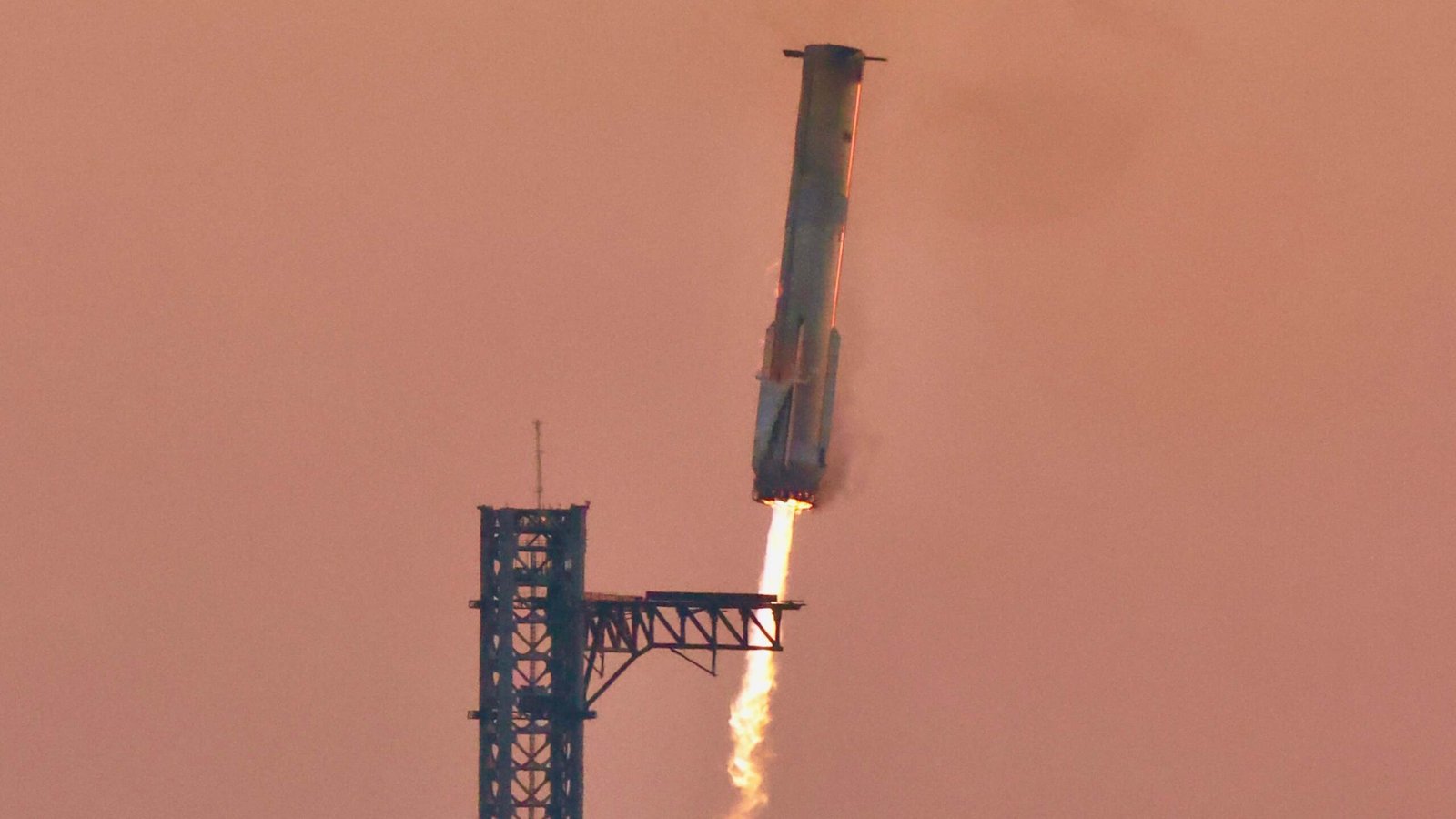
Elon Musk’s Much Easier Way to Refuel Starship on the Moon: The future of human exploration beyond Earth depends on solving one of the biggest challenges in spaceflight: moving massive amounts of fuel into orbit and beyond. NASA’s Artemis III mission, which aims to return astronauts to the lunar surface for the first time in more than 50 years, depends heavily on a breakthrough technology: in-space cryogenic propellant transfer.
The mission’s success relies on SpaceX’s Starship Human Landing System (HLS), a lunar lander designed to transport astronauts from lunar orbit to the Moon’s surface and back. However, getting Starship HLS to the Moon requires a revolutionary approach. Instead of carrying all the fuel it needs from Earth, SpaceX plans to use orbital refueling, creating a fuel supply chain in Low Earth Orbit (LEO).
This approach could transform deep-space travel by turning fuel logistics into a repeatable process rather than a one-time engineering challenge.
Why Starship Needs Orbital Refueling for Lunar Missions
Traditional rockets carry most of their fuel at launch because they have no way to refuel once they leave Earth. The problem is that fuel is extremely heavy.
When NASA’s Saturn V rocket launched during the Apollo era, more than 90% of its total mass was propellant. The rocket weighed roughly 3,000 tons at liftoff, but only about 41 tons reached a trajectory toward the Moon.
This demonstrates a fundamental limitation of chemical rockets: most of the vehicle exists simply to carry fuel.
The Starship HLS faces the same physics problem. During its journey to orbit, Starship consumes almost all of its internal fuel. Once it reaches Low Earth Orbit, it does not have enough propellant remaining for the journey to the Moon, lunar landing, and return to lunar orbit.
The solution is an orbital refueling pipeline:
Starship Tankers → Orbital Storage Depot → Starship HLS → Moon
Dedicated tanker versions of Starship will launch into orbit and transfer thousands of tons of liquid methane and liquid oxygen (methalox) into a storage depot. The fully fueled Starship HLS can then begin its lunar mission.
For Artemis III, SpaceX estimates that approximately 1,200 tons of cryogenic propellant may need to be transferred before the lunar landing mission begins.
Starship Version 3 vs Version 4: The Major Refueling Upgrade
Early Starship refueling plans depended on Version 3 (V3) tanker vehicles. However, this approach created significant operational challenges.
NASA’s Office of Inspector General previously identified the large number of required tanker launches as a major risk factor.
The Problems With Version 3 Tankers
A V3 tanker designed for normal atmospheric reentry would include:
- Heat shield tiles
- Aerodynamic control flaps
- Recovery hardware
These components add mass and reduce the amount of fuel the tanker can deliver.
A standard V3 tanker was estimated to deliver only around 100 to 150 tons of usable propellant per mission.
Because of this limited capacity, fully filling an orbital depot could require:
- 10 to 16 tanker launches
- Extended mission timelines
- Increased exposure to cryogenic fuel losses
The reliability challenge becomes even greater when multiple launches must succeed.
If every launch has a 95% success probability, completing a 16-launch campaign results in only about a 44% overall probability of success.
Each additional launch creates another opportunity for delay or failure.
How Version 4 Tankers Make Lunar Refueling Easier
SpaceX’s Version 4 (V4) tanker architecture changes the strategy completely.
Instead of designing tankers to return to Earth, dedicated orbital tankers can remove unnecessary equipment.
Key V4 Improvements
1. Reduced Vehicle Mass
V4 tankers designed specifically for orbital operations can remove:
- Reentry heat shields
- Landing flaps
- Recovery systems
This allows more of the vehicle’s capacity to be dedicated to fuel storage.
2. Increased Propellant Delivery
With longer tanks and increased capacity, V4 tankers could carry more than 2,000 tons of propellant capacity and deliver over 200 tons of usable fuel per flight.
This reduces the number of tanker launches required.
Fewer Launches, Higher Mission Reliability
Instead of requiring as many as 15 or 16 tanker flights, the V4 system could reduce the campaign to approximately:
5 to 6 tanker launches
This dramatically improves mission probability.
With a 95% success rate per launch:
- A 16-launch campaign provides about 44% success probability
- A 6-launch campaign improves that to approximately 74%
The shorter launch sequence also reduces the time cryogenic fuel spends in orbit, lowering the risk of boiloff losses.
The Engineering Challenge of Cryogenic Fuel Transfer in Space
While orbital refueling sounds simple, performing it in space requires solving difficult engineering problems.
Cryogenic fuels such as liquid oxygen and liquid methane behave differently in microgravity.
Autonomous Orbital Docking
Two Starships must locate each other and connect safely while traveling around Earth at thousands of kilometers per hour.
SpaceX plans to use advanced sensors, including Dragon Eye LiDAR technology, to measure distance and velocity with extremely high precision.
The spacecraft must perform an autonomous docking process before fuel transfer can begin.
Managing Liquids in Zero Gravity
On Earth, gravity naturally pulls liquids toward the bottom of a tank. In orbit, fuel floats and mixes with gas inside the tank.
To solve this problem, SpaceX uses settling burns.
Small thruster firings create artificial acceleration, pushing liquid methane and liquid oxygen toward the transfer ports.
This allows fuel to flow between spacecraft.
Preventing Cryogenic Boiloff
Keeping fuel cold in space is another major challenge.
Cryogenic liquids naturally warm over time, causing evaporation known as boiloff.
Long-duration orbital storage requires:
- Improved insulation
- Thermal monitoring
- Pressure management systems
Successful boiloff control will be essential for future Moon and Mars missions.
Starship HLS vs Blue Moon Mark II: Two Different Lunar Strategies
NASA has selected both SpaceX and Blue Origin to develop lunar landing systems, creating redundancy for future Artemis missions.
The two vehicles represent very different approaches.
Blue Origin Blue Moon Mark II
Blue Moon Mark II is designed primarily for focused lunar missions.
Its features include:
- Approximately 16-meter height
- Compact crew cabin
- Liquid hydrogen and liquid oxygen propulsion
- Cargo delivery capability of up to 20 metric tons
It is designed for astronauts to arrive, complete tasks, and leave.
Starship Human Landing System
Starship HLS represents a much larger vision.
The vehicle provides:
- Around 600 cubic meters of pressurized volume
- Large cargo capacity
- Long-duration astronaut living space
Its interior volume is more than 37 times larger than Blue Moon Mark II.
Rather than acting only as a lander, Starship HLS is designed to become a combination of:
- Lunar habitat
- Storage facility
- Scientific workspace
- Future exploration platform
Life Inside Starship HLS
A long-duration lunar mission requires advanced life-support technology.
Advanced Life Support Systems
Starship HLS will rely on an advanced Environmental Control and Life Support System (ECLSS).
The system is designed to recycle up to 98% of onboard moisture, including water recovered from:
- Astronaut breathing
- Sweat
- Other waste sources
Continuous air circulation will also be required because carbon dioxide can accumulate around astronauts in microgravity environments.
Human Controls and Automation
SpaceX has designed Starship around extensive automation.
The flight deck uses:
- Large touchscreen displays
- Simplified controls
- Confirmation systems to prevent accidental commands
However, NASA and SpaceX continue to discuss how much manual control astronauts should have.
SpaceX favors highly autonomous operations capable of processing thousands of variables per second, while NASA requires reliable manual override options for emergency situations.
The Future of Lunar Transportation
The transition from Version 3 to Version 4 Starship tankers could represent one of the biggest improvements in lunar mission architecture.
By reducing tanker launches, increasing fuel delivery, and improving reliability, SpaceX is moving toward a future where deep-space fuel logistics become routine.
The success of Artemis III will depend not only on the Starship HLS itself but also on the invisible infrastructure supporting it: orbital refueling, cryogenic storage, and autonomous spacecraft operations.
If SpaceX can prove reliable in-space refueling, it could unlock a new era of exploration where missions to the Moon and eventually Mars are no longer limited by the amount of fuel a rocket can carry from Earth.
FAQs
1. What is the main challenge behind refueling Starship for lunar missions?
The biggest challenge is that Starship consumes most of its propellant while reaching Low Earth Orbit (LEO). To travel to the Moon, land on the surface, and return to lunar orbit, the Starship Human Landing System (HLS) needs to be refueled in space using dedicated tanker spacecraft.
2. Why does NASA’s Artemis III mission require orbital refueling?
NASA’s Artemis III mission requires orbital refueling because sending enough fuel directly from Earth would make the spacecraft too heavy and inefficient. By transferring liquid methane and liquid oxygen (methalox) in orbit, SpaceX can send a fully fueled Starship HLS toward the Moon.
3. How much fuel will Starship need for a Moon landing mission?
The Starship lunar architecture may require transferring around 1,200 tons of cryogenic propellant before the mission begins. This fuel will be stored in orbit and transferred to the Starship HLS before its journey to the Moon.
4. What is the difference between Starship V3 and V4 tankers?
The main difference is efficiency. Version 3 tankers require more launches because they carry additional hardware for atmospheric return. Version 4 tankers are optimized for orbital refueling by removing unnecessary recovery equipment, allowing them to deliver significantly more propellant per mission.
5. How many tanker launches are required to refuel Starship?
Earlier Starship V3 plans could require around 10 to 16 tanker launches. The improved V4 tanker design may reduce this requirement to approximately 5 to 6 launches, making lunar missions more practical.
6. Why are fewer tanker launches important for Artemis missions?
Every additional launch adds another opportunity for delays or failures. Reducing tanker launches improves mission reliability, shortens the refueling timeline, and decreases the amount of time cryogenic fuel remains stored in orbit.
7. What are Starship tankers carrying into orbit?
Starship tankers will carry cryogenic propellants, mainly liquid methane (CH₄) and liquid oxygen (LOX). These fuels will be transferred to an orbital depot before being loaded into the Starship HLS.
8. How does orbital refueling work in zero gravity?
In microgravity, liquids do not naturally settle at the bottom of a tank. SpaceX plans to use settling burns, where small thruster firings create acceleration that pushes fuel toward transfer ports, allowing controlled propellant transfer.
9. How will Starships dock in orbit?
Starships will use autonomous docking systems supported by advanced sensors such as LiDAR technology. These systems help spacecraft measure distance, speed, and alignment before connecting for fuel transfer operations.
10. What is cryogenic boiloff and why is it a problem?
Cryogenic boiloff occurs when extremely cold fuels gradually warm and evaporate. In space, managing heat from sunlight and spacecraft structures is essential to prevent losing valuable propellant during long orbital storage periods.
11. How reliable is the Starship orbital refueling system?
Reliability depends on successfully completing multiple launches, docking operations, and fuel transfers. The Version 4 tanker strategy improves reliability by reducing the number of required launches compared with earlier designs.
12. How is Starship HLS different from Blue Moon Mark II?
The Starship Human Landing System is designed as a large-scale lunar exploration platform with around 600 cubic meters of pressurized volume. Blue Moon Mark II is a smaller lunar lander designed mainly for transporting astronauts and cargo during focused missions.
13. What type of fuel does Starship HLS use?
Starship HLS uses liquid methane and liquid oxygen (methalox). This fuel combination is considered valuable for future Mars missions because methane can potentially be produced using resources found on Mars.
14. How much living space does Starship HLS provide astronauts?
Starship HLS offers approximately 600 cubic meters of pressurized interior space, providing room for crew living areas, equipment storage, scientific activities, and extended lunar operations.
15. How does Starship HLS support astronauts during long missions?
The spacecraft uses advanced Environmental Control and Life Support Systems (ECLSS) to recycle resources, manage air quality, remove carbon dioxide, and maintain a safe environment for astronauts.
16. Will astronauts manually control Starship HLS during landing?
SpaceX is developing Starship HLS with extensive autonomous landing technology. However, NASA has emphasized the importance of manual override capabilities so astronauts can respond during unexpected emergencies.
17. Could orbital refueling help future Mars missions?
Yes. Orbital refueling is considered a key technology for Mars exploration because spacecraft traveling to Mars require much larger amounts of fuel than can be launched in a single vehicle from Earth.
18. Why is Starship orbital refueling considered a major breakthrough?
Starship orbital refueling could change space exploration by creating a reusable transportation system where spacecraft can be launched, refueled, and sent deeper into space. This approach may make regular Moon missions, Mars missions, and deep-space exploration more achievable.
Read More:
- Tesla stock tumbles after earnings, one of its sharpest single-day declines
- SpaceX Starship Flight 13 faces wrath of the Texas skies
- Tesla door handle saga gets its latest chapter and a big change is coming
- Tesla short sellers win big after shares fall after earnings
- Tesla’s Supercharger Diner probably just secured more locations