


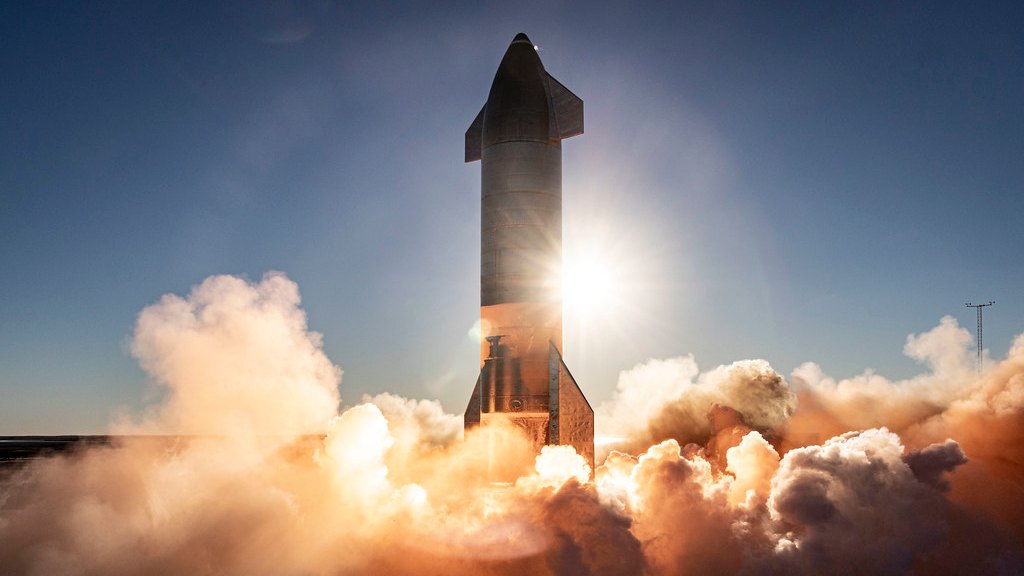
Space exploration is entering a completely new era. With the development of SpaceX Starship, humanity is preparing for missions that go far beyond low Earth orbit. Designed by SpaceX under the leadership of Elon Musk, Starship is expected to carry as many as 100 people on journeys not just around Earth but all the way to the Moon and eventually Mars.
But one question has fascinated space enthusiasts for years:
What does the inside of Starship actually look like?
Until recently, the spacecraft’s interior remained mostly a mystery. However, new insights shared by astronaut Scott Potit, who is closely connected to SpaceX missions, have finally revealed a fascinating glimpse into how astronauts might live inside this massive spacecraft during multi-day missions to the Moon.
In this article, we explore the interior layout, living spaces, engineering systems, and design philosophy behind Starship’s crewed version and how it could transform the future of deep-space travel.
Why Spacecraft Interior Design Matters More Than You Think
Some people believe that interior design in spacecraft isn’t very important. As long as the vehicle is safe and reliable, they argue, astronauts should be satisfied.
However, history proves otherwise.
For example, both the Russian Soyuz spacecraft and SpaceX Crew Dragon are highly reliable and safe spacecraft. Yet many astronauts openly say they prefer Crew Dragon.
Why?
Because Crew Dragon feels modern, spacious, and thoughtfully engineered. The interface is digital, the environment is cleaner, and the design prioritizes comfort and usability.
Even though the trip to the International Space Station usually lasts less than a day, astronauts still notice the difference.
Now imagine traveling three to four days to the Moon.
Suddenly, interior factors like:
- Lighting
- Personal space
- Layout efficiency
- Psychological comfort
- Human-centered engineering
become mission-critical elements that directly affect astronaut performance and safety.
A Rare Look Inside Starship’s Crew Module
During an interview on the The Shawn Ryan Show, astronaut Scott Potit revealed new information about Starship’s crew accommodations.
One detail surprised many people.
Instead of large luxury cabins, Starship may use compact sleeping pods.
These pods resemble the capsule-style sleeping compartments often found in Japanese capsule hotels or overnight trains.
Each pod provides just enough space for an astronaut to:
- Strap themselves securely in microgravity
- Sleep comfortably
- Maintain a small private area
But the most interesting detail is how these pods are arranged.
Spiral-Stacked Sleeping Pods
According to Potit, the sleeping compartments could be arranged in a spiral configuration, stacked vertically within Starship’s enormous pressurized hull.
This means dozens or even hundreds of compact personal pods could fit inside the spacecraft.
At first glance, this may sound less luxurious than science-fiction visions of space travel.
But in reality, it reflects a smart engineering philosophy: maximize volumetric efficiency.
Every cubic meter inside a spacecraft is incredibly valuable, and SpaceX appears to be optimizing the interior for functionality rather than luxury.
How Big Is Starship’s Habitable Volume?
The Starship Human Landing System (HLS) is expected to provide roughly 614 cubic meters of pressurized habitable space.
To put that into perspective:
- It’s about two-thirds the pressurized volume of the entire International Space Station.
- The spacecraft stands around 52 meters tall.
- Its pressure hull diameter is about 9 meters.
This makes Starship not just a lander but essentially a multi-level space habitat.
Touring the Interior of Starship Deck by Deck
Because Starship is built vertically, its interior is organized into multiple stacked decks. Let’s imagine walking through the spacecraft from the bottom to the top.
Lower Deck: Cargo, Equipment, and Airlocks
The lowest section sits just above the massive propellant tanks.
This level serves as the logistics backbone of the spacecraft.
Here you’ll find:
- Scientific equipment
- Cargo storage
- Autonomous rovers
- Life-support hardware
For lunar missions, this deck also contains dual airlocks and a dedicated elevator system used to transport astronauts to the lunar surface.
Each airlock has a volume of roughly 13 cubic meters.
That’s actually more than double the entire habitable space of the lunar module used during the Apollo 11 Moon Landing.
Positioning heavy equipment on the lowest deck also lowers the spacecraft’s center of mass, which is extremely important for stable landings on uneven lunar terrain.
Crew Living Areas: The Heart of Daily Life
Moving upward through the spacecraft, we reach the daily living spaces where astronauts will spend much of their time.
Communal Galley
Food in space isn’t just about nutrition.
Meals also play an important psychological role.
Sharing meals helps astronauts:
- Maintain morale
- Build team cohesion
- Establish a daily routine
Even in microgravity, these communal moments are vital during long missions.
Growing Fresh Food in Space
Another fascinating feature could be small aeroponic farming systems.
These allow astronauts to grow fresh vegetables inside the spacecraft.
Although most food will still be dehydrated or shelf-stable, fresh produce provides:
- Better nutrition
- Improved mental wellbeing
- A sense of connection to Earth
The Space Gym: Staying Healthy in Microgravity
A few decks higher sits the exercise area, which is absolutely essential for astronaut health.
In reduced gravity environments, the human body begins to experience:
- Muscle atrophy
- Bone density loss
- Cardiovascular changes
To counter these effects, astronauts must exercise around two hours per day.
Specialized equipment may include:
- Resistance machines
- Space treadmills
- Elastic exercise systems
This setup is similar to the training equipment currently used aboard the International Space Station.
Closed-Loop Life Support Systems
Another critical part of Starship’s interior is the environmental control and life support system (ECLSS).
This advanced system recycles resources to keep astronauts alive during long missions.
Water Recycling
Water is extremely heavy to transport from Earth.
So Starship must recycle nearly everything.
Systems onboard will collect:
- Urine
- Humidity from breath
- Condensed water vapor
The system then purifies this water into safe drinking water.
The International Space Station currently achieves around 93% water recycling efficiency, and Starship may aim for similar performance.
Without recycling, a crew of 10 astronauts on a 900-day mission could require about 27 metric tons of water, which would be impractical to launch.
Sleeping Deck: Capsule-Style Crew Pods
After passing several decks, we reach the level that houses the spiral sleeping pods described by Scott Potit.
These pods are designed to provide astronauts with private rest areas while maximizing space efficiency.
Each pod likely includes:
- Restraints for sleeping in microgravity
- Personal lighting controls
- Communication interfaces
- Storage for personal items
This design ensures astronauts have privacy while still allowing the spacecraft to accommodate large crews.
Panoramic Observation Deck
One of the most exciting areas of Starship may be its main communal observation deck.
This level could include large panoramic windows that allow astronauts to see:
- Earth shrinking in the distance
- The Moon slowly growing closer
- The vast darkness of space
This area may serve as:
- A meeting space
- Mission coordination hub
- Communication center connected through the Starlink satellite network
It’s also a place where astronauts can simply relax and experience the beauty of space.
Flight Deck: The Command Center
At the very top of Starship sits the flight deck.
This is the spacecraft’s nerve center, equipped with advanced avionics and digital control systems.
During launch and landing, astronauts will sit in articulated seats that rotate to align with the vehicle’s thrust direction.
This helps them tolerate the intense forces during:
- Liftoff
- Orbital maneuvers
- Powered vertical landings
How Starship Compares to Apollo Spacecraft
To truly appreciate Starship’s design, it helps to compare it with older spacecraft.
Astronaut Eugene Cernan, who walked on the Moon during Apollo 17, once described the Apollo Lunar Module as extremely cramped.
He recalled trying to sleep with his feet pressed against instrument panels while avoiding accidentally kicking switches.
Similarly, Neil Armstrong and Buzz Aldrin had a difficult time sleeping during Apollo 11 Moon Landing.
The cabin was:
- Noisy
- Cold
- Very cramped
In contrast, Starship’s interior is designed as a sealed and controlled habitat, far more comfortable and spacious than the spacecraft of the 1960s.
Power Systems and Energy Challenges
Running a massive spacecraft like Starship requires enormous energy.
Power is needed for:
- Heating and cooling
- Air circulation
- Navigation systems
- Life support
While solar panels are commonly used in space, their efficiency decreases as missions travel farther from the Sun.
To address this, SpaceX is reportedly studying hybrid energy solutions.
These may include:
- Large battery systems similar to Tesla Powerwall technology
- Hydrogen fuel cells
These systems would help stabilize power delivery during long missions.
Communication with Earth
Maintaining communication with Earth is essential for both mission control and astronaut morale.
Starship may rely on the Starlink satellite network to maintain high-speed connectivity.
Astronauts could potentially:
- Send messages
- Share videos
- Talk with family members
However, missions to Mars will face unavoidable signal delays of 10 to 20 minutes due to the vast distances involved.
The Microgravity Health Challenge
One of the biggest challenges for long-duration spaceflight is the effect of microgravity on the human body.
Over time, astronauts experience:
- Bone density loss
- Muscle weakening
- Circulatory changes
On short missions to the Moon, these effects are manageable.
But on a months-long journey to Mars, they become a serious medical concern.
Artificial Gravity: A Possible Future Solution
One proposed solution is artificial gravity.
This can be generated by rotating the spacecraft to create centrifugal force, simulating gravity.
Several ideas have been discussed:
- Slowly spinning the entire SpaceX Starship.
- Connecting two starships with a tether and rotating them together.
- Installing a compact onboard centrifuge for daily gravity training.
Even a small gravity force could significantly reduce the harmful effects of microgravity.
A New Era of Human Space Habitats
The interior design of SpaceX Starship reveals something remarkable.
This spacecraft isn’t just a vehicle for transportation.
It is a fully integrated deep-space habitat capable of supporting human life for extended periods beyond Earth.
With features like:
- Multi-deck living spaces
- Efficient sleeping pods
- Food production systems
- Advanced life support recycling
- Exercise facilities
- Large observation windows
Starship could redefine how humans live and work in space.
Conclusion
The newly revealed details about Starship’s interior show how carefully SpaceX is designing the future of human space travel.
From spiral sleeping pods to panoramic observation decks, every part of the spacecraft reflects a balance between engineering efficiency, astronaut health, and long-term sustainability.
While earlier missions like Apollo 11 Moon Landing proved humans could reach the Moon, Starship represents the next step: building a spacecraft where humans can truly live during deep-space journeys.
As development continues, this towering spacecraft may soon become the vehicle that carries humanity not only back to the Moon—but eventually to Mars and beyond. 🚀
FAQs
1. What is the interior design of Starship like?
The interior of SpaceX Starship is designed as a multi-deck space habitat rather than a simple spacecraft cabin. It includes cargo decks, communal living areas, sleeping pods, exercise facilities, life-support systems, observation areas, and a flight deck. The design focuses on efficient use of space, astronaut health, and long-duration missions.
2. How many astronauts can Starship carry?
According to Elon Musk, Starship could potentially carry up to 100 people depending on the mission type. However, missions to the Moon or Mars will likely carry smaller crews to ensure safety and adequate living space.
3. How large is Starship’s habitable interior space?
The Starship Human Landing System version is expected to provide about 614 cubic meters of pressurized living space, which is roughly two-thirds of the pressurized volume of the International Space Station.
4. What are Starship’s sleeping pods like?
Starship may use compact capsule-style sleeping pods arranged in a spiral configuration. These pods provide astronauts with private sleeping areas in microgravity while maximizing the spacecraft’s internal space efficiency.
5. Who revealed details about Starship’s interior?
Astronaut Scott Potit, who is connected to SpaceX missions, shared insights about the spacecraft’s interior during an interview on the The Shawn Ryan Show.
6. Will Starship have windows for astronauts to view space?
Yes. Plans suggest that Starship may include large panoramic windows in the communal observation area, allowing astronauts to see Earth, the Moon, and deep space during missions.
7. How is Starship different from older spacecraft like Apollo?
Older spacecraft such as the Apollo Lunar Module were extremely cramped and designed only for short missions. Starship, however, is built as a long-duration space habitat with multiple decks, living areas, and advanced life-support systems.
8. Will astronauts exercise inside Starship?
Yes. Starship will likely include a dedicated exercise area with treadmills and resistance machines. Astronauts typically need about two hours of daily exercise to prevent muscle and bone loss in microgravity.
9. How does Starship recycle water in space?
Starship will use advanced closed-loop life support systems similar to those on the International Space Station. These systems recycle water from urine, humidity, and condensation, turning it into clean drinking water.
10. Can astronauts grow food inside Starship?
Yes. The spacecraft may include small aeroponic farming systems where astronauts can grow fresh vegetables. While most food will still be packaged, fresh produce can boost nutrition and mental well-being.
11. What is the purpose of Starship’s lower deck?
The lower deck stores cargo, scientific equipment, life-support hardware, and lunar mission tools. It also contains airlocks and an elevator system used for lunar surface operations.
12. How tall is Starship?
The SpaceX Starship spacecraft stands roughly 52 meters tall, which is approximately the height of a 15-story building.
13. How will astronauts communicate with Earth?
Starship may rely on the Starlink satellite network for communication. This system can provide high-speed data connections for mission operations and personal messages.
14. Will astronauts experience artificial gravity on Starship?
Artificial gravity is being explored as a future possibility. One idea involves spinning the spacecraft or connecting two Starships with a tether to generate centrifugal force that simulates gravity.
15. Why is interior design important for long space missions?
Interior design affects astronaut mental health, productivity, and safety. Comfortable living spaces, proper lighting, and personal privacy help crews perform better during multi-day or multi-month missions.
16. How long would a trip to the Moon take on Starship?
A typical journey from Earth to the Moon using SpaceX Starship could take around three to four days, depending on mission trajectory and orbital maneuvers.
17. Could Starship travel to Mars?
Yes. Starship is specifically designed for interplanetary missions, including trips to Mars. SpaceX plans to eventually use fleets of Starships to transport humans and cargo to the Red Planet.
18. When will humans likely fly to the Moon on Starship?
The Starship Human Landing System is planned to support NASA’s Artemis program, which aims to return astronauts to the Moon later this decade.
Read More:
- Take A Look Inside Elon Musk’s TeraFab AI Factory
- Tesla ‘Killer’ heads to the graveyard as AFEELA taps out
- Tesla lands on Fortune’s 2026 Most Innovative Companies and the Cybercab is why
- Tesla and SpaceX to merge in 2027, Wall Street analyst predicts
- The Boring Company clears final Nashville hurdle: Music City loop is full speed ahead