
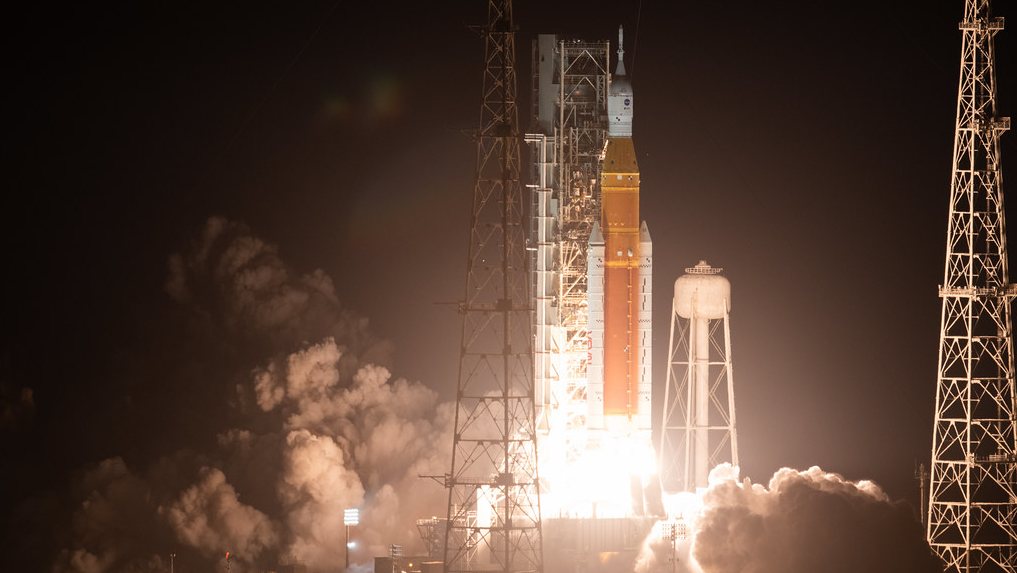
On April 1, 2026, history was made as NASA officially returned to the Moon with the launch of Artemis 2, marking the first crewed lunar mission in over 50 years. Despite the launch coinciding with April Fool’s Day, NASA emphasized that this was a full-scale operational flight, not a prank or a demonstration. This mission signifies a pivotal moment for humanity’s renewed lunar ambitions, as it sets the stage for upcoming deep space exploration, lunar landings, and a potential permanent presence on the Moon.
In this article, we’ll break down the Artemis 2 mission profile, examine the strategic implications for NASA, SpaceX, and China, highlight SpaceX’s remarkable logistical feats, and explore the record-breaking reusability achievements that are revolutionizing spaceflight.
Artemis 2: The Mission Profile
The Artemis 2 mission is a cornerstone of NASA’s ambitious Artemis program, which aims to return humans to the Moon and prepare for deep space missions. Launching at 6:35 p.m. ET from Florida, the spacecraft soared atop the Space Launch System (SLS) rocket, which produced an astonishing 8.8 million pounds of thrust. This incredible lift-off power ensured a smooth ascent for the four astronauts onboard.
Launch Sequence and Rocket Performance
The launch sequence of Artemis 2 was a spectacular display of engineering precision:
- Twin Boosters: The two boosters delivered 75% of the initial thrust, separating 2.5 minutes into flight.
- Core Stage Separation: The main core stage shut down and detached at the 8-minute, 20-second mark, ensuring the spacecraft entered the correct trajectory toward the Moon.
These stages, though brief, were critical for mission success, showcasing decades of experience and innovation in rocket design.
The 10-Day Lunar Quest
The Artemis 2 mission followed a detailed 10-day timeline, carefully designed to ensure astronaut safety and mission efficiency.
- Day 1 – System Checks and Earth Orbit Maneuvers: The crew conducted routine system diagnostics and orbital adjustments around Earth to verify that all systems were fully operational.
- Days 2–5 – Transit to the Moon: Over the next four days, Artemis 2 cruised through space, gradually approaching the Moon while maintaining the “free return” trajectory.
- Day 6 – Lunar Flyby: The spacecraft reached its closest point to the lunar surface, providing a breathtaking view for the astronauts while testing navigation and communication systems critical for Artemis 3’s lunar landing.
- Days 7–10 – Return Phase: The final stage of the mission involved re-entry maneuvers and splashdown in the Pacific Ocean, concluding a highly successful mission.
Despite minor technical glitches, including fuel leaks and valve issues at the Vehicle Assembly Building (VAB), NASA engineers resolved these challenges months prior, boosting public and political confidence in the Artemis program.
Strategic Impact: NASA vs. SpaceX vs. China
The success of Artemis 2 extends far beyond a historic flight—it has strategic implications for the global space industry.
The SpaceX Mandate
As the partner responsible for the lunar landing system, SpaceX faces significant pressure to optimize Starship for the upcoming Artemis 3 mission scheduled for 2027. The success of Artemis 2 underscores the importance of collaboration while setting a high-performance benchmark for private companies participating in lunar exploration.
The “Friendemy” Rivalry
While companies like SpaceX and Blue Origin collaborate on NASA hardware, there is an ongoing competitive race to see which company will place astronauts on the Moon during Artemis 4. This so-called “friendemy” dynamic drives innovation and efficiency, accelerating the timeline for lunar colonization.
Geopolitical Influence
NASA’s progress ensures the United States maintains its strategic edge in space exploration. Meanwhile, China is rapidly developing its own heavy-lift rockets and lunar base infrastructure. Artemis 2 demonstrates U.S. technological leadership and strengthens geopolitical influence in space, reinforcing the Moon as a critical arena for national prestige and security.
SpaceX: The Logistics King of the Cosmos
While NASA’s Artemis 2 captured the headlines, SpaceX quietly dominated orbital logistics, demonstrating why the company is considered the logistical powerhouse of the cosmos.
Transporter-16: A Rideshare Revolution
On the same day as Artemis 2’s launch, SpaceX conducted Transporter-16, a massive rideshare mission that deployed 119 payloads. These included CubeSats, microsatellites, and orbital transfer vehicles, all launched just 55 minutes after liftoff. This achievement highlights SpaceX’s efficiency in managing complex, high-volume satellite deployments.
The “Bandwagon” Missions
SpaceX’s newer Bandwagon missions have already completed four successful flights. With over 1,600 total successful payload missions, SpaceX continues to dominate the commercial spaceflight market, offering reliable, cost-effective solutions for government agencies, private companies, and international clients.
Record-Breaking Reusability: Booster B1067
One of SpaceX’s most remarkable achievements is rocket reusability, dramatically reducing costs and environmental impact. Booster B1067 set a world record for the most flights of a single booster, redefining spaceflight economics.
The 34-Flight Milestone
On April 1, 2026, B1067 landed successfully for the 34th time on the drone ship Just Read the Instructions (JRTI). This milestone proves that reusability is not just feasible—it’s practical.
Service History and High-Profile Missions
Since its debut in 2021, Booster B1067 has launched numerous high-profile missions, including:
This extensive service history demonstrates both reliability and performance under repeated stress, a critical factor for sustainable space exploration.
The Goal of 40 Flights
SpaceX aims to reach 40 flights per booster by the end of 2026, a target that would make traditional expendable rockets appear obsolete. This ambition highlights a new paradigm in spaceflight: sustainable, reusable technology that pushes the boundaries of what’s possible.
Why Artemis 2 is a Game-Changer
The Artemis 2 mission is more than a successful flight—it’s a symbol of human ingenuity and perseverance.
- Human Return to the Moon: The mission proves humans can safely travel to and from the Moon using modern technology.
- Lunar Mission Readiness: Lessons from Artemis 2 will inform Artemis 3, which aims to land astronauts on the lunar surface for the first time since Apollo 17.
- Industry-Wide Impact: The mission pressures private companies like SpaceX and Blue Origin to innovate faster, improving launch cadence, safety protocols, and spacecraft design.
- Geopolitical Significance: Artemis 2 reinforces the United States’ leadership in space, providing a strategic advantage over other nations investing in lunar exploration.
The Future of Lunar Exploration
Looking forward, the Artemis program sets the foundation for sustained human presence on the Moon. NASA aims to:
- Establish a lunar Gateway orbiting station to support long-term missions
- Develop habitats and rovers for lunar surface exploration
- Test technologies for Mars missions, using the Moon as a proving ground
Meanwhile, SpaceX continues to expand its capabilities, supporting both commercial and government-led lunar missions. Their focus on rocket reusability, rapid turnaround, and scalable payload deployment positions them as a key partner in humanity’s next giant leap.
Conclusion: A Historic Day for Humanity
April 1, 2026, marks an unforgettable milestone in space exploration. The successful launch of Artemis 2 demonstrates that humans are back on the path to the Moon after decades, while SpaceX’s logistical feats and booster reusability continue to redefine what’s possible in orbit.
As the space race accelerates, NASA, SpaceX, and international players like China are pushing the boundaries of human exploration. The Moon is no longer just a distant dream—it is a strategic, technological, and commercial frontier. With Artemis 3 on the horizon, humanity is truly entering a new era of space exploration.
Whether you’re a space enthusiast, a tech investor, or just curious about the future, Artemis 2’s success signals that the next giant leap for mankind is already underway.
FAQs
1. What is NASA’s Artemis 2 mission?
Artemis 2 is NASA’s first crewed lunar mission in over 50 years, designed to send astronauts around the Moon on a 10-day orbital flight as part of the Artemis program.
2. When did Artemis 2 launch?
Artemis 2 launched on April 1, 2026, at 6:35 p.m. ET from Florida, marking a historic human return to lunar exploration.
3. Who are the astronauts on Artemis 2?
Artemis 2 carries four astronauts, selected for their experience and expertise in deep space operations.
4. What rocket was used for Artemis 2?
The mission launched on NASA’s Space Launch System (SLS) rocket, which produces 8.8 million pounds of thrust, making it the most powerful rocket in history.
5. What is the mission timeline for Artemis 2?
The mission lasts 10 days, including Earth orbit system checks, transit to the Moon, a lunar flyby, and splashdown in the Pacific Ocean.
6. Was Artemis 2 a prank since it launched on April Fool’s Day?
No, NASA confirmed that Artemis 2 was a full operational mission, and the April 1 launch date was purely coincidental.
7. What technical challenges did NASA overcome for Artemis 2?
NASA resolved fuel leaks and valve issues at the Vehicle Assembly Building (VAB), ensuring the spacecraft’s systems were fully operational.
8. How does Artemis 2 affect SpaceX?
The success of Artemis 2 puts pressure on SpaceX to optimize Starship for the Artemis 3 lunar landing, accelerating their development timeline.
9. What is the significance of the Artemis program?
The Artemis program aims to return humans to the Moon, establish sustainable lunar missions, and prepare for Mars exploration.
10. What is a “free return” trajectory?
A free return trajectory allows a spacecraft to automatically return to Earth without major engine burns, enhancing crew safety during lunar missions.
11. How does Artemis 2 impact U.S. leadership in space?
The mission reinforces U.S. strategic and technological leadership, ensuring the United States stays ahead of countries like China in lunar exploration.
12. What is SpaceX Transporter-16?
Transporter-16 is a massive rideshare mission that deployed 119 payloads, including CubeSats, microsatellites, and orbital transfer vehicles.
13. How many successful SpaceX missions have there been?
SpaceX has completed over 1,600 successful payload missions, including crewed flights, cargo resupply, and Starlink satellite launches.
14. What record did SpaceX Booster B1067 set?
Booster B1067 set a record for 34 successful landings, proving the feasibility of rocket reusability for cost-effective spaceflight.
15. How many flights does SpaceX plan for a single booster?
SpaceX is targeting 40 flights per booster by the end of 2026, demonstrating unprecedented durability and efficiency.
16. What is Artemis 3?
Artemis 3 is the upcoming mission that will land astronauts on the Moon, building on the success of Artemis 2’s lunar flyby.
17. How does SpaceX’s reusability impact the space industry?
Rocket reusability reduces launch costs, increases launch frequency, and challenges traditional expendable rockets, making spaceflight more accessible.
18. What is the “friendemy” rivalry between SpaceX and Blue Origin?
While both companies collaborate with NASA, they compete to put astronauts on the Moon first, driving innovation in lunar technology.
19. Why is Artemis 2 historic?
Artemis 2 is historic because it marks the first human lunar mission in over five decades, testing systems that will enable sustainable lunar exploration and eventually Mars missions.
Read More:
- New Tesla Model 2 ALUMINUM-ION Battery? 10,000 Cycles, Non-Flammable, -25°C Efficiency (2026)
- Starship S39 with Raptor 3 Installed Ready to Firing! NASA Lunar Moonbase
- Tesla hit by Iranian missile debris in Israel and survives
- SpaceX to launch military missile tracking satellites through new Space Force contract
- Elon Musk reveals date of SpaceX Starship v3’s maiden voyage