


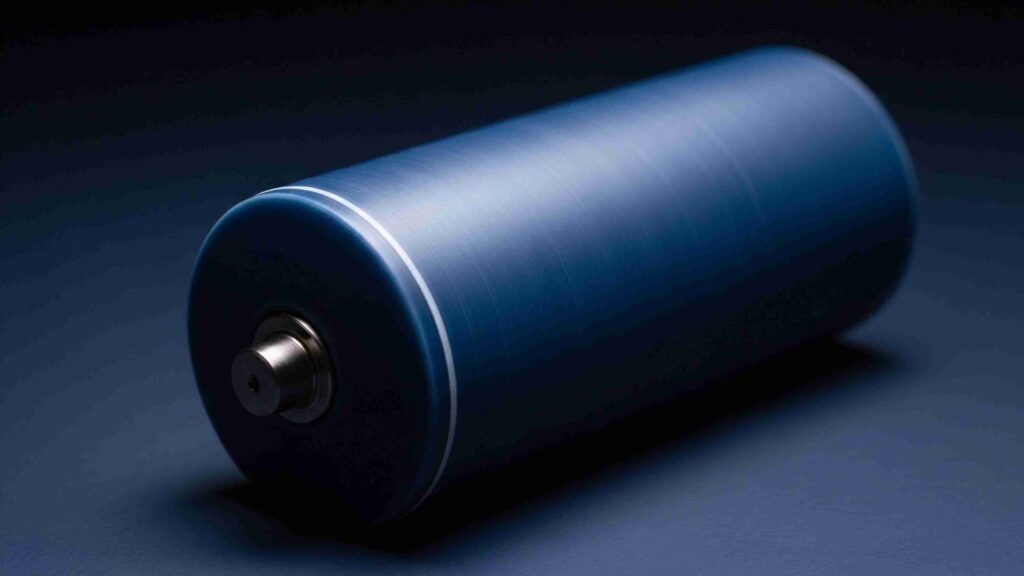
The electric vehicle world has seen countless promises of “5-minute charging” batteries over the years. Most turned out to be exaggerated, misleading, or outright scams. That’s why the recent claims from Donut Lab have sparked both excitement and intense skepticism across the EV and energy industries.
According to official reports, Donut Lab’s solid-state battery can charge from 0% to 80% in just 4.5 to 4.9 minutes under extreme laboratory conditions. Unlike flashy stage demos or edited promotional videos, this claim is backed by independent testing conducted by the VTT Technical Research Centre of Finland.
But is this truly a revolutionary breakthrough? Or is this another case of hype running ahead of reality?
Let’s break down every number, every test condition, and most importantly — the critical unanswered questions.
Why Ultra-Fast Charging Matters for EVs
Charging time remains one of the biggest barriers to widespread electric vehicle adoption. Today’s EV batteries typically charge at the equivalent of 2C to 4C rates, meaning a full charge takes anywhere from 20 to 40 minutes under ideal fast-charging conditions.
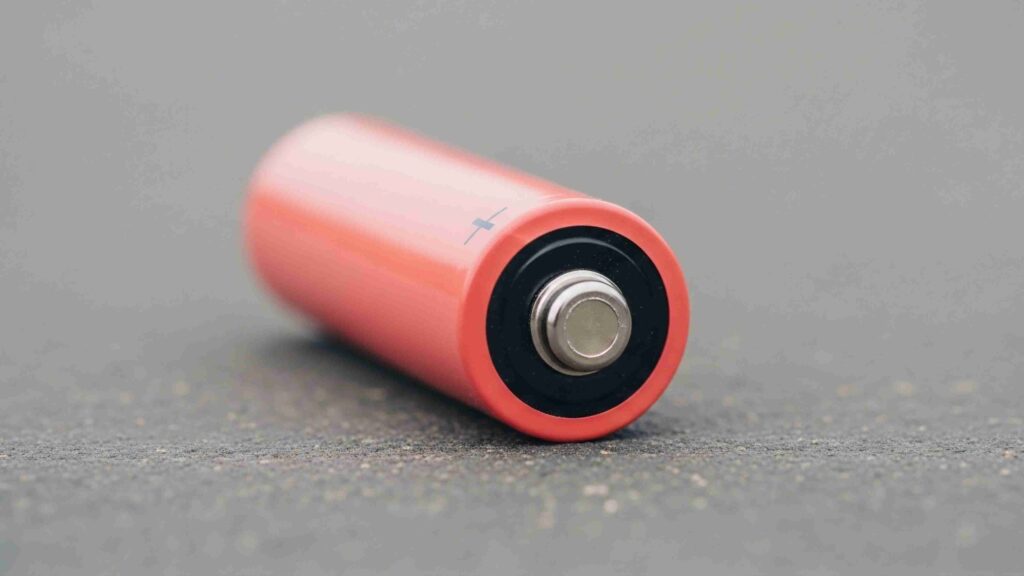
Now imagine a battery capable of charging to 80% in under five minutes. That would:
- Dramatically reduce charging station congestion
- Change infrastructure planning
- Make EV refueling feel closer to gasoline vehicles
- Transform consumer perception
An 11C charge rate — which Donut Lab’s battery reportedly achieved — is not an incremental improvement. It’s a massive leap in electrochemical performance.
The Independent Test: What Was Actually Verified?
One of the strongest points in Donut Lab’s favor is that they sought independent verification from VTT Technical Research Centre of Finland.
However, it’s critical to understand what VTT did — and did not — confirm.
What VTT Tested
- Charging performance at 5C and 11C
- Temperature behavior during charging
- Discharge capacity after fast charging
- Controlled lab conditions with active cooling
What VTT Did NOT Confirm
- The battery chemistry details
- Long-term cycle life
- Automotive certification compliance
- Energy density validation
- Mass production feasibility
The test focused exclusively on charging performance of a single cell.
And that distinction is extremely important.
Single Cell vs. Full Battery Pack: A Massive Difference
The tested unit was a single 26Ah cell with:
- Nominal voltage: 3.66V
- Energy content: ~94Wh
For comparison, a typical electric vehicle battery pack contains 70–90 kWh — nearly 1,000 times larger.
Charging a single cell in isolation is fundamentally different from charging an entire pack made up of thousands of cells. At scale, challenges multiply:
- Heat accumulation
- Cell imbalance
- Cooling uniformity
- Mechanical stress
- Localized hotspots
If a single cell struggles under extreme current, scaling becomes impossible. But even if one cell survives, scaling introduces entirely new engineering challenges.

The 5C Test Results
At a 5C rate, using constant current/constant voltage (CC/CV) charging and dual-sided heat sinks:
- 0–80% achieved in ~9.5 minutes
- Peak surface temperature: ~47°C (dual cooling)
- Over 60°C with single-sided cooling
This is already impressive. But it’s the 11C results that made headlines.
The 11C Charging Breakthrough
At an astonishing 11C rate:
- Charging current reached ~286 amps
- 0–80% achieved in 293 seconds (under 4.9 minutes)
- 0–100% reached in ~8 minutes (with dual cooling)
To put that into perspective, even the fastest EV battery systems today rarely exceed 6C at pack level.
An 11C cell is extraordinary by current industry standards.
But there’s a catch.
The Heat Problem: The Biggest Trap
Fast charging generates heat — lots of it.
At 11C:
- Peak temperature reached ~63°C (dual cooling)
- With single-sided cooling, temperature climbed toward 90°C safety thresholds, forcing test termination
This highlights a crucial issue:
The battery survived — but only with aggressive active cooling.
Previously, Donut Lab suggested their solid-state battery might not require active cooling. Yet the independent test clearly shows that passive cooling is insufficient at ultra-high C rates.
In real-world EV packs, ensuring uniform cooling for thousands of cells is an enormous engineering challenge — one that even industry giants struggle with.
Post-Charge Performance: Did the Cell Degrade?
After fast charging at 11C, the cell was discharged at ~1C. The results:
- Capacity retention between 98.4% and 99.6%
This indicates no immediate catastrophic degradation.
That’s good news.
However — and this is critical — there is no long-term cycle data at 11C.
We do not know:
- What happens after 500 cycles
- After 1,000 cycles
- After 5,000 cycles
Short-term survivability does not equal long-term durability.
The 100,000 Cycle Claim: Realistic or Fantasy?
Donut Lab has claimed up to 100,000 charge cycles.
Let’s put that into perspective:
- 1,000 cycles = solid EV battery
- 3,000–5,000 cycles = excellent (common for LFP storage systems)
- 10,000 cycles = rare and usually low energy density
100,000 cycles would imply:
- Decades of daily full charging
- Possibly over 100 years of service life
In over 30 years of lithium battery development, no chemistry has achieved anything close to this while maintaining high energy density.
This claim goes far beyond industry norms.
The 400 Wh/kg Energy Density Claim
Donut Lab also claims 400 Wh/kg.
For context:
- Most commercial EV cells: 160–300 Wh/kg
- Tesla 4680 cells reportedly approach ~300 Wh/kg
- QuantumScape has demonstrated lab-level solid-state prototypes nearing 400 Wh/kg
Theoretically plausible? Yes.
Proven in mass production? No.
The “Impossible Triangle” of Battery Design
Battery engineering is governed by trade-offs:
- Ultra-fast charging
- High energy density
- Long lifespan
In practice, companies can optimize two — rarely all three.
Ultra-fast charging increases heat and stress.
High energy density increases reactivity.
Long lifespan requires gentle conditions.
Claiming all three simultaneously — plus low cost and mass production readiness — pushes against fundamental electrochemical limits.
Industry Reaction: Skepticism from the Giants
If this breakthrough were easy, why haven’t industry leaders achieved it?
Major players like:
Spend billions annually on battery R&D.
Most are targeting 2027–2030 for scalable solid-state production.
The probability that a small startup leapfrogged all of them isn’t zero — but it’s extremely low.
CES Controversy and Public Doubt
At CES, Donut Lab reportedly displayed a battery pack shell without internal cells and did not perform live charging demonstrations.
This fueled skepticism.
The industry’s response was unusually blunt, with some EV association leaders publicly questioning the legitimacy of the claims.
To their credit, Donut Lab pursued third-party testing at VTT — a step toward credibility.
But independent validation of charging speed does not equal validation of the entire technology stack.
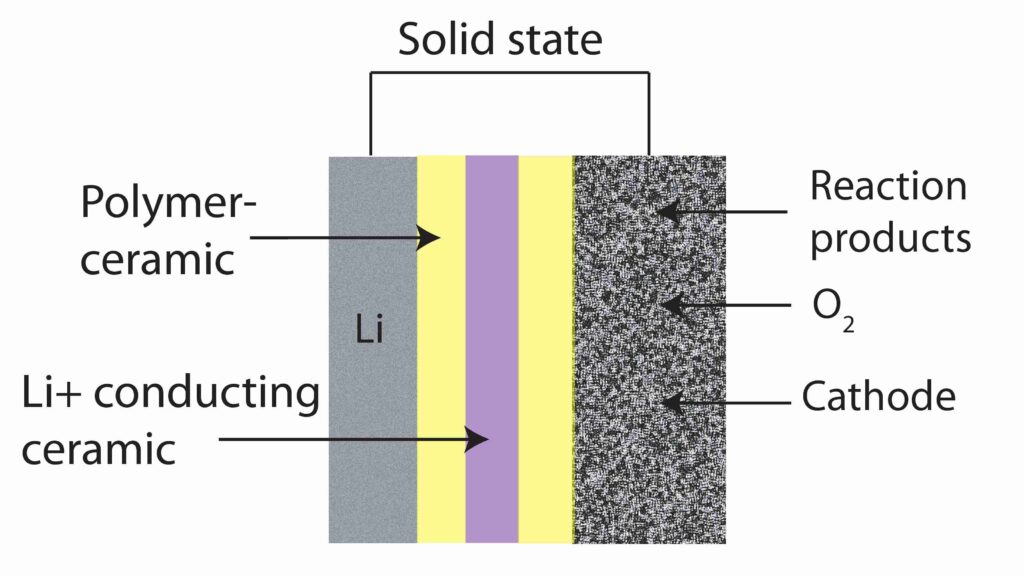
Scaling: The Real Battlefield
Laboratory success does not guarantee real-world viability.
When moving from cell to pack level, new problems appear:
- Vibration stress
- Thermal gradients
- Manufacturing defects
- Uneven aging
- Cost constraints
Battery history is filled with promising lab breakthroughs that failed during scale-up.
The real question is not:
“Can this cell charge in 4.5 minutes?”
It’s:
“Can thousands of these cells operate safely for years inside a vehicle?”
What’s Real — And What’s Still Unknown
Verified:
✔ 11C charging at cell level
✔ Independent testing at VTT
✔ No immediate catastrophic degradation
Not Verified:
✖ 100,000 cycle lifespan
✖ 400 Wh/kg mass production capability
✖ Automotive safety certification
✖ Pack-level thermal management
✖ Manufacturing scalability
Could This Change the EV Industry?
If proven at scale, this technology would:
- Disrupt charging infrastructure
- Reduce grid stress via faster turnover
- Change battery reuse economics
- Impact recycling models
- Redefine EV ownership experience
That’s precisely why skepticism is rational.
When a claim threatens to overturn decades of engineering assumptions, the burden of proof must be extraordinary.
Final Thoughts: Believe Now or Wait?
At this stage, Donut Lab’s battery appears to be:
- A promising prototype
- A scientifically interesting development
- Not yet a commercial revolution
The gap between “possible in a lab” and “ready for public roads” is enormous.
History teaches us that extraordinary claims require extraordinary evidence — long-term data, peer-reviewed research, mass-production validation, and real-world testing.
Until then, the most reasonable stance is neither blind belief nor outright dismissal.
Watch carefully. Demand transparency. Follow the data.
Because if Donut Lab truly manages to combine ultra-fast charging, high energy density, and extreme lifespan in one scalable product, it won’t just be a breakthrough.
It will be one of the most important turning points in energy technology history.
FAQs
1. What is Donut Lab claiming about its solid-state battery?
Donut Lab claims its solid-state battery can charge from 0% to 80% in under 5 minutes (around 4.5–4.9 minutes) at an ultra-high 11C charging rate, while also promising 400 Wh/kg energy density and up to 100,000 charge cycles.
2. Was the 4.5-minute charging test independently verified?
Yes. The charging test was conducted by the VTT Technical Research Centre of Finland, which verified the cell’s fast-charging performance under controlled laboratory conditions.
3. Did VTT confirm the battery chemistry?
No. VTT only verified charging performance. It did not validate the detailed battery chemistry, long-term durability, or commercial readiness.
4. What does 11C charging mean?
A C-rate measures how fast a battery charges relative to its capacity.
- 1C = full charge in 1 hour
- 2C = full charge in 30 minutes
- 11C = theoretical full charge in about 5–6 minutes
An 11C rate is extremely high compared to current EV standards.
5. How does 11C compare to today’s EV batteries?
Most electric vehicles charge at about 2C to 4C at the pack level. Even the fastest systems rarely exceed 6C. An 11C cell represents a significant leap beyond current commercial norms.
6. Was the test done on a full EV battery pack?
No. The test was performed on a single 26Ah battery cell (~94Wh). This is far smaller than a typical EV battery pack, which ranges between 70–90 kWh.
7. Why is testing a single cell different from testing a full pack?
A full pack contains thousands of cells. Scaling introduces challenges like:
- Heat buildup
- Cooling uniformity
- Cell imbalance
- Mechanical stress
- Safety management
What works in one cell may not work in a complete battery system.
8. How hot did the battery get during fast charging?
During 11C charging, temperatures reached around 63°C with dual-sided cooling. With reduced cooling, temperatures approached 90°C safety limits, forcing the test to stop.
9. Does the battery require active cooling?
Yes, at extreme charging rates. Despite earlier suggestions that active cooling might not be necessary, the test results indicate that aggressive cooling is essential at 11C.
10. Did the battery degrade after fast charging?
Immediately after the 11C test, discharge capacity remained between 98.4% and 99.6% of nominal capacity. However, no long-term cycle data was provided.
11. Has Donut Lab proven the 100,000 cycle lifespan?
No. There is currently no publicly available long-term data showing anywhere near 100,000 cycles. Such testing would take many years to verify.
12. Is 100,000 cycles realistic?
Historically, lithium battery chemistries achieve:
- 1,000 cycles (good EV battery)
- 3,000–5,000 cycles (excellent LFP systems)
- 10,000 cycles (rare, usually low energy density)
100,000 cycles would be unprecedented in high-energy-density batteries.
13. What about the claimed 400 Wh/kg energy density?
400 Wh/kg is theoretically possible in advanced solid-state designs. For comparison:
- Tesla 4680 cells reportedly approach ~300 Wh/kg.
- QuantumScape has demonstrated lab prototypes near 400 Wh/kg.
However, large-scale commercial production at that level remains unproven.
14. What is the “impossible triangle” in battery technology?
It refers to the trade-off between:
- Ultra-fast charging
- High energy density
- Long lifespan
Most battery designs can optimize only two of these three at once.
15. Why is the industry skeptical?
Major companies like:
- BYD
- CATL
- Toyota
- Samsung
Invest billions in R&D and are targeting 2027–2030 for solid-state production. A small startup claiming to surpass them raises understandable skepticism.
16. Was there controversy around Donut Lab’s CES appearance?
Yes. At CES, the company reportedly displayed a battery pack without demonstrating a working cell live, leading to criticism and accusations from some industry figures.
17. Could this technology change EV charging infrastructure?
If scalable, yes. Five-minute charging would reduce station congestion, change grid planning, and make EV refueling comparable to gasoline refills.
18. What remains unproven?
- Pack-level performance
- Long-term degradation at 11C
- Automotive safety certification
- Manufacturing cost and scalability
- Real-world environmental durability
19. Should consumers trust these claims now?
The fast-charging capability at cell level appears independently verified. However, comprehensive validation — especially at pack level and long-term use — is still needed before considering it a true revolution.
Read More:
- SpaceX’s Upgrades on Starship V4 to Refueling Lunar Lander is Really Genius
- Elon Musk shares timeframe for X Money early public access rollout
- Tesla Model Y L spotted on transport trucks in Australia
- Tesla China posts strong February wholesale growth at Gigafactory Shanghai
- Tesla and xAI team up on massive new project
- Tesla Cybercab includes this small but significant feature