


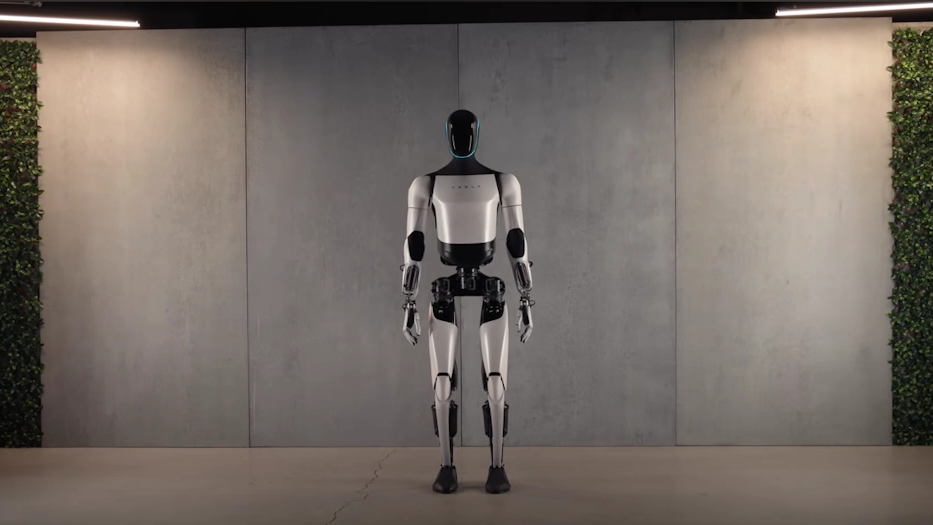
The future of robotics is no longer a distant dream—it is unfolding right in front of us. With groundbreaking advancements led by Elon Musk and Tesla, the world is witnessing the rapid evolution of humanoid robots and artificial intelligence. The latest update on Tesla’s humanoid robot program, Optimus, signals a massive leap forward in automation, AI integration, and real-world applications.
In this comprehensive blog post, we will explore the latest developments in Tesla Optimus Gen 3, production timelines, technological breakthroughs, and the revolutionary concept of Digital Optimus—a system that could redefine office work forever.
What is Tesla Optimus? A Quick Overview
Before diving into the updates, let’s understand the basics.
Tesla Optimus is a humanoid robot designed to perform repetitive, dangerous, or physically demanding tasks. Unlike traditional industrial robots, Optimus is built to mimic human movements, making it adaptable to real-world environments such as factories, offices, and even homes.
Key Purpose of Optimus
- Assist humans in labor-intensive jobs
- Improve productivity and efficiency
- Reduce workplace injuries
- Automate repetitive tasks
At its core, Optimus is not just a robot—it is a physical extension of artificial intelligence.
Elon Musk Confirms Optimus Gen 3 is Near Production
One of the most significant announcements is that Optimus Gen 3 is now in its final stage of development.
According to Elon Musk, Tesla is preparing to begin production as early as this summer. This marks a critical milestone in the journey of humanoid robotics.
Why This Update Matters
- Signals transition from prototype to real-world deployment
- Indicates Tesla’s confidence in the technology
- Positions Optimus as a leader in humanoid robotics
Musk even stated that Optimus 3 could be the most advanced humanoid robot in the world, surpassing anything currently demonstrated by competitors.
Understanding the S-Curve Production Strategy
Tesla is known for its unique S-curve production model, and Optimus will follow the same path.
What is the S-Curve?
The S-curve represents how production scales over time:
- Slow initial phase – limited production to refine the system
- Rapid growth phase – exponential increase in output
- Stabilization phase – mass production at scale
Expected Timeline
- 2026: Initial production begins
- 2027: Mass production ramps up significantly
- Beyond 2027: Widespread availability for businesses and individuals
This strategy ensures quality, reliability, and scalability before mass deployment.
Optimus Gen 3: Key Technological Breakthroughs
Optimus Gen 3 introduces several groundbreaking improvements that make it far more capable than earlier versions.
1. Advanced Dexterity with 22 Degrees of Freedom
One of the most impressive upgrades is the robot’s hand.
- Optimus 1: ~4–5 degrees of freedom
- Optimus 2: 11 degrees of freedom
- Optimus 3: 22 degrees of freedom
This allows the robot to perform highly precise and delicate tasks, such as:
- Handling fragile objects like eggs
- Using tools like screwdrivers and hammers
- Manipulating cables, fabrics, and small items
- Interacting safely with pets
2. Human-Like Precision and Control
With improved finger coordination and force control, Optimus can:
- Pour liquids without spilling
- Pick up small objects
- Operate buttons and switches
- Perform complex assembly tasks
3. Water Resistance
Another major upgrade is water resistance, enabling the robot to:
- Work outdoors
- Operate in rainy conditions
- Expand beyond factory environments
This dramatically increases its real-world usability.
Production Plans: From Thousands to Millions
Tesla is not thinking small. The company has ambitious plans to scale Optimus production rapidly.
Manufacturing Locations
- Tesla Fremont Factory
- Initial production site
- Capacity: Up to 1 million robots per year
- Gigafactory Texas
- Future large-scale production
- Potential capacity: 10 million robots annually
What This Means
If successful, this could become one of the fastest production ramps in history for such a complex machine.
Pricing Expectations: When Will It Be Affordable?
Early versions of Optimus won’t come cheap—but prices are expected to drop over time.
Estimated Pricing
- Initial cost: Around $50,000
- Future generations: Around $20,000
As production scales and technology improves, Optimus could become accessible to households, not just businesses.
Optimus Gen 4 and Beyond: A New Robot Every Year
Tesla is not stopping at Gen 3.
What’s Next?
- Optimus 4 design expected next year
- Potential annual robot releases
- Continuous improvements in AI and hardware
This rapid iteration cycle could accelerate innovation faster than traditional robotics companies.
Digital Optimus: The Future of AI Workers
While physical robots are impressive, Tesla is also working on something equally transformative—Digital Optimus.
What is Digital Optimus?
Digital Optimus is an AI-powered system developed in collaboration with xAI.
Unlike the physical robot, this system operates inside computers.
Key Capabilities
- Observes how humans use a computer
- Learns workflows in real time
- Performs tasks automatically within seconds
Potential Applications
- Accounting tasks
- Human resources management
- Data entry and analysis
- Customer support automation
In essence, Digital Optimus acts as a virtual employee powered by AI.
How Digital Optimus Could Transform Office Work
The implications of Digital Optimus are massive.
1. Automation of Repetitive Tasks
Routine tasks like data entry and reporting could be handled instantly.
2. Increased Productivity
Employees can focus on creative and strategic work instead of manual processes.
3. Reduced Operational Costs
Businesses could significantly cut costs by automating workflows.
4. Real-Time Learning
The system adapts quickly by observing human behavior, making it highly efficient.
Are Humanoid Robots Dangerous? Addressing Common Concerns
With such powerful technology, concerns are inevitable.
Common Fears
- Job loss
- Loss of human control
- Overdependence on machines
- Safety risks
The Reality
The real issue is not the robot itself—but the artificial intelligence controlling it.
Robots are tools. Their impact depends on:
- How they are designed
- Who controls them
- What purpose they serve
Key Perspective
No one builds technology to destroy their own future. Instead, these systems are designed to:
- Assist humans
- Enhance productivity
- Improve quality of life
Humans vs AI: Who Stays in Control?
Despite rapid advancements, humans remain firmly in control.
Why AI Won’t Replace Humans Completely
- AI lacks true consciousness
- Human creativity and judgment remain unmatched
- Ethical decisions require human oversight
The Future Relationship
Rather than replacement, the future is about collaboration:
- Humans handle strategy and creativity
- AI handles execution and repetition
Real-World Demonstrations and Progress
Tesla has already begun showcasing Optimus in public events.
Notable Showcase
- Appliance and Electronics World Expo 2026
At this event, Tesla demonstrated:
- Advanced robot movements
- Improved hand dexterity
- Integration with real-world tasks
These demonstrations prove that Optimus is closer to reality than ever before.
The Vision: A Self-Sustaining Robotic Future
In one of his boldest statements, Elon Musk suggested that Optimus could become a self-replicating system.
What Does This Mean?
A robot capable of:
- Building other robots
- Creating industrial systems
- Supporting large-scale infrastructure
Long-Term Possibilities
- Fully automated factories
- Smart cities powered by robots
- Even space colonization support
This concept aligns with the idea of a von Neumann machine—a system that can reproduce itself.
Why Tesla Optimus Could Change Everything
The combination of physical robots + digital AI systems is what makes Tesla’s approach unique.
Key Advantages
- Integration of AI and robotics
- Rapid production scaling
- Continuous innovation
- Real-world usability
Industries That Could Be Transformed
- Manufacturing
- Logistics
- Healthcare
- Retail
- Office work
Final Thoughts: The Real Risk and Opportunity
The rise of Tesla Optimus and Digital Optimus raises an important question:
Is the real risk coming from robots—or from how humans use AI?
The answer is clear:
Technology itself is neutral. Its impact depends entirely on human intention.
The Opportunity Ahead
- Increased productivity
- Better quality of life
- Safer work environments
- New economic possibilities
The Responsibility
- Ethical AI development
- Responsible deployment
- Human oversight
Conclusion
Tesla’s Optimus Gen 3 is not just another tech product—it represents a paradigm shift in how humans interact with machines. With production expected soon, mass adoption on the horizon, and Digital Optimus redefining office automation, the future is arriving faster than expected.
As Tesla continues to push boundaries, one thing is certain:
The age of intelligent robots is no longer science fiction—it is becoming reality.
FAQs
1. What is Tesla Optimus Gen 3?
Tesla Optimus Gen 3 is the latest version of the humanoid robot developed by Tesla, designed to perform complex physical tasks with human-like precision and intelligence.
2. When will Tesla Optimus Gen 3 be released?
According to Elon Musk, production could begin as early as summer 2026, with mass production expected around 2027.
3. How much will Tesla Optimus cost?
The initial price is estimated to be around $50,000, while future versions may drop to approximately $20,000 as production scales.
4. What can Tesla Optimus robots do?
Optimus robots can:
- Lift and transport objects
- Perform repetitive factory tasks
- Handle delicate items
- Use tools like humans
- Assist in daily activities
5. What makes Optimus Gen 3 different from previous versions?
Optimus Gen 3 features 22 degrees of freedom in its hands, improved AI, better precision, and water resistance, making it far more advanced than earlier models.
6. Will Tesla Optimus replace human jobs?
While some repetitive jobs may be automated, Optimus is designed to assist humans, not fully replace them. It will likely create new job opportunities as well.
7. What is Digital Optimus?
Digital Optimus is an AI system developed by xAI that can observe and replicate human computer tasks automatically.
8. How does Digital Optimus work?
It watches how users interact with a computer (keyboard, mouse, and screen) and then performs similar tasks within seconds using AI automation.
9. What jobs can Digital Optimus automate?
Digital Optimus can handle:
- Data entry
- Accounting
- HR processes
- Customer support
- Administrative tasks
10. Where will Tesla manufacture Optimus robots?
Tesla plans to manufacture Optimus at:
- Tesla Fremont Factory
- Gigafactory Texas
11. Is Tesla Optimus safe to use?
Yes, Optimus is designed with safety in mind. Its AI and sensors ensure controlled movements, making it safe for human interaction.
12. Can Tesla Optimus be used at home?
In the future, as prices decrease and production scales, Optimus could become a household assistant for everyday tasks.
13. What industries will benefit from Tesla Optimus?
Industries that may benefit include:
- Manufacturing
- Logistics
- Healthcare
- Retail
- Office automation
14. What is the future of Tesla humanoid robots?
Tesla aims to release new versions annually, with continuous improvements in AI, hardware, and real-world capabilities.
15. Are humanoid robots the future of AI?
Humanoid robots like Optimus represent a major step in AI evolution, combining physical automation with intelligent decision-making, making them a key part of the future.
Read More:
- New Tesla Model 2 Senior Edition ALUMINUM-ION $25K 12-min charge + 1.8M km battery life
- Tesla officially begins sunset of Model S and Model X
- Elon Musk’s $10 Trillion robot: Inside Tesla’s push to mass produce Optimus
- Elon Musk says Tesla is developing a new vehicle: ‘Way cooler than a minivan’
- Tesla Cybercab spotted next to Model Y shows size comparison