
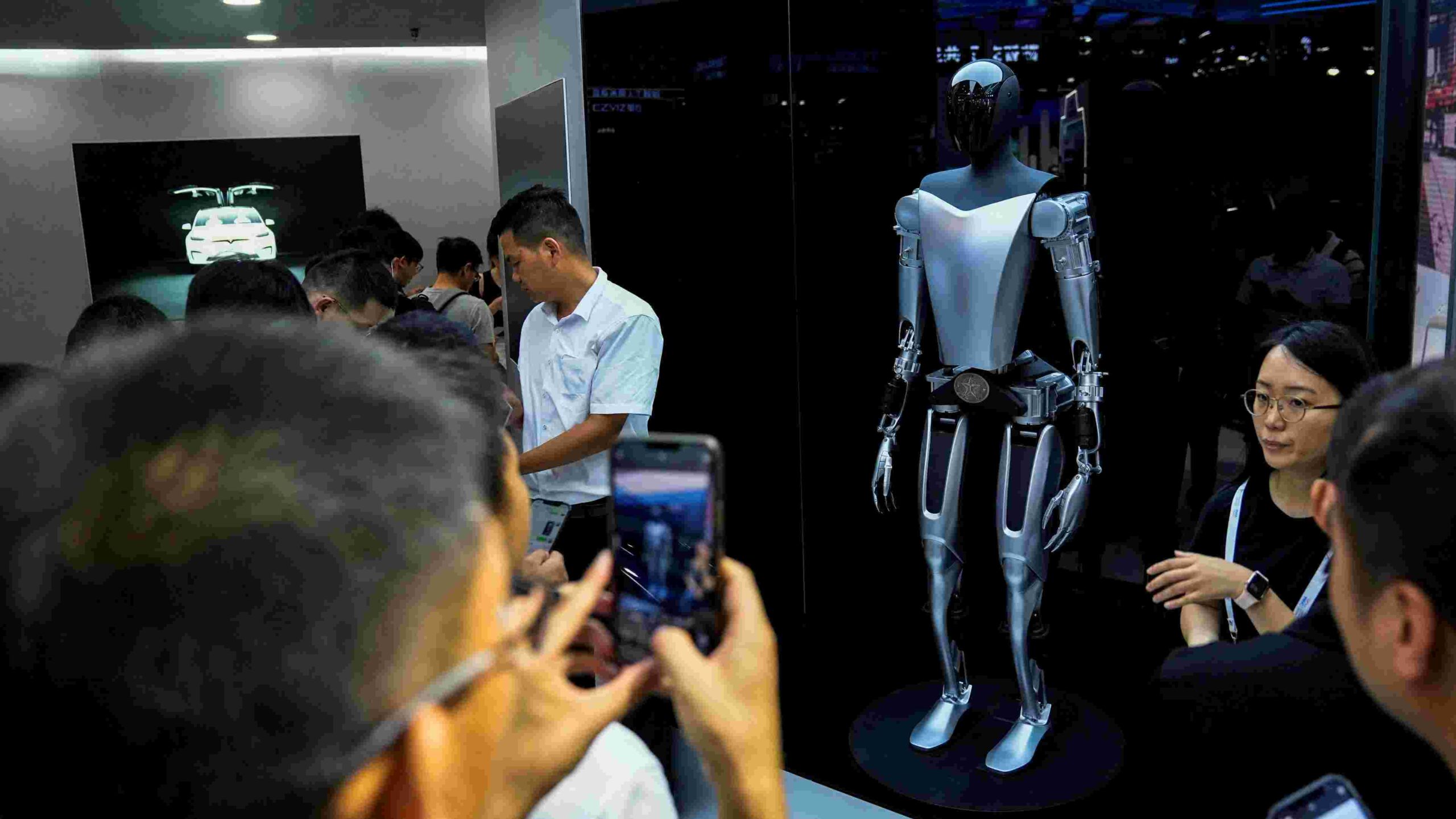
The moment a humanoid robot steps into a human kitchen and prepares a complete meal using its own hands is more than just a technological demo. It is a defining milestone that forces humanity to pause and ask a profound question: Have we officially entered a new era of human–robot coexistence?
With Tesla Bot Optimus Gen 3, Elon Musk believes the answer is yes. This is not another staged laboratory experiment or a tightly controlled industrial showcase. This is a robot designed to function inside real human environments, starting with the most complex and unforgiving space of all—the kitchen.
In this in-depth article, we explore why Tesla Optimus Gen 3 cooking a meal is revolutionary, how Tesla solved the hardest problems in humanoid robotics, and why Elon Musk calls Optimus the most important product in human history.
Why Cooking Is the Ultimate Test for Humanoid Robots
Cooking is not a simple task. It is a real-world intelligence challenge that combines perception, dexterity, timing, balance, reasoning, and adaptability.
To prepare something as basic as eggs and bacon, a robot must:
- Open a refrigerator properly
- Recognize and sort ingredients
- Handle fragile items like eggs without breaking them
- Turn on a stove safely
- Control a pan and manage heat
- Time each step with precision
- Clean up afterward
Every one of these actions requires a perfect fusion of hands, vision, and intelligence. This is why cooking cannot be faked. If a robot can cook, it has crossed the line from an industrial machine into the human world.
Elon Musk has openly stated that cooking is the harshest integrated test for a humanoid robot, and Optimus Gen 3 is designed to pass it.
Clearing the Confusion: What Optimus Gen 3 Is—and Isn’t
Before going further, it’s critical to address a common misunderstanding.
The yellow-and-black Tesla Bot images circulating online with updated arms are not Optimus Gen 3. Elon Musk himself has confirmed that:
- Those images show Optimus Gen 2 and Gen 2.5
- They were tele-operated for testing
- Optimus Gen 3 has not yet been fully revealed
This distinction matters because Gen 3 is not an experimental prototype. According to Tesla’s current plan, Optimus Gen 3 launches as a fully finished, autonomous humanoid robot, polished for real-world operation.
Unlike earlier versions that suffered falls during tele-operated testing, Gen 3 is designed to function entirely on its own.
Optimus Gen 3: Designed for the Real World
From Bumblebee to Gen 3: A Clear Evolution
Tesla’s humanoid robot journey began with the early prototype known as Bumblebee, followed by:
- Optimus Gen 1
- Optimus Gen 2
- Optimus Gen 2.5
- Now: Optimus Gen 3
Each generation brought dramatic improvements—not just in software, but in physical design, which Elon Musk says accounts for about 65% of a humanoid robot’s performance.
Why Design Matters More Than Most People Think
A humanoid robot must strike a perfect balance:
- Too heavy: Massive energy loss just to move
- Too light: Instability and constant risk of falling
- Too industrial-looking: Intimidating for human homes
- Too complex: Impossible to mass-produce affordably
Optimus Gen 2.5 already showed progress with:
- Softer, more friendly lines
- Enclosed joints
- Fewer exposed cables
- A clean, consumer-ready appearance
Optimus Gen 3 takes this even further, aiming to be welcomed into homes, not feared.
The Real Breakthrough: Fully Autonomous Intelligence
100 Open-Ended Tasks Per Day
Elon Musk states that Optimus Gen 3 can complete up to 100 open-ended tasks per day, thanks to its ability to learn and imitate human behavior.
This means Optimus is not limited to pre-programmed routines. Instead, it can:
- Observe humans
- Watch instructional videos
- Practice tasks in simulation
- Execute them naturally in the real world
Cooking daily meals and preparing breakfast are not marketing gimmicks—they are strategic milestones.
Optimus’ Brain: Not a Controller, But a Real Brain
One of the most important advances in Optimus Gen 3 is its AI architecture.
Elon Musk describes it as a real brain, not just a control system.
Learning From Video at Massive Scale
Optimus Gen 3 can:
- Watch YouTube cooking tutorials
- Observe how humans chop, stir, clean, and plate food
- Run billions of simulations in a virtual environment
- Optimize every movement before acting in the real world
Once a skill is learned by one robot, it can be shared instantly across the entire network. This collective learning is something humans can never achieve.
Why Hands Are the Hardest Problem in Robotics
Elon Musk repeatedly emphasizes one truth:
The world is designed for human hands.
The human hand has over 27 degrees of freedom, controlled by an intricate system of tendons and muscles. This allows us to:
- Thread a needle
- Play piano
- Crack an egg
- Fold laundry
- Assemble complex machinery
Most robotics companies fail here. Their robots can run, jump, box, or play table tennis, but they cannot:
- Peel an orange
- Wash vegetables
- Fold clothes
- Cook a meal
Optimus Gen 3 tackles this head-on with highly dexterous hands, each arm containing up to 26 actuators.
Beyond Cooking: Laundry as the Next Test
Cooking isn’t the only household challenge Optimus Gen 3 is designed to conquer.
Why Laundry Is Surprisingly Hard
Laundry requires:
- Sorting clothes by color and fabric
- Controlled grip to avoid tearing fabric
- Operating a washing machine
- Recognizing clothing types
- Folding with precision
Industrial robots struggle immensely with folding. Optimus’ advantage lies in its ability to learn from video tutorials, practicing virtually until it masters the task.
Completing the entire laundry cycle—from dirty clothes to neatly folded stacks—would save families hours every week.
How Much Will Optimus Gen 3 Cost?
Elon Musk estimates that at a production scale of 1 million units per year, the price of Optimus could stabilize between:
💰 $20,000 to $25,000
While that may sound expensive, consider the long-term comparison:
- Domestic help
- Personal chefs
- Elderly caregivers
- Full-time assistants
The AI chip alone costs $5,000–$7,000, highlighting the machine’s sophistication.
Tesla has already proven it can turn expensive technology—like EV batteries—into mass-market products. There’s little reason to doubt Optimus will follow the same path.
Optimus as a Money-Making Machine
Elon Musk has hinted that Optimus could help owners generate income.
Potential roles include:
- Restaurants and cafes
- Bartending
- Warehousing and logistics
- Retail assistance
- Factory labor
Tesla has already deployed robots in real operations, such as the Tesla Diner.
At an estimated purchase price of $50,000, the payback period could be 2–3 years, making Optimus a genuinely attractive investment.
Elder Care, Healthcare, and a Global Impact
One of the most transformative applications of Optimus Gen 3 lies in elder care.
The robot could:
- Assist with mobility
- Monitor vital signs
- Help with personal hygiene
- Provide companionship
- Support basic healthcare needs
As societies face aging populations and rising healthcare costs, a reliable humanoid robot could be revolutionary.
Musk even believes future versions could outperform human surgeons, delivering ultra-precise procedures without fatigue.
Why Tesla Is Uniquely Positioned to Win
Elon Musk often compares Tesla vehicles to robots on four wheels. They already have:
- Batteries
- Motors
- Power electronics
- Gearboxes
- Vision-based AI
- Custom AI chips
- Fleet learning capability
From this perspective, Optimus is simply a transition from wheels to legs and arms.
Musk identifies three barriers most companies cannot overcome:
- Dexterous arms and hands
- Real-world AI intelligence
- Mass production at enormous scale
Tesla has already solved all three.
A Future Where Work Becomes Optional
Elon Musk envisions a world where:
- Work is optional
- Basic needs are abundant
- Money matters far less
- People focus on what they truly enjoy
Optimus Gen 3 is the strongest evidence yet that this future may arrive sooner than expected.
Imagine waking up on a Sunday morning while your robot:
- Cleans the house
- Prepares breakfast
- Does laundry
- Takes care of loved ones
What once felt like science fiction is quickly becoming reality.
Final Thoughts: The Biggest Product in Human History?
Elon Musk believes Optimus may surpass the smartphone in terms of impact.
He envisions a future where everyone on Earth wants their own robot, much like R2-D2 or C-3PO—but vastly more capable, intelligent, and human-friendly.
Optimus Gen 3 cooking a meal is not the end goal—it’s the beginning.
It marks the moment when robots stop being tools and start becoming true partners in human life.
FAQs
1. What is Tesla Bot Optimus Gen 3?
Optimus Gen 3 is Tesla’s first fully autonomous humanoid robot designed to operate in real-world environments such as homes, factories, and workplaces. It represents a major leap from earlier tele-operated versions.
2. Has Tesla officially revealed Optimus Gen 3 yet?
No. Elon Musk has confirmed that Optimus Gen 3 has not been fully revealed yet. Images currently circulating online show Gen 2 and Gen 2.5 models used for testing.
3. When is Optimus Gen 3 expected to launch?
According to current plans shared by Elon Musk, Optimus Gen 3 is targeted for release around February, marking its debut as a polished, real-world-ready robot.
4. Can Tesla Bot Gen 3 really cook meals?
Yes. Cooking is one of the core benchmarks for Optimus Gen 3. It is designed to prepare full meals, including tasks like handling ingredients, cooking on a stove, and cleaning up afterward.
5. Why is cooking such a big deal for humanoid robots?
Cooking requires vision, dexterity, timing, reasoning, and real-time coordination. It cannot be reduced to repetitive motions, making it the toughest real-world test for a humanoid robot.
6. Is Optimus Gen 3 fully autonomous?
Yes. Unlike Gen 2 and 2.5, which relied heavily on tele-operation, Optimus Gen 3 is designed to function fully autonomously without human control.
7. How many tasks can Optimus Gen 3 perform?
Elon Musk estimates that Optimus Gen 3 can perform over 3,000 tasks and complete up to 100 new or open-ended tasks per day.
8. How does Optimus Gen 3 learn new skills?
Optimus learns by watching videos, observing humans, and running billions of simulations in virtual environments before executing tasks in the real world.
9. What makes Optimus’ hands special?
Each arm contains up to 26 actuators, allowing extremely precise and gentle movements. This enables Optimus to handle fragile objects like eggs and fold laundry accurately.
10. Can Optimus Gen 3 do household chores besides cooking?
Yes. Optimus is designed to handle laundry, cleaning, organizing, caregiving tasks, and general household assistance.
11. How much will Tesla Bot Optimus Gen 3 cost?
Elon Musk estimates that at large-scale production, the price could range between $20,000 and $25,000, though early versions may cost more.
12. Why is Optimus considered affordable compared to alternatives?
When compared to the long-term cost of domestic help, caregivers, or personal chefs, Optimus could be a cost-effective, one-time investment.
13. Can Optimus Gen 3 help people make money?
Yes. Optimus could work in restaurants, factories, warehouses, retail, and service roles, potentially paying for itself within 2–3 years.
14. Will Optimus replace human jobs?
Optimus is designed to take on dangerous, repetitive, or physically demanding jobs, allowing humans to focus on creative, social, and meaningful work.
15. Can Optimus Gen 3 provide elder care?
Yes. Optimus can assist with mobility support, basic health monitoring, personal care, and companionship, making it valuable for aging populations.
16. How is Tesla uniquely positioned to build humanoid robots?
Tesla already has expertise in AI, batteries, motors, mass production, and autonomous systems, giving it a major advantage over competitors.
17. Can Optimus learn from other robots?
Yes. Once one Optimus learns a new skill, the entire network of robots can acquire it instantly through collective learning.
18. Why does Elon Musk call Optimus the biggest product in history?
Musk believes Optimus could surpass smartphones in impact, eliminate poverty, make work optional, and fundamentally reshape how humans live and work.
Read More:
- Elon Musk UNBOXED $789 Tesla Pi Phone 2026! Titanium Look & Free Starlink DESTROY Apple
- SpaceX Ready to Test Starship S39 in Days after…! New NASA Leader Appointment Confirmed
- Tesla dispels reports of ‘sales suspension’ in California
- Tesla Full Self-Driving gets sparkling review from South Korean politician
- Tesla Insurance officially expands to new U.S. state
- 2026 Tesla Model 2 $15,990 Pre-Orders Start! Why Elon Musk Stayed Silent?
- NASA & SpaceX revealed new Way to Land Starship on Mars and Secretly Practicing SHOCKED China