


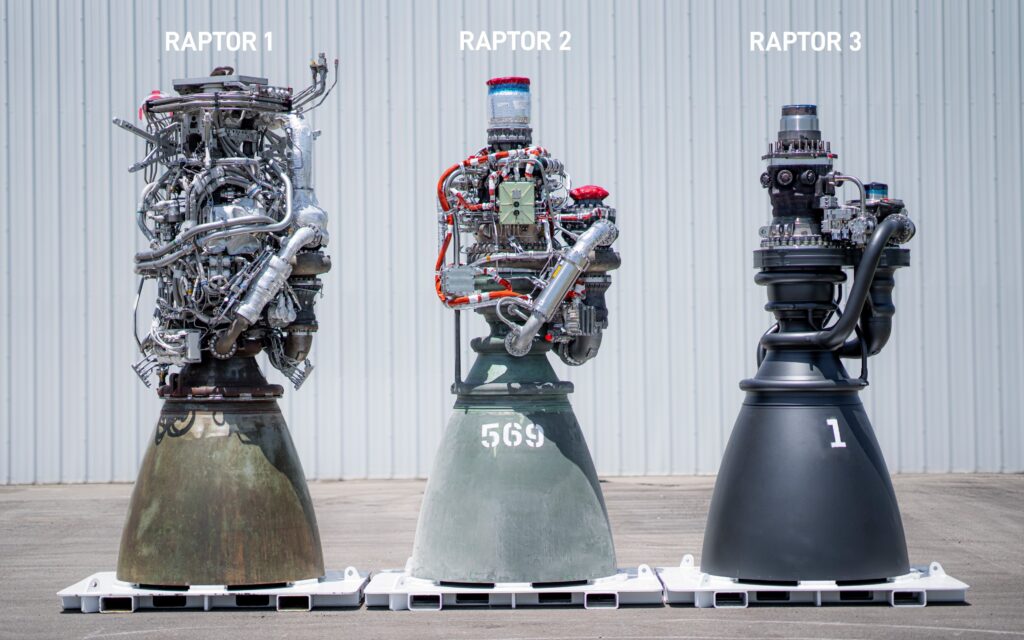
The Raptor engine has long been hailed as a technological marvel, pushing the boundaries of what’s possible in modern rocket propulsion. Yet, even SpaceX’s most powerful engine to date, the Raptor 3, is not immune to engineering setbacks. In a recent comment, Elon Musk revealed a significant technical issue with the new Raptor 3 variant, which SpaceX is currently testing and preparing for future Starship flights.
The Hidden Challenge Behind Raptor 3’s Power
SpaceX is currently in the development phase of the Raptor 3—an engine designed to be even more powerful, efficient, and simplified compared to its predecessor, the Raptor 2. But in a recent online post, Musk unexpectedly revealed a design flaw in the engine’s structure, particularly at the interface between the thrust chamber and the hot gas manifold.
“Ugly, Unreliable, and Heavy” – Musk’s Brutal Assessment
When responding to a question about engine improvements, Elon Musk didn’t mince words. He called out the bolted flange connection in Raptor 3 as being:
“Ugly, unreliable, and heavy.“
According to Musk, SpaceX plans to replace this flange with a welded joint, an upgrade that has far-reaching implications for the engine’s reliability, weight, and efficiency.
Understanding the Raptor Engine’s Critical Joint
To fully grasp the challenge, let’s understand what the thrust chamber and hot gas manifold actually do.
- The thrust chamber is where the rocket’s propellants combust, generating the extreme heat and pressure that powers flight.
- The hot gas manifold distributes the gases to other critical components, such as injectors and turbines.
These parts are joined together using a bolted flange—a mechanical connection where bolts secure the components together, often with a gasket to prevent leaks.
Why Bolted Flanges Are a Problem
In most industrial applications, bolted flanges are common. But rockets are not “most” machines. Here’s why this joint is a serious liability:
- Adds weight: The flange, bolts, and reinforcement structures increase engine mass, negatively impacting payload capacity.
- Leak risks: Under high thermal and pressure cycles, gaskets can fail, and bolts may loosen, leading to dangerous gas leaks.
- Complex assembly: Requires precise machining, increasing manufacturing time and cost.
- Aesthetic and aerodynamic issues: Bulky flanges disrupt internal gas flow dynamics.
Welding: A Better Way Forward for Raptor 3
To resolve the issue, **Musk confirmed that Raptor 3 would adopt a welded joint between the thrust chamber and manifold. This is not a trivial change—it’s a substantial engineering pivot.
Benefits of Welded Joints
Welded connections are already used extensively in rocket manufacturing, and they offer several benefits:
- Reduces weight: No bolts or gaskets means lighter overall mass.
- Improved strength and durability: Welded joints are generally stronger and more resistant to fatigue.
- Leak-proof: A continuous metal bond virtually eliminates leakage.
- Simpler appearance: Aesthetically and structurally cleaner, reducing turbulence and flow loss.
Modern techniques like laser welding and electron beam welding can create defect-free joints in high-performance alloys like Inconel or stainless steel, both used in rocket engines.
But Welding Isn’t Without Challenges
Switching to a welded joint, though seemingly ideal, isn’t without its share of technical difficulties.
Material Compatibility Issues
The thrust chamber and hot gas manifold often use different materials:
- The chamber might include copper alloys for thermal conductivity.
- The manifold may use stainless steel or Inconel for strength and heat resistance.
Welding dissimilar metals introduces the risk of creating brittle joints or intermetallic compounds, which could jeopardize the engine’s performance.
Handling Thermal Expansion
Different materials expand at different rates under extreme temperatures. A welded joint must withstand these stresses without cracking—a task that demands finite element analysis (FEA) and advanced thermal modeling.
Inspection and Maintenance Challenges
Another downside is maintainability:
- Bolted flanges can be disassembled for inspection or repairs.
- Welded joints are permanent, meaning engineers must have full confidence in durability.
Rigorous testing methods like X-ray imaging or ultrasonic scanning will be essential to ensure structural integrity.
Full Flow Staged Combustion: The Heart of the Raptor
Despite the welding setback, the Raptor 3 continues to represent a leap forward in rocket technology thanks to its full flow staged combustion cycle—a system that no other operational rocket engine uses.
What Is Full Flow Staged Combustion?
Unlike traditional engines, where a small portion of propellant powers turbines, in full flow staged combustion:
- All fuel and oxidizer are run through separate pre-burners.
- These gases then enter the main combustion chamber at high efficiency.
This method increases performance while reducing turbine stress, improving reusability—a key pillar of SpaceX’s strategy.
Historical Significance
For decades, aerospace engineers considered full flow engines too complex. While both the U.S. and USSR researched it extensively, none succeeded in bringing one to flight until SpaceX did it with the Raptor.
How Raptor 3 Differs from Its Predecessors
The Raptor 3 builds on the already revolutionary Raptor 2, with design simplifications that aim to improve manufacturability and performance. Here’s how it stands out:
- Fewer parts and welds overall.
- Improved thrust-to-weight ratio.
- Easier integration with Starship hardware.
- Now includes welded joints instead of flanges (moving forward).
Starship Flight 9: Raptor 3’s First Big Test?
With Flight 9 on the horizon, SpaceX is working rapidly to resolve the Raptor 3 issues. So far, all previous test flights have used Raptor 2 engines.
Although SpaceX has not yet released Raptor 3 test footage, leaked images and insider comments suggest that development is in full swing. Given Musk’s recent comments, we now know that refinements are still needed before these engines take their first flight.
SpaceX’s Track Record of Solving the Impossible
Let’s not forget: SpaceX has overcome seemingly insurmountable challenges in the past.
- It perfected rocket reusability.
- It landed orbital-class boosters with unmatched regularity.
- It made the full flow staged combustion engine a reality.
Given this history, there’s every reason to believe that SpaceX will fix Raptor 3’s design challenges, just as it has done before.
Why This Matters for the Future of Space Travel
SpaceX’s work on the Raptor engine isn’t just about incremental improvements. It’s about creating the foundation for Mars colonization and interplanetary missions.
A lighter, more reliable, and more efficient engine could make the difference between launching dozens of payloads a year and launching hundreds. It will power not just Starship, but potentially lunar landers, orbital refueling tankers, and deep-space habitats.
Conclusion: The Road Ahead for Raptor 3
While the revelation of the Raptor 3 “BIG PROBLEM” may sound alarming, it’s actually a natural part of cutting-edge engineering. The decision to replace the bolted flange with a welded joint is bold but necessary.
As SpaceX pushes toward Starship Flight 9, expect more Raptor upgrades, testing milestones, and perhaps new challenges. But one thing remains constant:
SpaceX is redefining what’s possible in rocketry.
With Elon Musk at the helm, the Raptor engine’s evolution is just getting started.
FAQs
1. What is the main problem with SpaceX’s Raptor 3 engine?
The main issue is the bolted flange connection between the thrust chamber and hot gas manifold, which Elon Musk called “ugly, unreliable, and heavy.” SpaceX is replacing this with a welded joint to improve performance and reliability.
2. What did Elon Musk say about the Raptor 3 engine?
Elon Musk stated that the bolted flange in Raptor 3 is a weak point and confirmed that SpaceX will switch to welded joints in future versions of the engine to eliminate this flaw.
3. How is Raptor 3 different from Raptor 2?
Raptor 3 has a simplified design, improved thrust-to-weight ratio, and fewer mechanical parts, making it easier to produce and potentially more efficient than Raptor 2.
4. Why is welding better than using bolted flanges in rocket engines?
Welded joints are lighter, more robust, and leak-proof, making them better suited for high-pressure, high-temperature environments like rocket engines.
5. Has SpaceX tested Raptor 3 on a Starship flight yet?
As of now, Raptor 3 has not flown on any Starship mission. All test flights to date have used Raptor 2 engines, but Raptor 3 is being prepared for future missions, possibly starting with Flight 9.
6. What is a full flow staged combustion engine, and why is it important?
It’s a type of rocket engine where all fuel and oxidizer pass through pre-burners before entering the combustion chamber. This maximizes efficiency and thrust, and it’s a major advancement over traditional designs.
7. What materials are used in the Raptor engine?
Raptor engines typically use Inconel, stainless steel, and copper alloys. These materials must withstand extreme heat, pressure, and vibration.
8. What risks are associated with switching from flanges to welded joints?
While welding offers advantages, it introduces risks like material incompatibility, thermal expansion issues, and the potential for defects such as cracks or voids. It also reduces maintainability.
9. How does Raptor 3 support SpaceX’s goal for Mars missions?
Raptor 3’s higher efficiency and lower mass are crucial for powering Starship, the spacecraft intended for Mars colonization. A more reliable engine increases the chance of mission success.
10. Is there any video of Raptor 3 testing?
No official test video of Raptor 3 has been released by SpaceX. Some photos have leaked, but the results and current testing status remain undisclosed.
11. What makes the Raptor engine different from other rocket engines like the RD-180 or Merlin?
Unlike engines like the RD-180 (oxygen-rich staged combustion) or Merlin (gas generator cycle), Raptor uses full flow staged combustion, making it more efficient and powerful than most engines ever built.
12. Will SpaceX fix the Raptor 3 issues before the next Starship flight?
Yes, based on past performance, SpaceX is expected to resolve the flange issue and optimize Raptor 3 before it is flown. The company has a strong record of rapid iteration and innovation.
Read More: