


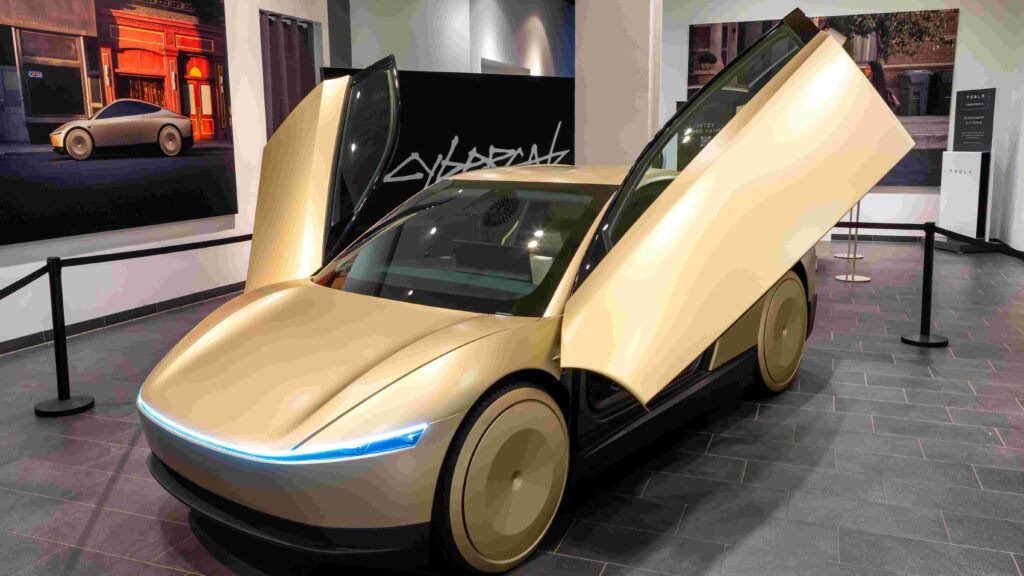
The future of transportation is evolving faster than ever, and Tesla is once again at the center of the disruption. With new confirmations from Elon Musk, the spotlight is now on two groundbreaking innovations: the Tesla Cybercab robotaxi and the ambitious Terafab AI chip manufacturing project.
These developments are not just incremental upgrades—they represent a massive leap toward a fully autonomous, AI-driven world. In this in-depth, SEO-friendly blog, we will explore everything you need to know about the Cybercab, how it differs from robotaxis, its design and technology, and how Terafab could reshape the global semiconductor industry.
What Is the Tesla Cybercab Robotaxi?
The Tesla Cybercab is one of the most unconventional vehicles ever designed by Tesla. Unlike traditional electric cars such as the Model 3 or Model Y, this vehicle is built from the ground up specifically for autonomous ride-hailing.
Cybercab vs Robotaxi: Understanding the Difference
One of the biggest misconceptions is confusing Cybercab with the broader concept of a robotaxi.
- Robotaxi: Any fully autonomous vehicle capable of operating as a taxi without a driver
- Cybercab: A specific Tesla product designed exclusively for that purpose
This means vehicles like the Model Y or Model 3 could technically become robotaxis if equipped with full self-driving (FSD). However, the Cybercab is purpose-built, making it far more optimized for this role.
A Radical Design: No Steering Wheel, No Pedals
The Cybercab breaks all traditional automotive norms.
Key Design Features
- No steering wheel
- No pedals
- Fully autonomous operation
- Wing-style automatic doors
This bold design reflects Tesla’s confidence in its Full Self-Driving (FSD) system. It also signals a future where human driving may become obsolete.
Why People Are Still Skeptical
Despite rapid progress, many people remain unconvinced that the Cybercab will be operational soon.
Common Concerns
- Safety without manual controls
- Lack of side mirrors
- Regulatory approval challenges
- Reliability of autonomous systems
However, Elon Musk has repeatedly clarified that test vehicles with mirrors and steering wheels are only prototypes. The final production version will fully embrace autonomy.
Production Timeline: Is April the Turning Point?
Tesla is reportedly planning to start mass production in early April, marking a crucial milestone.
Signs Production Is Near
- Increased testing activity in Austin
- More Cybercab sightings on public roads
- New interior and hardware leaks
- Growing logistics and transport operations
All indicators suggest Tesla is moving beyond the concept phase and entering real-world deployment preparation.
Interior Design: Minimalism Meets Functionality
The Cybercab’s interior reflects Tesla’s signature minimalist approach—but with a twist.
Notable Interior Features
- 21-inch central touchscreen
- Single emergency stop button (with braille)
- Ambient lighting for passenger comfort
- Durable, easy-to-clean materials
The inclusion of braille on the emergency button highlights Tesla’s focus on accessibility, making the vehicle usable for a wider audience.
Passenger Experience Matters
Unlike personal cars, robotaxis must handle continuous usage by different passengers. Tesla has optimized the cabin for:
- Easy cleaning
- Long-term durability
- Comfort during short rides
Advanced Camera System: The Brain of Cybercab
Cameras are the lifeline of the Cybercab’s autonomous system.
Upgraded Hardware Features
- Larger front-facing cameras
- Improved optical sensors
- Interior cabin monitoring camera
- Rear trunk camera for forgotten items
These upgrades suggest Tesla may be preparing for the next-generation AI5 hardware platform, expected around 2027.
Why Cameras Matter More Than LiDAR
Unlike competitors such as Waymo, Tesla relies primarily on vision-based systems instead of LiDAR.
This approach:
- Reduces hardware costs
- Simplifies system architecture
- Mimics human driving perception
Smart Features for Autonomous Operation
Tesla is thinking beyond just driving.
Innovative Additions
- Trunk camera to detect forgotten belongings
- High-pressure camera cleaning system
- Real-time cabin monitoring
These small but critical features ensure the Cybercab can operate independently without human oversight.
Exterior and Materials: A Manufacturing Revolution
Tesla is introducing a new approach to vehicle production.
Polyurethane Body Panels
- Color molded into the material
- No need for traditional paint shops
- Easier and cheaper repairs
According to Tesla engineers, damaged panels can simply be replaced instead of repainted, reducing maintenance costs.
Performance and Wheel Setup
The Cybercab isn’t just futuristic—it’s engineered for efficiency.
Asymmetric Wheel Configuration
- Smaller front tires
- Larger rear tires for better traction
- Aerodynamic wheel covers
This setup improves:
- Energy efficiency
- Stability
- Acceleration performance
The Terafab Project: Tesla’s Biggest Bet Yet
While Cybercab is transforming transportation, Terafab is set to revolutionize AI infrastructure.
What Is Terafab?
The Terafab project is a massive semiconductor manufacturing initiative by Tesla.
It aims to:
- Produce 100–200 billion AI chips annually
- Achieve full vertical integration
- Reduce reliance on external suppliers
Why Terafab Matters
Tesla’s demand for AI chips is skyrocketing due to:
- Full Self-Driving systems
- Dojo supercomputer
- Optimus humanoid robots
- AI model training
The Problem
Current suppliers like TSMC and Samsung may not meet future demand.
The Solution
Build an in-house terascale chip factory.
Terafab Launch Timeline
According to Elon Musk, the project is expected to launch on March 21, 2026.
This phase may include:
- Construction kickoff
- Engineering design
- Prototype testing
- Partner announcements
Economic Impact of Terafab
If successful, Terafab could:
- Create thousands of jobs
- Strengthen U.S. manufacturing
- Reduce global supply chain risks
- Position Tesla as an AI leader
A Shift Beyond Automobiles
Tesla could evolve into:
- AI company
- Robotics leader
- Semiconductor manufacturer
Competing with giants like Intel.
Rising Competition: Lucid Enters the Robotaxi Race
Tesla is no longer alone.
Introducing Lunar by Lucid
Lucid Motors has unveiled a robotaxi concept called Lunar.
Key Highlights
- Fully autonomous design
- High energy efficiency
- Fast charging capabilities
- Minimalist interior
However, Lunar remains only a concept, unlike Tesla’s near-production Cybercab.
Tesla vs Lucid: Who Has the Edge?
Tesla Advantages
- Real-world autonomous testing
- Billions of miles of driving data
- Operational FSD in multiple cities
Lucid Challenges
- No production-ready robotaxi
- Limited autonomous software experience
While Lucid excels in battery technology, Tesla leads in AI and autonomy.
The Role of AI and Robotics
Tesla’s vision goes far beyond cars.
Optimus Robot Program
Elon Musk confirmed progress on Optimus 3, the next-generation humanoid robot.
Key Goals
- Pilot production in 2026
- Mass production by 2027
- Millions of units annually
The Future Economy: Musk’s Bold Predictions
Musk envisions a world where:
- Robots handle repetitive tasks
- Productivity skyrockets
- Cost of living drops dramatically
A Post-Scarcity Society?
According to Musk:
- Goods could become extremely cheap
- Income levels could rise universally
- Money may lose its traditional importance
This vision is driven by AI, robotics, and automation.
Challenges Ahead
Despite the excitement, major hurdles remain:
Key Risks
- Regulatory approval
- Public trust in autonomy
- Technical reliability
- Massive infrastructure costs
Both Cybercab and Terafab are high-risk, high-reward ventures.
Conclusion: A Defining Moment for Tesla
The combination of the Cybercab robotaxi and Terafab project marks a turning point for Tesla.
- Cybercab could redefine urban transportation
- Terafab could power the AI revolution
- Optimus could transform labor and productivity
With bold leadership from Elon Musk, Tesla is positioning itself not just as a car company—but as a global technology powerhouse.
Final Thoughts
The road ahead is uncertain, but one thing is clear:
Tesla is not just building cars anymore—it’s building the future.
Whether Cybercab becomes mainstream or Terafab reshapes the semiconductor industry, these innovations are pushing the boundaries of what’s possible.
Stay tuned, because the next few months could define the next decade of technology.
FAQs
1. What is the Tesla Cybercab?
The Tesla Cybercab is a fully autonomous vehicle developed by Tesla, designed specifically for robotaxi services without a driver, steering wheel, or pedals.
2. How is Cybercab different from a robotaxi?
A robotaxi is a general term for any self-driving taxi, while the Cybercab is a specific product built exclusively for that purpose.
3. Does the Cybercab really have no steering wheel?
Yes, the production version of the Cybercab is expected to have no steering wheel or pedals, relying entirely on autonomous driving technology.
4. When will Tesla Cybercab production start?
Tesla is expected to begin mass production around April 2026, according to updates from Elon Musk.
5. Is the Cybercab safe without manual controls?
Tesla aims to ensure safety through advanced Full Self-Driving (FSD) systems, enhanced cameras, and AI-driven decision-making.
6. Why do some Cybercab prototypes have mirrors and steering wheels?
These are test vehicles used to comply with local regulations during development and testing phases.
7. What technology powers the Cybercab?
The Cybercab uses Tesla’s Full Self-Driving system, powered by AI chips and advanced camera-based vision systems.
8. Does Cybercab use LiDAR technology?
No, unlike Waymo, Tesla relies mainly on camera-based vision systems instead of LiDAR.
9. What is special about Cybercab’s camera system?
It features upgraded larger cameras, better sensors, and improved optical systems for enhanced environmental awareness and safety.
10. What is the Terafab project?
The Terafab project is a massive AI chip manufacturing initiative by Tesla aimed at producing billions of chips annually.
11. When will the Terafab project launch?
The project is expected to officially begin around March 21, 2026, as confirmed by Elon Musk.
12. Why is Tesla building its own chip factory?
Tesla wants to reduce reliance on companies like TSMC and ensure a stable supply of AI chips.
13. What are polyurethane body panels in Cybercab?
These panels have color molded directly into the material, eliminating the need for traditional paint shops and simplifying repairs.
14. How does Cybercab improve passenger experience?
It offers features like ambient lighting, a large touchscreen, easy-to-clean interiors, and accessibility options like braille buttons.
15. What is the role of AI in Cybercab?
AI handles driving, navigation, safety decisions, and passenger monitoring, making the vehicle fully autonomous.
16. Who are Tesla’s main competitors in robotaxis?
Major competitors include Waymo and Lucid Motors.
17. What is Lucid’s Lunar robotaxi?
Lunar is a concept autonomous vehicle introduced by Lucid Motors, but it is not yet in production.
18. What is Elon Musk’s vision for the future with AI and robots?
Elon Musk envisions a future where AI and robots increase productivity, reduce costs, and potentially create a post-scarcity economy.
Read More:
- SpaceX Did Something Never Done before on Booster V3 Test! Dream Chaser Incoming
- Elon Musk offers to pay TSA salaries as government shutdown leaves agents without paychecks
- Elon Musk launches TERAFAB: The $25B Tesla-SpaceXAI chip factory that will rewire the AI industry
- SpaceX’s NEW Genius Solution For Starship HeatShield Survive into Earth’s Atmosphere
- Elon Musk’s Tesla Future: 5 New Models, AI Breakthroughs, and the Reality of Flying Cars (2026 Guide)