



The space industry is no stranger to bold announcements, but Elon Musk’s latest hint about Starship Version 4 (V4) has ignited a new wave of excitement across the world of spaceflight, technology, and future exploration. Even before Starship Version 3 (V3) has completed a single operational mission, SpaceX is already looking ahead—much like the biggest tech giants on Earth.
This is not just another incremental upgrade. Starship V4 represents a critical leap toward humanity’s ultimate goal: landing humans on Mars. By making the world’s largest rocket even bigger, SpaceX is quietly solving some of the most difficult problems in interplanetary travel.
In this in-depth guide, we’ll break down what Starship V4 really means, why being longer is such a big deal, how it impacts Mars missions, and when we can realistically expect to see it fly.
The Tech Giant Playbook: Why SpaceX Never Stops Innovating
In today’s competitive tech world, the most successful companies follow one unspoken rule:
Never stop at the current version
- Apple starts working on the iPhone 18 while the iPhone 17 is still being sold
- Samsung and Google run parallel development teams
- Innovation never pauses

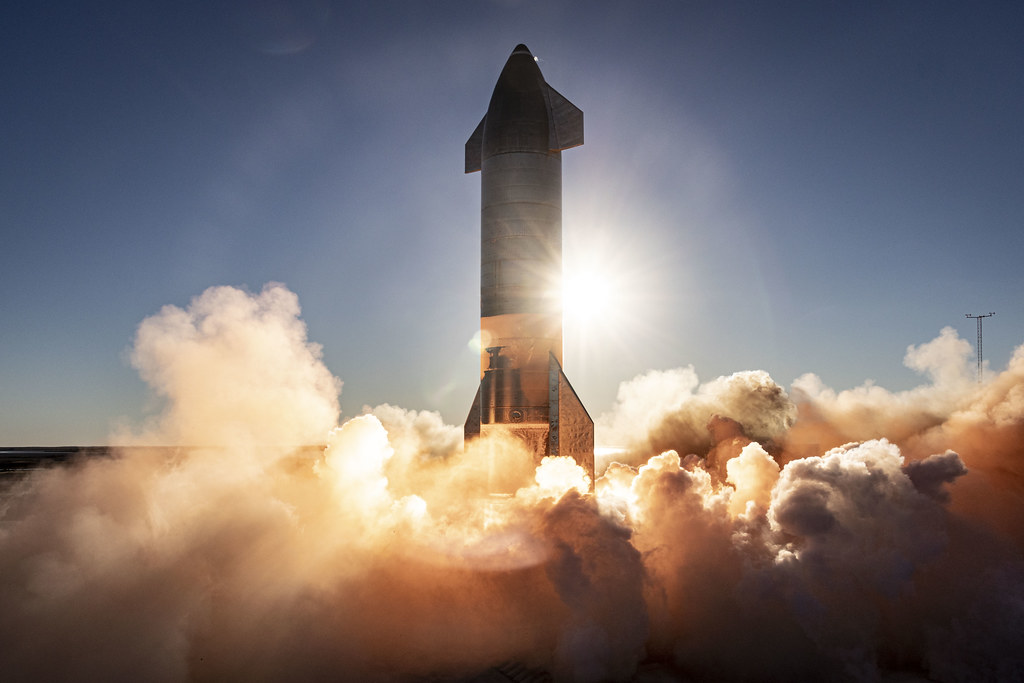
This same philosophy defines SpaceX.
Even though Falcon 9 remains one of the most reliable rockets ever built—launching thousands of satellites—Elon Musk never intended it to be the final answer. Instead, Falcon 9 was always a stepping stone.
Enter Starship
Starship is not just a rocket. It’s a fully reusable transportation system designed to:
- Return humans to the Moon
- Build permanent lunar infrastructure
- Carry humanity to Mars
Starship V3: The Beginning of a New Era
As we step into 2026, SpaceX officially enters the era of Starship Version 3.
Key Features of Starship V3
- Taller vehicle than previous versions
- Powered by Raptor 3 engines
- Dramatically higher payload capacity
- Designed for frequent, rapid reuse
When fully stacked (booster + ship), Starship V3 stands at approximately 124.4 meters tall.
Yet, before V3 even completes its first true operational flight, SpaceX engineers are already deep into the next evolution.
Starship V4: Bigger, Longer, and Built for Mars
According to Elon Musk himself, Starship Version 4 will be 10–20% longer than V3.
What Does That Actually Mean?
- V3 total height: ~124.4 meters
- V4 total height: ~142 meters
- Actual increase: ~14%
That extra length isn’t cosmetic. It directly impacts fuel capacity, mission duration, safety, and success rates for Mars missions.
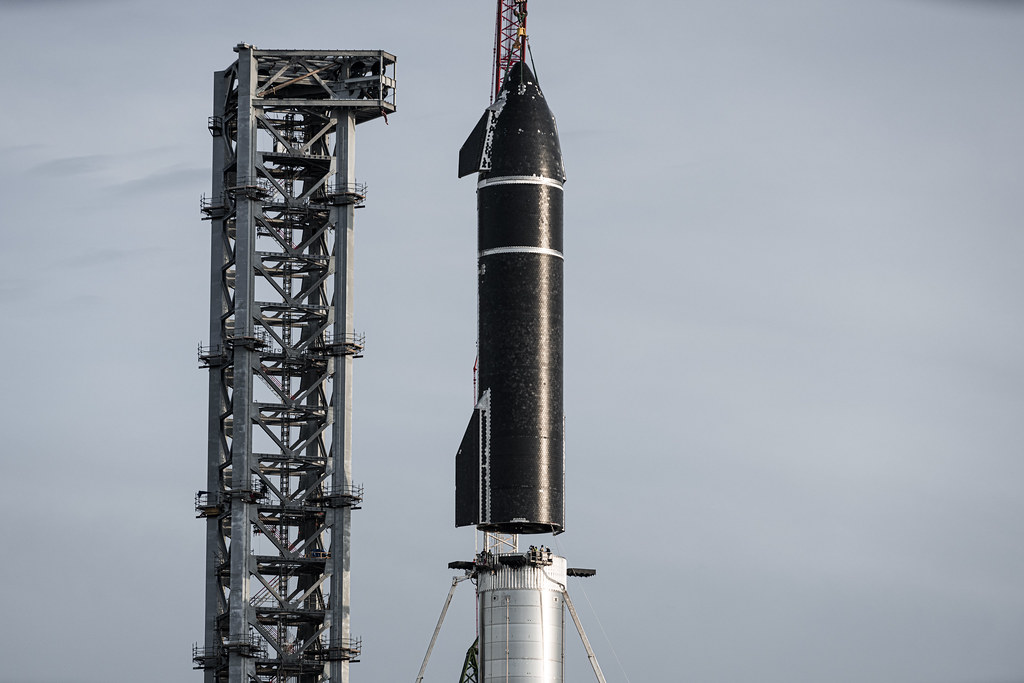
The Real Star of the Upgrade: Ship V4
To understand why this matters, we need to focus on the upper stage—the ship itself.
Ship V4 Dimensions
- Height: ~61 meters
- Increase over V3: ~9 meters
To put that into perspective:
Ship V4 alone will be nearly as tall as ULA’s Vulcan Centaur when fully stacked—a rocket already classified as heavy-lift.
Why SpaceX Keeps Making Starship Bigger
Simple answer: Mars requires massive amounts of fuel.
Fuel Is the Key to Reaching Mars
Mars is far—extremely far.
- Closest distance to Earth: ~54.6 million km (33.9 million miles)
In space, engines don’t burn continuously. Instead, they fire in short bursts to:
- Adjust trajectory
- Perform Mars orbit insertion
- Execute landing burns
Starship V3 Fuel Capacity
- ~1,600 tons of propellant
- Enough for a Mars transfer at 4–6 km/s delta-V
The Problem
At that delta-V, the journey takes 6–8 months.
Why Long Travel Time Is Dangerous
A long Mars journey creates serious challenges:
1. Radiation Exposure
Astronauts are bombarded by cosmic radiation, increasing cancer risk—similar to repeated X-ray scans over months.
2. Life Support Limits
Starship is not the ISS:
- Less redundancy
- Less shielding
- Limited long-duration comfort
3. Resource Consumption
More time = more food, water, and oxygen required.
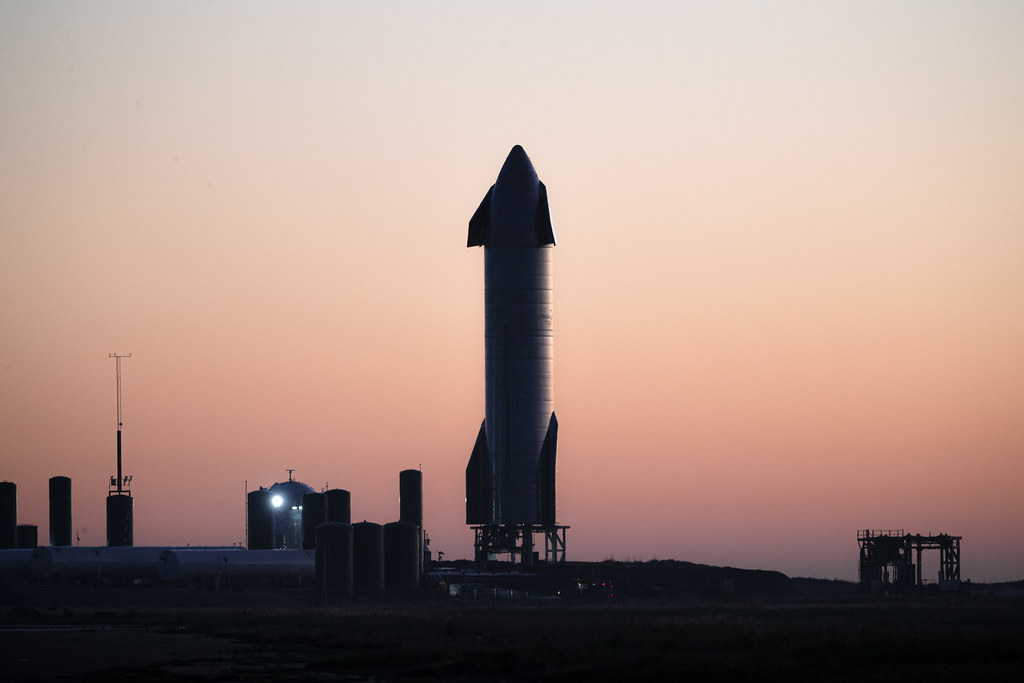
Starship V4 Solves This with One Key Advantage: More Fuel
By stretching the ship, SpaceX can extend its internal propellant tanks.
Starship V4 Fuel Capacity
- Up to 2,300 tons of propellant
With that extra fuel, Starship can:
- Push delta-V to 7–9 km/s or higher
- Reduce Mars travel time to 3–6 months
Less time in space = safer missions.
Nine Raptor Engines: Powering the Journey
Starship V4 is expected to feature:
Engine Configuration
- 9 Raptor 3 engines total
- 3 sea-level engines
- 6 vacuum engines
Total Thrust
- ~2,700 tons of thrust
This combination delivers:
- More thrust
- Higher delta-V
- Faster transit
- Reduced radiation exposure
Orbital Refueling: The Hidden Game-Changer
Before heading to Mars, Starship must refuel in orbit.
Why Refueling Matters
- Escaping Earth’s gravity consumes massive fuel
- Efficient refueling reduces mission risk
Starship V4 Tanker Advantage
With stretched tanker variants:
- No more than 5 tanker flights needed
- Full refueling in 1–2 hours
- 2,300 tons transferred efficiently
This means:
- Fewer launches
- Lower risk
- Higher mission success rates
Does a Bigger Ship Stress the Booster?
Short answer: No.
Super Heavy V4 Gets Bigger Too
- Height: ~81 meters (20-story building)
- Propellant capacity: ~4,500 tons
- 400+ tons more than V3
Engine Count
- Likely 33–35 Raptor 3 engines
Total Liftoff Thrust
- ~10,000 tons
- Three times more powerful than Saturn V
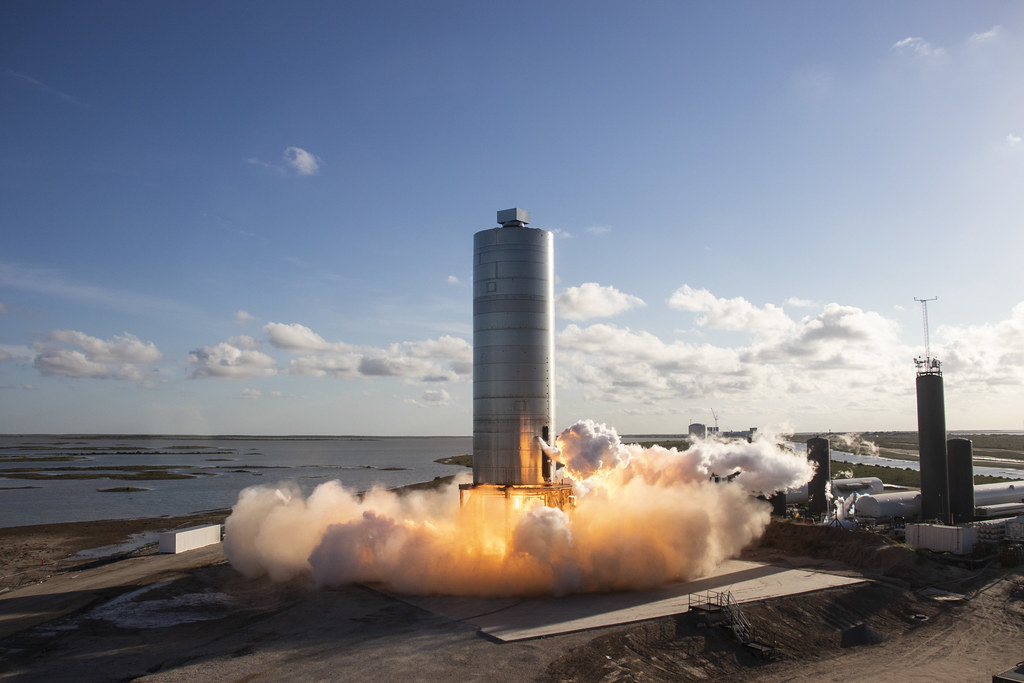
Understanding Thrust-to-Weight Ratio (TWR)
This metric determines whether a rocket can lift off.
- Below 1: No liftoff
- At 1: Barely holds position
- Above 1: Real flight begins
Starship V4 TWR
- ~1.49
That means:
- Thrust exceeds gravity by 49%
- Clean, aggressive liftoff
- Greater orbital efficiency
- Fewer tanker flights needed
Starship V4 Timeline: When Will It Fly?
Elon Musk has hinted:
Starship V4 will feature 42 engines and fly in 2027
Starship Development Timeline
- V1: 2023–2024
- V2: 2025
- V3: 2026
- V4: 2027
It almost mirrors Apple’s annual iPhone cycle—except this is the largest rocket ever built.
The Cost of Building the World’s Biggest Rocket
Estimated Cost per Full Stack
- $90–150 million
Raptor Engines
- Cost per engine: $200,000 – $1 million
- Recent estimates: Below $500,000
Engine Cost Per Stack
- $8–40 million
- ~30–40% of total cost
For comparison:
- NASA’s RS-25 engine: ~$100 million each
Gigabay and the Dream of Mass Production
Elon Musk has hinted that once Gigabay comes online:
- Production could theoretically reach 10,000 Starships per year
While unrealistic today, it highlights SpaceX’s long-term vision.
How Starship Will Actually Make Money
Short-Term: Satellite Launches
- Falcon 9 launch cost: $67 million
- Starship launch cost: 6–10× cheaper
- Target: $2–10 million per launch
Payload Advantage
- 60–90 Starlink satellites per flight
- Massive cost savings per mission
Long-Term: Moon and Mars Economy
Future revenue streams include:
- Government contracts
- Lunar base construction
- Orbital fuel depots
- Resource extraction (like Helium-3)
Some analysts predict:
New space markets worth hundreds of billions of dollars within a decade
The Bigger Picture: Why Starship V4 Matters
Starship V4 isn’t just longer—it’s smarter, safer, faster, and more economical.
By increasing size, SpaceX:
- Reduces mission risk
- Cuts travel time
- Lowers launch costs
- Increases success rates
One Destination Drives It All
Mars.
Final Thoughts
Starship V4 represents the most ambitious step yet in human spaceflight. While many see a longer rocket, SpaceX sees something else entirely:
A faster path to Mars, a sustainable space economy, and a future where humanity becomes a multi-planet species.
If Elon Musk’s timeline holds, 2027 could mark the beginning of the true Mars era—and Starship V4 will be the vehicle that makes it possible 🚀
FAQs
1. What is Starship Version 4 (V4)?
Starship V4 is the next major iteration of SpaceX’s fully reusable rocket system. It is expected to be 10–20% longer than Starship V3, with significantly more fuel capacity, higher thrust, and improved performance specifically optimized for Mars missions.
2. How much taller is Starship V4 compared to V3?
When fully stacked, Starship V4 is expected to reach about 142 meters in height, compared to approximately 124.4 meters for V3, making it roughly 14% taller overall.
3. Why is SpaceX making Starship longer?
The extra length allows SpaceX to increase internal propellant tank volume, which means:
- More fuel
- Higher delta-V
- Faster Mars travel times
- Reduced radiation exposure for astronauts
4. How much fuel will Starship V4 carry?
Starship V4 is expected to carry up to 2,300 tons of propellant, compared to about 1,600 tons in Starship V3.
5. How does Starship V4 reduce travel time to Mars?
With more fuel and higher thrust, Starship V4 can perform stronger departure burns, increasing delta-V to 7–9 km/s, potentially reducing Mars travel time from 6–8 months to just 3–6 months.
6. Why is shorter Mars travel time so important?
Shorter trips mean:
- Lower radiation exposure
- Reduced cancer risk
- Less food, water, and oxygen needed
- Improved crew safety and mission success
7. How many engines will Starship V4 have?
Starship V4 is expected to use:
- 9 Raptor 3 engines on the ship (3 sea-level + 6 vacuum)
- 33 to 35 Raptor engines on Super Heavy
This could total up to 42 engines across the full stack.
8. How powerful will Starship V4 be at liftoff?
The full Starship V4 stack could generate around 10,000 tons of thrust, making it about three times more powerful than NASA’s Saturn V, the rocket that sent humans to the Moon.
9. What is Starship’s thrust-to-weight ratio (TWR), and why does it matter?
Starship V4 is expected to have a TWR of around 1.49, meaning thrust exceeds gravity by nearly 49%. This allows:
- Clean, aggressive liftoff
- Faster climb to orbit
- Better fuel efficiency
10. Will the larger Starship V4 require more tanker launches?
No—actually the opposite. The stretched tanker version of Starship V4 could:
- Fully refuel a Mars-bound Starship with 5 or fewer tanker flights
- Complete orbital refueling in 1–2 hours
11. When will Starship V4 fly?
Elon Musk has hinted that Starship V4 could fly as early as 2027, continuing SpaceX’s rapid annual development cycle.
12. How much does it cost to build one Starship rocket?
A full Starship and Super Heavy stack is estimated to cost between $90 million and $150 million, with Raptor engines accounting for 30–40% of the total cost.
13. How much does a single Raptor engine cost?
Current estimates place the cost of a Raptor engine between $200,000 and $1 million, with recent improvements suggesting the price may already be below $500,000.
14. How will Starship make money before Mars missions?
In the near term, Starship will:
- Replace many Falcon 9 launches
- Launch 60–90 Starlink satellites per flight
- Reduce launch costs to as low as $2–10 million per mission
15. Is Starship V4 really about Mars or just bigger rockets?
While Starship V4 will dominate Earth orbit, its primary purpose is Mars. Every design choice—size, fuel capacity, engines, refueling strategy—is aimed at making human Mars missions safer, faster, and economically viable.
Read More:
- Tesla gets price target bump, citing growing lead in self-driving
- Elon Musk’s xAI closes upsized $20B Series E funding round
- Elon Musk confirms xAI’s purchase of five 380 MW natural gas turbines
- Nvidia CEO Jensen Huang explains difference between Tesla FSD and Alpamayo
- Tesla stands to win big from potential adjustment to autonomous vehicle limitations