
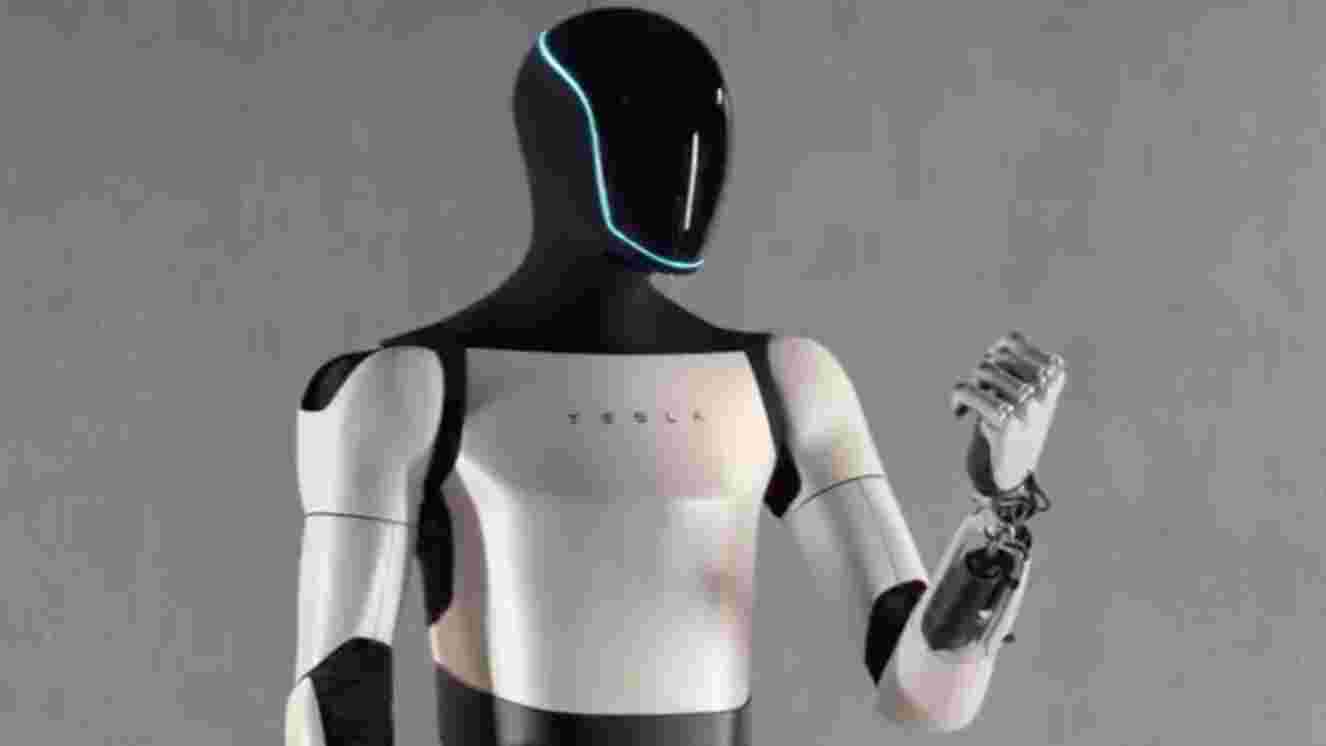
Elon Musk Reveals New Tesla Bot Production Update: The past week delivered a flood of major updates from Elon Musk, touching nearly every corner of his empire — from Tesla’s Cyber Cab and Optimus humanoid robot, to unsupervised robo taxis, new AI hardware in the Model Y, and SpaceX’s ambitious Starship V3 launch plans.
Together, these developments paint a clear picture: Tesla and SpaceX are entering a new phase of technological risk, slower early progress, and potentially explosive long-term scale. This is not about incremental upgrades. This is about entirely new platforms, new manufacturing philosophies, and new definitions of autonomy.
In this in-depth breakdown, we’ll unpack what Elon Musk actually said, why early production will be slow, what’s already happening on factory floors, and how these changes could reshape transportation, robotics, and spaceflight over the next decade.
Cyber Cab and Optimus: A New Category of Tesla Products
Production Start Date Confirmed — But With a Catch
Elon Musk confirmed that production for both the Tesla Cyber Cab and the Optimus humanoid robot is still scheduled to begin in April. On the surface, that sounds straightforward. But the real insight came from how Musk described the production ramp.
In a post on X, Musk explained:
“Initial production is always very slow and follows an S-curve. The speed of production ramp is inversely proportionate to how many new parts and steps there are.”
For Cyber Cab and Optimus, almost everything is new — meaning the early phase will be agonizingly slow, even if the end result becomes insanely fast.
This framing is critical. These products are not refreshes, not platform evolutions, and not minor experiments. They are entirely new manufacturing programs, unlike anything Tesla has previously shipped.
Why the S-Curve Matters in Tesla Manufacturing
Lessons From Model 3 “Production Hell”
Tesla has lived through this exact scenario before. The clearest historical parallel is the Model 3, Tesla’s first true mass-market vehicle.
The Model 3 introduced:
- New battery architectures
- Aggressive automation strategies
- Production volumes far beyond prior Tesla vehicles
The result was what Musk famously called “production hell.”
Tesla encountered severe bottlenecks, especially from over-automation. The dream of a fully automated “alien dreadnought” factory proved unrealistic. Machines struggled where human flexibility was still essential.
The Tent Line That Changed Tesla Forever
To break bottlenecks and increase output, Tesla erected an additional production line inside a sprung structure — the now-famous Model 3 tent line outside the Fremont factory.
At the time, critics mocked it as a sign of desperation. In reality, it worked.
More importantly, it reshaped Tesla’s entire manufacturing philosophy.
Today’s Gigafactories in:
all resemble refined, scaled-up versions of that original tent concept — simplified layouts, rapid deployment, and flexible scaling.
Why Model Y Scaled So Easily
The Advantage of a Mature Platform
The Model Y benefited enormously from these lessons. Built on the Model 3 platform, it shared:
- Major components
- Manufacturing processes
- Supply chain infrastructure
As a result, its ramp was dramatically smoother.
Tesla began delivering Model Y vehicles in spring 2020, well ahead of Elon Musk’s original estimate. It remains one of the few Tesla products to reach customers early rather than late.
That contrast explains Musk’s message perfectly:
- New platforms = slow, painful starts
- Mature platforms = rapid scaling
The Cyber Cab and Optimus clearly fall into the first category.
What Makes Cyber Cab and Optimus So Different
Tesla Cyber Cab: Built Only for Autonomy
The Cyber Cab is Tesla’s first vehicle designed from day one for full autonomy. It has:
- No steering wheel
- No pedals
- No driver controls
- Built using Tesla’s unboxed manufacturing process
This alone requires rethinking vehicle design, assembly, validation, and safety standards.
Optimus: Tesla’s Most Ambitious Product Ever
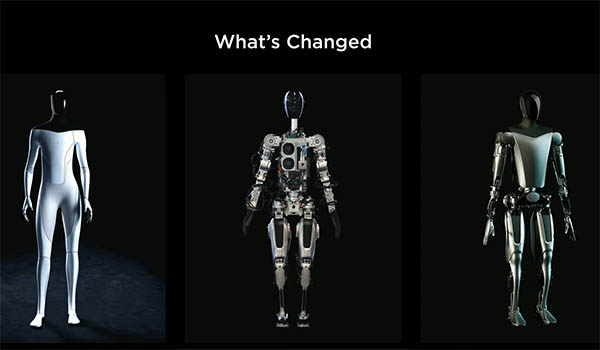
The Optimus humanoid robot may be even more challenging.
It demands:
- Precision mechanical manufacturing
- Advanced electrical systems
- Real-time AI inference
- Complex software coordination
Tesla has never attempted anything like this before. Every subsystem is new, and every mistake compounds across hardware and software.
Early Signs: Cyber Cab Production Is Already Taking Shape
Hiring Signals From Giga Texas
Tesla recently posted a job opening for a Body Fit Technician specifically dedicated to Cyber Cab end-of-line assembly at Giga Texas.
This is a major signal.
End-of-line roles typically appear when a program transitions from:
- Prototype builds
- To early production
At this stage, consistency, repeatability, and quality control become the top priorities.
Combined with Musk’s April timeline, these hires strongly suggest Cyber Cab is entering its initial manufacturing phase.
Tesla Begins Unsupervised Robo Taxi Rides in Austin
A Major Autonomy Milestone
Tesla crossed a historic threshold this week: unsupervised robo taxi rides are now available to the public in Austin, Texas.
As of January 22, riders requesting a robo taxi within Tesla’s Austin geofence may be picked up by:
- A Model Y
- No driver
- No safety monitor
- No human onboard
This is a massive leap forward for Tesla’s autonomy strategy.
Mixed Fleet Strategy for Safety
Tesla’s VP of AI, Ashok Elluswamy, confirmed that Tesla is operating a mixed fleet:
- Most vehicles still include safety monitors
- A smaller subset operates fully unsupervised
If matched with an unsupervised vehicle, riders can sit in the front seat for the first time.
Oversight hasn’t disappeared entirely. Community reports show that unsupervised robo taxis are often followed by other Tesla vehicles, acting as a transitional safety net.
The Small Hardware Change That Makes Robo Taxis Possible
Automated Camera Cleaning Systems
One of the most important — and overlooked — upgrades on Austin robo taxis is automated camera cleaning.
Observers noticed:
- Active camera sprayers on rear cameras
- Side repeater camera washers
- Similar washers on Cyber Cab B-pillar cameras
These systems are not present on consumer vehicles.
Why Camera Cleaning Is Critical for Autonomy
In supervised driving:
- A human can wipe a dirty camera
- Or take over if visibility is compromised
In unsupervised robo taxis, that option doesn’t exist.
A splash of mud or road salt could blind a camera and disable the vehicle.
By adding automated camera cleaning, Tesla eliminates a simple but potentially catastrophic failure mode in vision-only autonomy.
It’s a small hardware change with outsized importance — and one that only becomes necessary once humans are fully removed from the loop.
New Model Y Vehicles Spotted With AI Hardware 4.5
Unannounced Autonomy Upgrade
Tesla owners have begun reporting signs of a revised autonomy computer — Hardware 4.5 — in newly delivered Model Y vehicles.
The first confirmed case came from a Fremont-built 2026 Model Y AWD Premium, which featured:
- A new front camera housing
- A 16-inch center display
- An autopilot computer labeled AP4.5
Similar reports soon followed from:
- Model Y Performance owners
- Austin-built vehicles
What Hardware 4.5 Could Mean
Tesla has not formally announced Hardware 4.5, but clues have existed for some time:
- Tesla’s parts catalog previously listed HW4.5
- Software references suggest a three-SOC architecture
Previous systems used dual SOC designs for redundancy. A three-SOC setup could:
- Increase inference throughput
- Improve fault tolerance
- Serve as a bridge to future AI5 hardware
Tesla Changes Autopilot Packaging
Basic Autopilot Is Gone
Tesla has officially discontinued Basic Autopilot as a standard feature.
New vehicles now come with:
- Traffic-Aware Cruise Control
- Speed and following distance control
- No automated steering
This change further emphasizes Tesla’s push toward clearer autonomy tiers and paid software differentiation.
SpaceX Prepares for Starship V3 Launch
Flight 12 Expected As Early As March
Elon Musk announced that Starship Flight 12 is expected in about six weeks, potentially as early as March.
This flight will mark the debut of Starship Version 3.
Raptor V3: Built for Scale, Not Just Power
Starship V3 is expected to feature Raptor V3 engines, delivering:
- Nearly double the thrust of Raptor 1
- Lower weight
- Lower production cost
- Improved manufacturability
These changes aren’t just about performance. They are about making Starship economically viable as a fully reusable launch system.
Aggressive Development Despite Setbacks
Even after a structural anomaly during early V3 booster testing, SpaceX reaffirmed:
- Starship Flight 12 remains targeted for Q1 2026
Musk’s latest update suggests SpaceX is pushing hard to meet that goal.
The Bigger Picture: Why All of This Matters
When you zoom out, it becomes clear that Tesla and SpaceX are both tackling civilization-scale problems:
- Autonomous transportation
- Labor automation
- Interplanetary logistics
Progress in these domains is never linear. It follows S-curves, setbacks, and uncomfortable slow starts.
But history shows that once these curves turn upward, the acceleration can be breathtaking.
Final Thoughts
Elon Musk’s updates this week weren’t about hype. They were about setting expectations.
- Cyber Cab and Optimus will start slow
- Robo taxis are quietly crossing autonomy thresholds
- New AI hardware is already shipping
- Starship V3 is nearing flight readiness
Taken together, these signals suggest we are watching the early chapters of entirely new industries being written — in real time.
And if Tesla’s past is any indication, the slow beginnings may soon give way to something insanely fast.
FAQs
1. What is Tesla’s Cyber Cab?
Tesla’s Cyber Cab is a fully autonomous electric vehicle designed specifically for robo taxi services. It has no steering wheel or pedals and is built from the ground up for driverless operation.
2. When will Tesla Cyber Cab production begin?
Elon Musk confirmed that Cyber Cab production is scheduled to begin in April, though early output will be slow due to the vehicle’s entirely new design and manufacturing process.
3. Why will Cyber Cab production ramp up slowly at first?
According to Elon Musk, initial production follows an S-curve. Because Cyber Cab uses mostly new parts and processes, early manufacturing will be slow before accelerating rapidly later.
4. What is Tesla Optimus?
Tesla Optimus is a humanoid robot designed to perform physical tasks using advanced AI, sensors, and precision engineering. It represents Tesla’s first large-scale robotics product.
5. Why is Optimus production challenging?
Optimus requires high-precision manufacturing across mechanical, electrical, and software systems, many of which Tesla has never produced at scale before.
6. Has Tesla started hiring for Cyber Cab production?
Yes. Tesla posted job openings for Cyber Cab end-of-line assembly roles at Giga Texas, signaling a transition from prototypes to early production.
7. Where is Tesla building the Cyber Cab?
Initial Cyber Cab production is being prepared at Gigafactory Texas (Giga Texas).
8. Is Tesla offering unsupervised robo taxi rides now?
Yes. As of January 22, Tesla has begun offering unsupervised robo taxi rides to the public in Austin, Texas, with no driver or safety monitor inside the vehicle.
9. Are Tesla robo taxis completely unsupervised?
Tesla operates a mixed fleet. Some vehicles are fully unsupervised, while others still include safety monitors. Unsupervised vehicles may also be followed by support cars.
10. Why are automated camera cleaners important for robo taxis?
Automated camera cleaning systems prevent dirt, mud, or road spray from disabling cameras—critical for vision-only autonomous vehicles with no human onboard to intervene.
11. Do consumer Teslas have automated camera cleaners?
Currently, automated camera cleaners appear only on robo taxis and Cyber Cab prototypes, not standard consumer vehicles.
12. What is Tesla Hardware 4.5 (HW4.5)?
Hardware 4.5 is a newly spotted autonomy computer found in some 2026 Model Y vehicles. Tesla has not officially announced it, but evidence suggests improved AI processing capabilities.
13. Which Tesla vehicles have Hardware 4.5?
Owners have reported HW4.5 in select Fremont-built and Austin-built Model Y vehicles, including Performance trims.
14. Has Tesla removed Basic Autopilot?
Yes. Tesla has discontinued Basic Autopilot as a standard feature. New vehicles now include Traffic-Aware Cruise Control only, without automated steering.
15. When is SpaceX launching Starship V3?
Elon Musk stated that Starship Flight 12, featuring Starship V3, could launch as early as March, targeting Q1 2026.
16. What makes Raptor V3 engines special?
Raptor V3 engines are designed to deliver nearly double the thrust of earlier versions while being lighter, cheaper, and easier to manufacture, enabling full Starship reusability.
Read More:
- Tesla lands massive deal to expand charging for heavy-duty electric trucks
- Tesla owners in Sweden get direct attention from pro-union groups
- Tesla receives approval for FSD Supervised tests in Sweden
- LG Energy Solution pursuing battery deal for Tesla Optimus, other humanoid robots: report
- Tesla rolls out new Supercharging safety feature in the U.S.
1 thought on “Elon Musk Reveals New Tesla Bot Production Update 2026”