


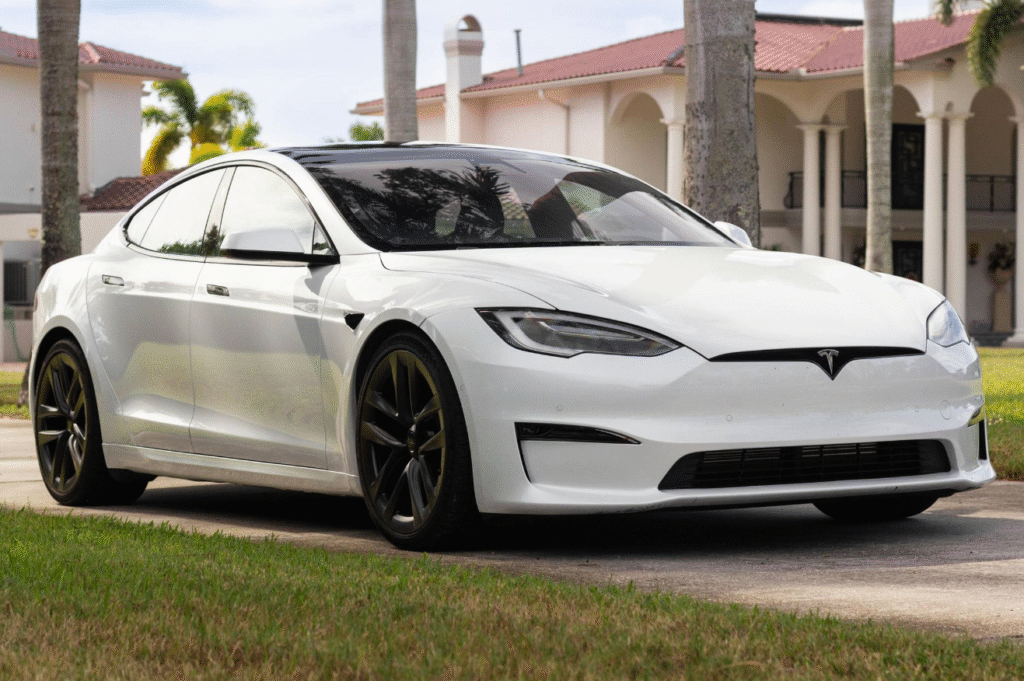
The Tesla Model 2 has been stirring up waves in the EV community throughout the first half of 2025. Unlike early rumors suggesting a hatchback, Tesla’s Vice President of Vehicle Engineering, Lars Moravey, alongside leaked images, confirms the Model 2 is actually a compact crossover. But what’s truly causing a stir is not just the design — it’s the massive price gap that potential buyers face.
Some lucky buyers could get this car for a jaw-dropping $12,370, thanks to federal incentives. Yet, others might be staring at a hefty $50,000 price tag. What explains this huge disparity? And what secrets lie behind Tesla’s aggressive production strategy?
How Is the Tesla Model 2 Priced at $12,370 for the Masses Instead of $50,000?
The Stunning Price Difference Explained
One of the most talked-about aspects of the Tesla Model 2 is its rumored price. The initial price for early or premium versions might be near $50,000, but for buyers who qualify for the full federal EV tax credit, the price can plummet to just $12,370. This is a game-changer for EV accessibility, but how does Tesla manage to achieve this?
The answer lies in Tesla’s revolutionary battery technology and production strategy.


Battery Breakthrough: From Lithium-Ion to Sodium-Ion and LFP Chemistry
Tesla is moving away from traditional lithium-ion batteries and doubling down on lithium iron phosphate (LFP) and sodium-ion batteries. This pivot underpins the significant price break for the Model 2.
- The Model 2 boasts a 50 kWh lithium iron phosphate battery delivering about 310 miles of practical range.
- Charging from 10% to 80% on a V3 Supercharger takes roughly 20 minutes.
But the real kicker? Tesla’s ongoing shift toward sodium-ion batteries, which:
- Use abundant and inexpensive materials like soda ash and seawater.
- Avoid costly metals such as cobalt and nickel, reducing ethical concerns and tariffs.
- Have the potential to cut battery pack costs from $57 per kWh to about $40 per kWh.
- Improve performance with energy density around 160 Wh/kg (compared to LFP’s 110-130 Wh/kg).
- Extend range from 310 miles to nearly 350 miles per charge.
- Enable faster charging, slashing 10-80% charge times to 10 minutes.
- Offer longer battery life with over 6,000 full cycles before capacity drops below 80%.
Tesla’s Gigafactory Advantage
Tesla’s flexible Gigafactory production lines in Texas, Berlin, and Nevada allow quick shifts from traditional LFP to sodium-ion cell production. This flexibility lets Tesla scale up sodium-ion battery manufacturing rapidly with minimal disruption.
By adopting sodium-ion batteries, Tesla can improve range, charging speed, and battery longevity, all while slashing production costs. This cost-saving could be passed directly to consumers in the form of lower prices or more advanced features.
Tesla Model 2: What To Expect From Design and Production
A Compact Crossover, Not a Hatchback
Contrary to initial speculation about a hatchback, the Model 2 is shaping up as a compact crossover — a smaller sibling to the Model Y, designed for mass-market appeal.
Visual clues from the 2023 shareholder slideshow hinted at a silhouette blending the sleekness of the Model 3 sedan and the utility of the Model Y crossover. Until the official reveal, most fans must rely on leaked drone footage and rumors.
Revolutionary Production Techniques: The Iron Giant and Giga Press
Tesla is transforming the way cars are built:
- Tesla’s Giga Press technology allows massive single-cast aluminum parts, reducing the parts count by up to 30-40% compared to older models.
- The Model 2’s chassis consists of roughly 80 parts, compared to hundreds in traditional vehicles.
- This reduces assembly time, labor costs, and increases build consistency.
- The large castings are poured at 850°C and then flash-cooled, with quality checked by cameras, X-ray scanners, and AI-driven algorithms.
- This approach saves Tesla thousands of dollars per vehicle and streamlines production dramatically.
Minimalist Interior and Efficient Architecture
Tesla’s design philosophy for the Model 2 is minimalist and efficient:
- Fewer physical buttons and cables.
- 48V electrical architecture instead of the outdated 12V system.
- A sleek, functional cabin that emphasizes usability over luxury.
This “back-to-basics” approach helps keep the price low without compromising essential features.
Who Benefits From the Federal EV Tax Credit?
The $12,370 Price is Possible With Incentives
The headline price assumes buyers qualify for the full $7,500 federal EV tax credit, a crucial factor in Tesla’s pricing strategy. Additional state incentives in places like California, Colorado, and New Jersey can further lower costs by $2,000 to $5,000.
Eligibility Limitations and $50,000 Price Tag Reality
Not everyone qualifies:
- Income limits imposed by the IRS.
- Battery sourcing must meet federal standards.
- Early adopters or premium Model 2 versions may face the $50,000 price.
This large price gap could pose a PR challenge, so Tesla must manage expectations carefully.
Tesla’s Long-Term Strategy: Democratizing EV Ownership
Tesla’s goal is clear: compress price, expand uptake, and dominate the affordable EV market before competitors catch up.
Vertical Integration: Tesla’s Secret Weapon
Tesla’s closed-loop supply chain means:
- They smelt their own batteries.
- Develop proprietary software and AI.
- Predict and manage parts shortages before they happen.
This integration reduces costs and speeds up innovation cycles, allowing Tesla to offer real savings to customers.
Affordability Without Sacrificing Quality
The Model 2 promises:
- A practical range of 350 miles.
- Rapid charging.
- Reliable battery chemistry.
- Access to Tesla’s full ecosystem, including software updates, Supercharger network, and Autopilot features.
What Are the Trade-Offs?
No Luxury Features, But Plenty of Value
Buyers should expect:
- A no-frills commuter.
- Basic interiors with no leather or panoramic glass roofs.
- Focus on functionality and affordability.
Tesla is chasing scale over opulence, making electric mobility accessible to more people.
Will Sodium-Ion Batteries Deliver?
While promising, sodium-ion tech is relatively new and still under scrutiny regarding:
- Cold weather performance.
- Longevity in real-world conditions.
- Fast charging capabilities.
Tesla’s continuous R&D investment suggests these issues will improve with scale.
What Does This Mean for the Future of Electric Vehicles?
Tesla’s Model 2 is more than just a new car; it’s a proof of concept for affordable, mass-market EVs.
- If successful, the Model 2 could redefine EV affordability.
- It challenges competitors to innovate or lose market share.
- Buyers get a vehicle that ages like a smartphone—constantly updated and evolving through software.
Final Thoughts: Are You Ready to Join the Tesla Revolution?
The Tesla Model 2 represents a bold gamble by Tesla to deliver affordable, practical, and innovative electric vehicles to the masses. While not every buyer will qualify for the lowest prices, Tesla’s advancements in battery tech, production efficiency, and vertical integration promise to shake up the automotive industry.
What Do You Think?
- Are you excited about a Tesla Model 2 at just $12,370 with full incentives?
- Do you trust sodium-ion batteries to power your daily commute?
- Would you sacrifice luxury features for affordability and advanced tech?
Share your thoughts in the comments below!
FAQs
1. What is the Tesla Model 2?
The Tesla Model 2 is Tesla’s upcoming compact crossover EV, designed to be smaller and more affordable than the Model Y.
2. How much does the Tesla Model 2 cost?
The base price can be as low as $12,370 with federal EV tax credits, but without incentives, the price could be as high as $50,000.
3. Why is there such a big price difference for the Model 2?
The price gap depends largely on eligibility for the federal EV tax credit and state incentives, as well as the battery technology used.
4. What kind of battery will the Tesla Model 2 use?
Tesla is shifting to more cost-effective battery chemistries like sodium-ion and lithium iron phosphate (LFP) batteries for the Model 2.
5. How far can the Tesla Model 2 travel on a single charge?
The Model 2 is expected to deliver around 310 to 350 miles of range, depending on the battery chemistry.
6. How fast can the Tesla Model 2 charge?
With V3 Superchargers, the Model 2 can charge from 10% to 80% in 10 to 20 minutes, depending on the battery technology.
7. Will the Tesla Model 2 be a hatchback or crossover?
Recent confirmations and leaked images reveal that the Model 2 will be a compact crossover, not a hatchback as previously rumored.
8. When will the Tesla Model 2 be available?
Limited early access is expected by mid-2026, with a full rollout planned for late 2026 across major markets.
9. Where will Tesla produce the Model 2?
Production will take place in U.S.-based Gigafactories, including Texas and Nevada, helping to reduce tariffs and qualify for incentives.
10. What are the advantages of sodium-ion batteries?
Sodium-ion batteries are cheaper, use abundant materials, have a longer lifespan, and improve charging times and cold-weather performance.
11. Does the Tesla Model 2 support autopilot and advanced features?
Yes, the Model 2 will offer Tesla’s signature software features, including autopilot and over-the-air updates.
12. Is the Model 2 a good option for budget-conscious buyers?
Absolutely. With its low price point after incentives and Tesla’s cutting-edge tech, the Model 2 aims to be one of the most affordable EVs on the market.
13. How does Tesla’s production method reduce costs for the Model 2?
Tesla uses advanced casting technology to create large single-piece body parts, reducing parts and assembly time by 30-40%.
14. What is the expected performance of the Model 2?
The Model 2 should accelerate from 0 to 60 mph in about 5.5 to 6 seconds, thanks to improved battery energy density.
15. Will the Tesla Model 2 be reliable in extreme weather?
Thanks to sodium-ion chemistry, the Model 2 will retain better battery capacity in cold weather compared to traditional LFP batteries.
Read More:
- Elon Musk revealed the Real Reason ‘It’s time to Destroy NASA Space Station’…Bad for Dragon?
- Tesla sets November 6 date for 2025 Annual Shareholder Meeting
- Tesla begins Robotaxi certification push in Arizona: report
- It Happened! Elon Musk LEAKED Tesla Semi Massive At New Giga! 50.000 Big Rigs Producing
- Tesla executive teases plan to further electrify supply chain