


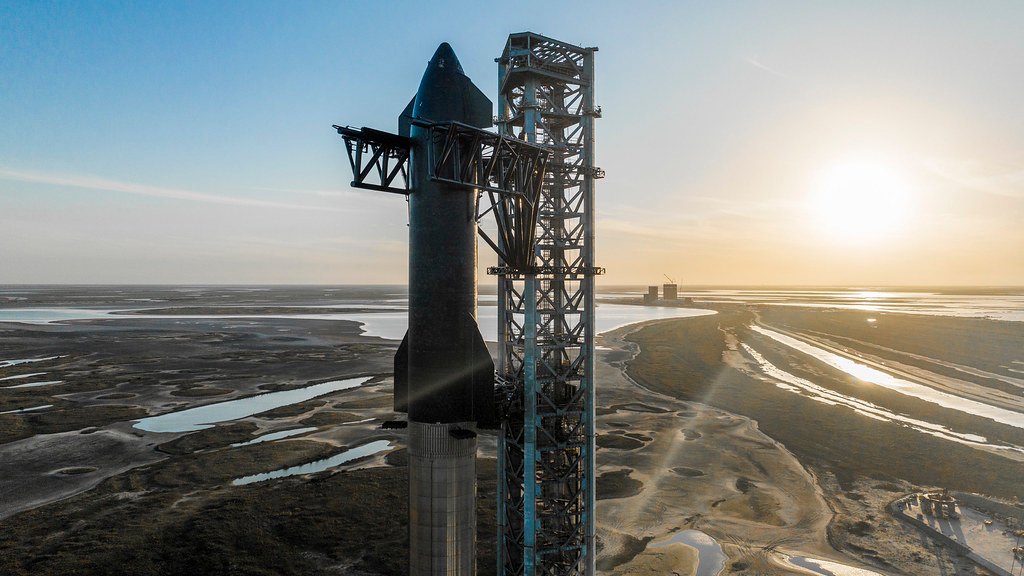
Full reusability has always been the ultimate goal of SpaceX. Not just landing boosters. Not just soft splashdowns. But recovering and rapidly reusing every major component of its most ambitious rocket system ever built: Starship.
Now, that vision may be closer than many expected.
The missing milestone? Catching the upper stage midair with the launch tower’s mechanical arms.
And according to Elon Musk, the first attempt could arrive sooner than anticipated.
In this deep dive, we break down the timeline, the engineering challenges, the risks, and why catching Starship could reshape the economics of spaceflight forever.

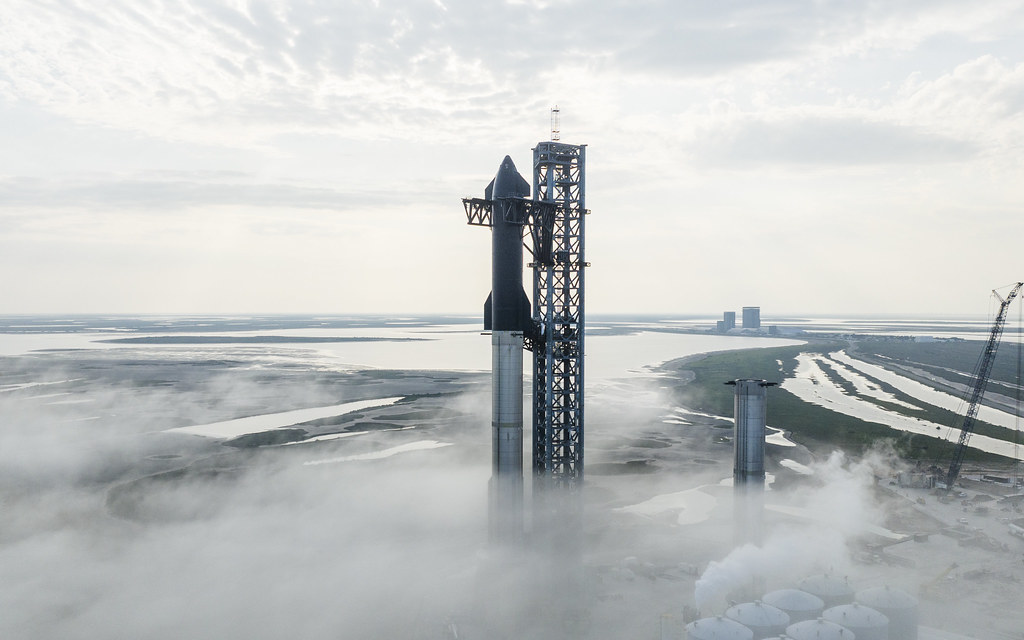
The Final Piece of Full Reusability
For years, SpaceX has pushed toward complete orbital reuse. The company has already demonstrated booster recovery with Falcon 9, transforming the launch industry.
But Starship is different.
It’s designed as a fully reusable two-stage orbital system, consisting of:
- The Super Heavy booster
- The Starship upper stage
While catching the booster has already been demonstrated in testing, catching the upper stage remains the final, revolutionary step.
Instead of:
- Splashing down in the ocean
- Landing on a concrete pad
The upper stage would:
- Re-enter Earth’s atmosphere
- Perform a landing burn
- Precisely guide itself into the tower’s “chopstick” arms
This would eliminate:
- Ocean recovery operations
- Lengthy transport delays
- Extended refurbishment timelines
It’s the difference between experimental rocketry and airline-style space operations.
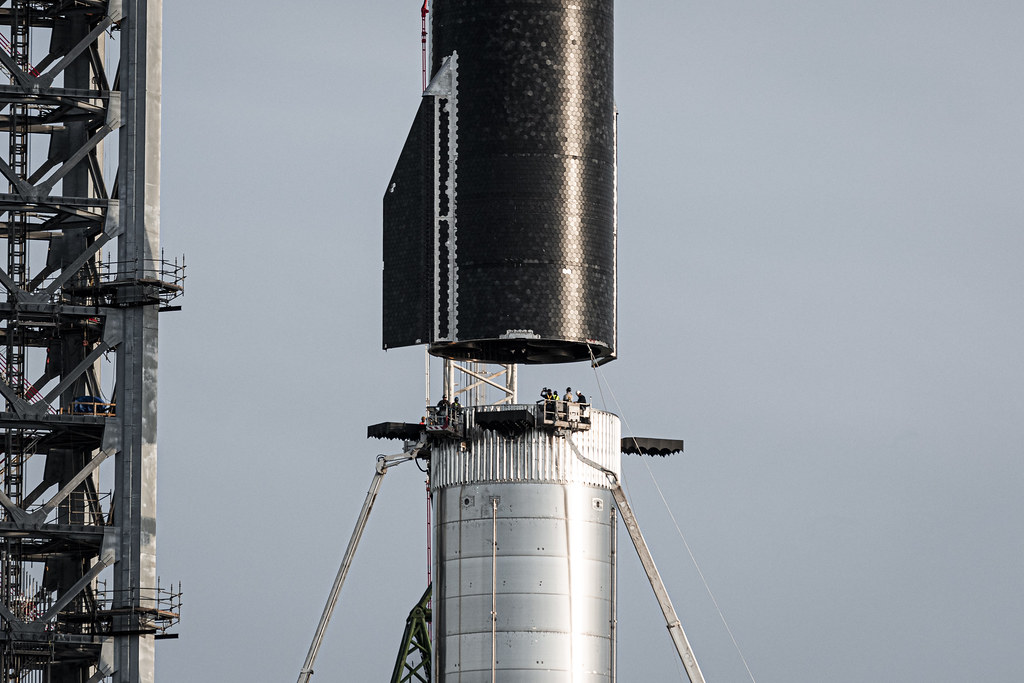
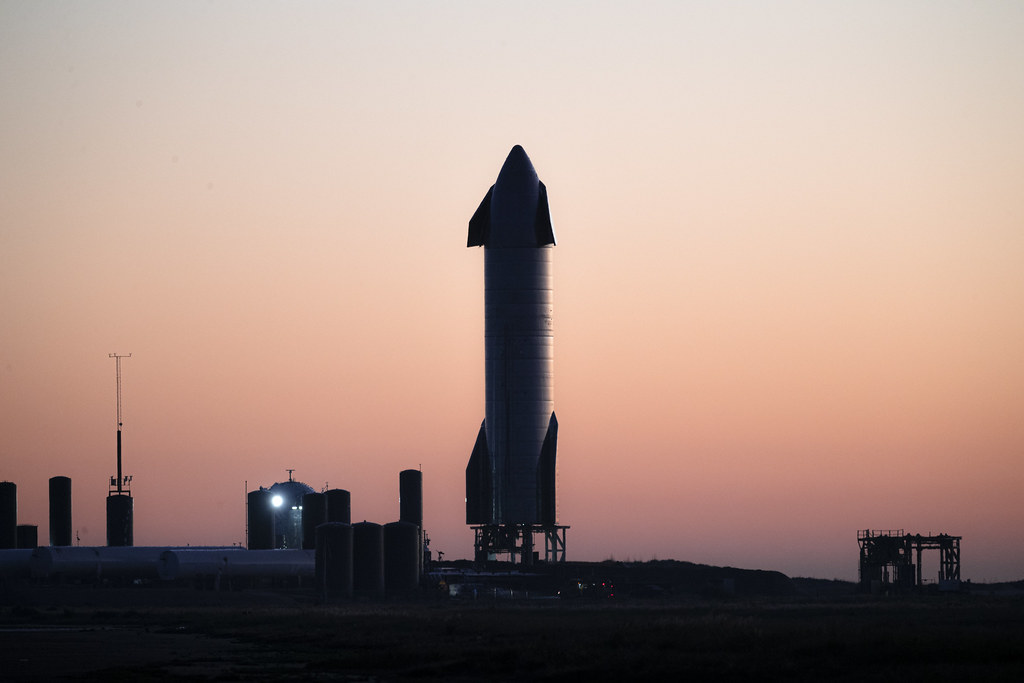
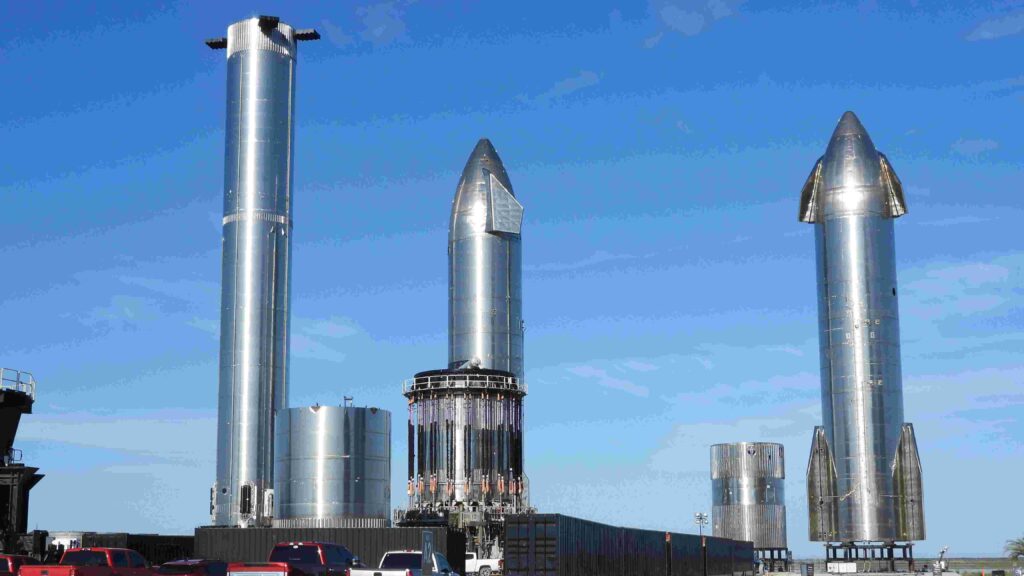
Ship 39: The First V3 Starship Rolls Out
After months of anticipation, Ship 39 — widely referred to as V3 SN1 — rolled out for testing.
This marked:
- The first major upper stage movement in some time
- The beginning of the Version 3 era
- A renewed push toward ship-catching
Version 3 (V3) isn’t just an incremental update. It introduces:
- Structural refinements
- Improved reliability
- Enhanced performance
- Upgraded heat shield systems
- The powerful Raptor 3 engine
This is the hardware that could attempt the first catch.

Elon Musk’s Condition: Two Perfect Ocean Landings First
Despite growing excitement, Elon Musk has repeated one key requirement:
SpaceX will only attempt to catch the ship after two perfect soft ocean landings.
This condition was first mentioned after Flight 3 in April 2024. It was reiterated again following Flight 6 in November 2024.
Each time, unexpected anomalies delayed the plan.
Now, with V3 entering testing, the opportunity returns.
But why the ocean requirement?
Because risk reduction comes first.
The Three Core Milestones Before a Catch
Before attempting a tower catch, SpaceX must demonstrate three fundamental capabilities:
1. Reach Orbit
Starship must successfully achieve orbital velocity and trajectory.
2. Deploy a Real Payload
This proves operational capability, not just test performance.
3. Return Safely to Starbase
Controlled re-entry and survivability are non-negotiable.
If confidence isn’t sufficient for a catch, the ship may:
- Re-enter
- Perform a landing burn
- Soft-land in the Gulf
That still counts as progress.
When Could the First Catch Happen?
There are two scenarios:
Conservative Timeline
If objectives are separated across flights:
- One milestone per mission
- One launch every ~2 months
- Catch attempt around Flight 15 or 16
That points toward late in the year.
Optimistic Timeline
If Flights 12 and 13 both achieve flawless ocean landings:
- Flight 14 could attempt the first catch
- Potentially by mid to late summer
SpaceX often combines objectives into a single mission.
A single flight could:
- Reach orbit
- Deploy payload
- Complete a full orbit
- Return to Starbase
If performance is clean, the timeline compresses dramatically.
Why Catching the Ship Is So Difficult
Catching a 50-meter-tall orbital vehicle midair is not symbolic. It’s one of the most complex maneuvers ever attempted in aerospace.
The challenges include:
Extreme Re-Entry Heating
Orbital velocity generates intense atmospheric compression heat.
Starship’s thermal protection system must:
- Survive plasma heating
- Prevent structural overload
- Maintain tile integrity
V3 features upgraded tile systems and improvements to the “crunch wrap” securing system.
Failure here ends the mission immediately.
Raptor 3: Precision in the Final Seconds
If the heat shield enables descent, the engines control the final outcome.
V3 introduces Raptor 3, which is:
- More powerful
- Lighter
- Mechanically simplified
- Designed with fewer failure points
During a catch attempt, engines must:
- Relight reliably
- Deliver stable thrust
- Null vertical velocity
- Provide precise throttle control
There is no water margin.
This is not a splashdown.
This is mid-air mechanical docking.
Flap Control During Descent
Starship’s flaps control:
- Attitude
- Drag
- Orientation
They function like a skydiver adjusting body position at hypersonic speeds.
Version 3 likely strengthens both:
- Thermal protection
- Structural durability
Together with thrust vectoring, flaps guide the ship into the narrow descent corridor required for capture.
The Catching Interface: Where Precision Becomes Critical
Ocean landings don’t require catching hardware alignment.
Tower catches do.
Reinforced catch points on the ship must:
- Align perfectly with tower rails
- Engage locking pins
- Transfer load without shock damage
A slight misalignment could:
- Damage the launch tower
- Destroy the vehicle
- Set the program back months
This is why risk must be “very low” before attempting over-land catches.
Starbase Infrastructure: The Other Half of the Equation
Catching Starship isn’t just about the vehicle. It’s about the launch site.
At Starbase, major preparations include:
- Full water deluge testing at Pad 2
- Chopstick cycling for structural validation
- Hydraulic and sensor testing
- Revised landing rails
- Updated catch pins
Pad 2 features shorter arms, reducing:
- Mass
- Inertia
- Structural load
Meanwhile, Pad 1 is undergoing similar standardization.
Ship and tower must function as one integrated system.
Any geometric mismatch risks catastrophic failure.
Why Starbase Remains the Testing Hub
While Starship operations may eventually expand to Florida’s Kennedy Space Center Launch Complex 39A, development remains centered at Starbase.
The reason:
- Two operational towers
- Higher testing cadence
- Fewer operational constraints
Future East Coast expansion may involve Cape Canaveral Space Launch Complex 37, but for now, Starbase is ground zero for ship-catching.
Ocean Landings: Not a Delay, But a Strategy
Each soft landing in the Gulf provides:
- Telemetry data
- Structural load measurements
- Heating performance insights
- Engine restart validation
Failures in the ocean are recoverable learning events.
Failures over land could damage infrastructure and endanger personnel.
In aerospace development, risk is never eliminated.
It is reduced step by step.
What Happens If They Succeed?
If Starship is caught and reflown successfully, the implications are enormous.
1. The First Fully Reusable Orbital-Class System
Even reusable boosters only cut part of launch cost.
Full reuse changes everything.
Instead of rebuilding engines, tanks, and avionics each mission:
- Hardware becomes capital investment
- Costs amortize over many flights
- Marginal cost to orbit drops dramatically
2. Launch Cadence Explodes
A tower catch eliminates:
- Ocean transport
- Recovery ship scheduling
- Extensive refurbishment delays
In theory, this enables:
- Multiple launches per day
- Hundreds per year
That level of cadence turns spaceflight into infrastructure.
3. Lunar and Mars Logistics Become Viable
High-frequency, low-cost launch is the backbone of:
- Lunar base construction
- Mars cargo transport
- Orbital propellant depots
- Deep-space missions
Without full reusability, these remain financially constrained.
With it, they become operationally feasible.
Flexible Recovery: More Than One Option
Tower catching isn’t the only path.
Offshore landings and drone ship recovery still provide:
- Payload optimization
- Operational flexibility
- Mission-specific tradeoffs
Different missions may favor different recovery strategies.
The point isn’t just catching.
It’s creating a transportation system.
Measured Risk vs Accelerated Schedule
Musk has acknowledged the central constraint:
The risk of the ship breaking over land must be very low.
That requirement governs everything.
If anomalies appear in Flights 12 or 13:
- Schedule slips
- Catch attempts delay
- Risk is reassessed
If performance is clean:
- Timeline compresses
- Catch attempt accelerates
The data will decide.
The Engineering Reality
To summarize, four systems must perform flawlessly:
Heat Shield
Survive orbital re-entry heating.
Raptor 3 Engines
Provide precise landing burn control.
Flaps
Guide stable aerodynamic descent.
Catching Interface
Dock cleanly with mechanical arms.
If even one falters, the catch fails.
A Structural Shift in Spaceflight
If Starship transitions from prototype to operational reuse, it marks more than a milestone.
It marks a paradigm shift.
For decades, rockets were disposable.
Even partial reuse was revolutionary.
Full reuse transforms rockets into:
- Transportation assets
- Logistics infrastructure
- High-frequency orbital vehicles
It reshapes:
- Satellite deployment
- Scientific missions
- Human exploration
- Commercial space activity
So, When Will It Actually Happen?
Based on current information:
- Conservative estimate: Late in the year
- Optimistic estimate: Mid-year
- Deciding factor: Performance of next two flights
Ship 39’s rollout signals a renewed push.
The hardware is advancing.
The infrastructure is preparing.
The systems are refining.
Now all eyes turn to Flight 12.
Because if the next missions deliver clean, predictable performance, the first mid-air catch attempt could happen far sooner than expected.
And when it does, it won’t just be a technical achievement.
It will mark the moment orbital rockets stopped being expendable machines — and became reusable transportation systems.
The countdown to full reusability has begun.
FAQs
1. What does “catching Starship” actually mean?
Catching Starship refers to the upper stage of Starship returning from orbit and being captured midair by the launch tower’s mechanical arms instead of landing on a pad or splashing down in the ocean.
2. Why is catching the ship important for SpaceX?
It completes the vision of full reusability at SpaceX. Recovering both stages eliminates lengthy ocean recovery operations and accelerates refurbishment, enabling faster relaunch timelines.
3. Has SpaceX already caught a rocket before?
Yes. SpaceX has demonstrated catching the Super Heavy booster. However, catching the Starship upper stage is more complex due to orbital re-entry heating and higher velocities.
4. When will the first Starship catch attempt happen?
According to statements by Elon Musk, a catch will only be attempted after two perfect soft ocean landings. Optimistic projections suggest mid-year, while conservative estimates point toward late in the year.
5. Why must Starship complete two ocean landings first?
Ocean landings reduce risk. They allow engineers to gather telemetry data, validate re-entry performance, and confirm engine reliability before attempting a high-risk over-land tower catch.
6. What is Starship Version 3 (V3)?
V3 is the latest iteration of Starship, featuring structural refinements, upgraded heat shield systems, and the new Raptor 3 engine for improved performance and reliability.
7. What makes catching the upper stage more difficult than catching the booster?
The upper stage returns from orbital velocity, meaning it experiences extreme atmospheric heating and higher descent speeds. Precision timing, engine relight, and aerodynamic control must be flawless.
8. What role does the Raptor 3 engine play in a catch attempt?
Raptor 3 provides the thrust control necessary for the landing burn. It must relight reliably and deliver precise throttle adjustments to null vertical velocity and align the ship with the tower arms.
9. What happens if something goes wrong during re-entry?
Potential failures include heat shield damage, structural stress, engine ignition issues, or trajectory deviation. That’s why ocean landings are conducted first to minimize risk to infrastructure and personnel.
10. Where will the first catch attempt take place?
It is expected to occur at Starbase in Texas, where SpaceX has two operational launch towers designed with “chopstick” arms for vehicle recovery.
11. Could Starship land offshore instead of being caught?
Yes. Offshore or splashdown landings remain viable options, especially for missions prioritizing payload performance or risk mitigation.
12. What happens if the catch is successful?
A successful catch would mark the first operational reuse of an orbital-class upper stage, dramatically lowering launch costs and increasing flight cadence.
13. How would full reusability impact launch costs?
Instead of rebuilding engines, tanks, and avionics each mission, hardware could be reused multiple times. This shifts costs toward fuel and operations, significantly reducing the marginal cost to orbit.
14. Could Starship really launch multiple times per day?
In theory, yes. Eliminating ocean recovery and transport delays could enable rapid turnaround similar to airline operations, potentially allowing hundreds of launches annually.
15. Why is this milestone considered historic?
If successful, Starship would become the first fully reusable orbital-class rocket system in history. This would fundamentally shift spaceflight from disposable rockets to sustainable transportation infrastructure.
Read More:
- Tesla preps to build its most massive Supercharger yet: 400+ V4 stalls
- Tesla wins another award critics will absolutely despise
- Elon Musk’s xAI plans $659M expansion at Memphis supercomputer site
- Tesla Roadster patent hints at radical seat redesign ahead of reveal
- Tesla Australia confirms six-seat Model Y L launch in 2026