


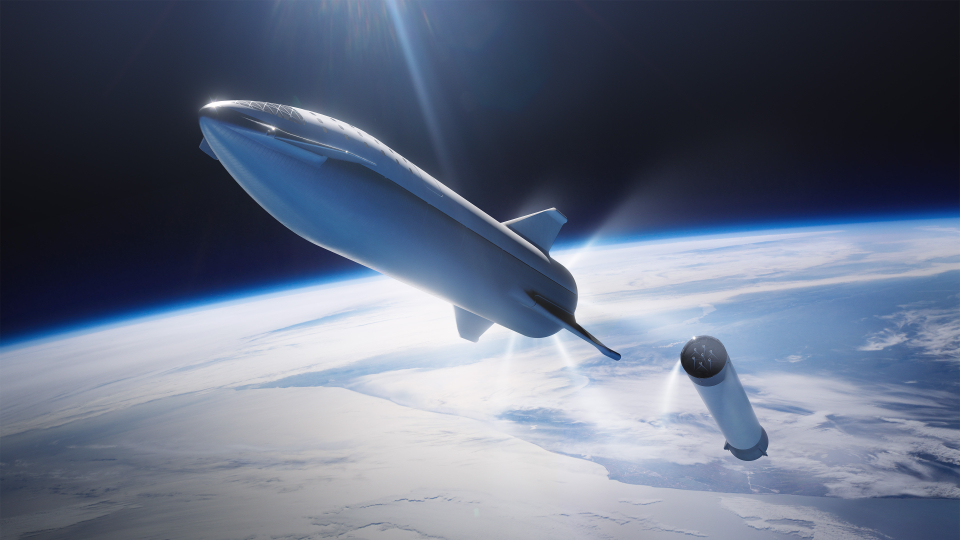
Now here’s a tantalizing space-story that blends engineering audacity with lunar ambition: what if Starship HLS — the variant of Starship built for the Moon by SpaceX — lands without traditional landing legs at all? That’s the claim that’s been swirling lately.
Below we dive deep into that idea: why it emerged, how it could work, the formidable hurdles it faces, what NASA thinks, and what it all means for lunar exploration.
1. The Huge Challenge of Landing a Giant on the Moon
Why landing legs are so tough for Starship HLS
When you contrast the standard Starship design with the HLS version, the landing-gear problem becomes glaring.
- Standard Starship: built to re‐enter Earth’s atmosphere, heat shield tiles are the biggest technical hurdle.
- Starship HLS: as one article put it, “the hardest part isn’t about heat. It’s the landing legs.”

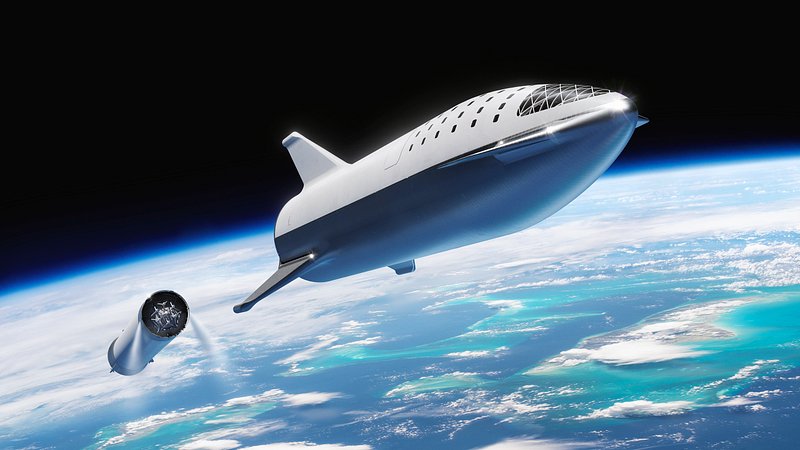
Let’s break down the difficulty:
- The HLS variant is enormous: roughly 9 m wide, 52 m tall, and at lunar landing will weigh around 300 tons (or the equivalent of ~50 tons on Earth under Earth gravity) thanks to lunar 1/6 g.
- The lunar surface: covered with fine powdery regolith, craters, uneven terrain, and unpredictable stability. A leg foot that sinks unevenly could tilt the vehicle catastrophically.
- Compare to Falcon 9: It weighs ~22–25 tons during landing on a flat pad on Earth and uses 4 legs. The Starship HLS is orders of magnitude larger and must land on unprepared terrain.
- Center of gravity issues: Because HLS is tall, its centre of gravity is much higher—making tipping risks much greater.
- Traditional legs for this scale would add tons of dry mass, and would need sophisticated terrain‐compensation systems (sensors, pistons, dampers) to manage uneven lunar ground.
Because of this, engineers and designers at SpaceX have been asking: why not eliminate the legs altogether?
Enter the “no-legs” or minimized legs concept
One of the bold ideas in the early proposals to NASA was a legless landing system for HLS. Essentially, instead of individually folding legs, the vehicle’s entire base acts like a “landing skirt” or a wide fixed base that distributes load across a large area of lunar regolith.
The idea in summary:
- Reinforce the lower rim of the ship with a titanium ring and a crushable aluminum lattice “skirt”.
- Use downward thrust from engines throttled to minimal speed (less than ~1 m/s) for final touchdown.
- Use peripheral thrusters to blow away or compact lunar dust/regolith before touchdown (addressing “plume surface interaction”).
- By spreading the load and reducing concentrated footpads, reduce risk of sinking or tipping.
It’s a fascinating approach that flips the assumption: instead of “how do we build legs strong enough?”, it asks “what if we redesign the landing interface so that legs aren’t required?”
2. How the Legless (or Low‐Leg) Concept Works
The design concept
Here’s how the scheme was described:
- The base: a 9 m wide footprint of Starship becomes the landing surface. Reinforced with an ~8 mm thick titanium ring around the rim and an approx. 40-50 cm thick 3D printed aluminum lattice skirt that deforms in a controlled way to absorb up to ~70% of landing energy (like honeycomb shock absorbers).
- Final descent: in the last ~10 seconds, all six Raptor engines throttle down to ~5-8% thrust (~10 to 5 tons per engine) so the vehicle touches the surface at <1 m/s.
- Plume Surface Interaction (PSI): ~30–60 seconds before touchdown a ring of hot gas thrusters (mounted around the base) fire at ~45° down and outwards to blow away the loose regolith and compact the ground into a ~20–30 cm thick firm surface (pressure-bearing ~25 kPa – roughly tire pressure of the Apollo Lunar Rover).
- Mass savings: According to early concept, the legless version could have a dry mass of ~85 tons, saving ~8-10 tons compared to one with conventional landing legs, which could be used to carry ~7 more tons of payload or extend crew mission life by 3-4 days.
- Simpler hardware: Eliminates things like six ~12 m titanium legs, 24 hinges, 48 pneumatic pistons, 72 pressure sensors, 18 electric actuators. Thousands of potential failure points gone, assembly time cut by ~30%.
- Bonus: Spreads load over large area, significantly reducing surface pressure and thus risk of sinking.

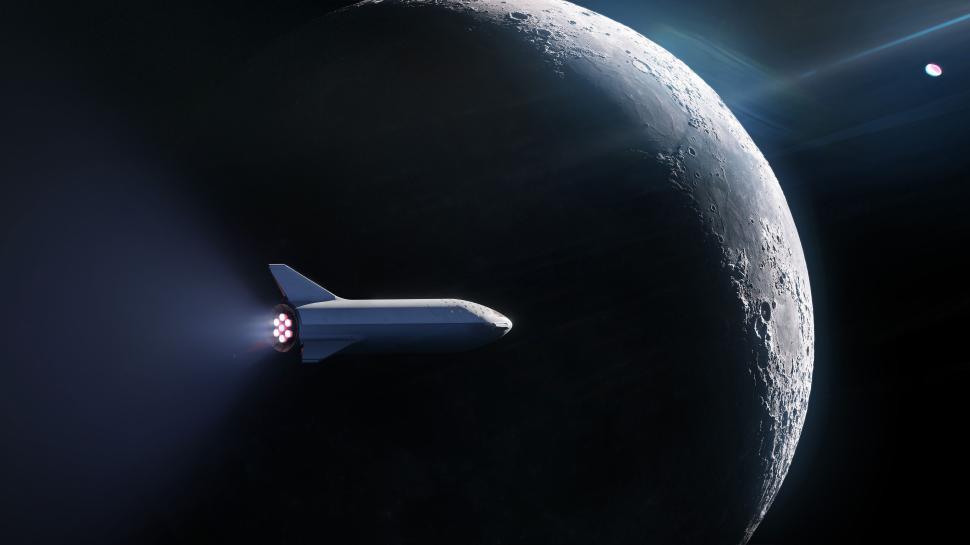
Alternate horizontal‐landing concept
There’s also an even more radical variant: horizontal landing. Instead of upright vertical touchdown, the vehicle approaches vertically, then at ~50 m above ground, the Reaction Control System (RCS) thrusters tip the vehicle from ~90° to ~30° in ~10 seconds. A deployable composite pad (~50 cm thick) deploys from the belly, cushioning touchdown and spreading the contact area to ~160 m², reducing load to ~0.3 kg per cm² (versus ~4 kg per cm² in a legged setup). Astronauts could exit via a 3 m folding ramp and the landed Starship becomes an instant lunar base.
3. Why NASA Wasn’t Enthusiastic: Risks & Trade-offs
The “No-Legs” concept hits stern resistance
Despite the engineering elegance of eliminating legs, the idea drew strong opposition from both NASA and independent safety advisors. A Q4 2022 safety assessment rejected the legless concept for the crude mission architecture. Why? Key risks:
- Regolith unpredictability & surface sink risk
- Lunar regolith thickness varies: ~4 to ~12 m deep with buried rocks beneath. If one side sinks ~1-1.5 m unevenly, the vehicle could tilt >25° in ~2 s — enough to tip the whole lander.
- With a tall vehicle and high centre of gravity, that’s a major hazard.
- Plume surface interaction (PSI) hazard
- Even throttled down, six Raptor engines still produce very high exhaust velocities (~2,000+ m/s), enough to excavate a 1-2 m crater beneath the landing vehicle. This could destroy the compacted surface, undermine the “clean landing” base. Observed in earlier experiments (e.g., LCROSS).
- Without legs, you lose the ability to stand clear of crater effects.
- Lack of redundancy and legs provide passive safety
- If even one engine fails or gimbals get stuck, without robust legs and terrain compensation the lander could hit the ground >5 m/s — well above human rating limits.
- Legs offer shock absorption and tolerance for minor offsets or partial failures.
- Dust/contamination risk
- Without legs, the crew cabin sits close to the surface; kicked‐up regolith dust could cling to the underside and enter the cabin when hatch opens, contaminating life‐support or medical systems.
Because of these risks, NASA mandated a legged landing system with active terrain compensation for the crude missions. The contract architecture switched from the “option A” legless idea to “option B” with legs. According to sources, starting early 2023 SpaceX moved into a design with six retractable landing legs made of 3D-printed titanium lattice, each 12-15 m long, ~1.2-2 tons, with adjustable pistons (15° terrain compensation), crushable honeycomb dampers, real-time load sensors.
Trade‐offs and the complexity swirl
- A legless design saves mass, simplifies mechanical systems, reduces failure points—but adds new risks.
- A legged design adds mass and complexity (folding legs, actuators, sensors) but offers greater margin for safety and surface irregularities.
- Horizontal landing spreads loads and gives novel benefits (instant base, cargo roll‐out) but requires enormous structural changes to the vehicle (which was originally optimized for vertical loads) and complicates take-off from that orientation.


4. Where Things Stand: Progress Toward Moon Landing
The mission context
- Under NASA’s Artemis III program, Starship HLS is slated to land astronauts on the Moon no earlier than 2026 (though delays likely to 2028-2029). SpaceX must meet human-rating certification.
- Key architectures: Launch Starship HLS into Earth orbit, rendezvous with tanker(s) to refuel cryogenic propellant, then travel to lunar near-rectilinear halo orbit (NRHO), dock with Orion spacecraft transferring astronauts, descend to lunar surface, ascent back to orbit, re-dock, return to Earth. NASA+1
- According to an update, SpaceX listed 49 development milestones already completed — including crew cabin, avionics, life support system, prototype landing legs testing on simulated lunar terrain. autoevolution+1
Evidence of leg testing
- SpaceX has reportedly conducted drop tests of landing legs, foot‐to‐regolith interaction tests and software/sensor reviews to handle the landing system. autoevolution+1
- Renders and leaks show landing legs in some design updates. One article notes new renderings show smaller, possibly fixed landing legs rather than large folding ones. Space Explored
Simplified mission architecture movement
- SpaceX has announced it is assessing a “simplified mission architecture” to reduce complexity and improve crew safety. Space Live+1
- The biggest complexity being targeted: multiple dockings between Orion & HLS and multiple refuelings. The simplified architecture might allow crew to ride in the HLS directly, removing one docking event.
- The need remains for orbital refueling of hundreds or thousands of tons of cryogenic propellant – a daunting technological hurdle. Space Live+1
5. Legless or Legged – Which Makes Sense?
Why legless could make sense
- Mass savings are huge: every ton saved means more payload or extra stay time.
- Fewer moving parts = fewer failure points = potentially higher reliability if done right.
- Wide footprint reduces unit surface pressure, lowers risk of sinking or tipping if engineered perfectly.
- For humans: a vehicle without long legs could give more usable internal volume and simpler down-and-out logistics.
Why legless is risky
- Moon’s regolith and terrain are unforgiving. Uneven support is a real hazard.
- Engine plumes create craters – the ground may not behave as ideal.
- Lack of redundancy (legs provide backup if something goes wrong).
- Landing system must be able to handle worst‐case scenarios – single engine failure, tilt, uneven load.
- Horizontal landing or legless base require fundamental structural changes and could introduce new failure modes (e.g., vehicle not optimized for non‐upright loads).
The middle ground
- The actual design seems to be veering toward legged landing system (six adjustable legs) for the crewed missions, with possible legless or simplified variants for cargo or unmanned landers.
- It may be that the legless idea serves as a “risk-reduction” path for future missions once the initial crew missions have proven the architecture.
My take
Given current information: a legged Starship HLS makes more sense as the first human lunar lander. It aligns better with NASA’s safety demands, gives higher margin for error, and avoids the “sink/tilt” land‐mine. The legless concept remains an innovative future option, possibly for cargo, reusable bases, or later lunar infrastructure.
6. Why This Matters: The Bigger Picture
Gateway to Mars and beyond
- The Moon is not merely a destination — for Elon Musk and SpaceX, it’s a stepping‐stone to Mars and beyond. Musk now treats the Moon as a “launch pad for Mars” and for future AI/orbital infrastructure.
- Demonstrating a reliable human‐rated landing on the Moon with Starship HLS unlocks Mars, asteroid missions, large moon bases, space industry in cislunar space.
Mass and reuse economy
- Mass savings (legless or light‐leg system) => more payload or longer stay => better economics.
- Reusability is core to SpaceX’s business model; the easier the landing system, the faster reuse cycles and lower costs.
Surface operations and lunar base potential
- Starship HLS sized for ~100 m³ interior volume could serve as a lunar base immediately after landing, not just a lander.
- Simplified landing system with fewer moving parts speeds path to permanent base, rovers rolling out, cargo racks deploying.
Risk reduction for human missions
- NASA’s requirement for human‐rating means huge emphasis on reliability, redundancy, abort modes. The landing system choice is a major component of crew safety.
- Success or failure of Starship HLS landing will set precedent for all future deep-space large landers.
7. The Timeline & What to Watch
Upcoming major milestones
- Full stack test flights of Super Heavy + Starship (Block 2) from Boca Chica: 3–5 flights needed to achieve high reliability (~95%) and demonstrate tower catch system.
- Orbital refueling demonstration: Tanker + depot + Starship HLS must perform rendezvous and cryo‐transfer trials under microgravity. Without this, lunar mission architecture fails.
- Landing leg system (or alternative) ground testing: simulated lunar terrain, regolith interaction, engine throttle stability, plume effects.
- Uncrewed lunar landing demonstration: Before Artemis III, SpaceX is required to perform a demonstration landing (without crew) to earn human‐rating certification.
- Crew mission: Artemis III (no earlier than 2026, likely 2028-29) with Starship HLS landing astronauts on the Moon.
What to watch & speculates
- Will SpaceX publish more detailed diagrams or renderings of the landing legs/skirt/footprint? So far many details are proprietary or under wraps.
- Does the horizontal‐landing variant (or cargo variant) go ahead? If so, what structural modifications are made?
- How will NASA accept the lander configuration? Will NASA approve a legless design for human missions (seems unlikely now)?
- What mass savings are realistically achieved? Is the payload uplift from legless/low‐leg worth the extra risk?
- Will the architecture move toward simplified crew transfer (crew in HLS directly) as suggested by SpaceX?
- What will the landing site be like? Lunar south pole terrain is challenging: slopes, craters, regolith depth, shadowed regions.
8. Conclusion
The notion of landing a massive Starship variant on the Moon without traditional landing legs is bold — and perfectly in line with SpaceX’s philosophy of “the best part is no part.” The engineering appeal is evident: reduce mass, reduce complexity, increase payload, simplify operations.
But in practice—when human lives, cost, schedule, and scientific credibility are all on the line—risk margins matter enormously. The lunar surface is harsh, unpredictable, and unforgiving. For the first human‐rated Starship HLS mission, the certainties that conventional legs bring may well tip the balance.
That said, the legless or horizontal‐landing concepts may yet shape the second wave of lunar exploration: cargo landers, lunar bases, long‐duration stays, infrastructure deployment. In that sense, we could see:
- Phase 1: Legged Starship HLS lands crew safely on the Moon.
- Phase 2: Streamlined, lower‐leg or legless Starships (cargo, base modules) follow to build up lunar infrastructure.
So to sum up: Legs or no legs? For now, legs probably win. But the no-legs future remains tantalizingly plausible and might dramatically reshape how we land large vehicles on other worlds.
FAQs
1. What is the Starship HLS?
The Starship Human Landing System (HLS) is a specially modified version of SpaceX’s Starship spacecraft, developed for NASA’s Artemis program. Its main goal is to transport astronauts from lunar orbit to the Moon’s surface and back safely.
2. Why is the landing system such a big challenge for Starship HLS?
Because of its massive size and height—52 meters tall and 9 meters wide—Starship HLS faces stability and terrain challenges on the uneven lunar surface. Designing legs strong and light enough to keep it upright is a huge engineering hurdle.
3. Why did Elon Musk consider removing the landing legs entirely?
Elon Musk’s philosophy, “the best part is no part,” inspired the idea. By eliminating heavy landing legs, SpaceX could save 8–10 tons of dry mass, reduce mechanical complexity, and make the system simpler and more reliable.
4. How would a legless Starship land on the Moon?
Instead of using separate legs, the entire base of Starship would act as a landing pad. A titanium-reinforced rim and a crushable aluminum lattice skirt would absorb impact, while downward thrusters compact lunar regolith before touchdown.
5. What is “plume surface interaction” (PSI)?
Plume surface interaction (PSI) refers to how rocket exhaust interacts with lunar dust and soil. SpaceX’s design uses angled gas thrusters to blow away loose regolith and create a firm surface before landing to prevent excessive dust and erosion.
6. What are the advantages of a legless Starship HLS design?
- Saves up to 10 tons of mass
- Reduces thousands of potential mechanical failure points
- Simplifies assembly and operations
- Provides a larger contact area for landing stability
- Increases payload capacity or crew mission duration
7. What are the risks of a legless Starship landing?
Without legs, the vehicle is more vulnerable to uneven surfaces, crater formation, and tipping. If one side sinks into the lunar soil, the tall lander could easily topple. There’s also increased dust contamination near the crew cabin.
8. Did NASA approve SpaceX’s legless Starship concept?
No. NASA and the Aerospace Safety Advisory Panel rejected the legless concept in 2022, citing safety concerns. They required a legged design with active terrain compensation for all crewed Artemis missions.
9. What does the current Starship HLS landing system look like?
SpaceX is now testing a six-leg design made from 3D-printed titanium lattice. Each leg is around 12–15 meters long, with adjustable pistons and crushable honeycomb dampers for uneven terrain.
10. What is the horizontal landing concept for Starship HLS?
In the horizontal landing concept, Starship would tilt to about 30° before touching down, spreading its weight over a larger area. A deployable composite belly pad would absorb impact, creating an instant lunar base configuration.
11. Why did NASA prefer a vertical landing instead of horizontal?
A horizontal landing requires massive structural reinforcement and complicates takeoff for lunar ascent. Vertical landings are simpler, proven, and align better with Starship’s current internal design and NASA’s human-rating safety rules.
12. When will Starship HLS attempt its first Moon landing?
The uncrewed demonstration landing is targeted for late 2026, followed by a crewed Artemis III mission no earlier than 2028 or 2029, depending on testing milestones and orbital refueling readiness.
13. What is SpaceX’s “simplified mission architecture”?
SpaceX has proposed a new simplified lunar mission plan that might allow astronauts to launch directly aboard Starship HLS, eliminating complex docking steps between Orion and the lander—making missions faster and safer.
14. How is Starship HLS different from regular Starship?
The HLS version:
- Has no heat shield (it doesn’t re-enter Earth’s atmosphere)
- Uses specialized Raptor engines optimized for lunar vacuum
- Has extended propellant capacity for the return journey
- Includes a crew cabin, elevator/ramp, and life-support systems
- Features large landing legs instead of fins or aerodynamic flaps
15. Could SpaceX eventually return to a legless landing system?
Possibly — for cargo or unmanned missions. Once the crewed missions prove the architecture, a legless or horizontal design might return for large-payload landings or future lunar base modules where risk tolerance is higher.
Read More:
- Tesla teases new market entrance with confusing and cryptic message
- Elon Musk hints at when Tesla can fix this FSD complaint with v14
- Tesla Australia celebrates 150k vehicles on domestic roads
- Jim Farley admits he was “humbled” when Ford tore down Tesla and Chinese EVs
- Tesla Superchargers to be opened for VW ID.4 and ID. Buzz owners