
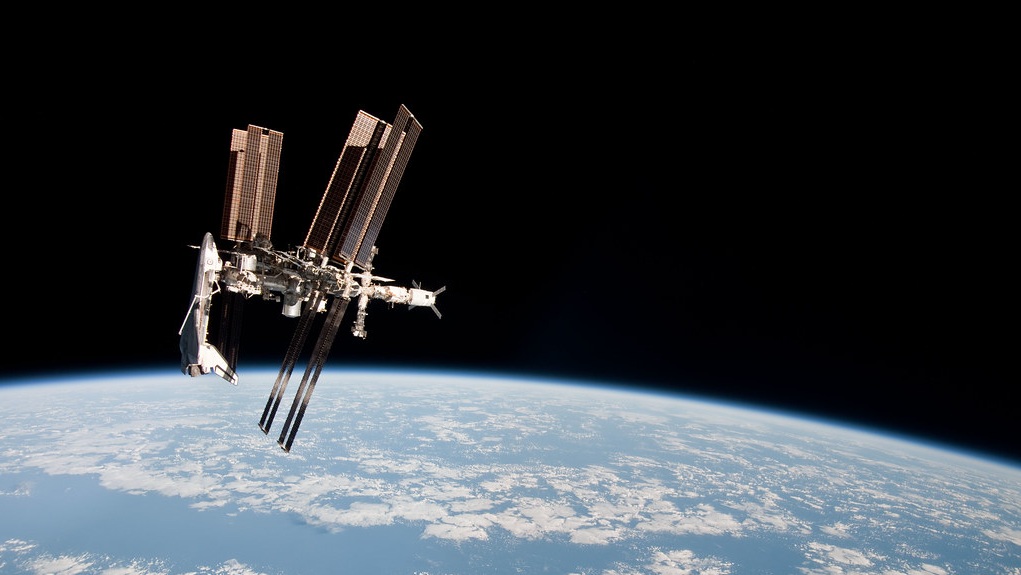
The long wait for the next generation of spaceplane travel is nearing an end as Sierra Space’s Dreamchaser makes steady progress toward its debut mission. This vehicle represents a new paradigm in space access, challenging the established dominance of capsule-based spacecraft like SpaceX’s Dragon. The program has recently undergone significant developments, facing both contract revisions and the need to overcome substantial technical hurdles. These factors have placed the spaceplane at a pivotal moment, where its technical readiness intersects with a shifting competitive landscape.
📅 Program Status and The Road to a Free Flight Demonstration
The most recent and defining development for the Dreamchaser program involves a modification to its contract with NASA. Initially, the agreement required the spaceplane to conduct seven cargo missions to the International Space Station (ISS). However, this mandate has been revised. The current agreement stipulates that Dreamchaser will first complete a free flight demonstration.
The Revised NASA Agreement and Schedule Shift
If this free flight demonstration proves successful and demonstrates the vehicle’s capabilities, NASA will then have the option to officially order subsequent resupply missions to the space station. This change, while offering a clear pathway to operational status, simultaneously represents a setback in the overall timeline. It shifts Dreamchaser’s debut mission further into the future, as competitors like the Dragon spacecraft continue to execute regular missions. In response to this shift, Sierra Space’s top priority is to finalize all necessary preparations to ensure the Dreamchaser is fully ready once the launch schedule opens up.
Recent Progress and the Free Flight Schedule
Despite the timeline adjustment, the company has indicated steady progress towards its goals. A recent announcement confirmed that Dreamchaser has successfully completed a series of critical pre-flight tests at NASA’s Kennedy Space Center. This marks continued advancement toward its first free flight mission, which is currently scheduled for late 2026. The positive momentum suggests that the vehicle is closer to readiness than at any prior point in its development history, an encouraging sign considering the delays the program has endured.
🔬 Critical Pre-Flight Testing Milestones
Sierra Space has meticulously moved through a comprehensive testing campaign to validate the Dreamchaser’s operational readiness. These recent tests have confirmed the vehicle’s ability to handle the extreme and complex environments of spaceflight, validating its systems for reliability and mission success.
Electromagnetic Compatibility (EMI/EMC) Validation
A crucial set of evaluations recently completed were the electromagnetic interference (EMI) and electromagnetic compatibility (EMC) testing. These trials were conducted inside NASA’s space systems processing facility and were designed to confirm the vehicle’s capacity to operate reliably in the expected electromagnetic conditions across different phases of a mission. In layman’s terms, this test ensured that all of Dreamchaser’s complex onboard systems will function correctly and without disruption even in the harsh and fluctuating electromagnetic environment of space.
Simulated Landing Conditions: The Tow Test
Another major milestone was a tow test performed at the Kennedy Space Center and Space Florida’s launch and landing facility. For this trial, a powerful Freightliner Cascadia truck towed the space plane at high speeds. The purpose of this specific trial was to simulate landing conditions and validate the complex autonomous navigation parameters the vehicle will rely on during its final runway touchdowns. This successfully demonstrated Dreamchaser’s readiness for the dynamic and highly demanding moments that characterize a landing sequence.
Real-Time Communication and Mission Control Links
Dreamchaser also successfully demonstrated the critical ability to receive telemetry data and distribute commands between the spacecraft and mission control, located in Louisville, Colorado. This vital communication was achieved using NASA’s Tracking and Data Relay Satellite System. This accomplishment showed that the spaceplane is capable of real-time communication and command operations during flight, confirming that effective communication links—which are fundamental to both mission safety and success—are fully functional.
Post-Landing Recovery Rehearsal
To conclude the comprehensive test campaign, Sierra Space performed a post-landing recovery rehearsal. This exercise specifically demonstrated the safety of the vehicle’s systems after landing and confirmed that ground teams could quickly and safely access sensitive or time-critical payloads. This recovery efficiency is critically important for missions that involve transporting scientific samples or equipment that must be handled immediately upon returning to Earth.
📈 Dreamchaser’s Strategic Position in the Commercial Space Market
Dreamchaser’s forward momentum is particularly notable when viewed against the backdrop of its struggling competitors. The current landscape is shifting in meaningful ways, creating a significant opportunity for a new contender to establish itself.
Starliner’s Operational Failures and Loss of Confidence
Among Dreamchaser’s primary competitors, Boeing’s Starliner stands out as the most challenged program. Starliner has suffered repeated delays, and recent updates indicate it will be limited to only four crewed missions under its 2014 contract, a reduction from the originally planned six. Furthermore, the missions will only move forward if NASA determines that the vehicle’s reliability meets acceptable thresholds.
While Dreamchaser also experienced a contract modification (the shift to a free-flight demonstration), its issues are tied to development progress, not operational failures. In contrast, Starliner has struggled during official missions and tests, which has deeply affected confidence in the program. The fact that Dreamchaser has a steady flow of positive test results makes its position considerably stronger than Starliner’s, whose history includes significant failures contributing to years of delays and uncertainty.
Vulnerabilities in Other Cargo Competitors
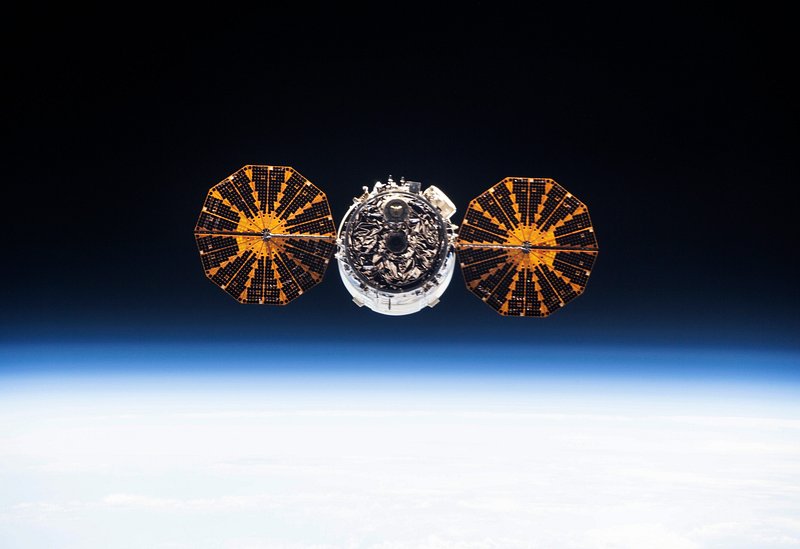
The commercial cargo sector also presents opportunities. Northrop Grumman’s Cygnus spacecraft, a long-relied-upon vehicle for ISS cargo missions, has encountered reliability concerns, highlighted when the NG-22 spacecraft was damaged during transportation. Although the issue was resolved for a subsequent launch, the incident exposed certain vulnerabilities. Since Dreamchaser’s initial missions will focus on cargo delivery, this creates a timely opportunity for the spaceplane to demonstrate its distinct strengths and potentially secure a substantial share of future ISS resupply missions. Internationally, programs like China’s Shenzhou 20 and disruptions to Russian launchpads also create secondary opportunities for Dreamchaser to serve as a dependable, supplemental option for global partners needing support.
The Strategic Need for NASA Redundancy
The only vehicle currently operating smoothly and consistently is SpaceX’s Dragon. While Dragon’s reliability is a credit to SpaceX, this success creates a strategic imbalance for NASA. The agency risks allowing a monopoly to form if it becomes too dependent on Dragon. Space agencies inherently prefer to maintain multiple, independent options for both crew and cargo operations to ensure maximum flexibility, operational redundancy, and cost competitiveness. This natural dynamic provides a powerful incentive for NASA to actively nurture Dreamchaser as a viable, secure second system. If the spaceplane proves its capability, it is naturally poised to rapidly rise to the operational position directly behind Dragon.
✨ Unique Design Advantages and Future Versatility
Dreamchaser benefits from a strong design that provides distinct operational advantages over traditional capsules. Shaped like a small lifting body aircraft, the spaceplane operates in a fundamentally different manner from its competitors.
The Core Advantage: Runway Landing
The most significant advantage Dreamchaser offers is its method of return and landing. Instead of splashing down in the ocean with parachutes or landing on airbags, Dreamchaser will execute a controlled touchdown on a conventional runway, much like a civil aircraft. This approach offers multiple profound benefits:
- Crew Comfort and Safety: For future crewed missions, it provides a significantly smoother and more controlled landing experience for astronauts.
- Payload Protection: For cargo missions, the gentle runway landing helps to protect sensitive equipment and scientific samples from the impact forces of a splashdown.
- Recovery and Turnaround: Landing on a runway enables immediate access by ground teams. This speeds up recovery, inspection, refurbishment, and dramatically shortens turnaround times for the vehicle. Traditional capsules require extensive, long-distance recovery operations involving ships and helicopters, making the process complex and time-consuming.
Enhanced Mission Flexibility and Scope
Sierra Space plans to complement the spaceplane with the Shooting Star cargo module, which is designed to be attached to the rear of the vehicle. This module will enhance payload capacity and further increase Dreamchaser’s overall mission flexibility. The vehicle’s interior volume may also allow for more astronauts per mission compared to certain capsule-based spacecraft.
Furthermore, Dreamchaser holds potential value far beyond its core NASA contract. The vehicle is already being evaluated for various national security applications, suggesting that military demand for its services may grow significantly once the system is fully validated. Looking to the future, its versatility makes it a strong candidate to service commercial space stations once they become operational, extending its utility across a wide range of mission profiles.
🚧 Key Challenges to Overcome Before Maiden Flight
Despite its encouraging progress and strong design advantages, Dreamchaser still needs to overcome several significant challenges before it can secure a stable, long-term position in the market. Time is becoming increasingly limited, and the window for correcting mistakes is narrowing.
The Vulcan Launch Vehicle Scheduling Conflict
A major and consistent source of delay for the Dreamchaser program has been scheduling conflicts with its launch vehicle, ULA’s Vulcan rocket. Since Vulcan is also a new rocket in development, it has faced its own setbacks. When Vulcan becomes available, it must be used immediately for its own certification milestones, a situation that has repeatedly pushed Dreamchaser out of launch slots, even during periods when the space plane itself was ready. For Dreamchaser to progress smoothly, Sierra Space must find a way to align its readiness schedule with Vulcan’s availability or secure an alternative launch path to reduce the risk of further delays.
The Pressure of Flawless Flight Operations
While its ground tests have been successful, the ultimate measure of reliability begins only once the vehicle enters flight operations. Dreamchaser must demonstrate flawless performance during these official missions. Any significant operational issue could lead to a situation similar to the years of setbacks experienced by Boeing’s Starliner program. If Dreamchaser encounters comparable problems, its opportunity to compete meaningfully could quickly disappear.
Accelerating Development of the Crewed Variant
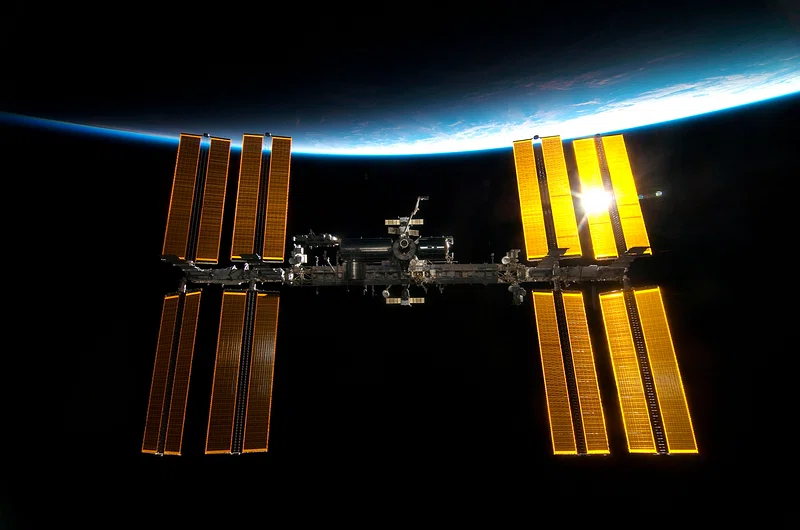
The limited operational timeline of the ISS, which is nearing the final years of its life, places immense pressure on Dreamchaser’s schedule. The first two Dreamchaser vehicles are designed as cargo variants, meaning Sierra Space must accelerate the development of the third vehicle, which is the first crew-rated prototype. If the company cannot bring a crew version online quickly enough, it risks losing the opportunity to support NASA’s crucial final phase of ISS crewed missions. Furthermore, it must compete with the exceptional reliability and consistency of SpaceX’s Dragon, a dominance that sets a high benchmark Dreamchaser must meet or exceed to secure major contracts.
Dreamchaser stands at a fascinating juncture where industry conditions, competitor weaknesses, and its own technical strengths create a powerful potential for success. While its path remains uncertain, its first flight will serve as the most critical demonstration of its capabilities.
🏁 Conclusion: A New Era of Space Access on the Horizon
The journey of Dreamchaser from concept to flight readiness has been a testament to resilience and innovation, positioning the spaceplane as a critical and highly anticipated asset in the evolving commercial space sector. Despite development delays and necessary contract revisions, Sierra Space has successfully completed a rigorous series of pre-flight testing milestones—including EMI/EMC validation, high-speed tow tests, and real-time communication checks—which collectively affirm the vehicle’s core engineering integrity and mission readiness.
Dreamchaser is not simply a new vehicle; it represents a strategic shift toward greater flexibility and reusability, primarily through its unique runway landing capability. This distinct feature not only ensures a gentle, low-G return for sensitive payloads and future crew but also promises faster turnaround times and operational efficiencies unavailable to splashdown capsules.
As major competitors like Boeing’s Starliner face operational challenges and NASA seeks to mitigate its dependence on a single provider, Dreamchaser is poised to fill a strategic void, offering the redundancy and competition vital for a healthy space ecosystem. While the reliance on the ULA Vulcan rocket’s schedule remains a key risk, the successful maiden demonstration flight—now targeted for late 2026—will be the definitive proof point. Upon proving its capabilities, Dreamchaser is set to become an essential tool for ISS resupply, national security missions, and ultimately, a foundational component for the next generation of commercial space stations, cementing its role in defining the future of orbital access.
FAQs
1. What is the Dreamchaser spaceplane?
The Dreamchaser is a reusable lifting-body spaceplane developed by Sierra Space. It is designed to transport cargo, and eventually crew, to and from low-Earth orbit (LEO) destinations, primarily the International Space Station (ISS) under contract with NASA.
2. Who is developing the Dreamchaser?
The Dreamchaser spaceplane is being developed by Sierra Space, which was spun off from Sierra Nevada Corporation (SNC).
3. What is the primary advantage of the Dreamchaser’s design?
The most significant advantage is its runway landing capability. Unlike capsules that splash down in the ocean, the winged, lifting-body design allows it to glide to a precise landing on any conventional runway, offering a gentle (low $1.5g$) return for sensitive cargo.
4. What is the purpose of the Dreamchaser Cargo System?
The uncrewed cargo system is designed to provide delivery and disposal services for pressurized and unpressurized payloads to the International Space Station (ISS) under NASA’s Commercial Resupply Services-2 (CRS-2) contract.
5. What is the “Shooting Star” module?
The Shooting Star is an expendable cargo module that attaches to the rear of the Dreamchaser spaceplane. It significantly enhances the total payload capacity and is designed to burn up on re-entry, allowing for the disposal of unwanted waste/trash from the ISS.
6. How much cargo can the Dreamchaser system carry?
The Dreamchaser Cargo System (with the Shooting Star module) is capable of delivering over 5,500 kg (12,000 lbs) of pressurized and unpressurized cargo to the ISS.
7. How much cargo can the Dreamchaser return to Earth?
The reusable Dreamchaser spaceplane itself can return up to 1,750 kg (3,860 lbs) of pressurized cargo and scientific experiments to Earth.
8. What is the benefit of the gentle runway landing?
The gentle landing at low atmospheric entry forces (approx. $1.5g$) is ideal for protecting delicate scientific experiments and ensures rapid access to critical payloads by ground teams, often within one hour of landing.
9. What is the heritage of the Dreamchaser design?
The spaceplane’s design is a derivative of NASA’s HL-20 Personnel Launch System concept from the 1990s, which itself descended from decades of lifting-body experimental vehicles.
10. Is there a crewed version of the Dreamchaser planned?
Yes, Sierra Space has long-term plans to develop a crewed variant of the Dreamchaser to transport astronauts, likely for use with future commercial space stations like the planned Orbital Reef.
11. What is the name of the first Dreamchaser vehicle?
The first operational Dreamchaser cargo spaceplane is named “Tenacity.”
12. When is the first launch of the Dreamchaser currently targeted?
The debut launch of the Dreamchaser is currently targeted for late 2026.
13. Which rocket will launch the Dreamchaser?
The Dreamchaser will be launched atop a ULA (United Launch Alliance) Vulcan Centaur rocket.
14. What is the nature of the Dreamchaser’s first mission?
Due to a recent contract modification with NASA, the first flight will be a “free-flyer demonstration mission” and will not initially dock with the ISS. This mission will focus on proving the spaceplane’s critical flight capabilities.
15. Besides ISS cargo, what other applications is Dreamchaser being considered for?
The Dreamchaser is being explored for a wide range of future applications, including servicing commercial space stations (like Orbital Reef), and performing missions for national security and defense (as a national asset).
Read More:
- Tesla refines Full Self-Driving, latest update impresses where it last came up short
- Where to Buy Tesla Optimus Robot: Everything You Need to Know
- $7,899 Tesla Tiny House is HERE: SHOCKING Production Line Revealed. Ready to Deliver
- What Rocket Lab Just Did to Catch up with SpaceX Just Changed Space Race Forever
- Tesla supplements Holiday Update by sneaking in new Full Self-Driving version
1 thought on “Finally Happened! NASA’s New Spaceplane Ready for the First Launch after Constant Delays”