
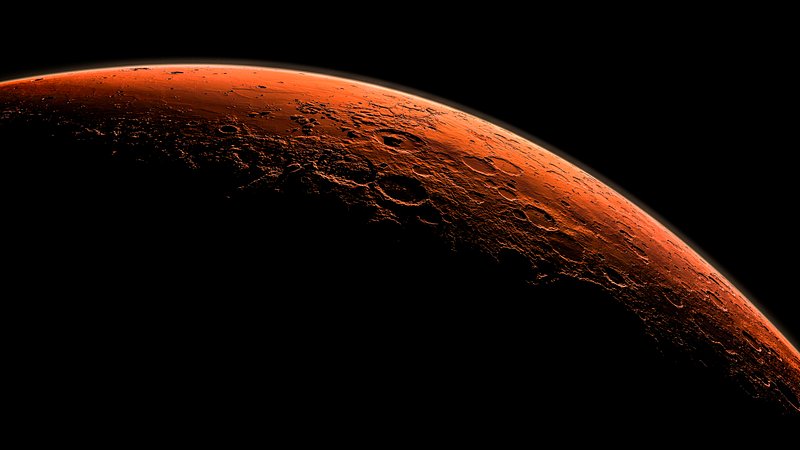
Mars has always fascinated humanity. From the fiery red hue visible in the night sky to the tantalizing possibility of life beyond Earth, the red planet has captured imaginations for centuries. But it wasn’t until the space race that we truly began to explore Mars in detail.
Today, we take a journey through the evolution of Mars exploration, from the first rover built by the Soviet Union to NASA’s latest cutting-edge technologies like the Perseverance rover and Ingenuity helicopter.
The Soviet Union’s First Mars Rover: Prop M
Did you know that the first-ever Mars rover was developed by the Soviet Union and landed on Mars in 1971? This milestone marked the beginning of a new era in planetary exploration. The rover was part of the Mars 3 mission, which successfully became the first man-made object to achieve a soft touchdown on the Martian surface.
The small rover, named Prop M, was a modest machine by today’s standards. Measuring just 21 cm long and 16 cm wide and weighing 4.5 kg, it lacked wheels entirely. Instead, it used a pair of wide, flat skis mounted on arms that allowed it to “step” forward. The rover was tethered to the lander with a 15-meter power cable, designed to deploy a small probe that measured Martian soil density.
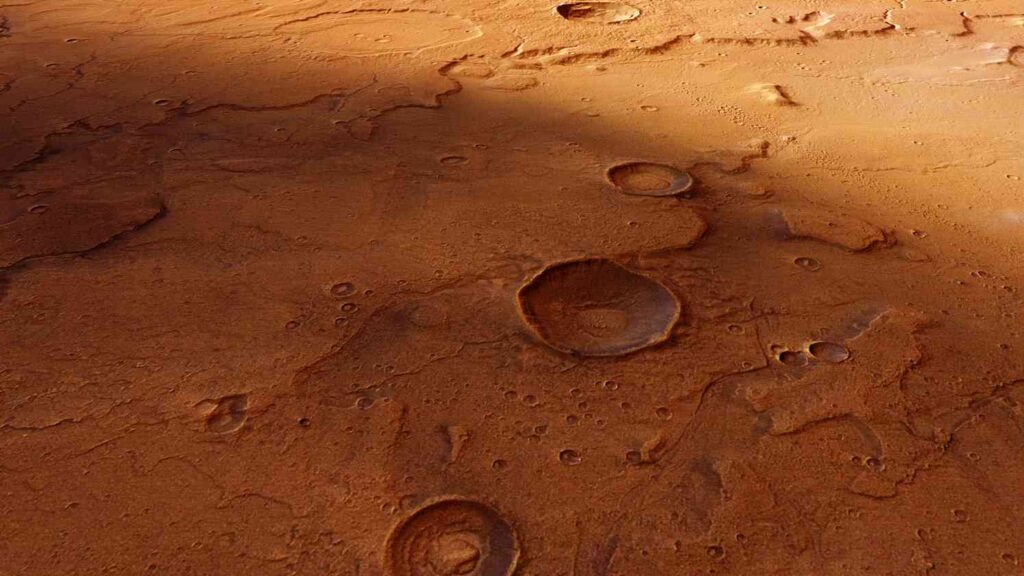
Unfortunately, the mission was short-lived. After only 14 seconds of transmission, the signal from Mars went dead, and the only data received was a scrambled black-and-white image. Prop M was never deployed, but the mission laid the groundwork for future explorations.
NASA Viking Landers: A Leap Forward in Mars Science
Our first successful close-up look at Mars came with NASA’s Viking landers in the mid-1970s. Launched in 1976, Viking 1 and Viking 2 carried scientific instruments to analyze the Martian surface. They returned the first detailed photographs of Mars, providing insights into its composition and terrain.
By placing two landers in separate regions of the planet, NASA aimed to collect the most diverse set of samples possible. Although the data provided valuable information, it was still just “two scoops of sand” in a vast Martian desert. The odds of discovering ancient fossilized Martian bacteria were slim, which led NASA to pause Mars landings for two decades while they developed improved exploration methods.
The Pathfinder Mission and Sojourer Rover: Mars Exploration Goes Mobile
In December 1996, NASA launched the Pathfinder mission to Mars. Unlike the Viking landers, Pathfinder carried a small prototype rover named Sojourer. This was the first rover that could move independently across the Martian surface, capturing the imagination of the public.
Sojourer was the size and weight of a microwave oven, with six wheels, each powered by independent electric motors. Its rocker-bogie suspension system allowed it to maintain contact with uneven terrain, overcoming obstacles up to a third of its height. The rover was equipped with an alpha proton X-ray spectrometer to analyze rocks and soil, and it had an early form of autonomous navigation, using cameras and lasers to identify obstacles.
Despite covering only about 100 meters in its three-month mission, Sojourer proved that remote exploration of Mars was possible. Its success laid the foundation for larger, more capable rovers.
NASA’s Mars Exploration Rovers: Spirit and Opportunity
Building on Sojourer’s success, NASA launched the Mars Exploration Rovers, Spirit and Opportunity, in 2003. Unlike earlier missions, these rovers combined the lander and rover into a single mobile unit.
Spirit and Opportunity were roughly the size of golf carts, significantly larger than Sojourer. They carried the entire suite of scientific instruments onboard, including cameras, spectrometers, and robotic arms for close-up analysis of Martian rocks and soil.
The twin rovers vastly expanded our understanding of Mars:
- Spirit: Operated for 6 years, traveling 4.8 miles across the Martian terrain.
- Opportunity: Exceeded expectations, functioning for over 14 years and covering 28 miles before succumbing to a massive dust storm.
These missions demonstrated that robust engineering, combined with mobility, allowed for far greater scientific discovery than stationary landers.
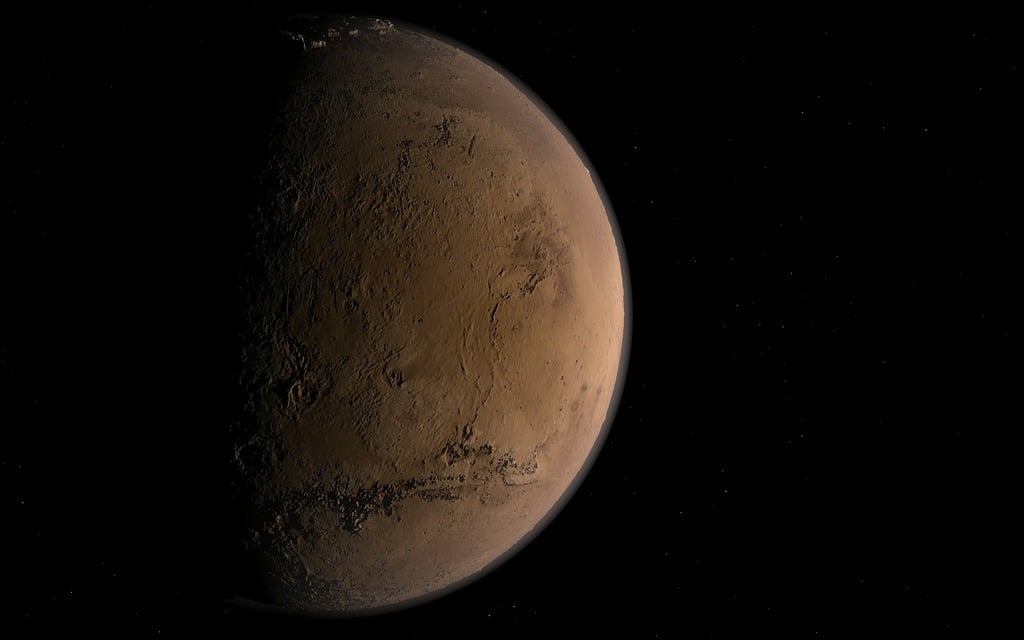
Curiosity Rover: The Crossover SUV of Mars
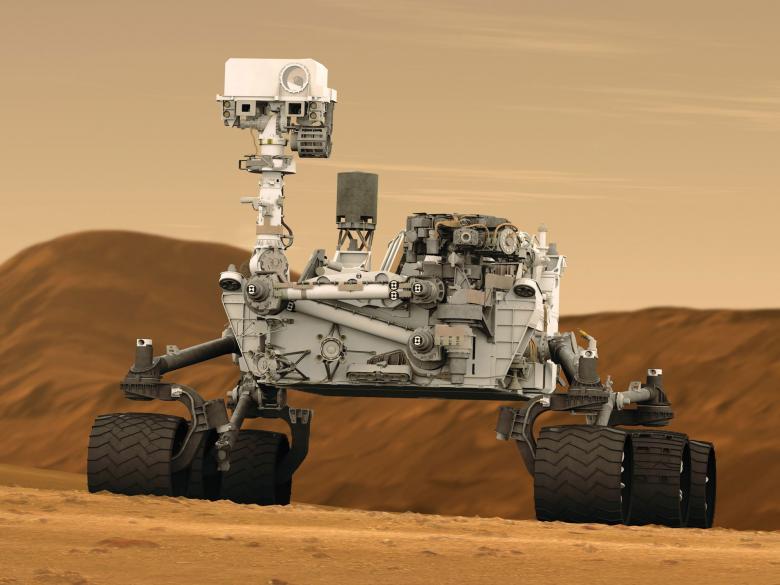
In 2012, NASA introduced the Curiosity rover, a massive vehicle about the size of a crossover SUV. Curiosity represented the next generation of Mars exploration, maintaining the six-wheel drive and rocker-bogie suspension system while adding advanced scientific instruments.
Unlike its predecessors, Curiosity did not rely on solar panels. Instead, it uses a radioisotope thermoelectric generator (RTG) powered by plutonium-238, providing reliable energy for long-duration missions. With 14+ years of expected operational lifespan, Curiosity has been exploring Mars’s surface, analyzing soil, rocks, and the planet’s atmosphere in unprecedented detail.
Perseverance Rover and the Ingenuity Helicopter
In 2021, Curiosity was joined by its “twin,” Perseverance, part of the Mars 2020 mission. Perseverance carried seven primary scientific instruments, 19 cameras, and even two microphones, allowing humanity to hear the sound of Mars for the first time.
The mission also included Ingenuity, a small helicopter drone designed to demonstrate powered flight on Mars. With a 4-foot wingspan and counterrotating propellers, Ingenuity achieved what was once thought impossible: sustained flight in Mars’s ultra-thin atmosphere. Despite an initial plan for only five test flights, Ingenuity has completed 72 flights, totaling 129 minutes in the air, proving the viability of aerial exploration on other planets.
The Future of Mars Exploration: Flying Beyond Wheels
Ingenuity’s success has opened new possibilities for Mars exploration. NASA is already designing larger six-propeller drones capable of carrying scientific payloads up to 5 kg and flying 10 km in a single mission—a monumental leap compared to rovers like Spirit, which traveled just under 8 km in six years.
Additionally, flying drones may play a crucial role in the Mars Sample Return mission, set for 2030. Instead of relying on rovers to retrace Perseverance’s path, helicopters could efficiently retrieve sample tubes for transport back to Earth.
Beyond Mars, similar aerial technology is planned for Titan, Saturn’s largest moon. NASA’s Dragonfly mission will deploy a quadcopter drone to explore Titan’s frozen surface and liquid methane seas, using the thick nitrogen-rich atmosphere to its advantage.
Why NASA’s Mars Missions Matter
The evolution of Mars exploration—from Prop M to Ingenuity—illustrates the importance of innovation, persistence, and technological advancement. Each mission built upon the lessons of its predecessor:
- Early failures like Prop M taught engineers about the challenges of Martian terrain.
- Sojourer demonstrated remote-controlled mobility.
- Spirit and Opportunity scaled the concept to full-sized, long-duration exploration.
- Curiosity and Perseverance brought new autonomy, energy systems, and scientific capabilities.
- Ingenuity pioneered aerial exploration, setting the stage for multi-dimensional planetary research.
These missions have transformed our understanding of Mars, proving it to be a dynamic world, rich with scientific opportunities, and paving the way for humanity’s eventual exploration of the red planet.
Conclusion: The Next Frontier
NASA’s journey to Mars exemplifies the power of human ingenuity. From a small tethered rover in 1971 to flying drones in 2021, each technological leap has expanded our ability to explore, understand, and interact with a world millions of miles away.
As we look forward, the future of Mars exploration is not just about wheeled vehicles—it’s about flying machines, intelligent systems, and bold missions that will continue to rewrite what we know about the red planet and beyond. With each rover, helicopter, and experiment, NASA has truly changed everything we know about Mars—and the possibilities for discovery are only just beginning.
FAQs
1. What was the first Mars rover ever built?
The first Mars rover was Prop M, developed by the Soviet Union as part of the Mars 3 mission in 1971. It was a small tethered rover designed to measure Martian soil density, but it was never deployed due to a mission failure.
2. What was the purpose of the Mars 3 mission?
Mars 3 aimed to achieve the first soft landing on Mars and deploy Prop M to study the planet’s soil. It marked the Soviet Union’s first major step in Mars exploration.
3. Which mission gave the first detailed photos of Mars?
NASA’s Viking 1 and Viking 2 landers in 1976 returned the first high-resolution photographs of the Martian surface.
4. What was the Sojourer rover?
Sojourer, part of NASA’s Pathfinder mission in 1996, was the first rover to move independently on Mars. It used a rocker-bogie suspension system and carried an alpha proton X-ray spectrometer for rock analysis.
5. How big was the Sojourer rover?
Sojourer was about the size and weight of a microwave oven, making it much smaller than later Mars rovers.
6. What were the Mars Exploration Rovers?
Spirit and Opportunity, launched in 2003, were NASA’s next-generation rovers. They were golf-cart-sized and carried full scientific instruments for detailed surface exploration.
7. How far did Spirit and Opportunity travel?
Spirit traveled 4.8 miles over 6 years, while Opportunity exceeded expectations, covering 28 miles over 14 years.
8. What makes the Curiosity rover different?
Curiosity, launched in 2012, is SUV-sized, uses a radioisotope thermoelectric generator instead of solar panels, and carries advanced instruments for detailed analysis of Mars’s geology and atmosphere.
9. What is Perseverance rover’s main goal?
Perseverance, launched in 2021, searches for signs of ancient life, collects soil and rock samples, and tests technology for future Mars missions.
10. What is the Ingenuity helicopter?
Ingenuity is a small Mars drone that demonstrated powered flight on Mars in 2021, providing aerial exploration and new perspectives of the Martian surface.
11. Why is flying on Mars difficult?
Mars’s atmosphere is less than 1% the density of Earth’s, so helicopters like Ingenuity require large, fast-spinning counterrotating propellers to achieve lift.
12. How many flights has Ingenuity completed?
Ingenuity has completed 72 successful flights, totaling 129 minutes in the air, far surpassing its original mission plan.
13. What is the Mars Sample Return mission?
NASA’s Mars Sample Return mission, planned for 2030, aims to retrieve sample tubes collected by Perseverance and bring them back to Earth for detailed study.
14. How does Mars exploration help us on Earth?
Mars missions advance robotics, AI, and engineering technology, while helping us understand planetary geology, climate, and the possibility of life beyond Earth.
15. What is Dragonfly?
Dragonfly is a NASA mission to Saturn’s moon Titan, sending a quadcopter drone to explore its frozen surface, rivers, and methane seas using Titan’s thick nitrogen atmosphere.
16. What is the future of Mars exploration?
Future Mars exploration involves larger rovers, flying drones, and autonomous systems. Flying machines may eventually collect samples, traverse difficult terrain, and extend our reach beyond Mars to other planets and moons.
Read More:
- Elon Musk Drops Price 2026 Tesla Model Y | All-New Updated Features LEAKED
- Tesla Cybercab coming next to Giga Berlin, Optimus possibly after
- Elon Musk estimates Tesla Semi could reach Europe next year
- Tesla FSD (Supervised) could be approved in the Netherlands next month: Musk
- Elon Musk outlines plan for first Starship tower catch attempt
- Tesla drops latest hint that new Cybertruck trim is selling like hotcakes