

Imagine if NASA had colonized Mars in the 1970s. It sounds like science fiction, but the truth is stranger than fiction. There was a real plan, backed by real rocket technology, that could have extended the Apollo moon landings all the way to Mars — and even created a human city on the Red Planet before the end of the 20th century.
This blog post explores that vision in detail — from Wernher von Braun’s Project Mars, to nuclear-powered spacecraft, to the Boeing Mars mission blueprint. Let’s go back in time and discover what could have been.
The 1940s: Wernher von Braun’s Dream of Mars
The story begins in the 1940s with Wernher von Braun, a brilliant rocket scientist and the architect behind NASA’s Apollo program. He started his career designing ballistic missiles for Germany during World War II and later became a leading figure in America’s space program.
But von Braun wasn’t just focused on rockets — he had a grand vision for human colonization of Mars.
Project Mars: A Blueprint for Interplanetary Travel
Von Braun wrote a 280-page novel titled Project Mars, a work of science fiction with detailed technical calculations embedded inside. Although much of the story is speculative and dramatic, the mission design is shockingly realistic.
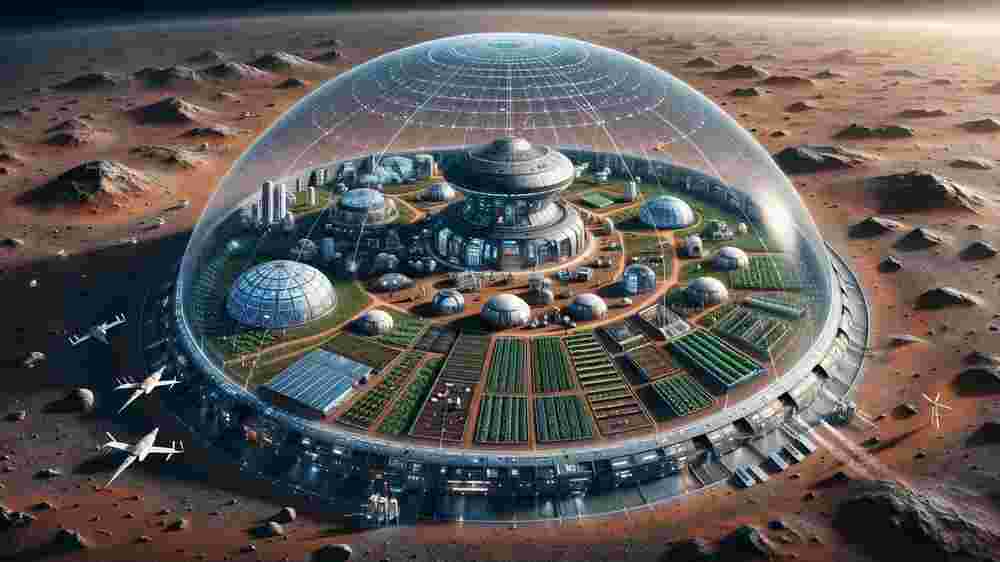
His plan included:
- Large ring-shaped space stations generating artificial gravity
- Orbital construction yards to assemble spacecraft
- Reusable ferry rockets delivering supplies to orbit
- A fleet of Mars transport ships, assembled 1,000 miles above Earth
This was not just imagination — it was a serious engineering blueprint for human travel to Mars.
How Von Braun’s Mars Fleet Would Work
Von Braun’s vision was to build a giant fleet of transport ships in Earth orbit, each with:
- Spherical crew sections
- Liquid-fueled rocket engines
- Massive fuel tank networks
- Hypergolic propellants (fuel that ignites upon contact)
This technology was already being developed in the 1940s and 50s — and it was used in modern rockets like SpaceX’s Dragon.
The Mission Timeline
Von Braun estimated the journey to Mars would take about 260 days, or 8.5 months, using the shortest orbital path between Earth and Mars.
The fleet would:
- Launch from Earth orbit
- Travel to Mars
- Enter Mars orbit
- Send down landers
- Establish a base
- Return to Earth
The Fatal Flaw: Mars Isn’t What We Thought
The biggest issue with von Braun’s plan wasn’t engineering — it was incorrect assumptions about Mars.
At the time, scientists believed Mars had:
- Oceans
- Rivers
- Vegetation
- Even alien civilizations
But we now know Mars has:
- Almost no atmosphere
- Less than 1% of Earth’s atmospheric density
- No breathable air
- Extreme cold and radiation
That means von Braun’s glider-style landers would have failed — Mars simply doesn’t have enough air to support such a landing method.
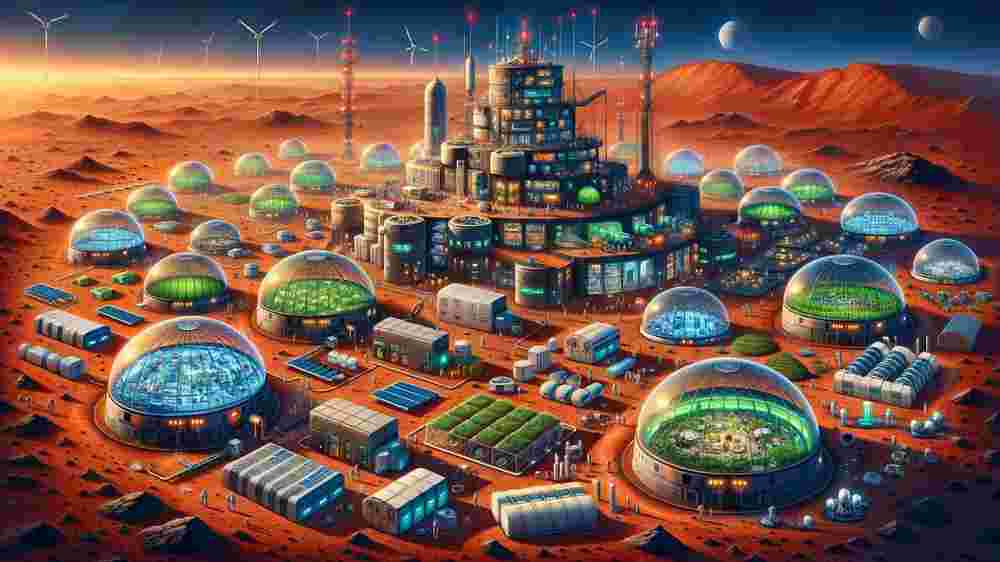
The 1950s: Nuclear Power Enters the Space Race
In the 1950s, a new technology changed the game: nuclear energy.
Scientists began imagining spacecraft powered by nuclear reactors — capable of long-duration missions far beyond what chemical rockets could manage.
Dr. Ernst Stuhlinger’s Nuclear Electric Spacecraft
A close colleague of von Braun, Dr. Ernst Stuhlinger, redesigned the Mars mission concept using nuclear electric propulsion.
His spacecraft would:
- Use a nuclear reactor to generate heat
- Convert heat into electricity
- Power an ion engine (similar to modern ion thrusters)
This concept was so advanced that it appeared on Disney’s “Mars and Beyond” in 1957, featuring models and animations of Stuhlinger’s nuclear Mars transport.
How the Nuclear Electric Ship Worked
The spacecraft used:
- A nuclear reactor
- A silicone oil reservoir
- A turbine generator
- A condenser panel
- A cesium ion engine
The result was a highly efficient propulsion system capable of long-term thrust — perfect for deep space travel.
The Mission Timeline
Stuhlinger’s plan estimated:
- 13 months to reach Mars
- 4 months to escape Earth’s gravity
- 7 months to travel to Mars
- 2 months to slow down and enter orbit
However, this long travel time created a major problem: prolonged exposure to radiation and microgravity, which is extremely harmful to human health.
The 1960s: NASA’s Golden Age and the Push to Mars
The 1960s marked the high point of NASA’s human spaceflight program. The Mercury and Gemini missions proved humans could travel and survive in space — and the Apollo program was closing in on the Moon.
NASA began planning beyond Apollo, and Mars became the next target.
Boeing’s 1968 Mars Mission Proposal
In 1968, Boeing Aerospace Division submitted a white paper outlining a Mars mission design using nuclear thermal propulsion.
Unlike the nuclear electric engine, nuclear thermal rockets use:
- A nuclear reactor
- Liquid hydrogen fuel
- High-temperature exhaust
- Massive thrust with high efficiency
This technology was already being tested under NASA’s Project NERVA, making Boeing’s design feasible with 1970s technology.
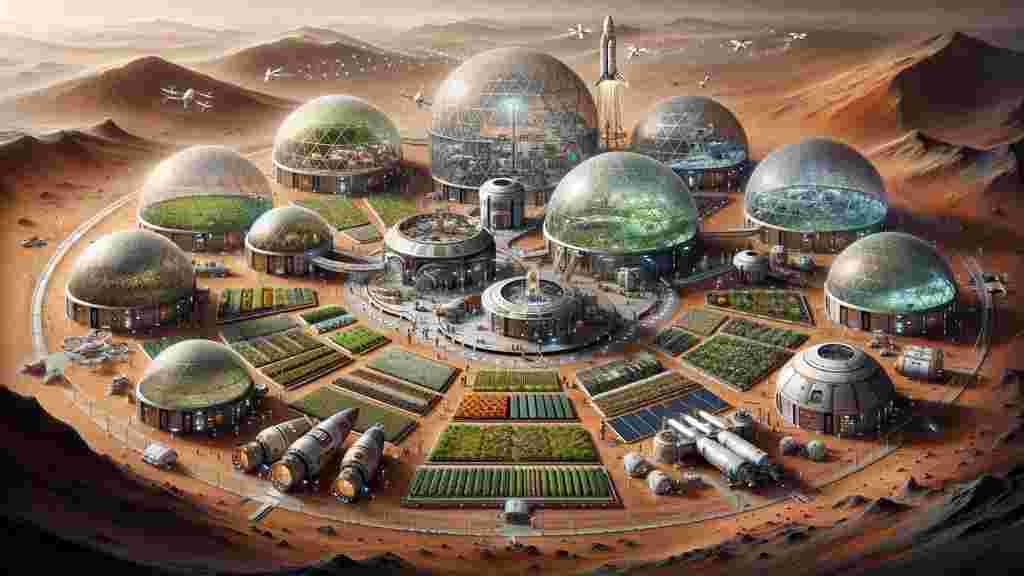
Boeing’s Mars Mission Design: The Most Realistic Plan
Boeing’s spacecraft required massive assembly in orbit, using multiple launches of Saturn V rockets.
Key Features
The mission included:
- Five nuclear propulsion modules
- A three-person Mars excursion module
- A six-person crew module
- An Earth reentry capsule
- A total mission duration of about 600 days
Mission Steps
- Assemble spacecraft in orbit
- Launch and burn toward Mars
- Insert into Mars orbit
- Send landers down
- 30-day Mars surface mission
- Return to Earth
It was a fully realistic mission design, and would have been possible with 1970s technology.
So Why Didn’t NASA Send Humans to Mars?
The real answer is: politics, funding, and timing.
By the early 1970s:
- The Apollo program ended
- Public interest in space exploration faded
- The Vietnam War consumed resources
- NASA’s budget was shrinking
- Political leadership changed
NASA faced a crucial choice on President Nixon’s desk:
Two Competing Visions
- Expand Apollo and build a Mars mission
- Build a reusable Space Shuttle for low Earth orbit
There wasn’t enough money to do both — and the Space Shuttle won.
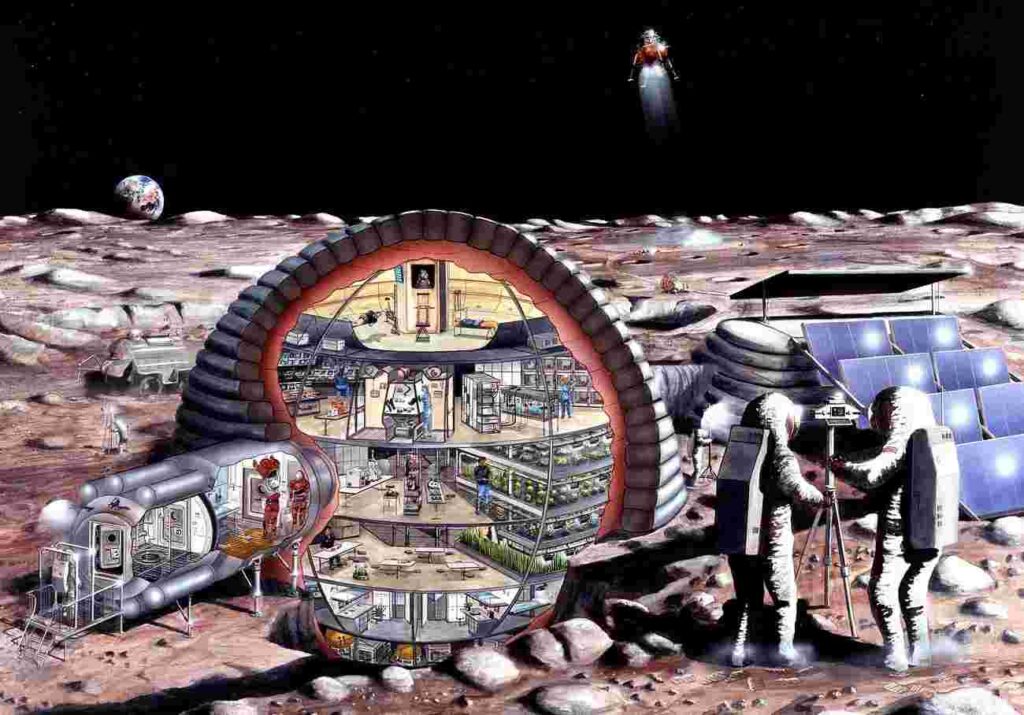
What Could Have Been: A Mars Colony in the 1970s
If NASA had chosen Mars, we might have seen:
- Large orbital construction stations
- Nuclear-powered spacecraft
- A human settlement on Mars by the late 20th century
- The first city on another planet
But instead, the space program shifted focus to Earth orbit — delaying Mars exploration for decades.
Conclusion: The Dream Still Lives
NASA’s early Mars plans were ambitious, realistic, and surprisingly advanced. The technology existed — but the political will did not.
Today, with private companies and renewed interest in Mars, the dream is returning — but the story of what could have been remains a powerful reminder of how history shapes our future in space.
FAQs
1. What was NASA’s plan to colonize Mars in the 1970s?
NASA’s plan involved using existing rocket technology to build large spacecraft in orbit and send crews to Mars using nuclear or chemical propulsion.
2. Who was Wernher von Braun and what was Project Mars?
Wernher von Braun was a rocket scientist and the architect of the Apollo program. Project Mars was his 280-page blueprint outlining a manned mission to Mars.
3. How did von Braun’s Mars mission design work?
Von Braun proposed building massive spacecraft in Earth orbit, using reusable ferry rockets and hypergolic engines to travel to Mars and back.
4. Why would von Braun’s Mars lander design fail today?
Because Mars has less than 1% of Earth’s atmosphere, his glider-style lander would not generate enough lift for a safe landing.
5. What is nuclear electric propulsion?
It uses a nuclear reactor to generate electricity, which powers ion engines. This creates efficient long-duration thrust ideal for deep space travel.
6. Who was Dr. Ernst Stuhlinger?
He was a scientist who worked with von Braun and developed a nuclear electric spacecraft concept for Mars missions.
7. How long would it take to reach Mars using nuclear electric propulsion?
Stuhlinger’s plan estimated about 13 months to reach Mars.
8. What is the difference between nuclear electric and nuclear thermal propulsion?
Nuclear electric propulsion uses electricity to power ion engines, while nuclear thermal propulsion uses heat from a reactor to heat hydrogen fuel and produce thrust.
9. What was Boeing’s Mars mission proposal in 1968?
Boeing proposed a Mars mission using nuclear thermal rockets, allowing faster travel (under 200 days to Mars orbit).
10. Why did NASA never send humans to Mars in the 1970s?
There were political, financial, and public support issues. NASA’s budget dropped, and the Space Shuttle program became the priority.
11. What was Project NERVA?
A NASA program focused on developing nuclear thermal rocket engines during the 1960s.
12. What would a Mars colony look like in von Braun’s vision?
It would begin with a small base and expand into a large settlement using supplies and technology transported from Earth.
13. Were these Mars mission plans technically feasible?
Yes, the technology existed — but long travel time, radiation exposure, and budget constraints made it unrealistic.
14. What are the main challenges of traveling to Mars?
Key challenges include radiation exposure, long travel time, microgravity health effects, and landing safely on Mars.
15. Could we still use these 1970s plans today?
Modern technology is more advanced, but the core ideas remain relevant, especially nuclear propulsion and orbital assembly.
16. What changed NASA’s direction away from Mars?
The end of Apollo, the Vietnam War, budget cuts, and the focus on reusable spacecraft (Space Shuttle) shifted NASA’s priorities.
Read More:
- Elon Musk Reveals New Tesla Bot Production Update 2026
- Tesla lands massive deal to expand charging for heavy-duty electric trucks
- Tesla owners in Sweden get direct attention from pro-union groups
- Tesla receives approval for FSD Supervised tests in Sweden
- LG Energy Solution pursuing battery deal for Tesla Optimus, other humanoid robots: report
- Tesla rolls out new Supercharging safety feature in the U.S.