


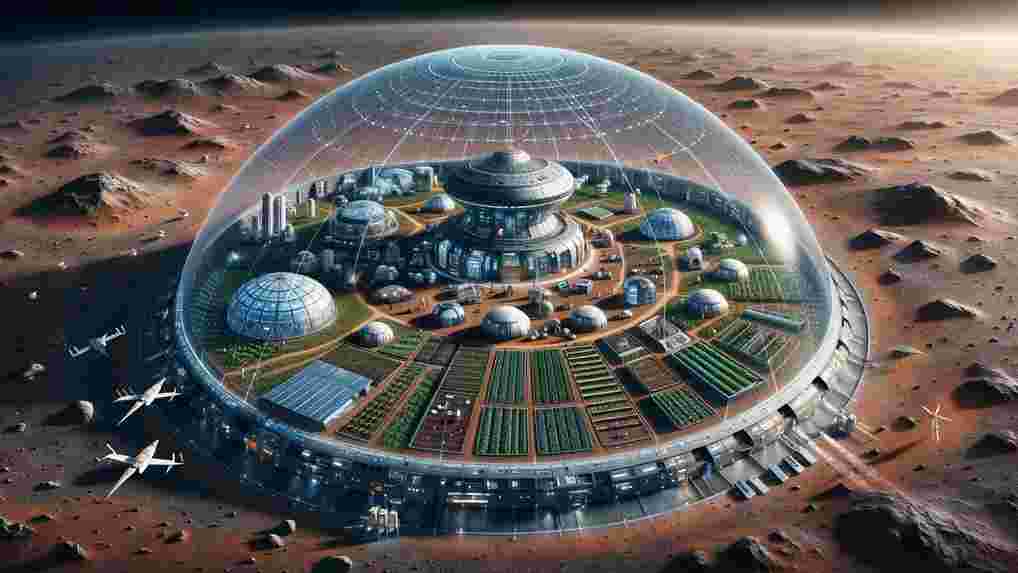
Humanity has always looked toward the stars and wondered what comes next. In the 21st century, that question is no longer philosophical—it is engineering, logistics, biology, and survival. By the year 2050, there may be a fully functioning city on Mars, serving as humanity’s second home and the first permanent outpost beyond Earth. At the center of this bold vision stands SpaceX, a company determined to transform Mars from a hostile red desert into a self-sustaining civilization.
This is not just about rockets or exploration. It is about ensuring the long-term survival of humanity as a multi-planet species. In this in-depth guide, we will explore how SpaceX plans to build a city on Mars, step by step—from robots and water extraction to power plants, habitats, food systems, and beyond.
Why Mars and Not the Moon?
At first glance, the Moon seems like the obvious choice for humanity’s first off-world settlement. It is close—just one day away from Earth—and relatively easy to reach. But that closeness is precisely the problem.

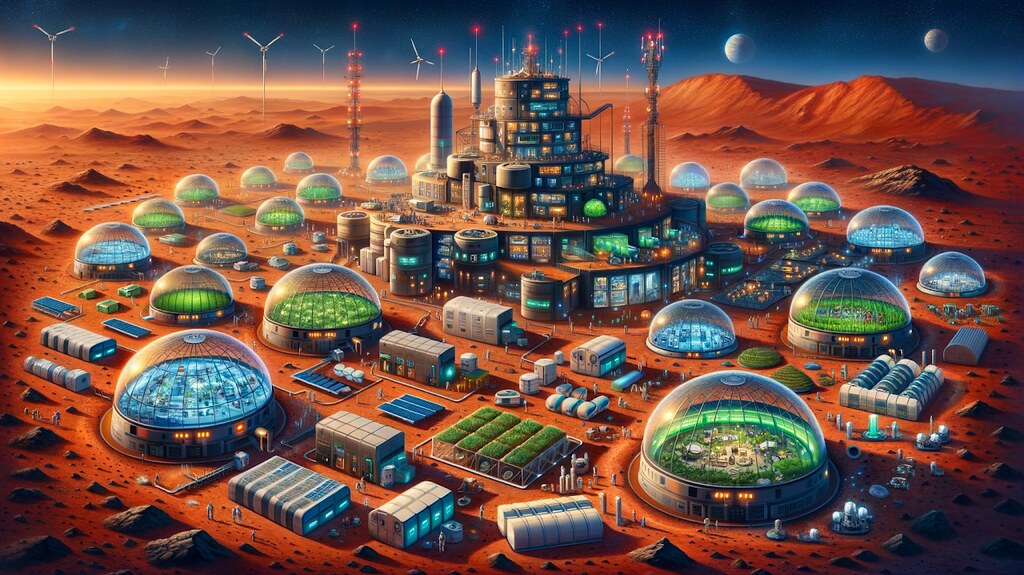
Mars Forces Self-Sufficiency
A Moon base could always rely on Earth for:
- Supplies
- Repairs
- Emergency evacuations
Mars, however, is different.
- Travel time from Earth to Mars: ~8 months (optimistically ~45 days in the future)
- Resupply missions: Rare and expensive
- Emergency returns: Practically impossible
Because of this distance, a Mars city cannot depend on Earth. It must:
- Produce its own water
- Generate its own oxygen
- Manufacture its own fuel
- Grow its own food
- Build its own infrastructure
Mars is not a backup outpost. It must become a fully independent world.
The Scale of the Vision: A Million People on Mars
To truly safeguard humanity, Mars must support at least one million people. That number is not arbitrary. It represents the minimum population needed to:
- Maintain a stable economy
- Preserve knowledge and skills
- Survive if Earth support suddenly ends
Only once Mars has **deep roots—figuratively and literally—**can it stand alone.
Phase One: Robots Before Humans
Why Robots Come First
Mars is:
- Colder than Antarctica
- Drier than the Sahara Desert
- Bombarded with radiation
- Covered in toxic soil
Sending humans first would be reckless. Instead, Mars will initially be inhabited by dozens, then hundreds of robots.

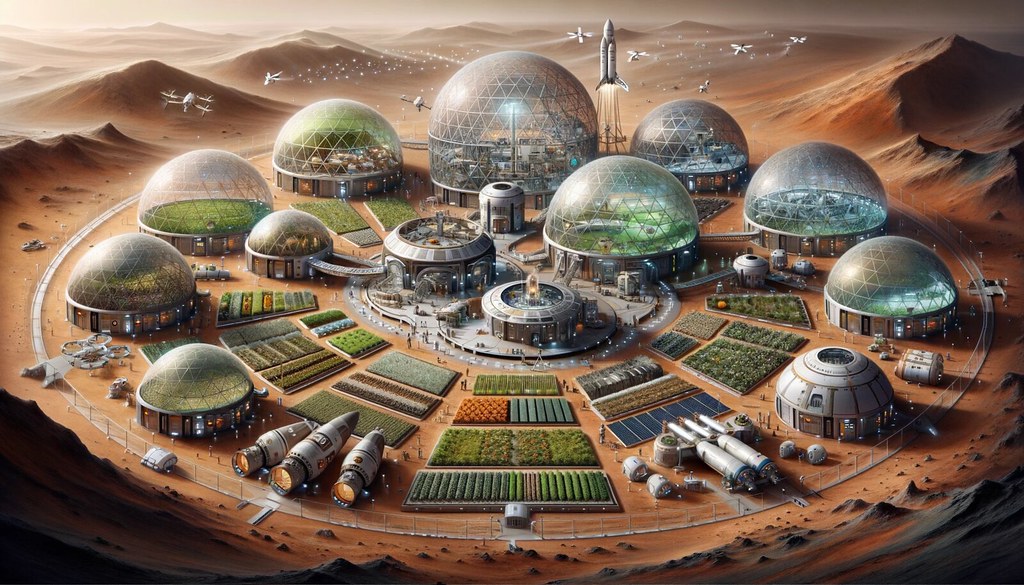
Optimus: Tesla’s Humanoid Robot
SpaceX’s sister company, Tesla, is developing Optimus, a fully autonomous, AI-powered humanoid robot designed to:
- Perform construction
- Operate machinery
- Build infrastructure
- Prepare habitats for humans
This is not a coincidence. Optimus is designed for Mars.
Robots don’t need:
- Oxygen
- Water
- Pressure
- Radiation shielding
They can work endlessly in conditions that would instantly kill a human.
The First Starship Missions to Mars
Initial Robotic Landings (As Early as 2026)
SpaceX plans to send:
- 5 Starship landers
- 10 tons of payload each
- Primary goal: Land at least one ship safely
SpaceX learns through trial and error. Early failures are expected. But once the process is refined, execution becomes consistent and scalable.
Phase Two: The First Colonial Fleet
2030: The Real Build Begins
Two years after the first successful robotic landing:
- 20 Starship landers
- 75 tons of cargo each
- Payload focused on infrastructure, not people
This marks the beginning of true colonization.
Choosing the Location: Why Arcadia Planitia
SpaceX has identified Arcadia Planitia, near Olympus Mons, as the ideal settlement zone.
Why Arcadia?
- Flat terrain for landing
- Near the Martian equator
- Massive underground water ice deposits
Water is the most important resource on Mars.


Water: The Foundation of Martian Life
Water on Mars is valuable because it enables:
- Drinking
- Oxygen production
- Rocket fuel manufacturing
- Radiation shielding
Water Treatment Plants
Robots will mine ice from beneath the surface and process it into:
- Drinkable water
- Oxygen (via electrolysis)
- Hydrogen (for fuel)
Recycling will be extreme—but there are limits to how many times you can turn last night’s pee into today’s coffee.
Fuel Production: The Key to Survival and Return
Why Fuel Must Be Made on Mars
Bringing rocket fuel from Earth is:
- Heavy
- Expensive
- Inefficient
Without local fuel production:
- No return trips
- No expansion
- No long-term future
Why SpaceX Uses Methane
- Is more stable than pure hydrogen
- Easier to store
- Ideal for Starship engines
Where the Ingredients Come From
- Hydrogen: Extracted from water
- Carbon: Pulled from Mars’ CO₂-rich atmosphere
This process also produces extra oxygen for colonists.
Mining Mars: Unlocking Local Resources
Water ice lies underground, which means mining is essential.
Mars Mining Technology
- Scaled-down tunneling machines
- Robotic drilling rigs
- Continuous autonomous operation
Bonus Benefit: Construction Materials
Excavated soil and rock can be processed into:
- Asphalt-like material for roads
- Landing pads
- Foundations
By around 2030, Mars will already have:
- Roads
- Fuel plants
- Water systems
All before humans arrive.
Phase Three: Humans Arrive on Mars
The First Human Fleet
- 100 Starship landers
- 150 tons of cargo each
- Carrying people, supplies, and advanced systems
This is the most dangerous migration in human history.
Powering a Mars City
Why Power Is Critical
Humans need:
- Heat
- Light
- Air pressure
- Oxygen
- Water circulation
All of this must run 24/7.
Solar Power and Mega Packs
- Mars day ≈ Earth day
- Solar panels power the colony
- Tesla Mega Pack batteries store energy overnight
One Mega Pack can power a small town for hours—making early Mars cities feasible.

Living on Mars: From Starship to Permanent Homes
Starship landers provide temporary shelter, but they are:
- Tall
- Narrow
- Inefficient long-term
Permanent habitats are required.
Why Glass Domes Won’t Work (At First)
While iconic, glass domes are:
- Heavy
- Material-intensive
- Difficult to assemble
A single large dome could require hundreds of Starship launches.
Mars needs smarter solutions.
Ice Domes: Nature’s Radiation Shield
NASA has proposed ice dome habitats.
Why Ice Works
- Excellent insulation
- Blocks radiation
- Allows natural light
- Uses local resources
How Ice Domes Are Built
- Inflate a base module
- Build a dome mold
- Fill with mined water ice
The result is a translucent, radiation-safe home that supports mental and physical health.
Beyond Homes: Building with Martian Concrete
Ice domes are ideal for living spaces, but labs and factories need stronger structures.
Astrocrete and Biocrete
Martian concrete can be made using:
- Martian soil
- Rock dust
- Human waste (urea)
Yes, urine helps bind materials into a concrete stronger than Earth’s.
This method:
- Recycles waste
- Reduces imports
- Strengthens structures
Even medieval builders used biological additives—this is old science, reimagined for Mars.
The Hardest Challenge: Growing Food on Mars
Why Mars Soil Is Toxic
Martian soil contains perchlorates, which:
- Prevent plant growth
- Are harmful to humans
Two Options
- Import soil from Earth (not scalable)
- Create a soil processing industry on Mars
The second option is the only viable path.
Human Waste: From Problem to Solution
Human waste can:
- Fertilize processed soil
- Restore nutrients
- Support large-scale agriculture
It’s not glamorous—but survival never is.
What Comes After the First City?
Once Mars can reliably produce:
- Power
- Water
- Oxygen
- Shelter
- Food
…without Earth’s help, humanity crosses a historic threshold.
We Become a Multi-Planet Species
The next steps may include:
- Expanding cities
- Terraforming research
- Space-based industries
- Further exploration of the solar system
Mars is not the end—it is the beginning.
Final Thoughts
Building a city on Mars is not science fiction. It is a monumental engineering challenge driven by necessity, ambition, and survival. Through robots, local resources, innovative construction, and radical recycling, SpaceX aims to turn an uninhabitable planet into a thriving world.
The question is no longer if humanity will live on Mars—but when.
And once we do, there may be no turning back. 🚀
FAQs
1. When will SpaceX build a city on Mars?
SpaceX aims to establish the foundations of a Mars city between 2030 and 2050, with early robotic missions starting as soon as 2026 and human settlement expanding steadily over the following decades.
2. Why is Mars chosen instead of the Moon for a permanent city?
Mars forces true self-sufficiency. Unlike the Moon, which is only a day away from Earth, Mars requires settlers to produce their own water, oxygen, food, and fuel, making it ideal for building a long-term, independent civilization.
3. How long does it take to travel from Earth to Mars?
Current missions take around 6–8 months one way. With future propulsion technologies, this could be reduced to about 45 days, but Mars will always remain far enough to require independence.
4. Will Mars colonists be able to return to Earth?
In the early stages, return trips may be possible, but long-term colonization is expected to involve mostly one-way migration, especially once Mars becomes fully self-sustaining.
5. Why are robots sent to Mars before humans?
Mars is extremely hostile to human life. Autonomous robots, such as Tesla’s Optimus, can build infrastructure, mine resources, and prepare habitats without needing air, water, or radiation protection.
6. What is Optimus and what role does it play on Mars?
Optimus is a humanoid AI-powered robot developed by Tesla. On Mars, it will handle construction, mining, fuel production, and maintenance before and after humans arrive.
7. Where will the first Mars city be built?
SpaceX has identified Arcadia Planitia, near Olympus Mons, as a prime location due to its flat terrain, proximity to the equator, and large underground water ice reserves.
8. How will people get water on Mars?
Water will be extracted from underground ice, melted, purified, and recycled. The same process will also produce oxygen for breathing and hydrogen for fuel.
9. How will SpaceX produce oxygen on Mars?
Oxygen will be generated by splitting water molecules and by extracting oxygen as a byproduct of carbon dioxide processing from the Martian atmosphere.
10. How will rockets refuel on Mars?
SpaceX will manufacture methane rocket fuel on Mars using hydrogen from water and carbon from the CO₂-rich Martian atmosphere, enabling Starships to launch again.
11. How will Mars cities be powered?
Early Mars settlements will rely on solar power combined with large battery storage systems, such as Tesla Mega Packs, to provide continuous energy during nighttime and dust storms.
12. What will homes on Mars look like?
Initial habitats will include Starship landers, followed by ice domes and reinforced inflatable structures covered with Martian concrete made from local soil.
13. How will settlers be protected from radiation?
Radiation protection will come from ice walls, thick regolith layers, and underground structures, as water and soil are excellent natural radiation shields.
14. Can food really be grown on Mars?
Yes, but it’s difficult. Martian soil contains toxic perchlorates, so it must be processed and treated. Human waste will also be used as fertilizer to support large-scale agriculture.
15. What is the ultimate goal of building a city on Mars?
The ultimate goal is to ensure the long-term survival of humanity by becoming a multi-planet species, capable of thriving even if Earth faces a global catastrophe.
Read More:
- World’s First All-Solid-State Battery Mass Production INCREDIBLE, 5 Min & 100,000 cycles
- Elon Musk’s Pi Phone Starlink 2026 FINALLY HERE
- Tesla Robotaxi CyberCab Price CHANGED! Elon Musk UPDATED New Design Inside Giga Texas
- SpaceX Starship is finally Launching Into Orbit for the First Time. Here’s Timeline
- Tesla FSD Supervised wins MotorTrend’s Best Driver Assistance Award
- Elon Musk’s X will start using a Tesla-like software update strategy