


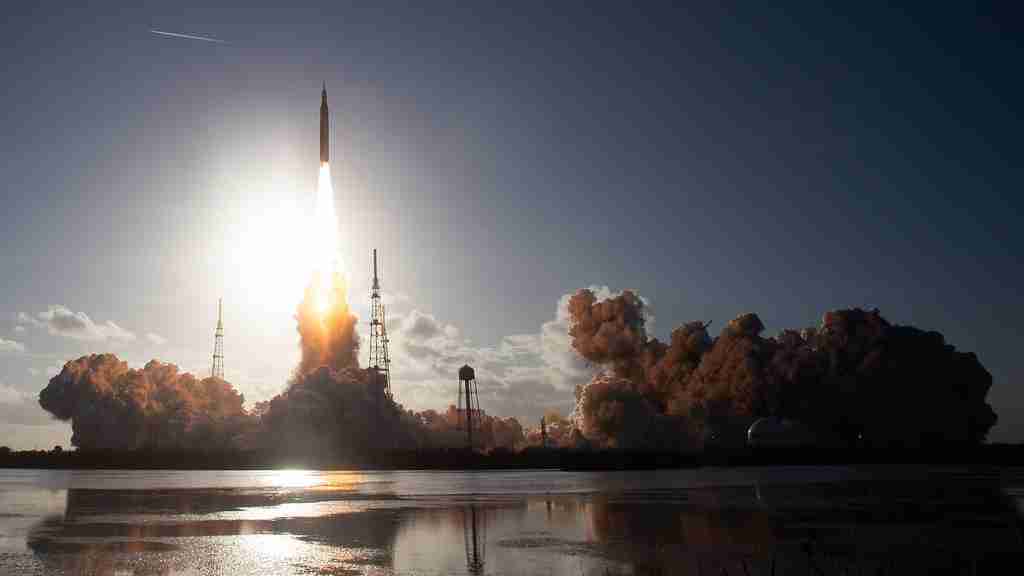
The successful completion of the Artemis II mission marks a defining chapter in modern space exploration. For the first time since the Apollo era, humanity has once again sent astronauts around the Moon and safely brought them back to Earth. This historic 10-day journey represents not just a technological achievement, but a bold declaration that the next era of human space exploration has truly begun.
From a flawless splashdown in the Pacific Ocean to the emotional homecoming aboard a U.S. Navy vessel, every moment of Artemis II reflects precision, resilience, and global collaboration. This mission has reignited humanity’s passion for lunar exploration and laid the groundwork for future missions that could take humans even further—to Mars and beyond.
A Historic Return: Why Artemis II Matters
The Artemis II mission is more than just another spaceflight—it is a symbol of human ambition returning to the Moon after more than five decades. The last time astronauts ventured into lunar orbit was during the Apollo missions in 1972. Since then, space exploration has evolved dramatically, but no mission has carried the same emotional and historical weight as Artemis II.
This mission successfully demonstrated that modern spacecraft systems, human endurance, and international collaboration can work seamlessly together. It validated technologies that will be essential for future lunar landings and long-duration missions in deep space.
Precision at Splashdown: A Perfect Ground Track
Unmatched Accuracy During Re-entry
On April 11, 2026, at approximately 7:07 PM Central Time, the Artemis II spacecraft—named Integrity—completed its journey with a flawless splashdown in the Pacific Ocean, southwest of San Diego.
What made this moment extraordinary was the unprecedented accuracy of the spacecraft’s re-entry trajectory. Flight dynamics experts described the alignment with Earth’s atmosphere as the most precise ever recorded for a mission of this scale. Achieving such accuracy is critical, as even the smallest deviation during re-entry can result in catastrophic consequences.
This level of precision showcases how far aerospace engineering has advanced since the Apollo era.
The Journey in Numbers
The mission’s scale is best understood through its impressive statistics:
- Total Distance Traveled: 694,000 miles
- Mission Duration: 10 days
- Recovery Team: 550 personnel
- Primary Recovery Vessel: USS John P. Murtha
These numbers highlight not just the distance covered, but the complexity and coordination required to execute such a mission successfully.
The Recovery Process: From Sea to Sky
A Carefully Orchestrated Extraction
Once the capsule safely landed in the Pacific Ocean, a highly trained recovery team moved swiftly into action. Extracting astronauts after a long-duration mission is a delicate process, as their bodies must readjust to Earth’s gravity.
The crew consisted of:
- Commander Reed Wiseman
- Pilot Victor Glover
- Mission Specialist Christina Koch
- Mission Specialist Jeremy Hansen
Each astronaut played a crucial role in the mission, and their safe recovery was the top priority.
The “Front Porch” Operation
The extraction process involved a specialized inflatable platform known as the “front porch.” This platform allowed astronauts to safely exit the capsule and prepare for transport.
The sequence was carefully planned:
- The first three astronauts exited the capsule.
- Commander Reed Wiseman was the last to leave, ensuring all procedures were followed.
- Each crew member was assisted onto the platform with precision and care.
This methodical approach minimized risks and ensured a smooth transition from spacecraft to recovery operations.
Helicopter Airlift for Maximum Safety
Instead of using traditional boat transfers, the recovery team opted for helicopter extraction, a decision made to enhance safety and comfort.
Here’s how it worked:
- Navy helicopters hovered approximately 40 feet above the platform.
- Recovery specialists were lowered down to secure the astronauts.
- Each crew member was fitted into a harness and carefully hoisted into the helicopter.
This approach significantly reduced the physical strain on astronauts who had just returned from microgravity, ensuring a faster and safer transition to medical care.
Homecoming on the USS John P. Murtha
A Moment of Celebration and Relief
As the helicopters touched down on the deck of the USS John P. Murtha, the atmosphere was filled with excitement and pride. The mission had been executed flawlessly, and the safe return of the crew was a moment of national and global celebration.
Despite the physical challenges of re-entry, the astronauts appeared to be in excellent spirits. Smiles, laughter, and even selfies captured the human side of this historic achievement.
Emotional First Moments Back on Earth
Two crew members, Victor Glover and Christina Koch, were seen smiling and interacting with the medical team almost immediately after landing. Their reactions reflected both relief and joy—emotions shared by millions watching around the world.
As the crew walked across the flight deck, a powerful message echoed through the ship’s loudspeaker:
“Welcome home, Integrity.”
This simple phrase captured the significance of the moment—humanity had once again reached beyond Earth and returned safely.
Recognition at the Highest Level
Shortly after the splashdown, the President of the United States personally congratulated NASA leadership, recognizing the mission as a historic milestone.
This acknowledgment underscores the importance of Artemis II not just as a scientific mission, but as a symbol of national achievement and global inspiration.
Mission Control: The Heart of the Operation
Inside the “White Flight” Control Room
While the recovery unfolded in the Pacific, another critical part of the mission was taking place thousands of miles away in Houston.
The Artemis II mission was managed from the White Flight Control Room, a historic facility previously used during the Space Shuttle era. This room has now been modernized to support the Artemis program, blending legacy experience with cutting-edge technology.
Leadership and Teamwork
Flight Director Rick Henling led a team of highly skilled controllers who monitored every aspect of the mission. From re-entry to splashdown and recovery, each milestone was carefully tracked and executed.
As each phase succeeded, the room erupted in applause—an emotional release after years of planning and preparation.
This moment highlighted the importance of teamwork, not just among astronauts, but across thousands of engineers, scientists, and support staff.
What Makes Artemis II So Revolutionary?
Validation of Critical Systems
One of the primary goals of Artemis II was to test and validate systems essential for future missions. The spacecraft performed flawlessly, particularly during re-entry—one of the most dangerous phases of any space mission.
Key systems validated include:
- Heat Shield Performance
- Life Support Systems
- Navigation and Guidance Systems
These successful tests provide the confidence needed to proceed with upcoming missions that will involve landing humans on the Moon.
A Step Toward Sustainable Lunar Exploration
Unlike the Apollo missions, which were short-term explorations, the Artemis program aims to establish a sustainable human presence on the Moon.
This includes:
- Building lunar bases
- Conducting long-term scientific research
- Preparing for missions to Mars
Artemis II serves as the critical bridge between testing and actual lunar surface operations.
The Capsule’s Next Journey
While the astronauts have safely returned, the mission is not yet fully complete. The Orion capsule will be carefully retrieved and transported back to land for detailed analysis.
Engineers will examine every aspect of the spacecraft to:
- Identify areas for improvement
- Validate performance data
- Prepare for future missions
This post-mission analysis is essential for ensuring continued success in the Artemis program.
A Giant Leap Toward Mars
Why Artemis II Changes Everything
The success of Artemis II proves that humanity is ready to venture deeper into space than ever before. It demonstrates that the challenges of long-distance space travel can be overcome with modern technology and international collaboration.
This mission is not just about returning to the Moon—it’s about preparing for the next great leap: sending humans to Mars.
Building the Future of Space Exploration
Artemis II has opened the door to a future where:
- Humans live and work on the Moon
- Space travel becomes more routine
- Interplanetary missions become a reality
It represents the beginning of a new era—one where space is no longer the final frontier, but the next destination.
Final Thoughts: A Moment That Will Define History
The Artemis II mission will be remembered as a turning point in human history. It marks the moment when humanity reestablished its presence beyond Earth orbit and set its sights on a future among the stars.
From its precise splashdown to the emotional homecoming, every aspect of the mission reflects the power of human ingenuity and determination.
As we look ahead to future Artemis missions, one thing is clear:
The path to the Moon—and beyond—is now wide open.
And this time, humanity isn’t just visiting.
FAQs
1. What is the Artemis II mission?
Artemis II is NASA’s first crewed mission in the Artemis program, designed to send astronauts around the Moon and safely return them to Earth. It marks humanity’s return to deep space exploration after decades.
2. Why is Artemis II historically important?
This mission is significant because it is the first crewed lunar mission since 1972, making it a major milestone in modern space exploration and a stepping stone toward future Moon landings and Mars missions.
3. How long did the Artemis II mission last?
The mission lasted approximately 10 days, during which the spacecraft traveled nearly 694,000 miles.
4. Who were the astronauts on Artemis II?
The crew included:
- Commander Reed Wiseman
- Pilot Victor Glover
- Mission Specialist Christina Koch
- Mission Specialist Jeremy Hansen
5. What spacecraft was used in Artemis II?
The astronauts traveled aboard the Orion spacecraft, named Integrity, which is designed for deep space missions.
6. Where did Artemis II land after returning to Earth?
The spacecraft made a safe splashdown in the Pacific Ocean, southwest of San Diego.
7. What made the splashdown unique?
The re-entry and splashdown were described as one of the most precise ever achieved, showcasing advanced flight dynamics and navigation systems.
8. How was the crew recovered after splashdown?
The astronauts were extracted using an inflatable platform called the “front porch” and then airlifted by helicopters to a U.S. Navy ship.
9. Which ship handled the recovery operations?
The recovery was supported by the USS John P. Murtha, along with a team of around 550 personnel.
10. Why were helicopters used instead of boats?
Helicopters provided a faster and safer method of transport, especially since astronauts need careful handling after spending time in microgravity.
11. What happens to astronauts after recovery?
After landing, astronauts undergo medical evaluations to assess their health and help them readjust to Earth’s gravity.
12. What is the “White Flight” control room?
It is a historic mission control room in Houston used during the Space Shuttle era, now upgraded to support Artemis missions.
13. What were the main goals of Artemis II?
The mission aimed to:
- Test spacecraft systems
- Validate life support and heat shield performance
- Demonstrate safe crewed travel beyond Earth orbit
14. What comes after Artemis II?
The next step is Artemis III, which aims to land astronauts on the Moon and begin building a sustainable human presence there.
15. How does Artemis II help future Mars missions?
By testing deep space travel systems and human endurance, Artemis II provides critical data needed for long-duration missions to Mars.
16. What does Artemis II mean for the future of space exploration?
Artemis II signals the start of a new era of exploration, where humans will not only return to the Moon but also prepare for living and working in space long-term.
Read More:
- Cybercab Robotaxi Mass Production Finally Begin
- SpaceX is keeping the Space Station alive again this weekend
- Tesla is using a redesigned Cybertruck battery cell to mitigate Semi challenges
- Elon Musk’s Tesla Bot Gen 3 April Launch Event Coming
- Elon Musk drops a bomb regarding Tesla Model S, X inventory