


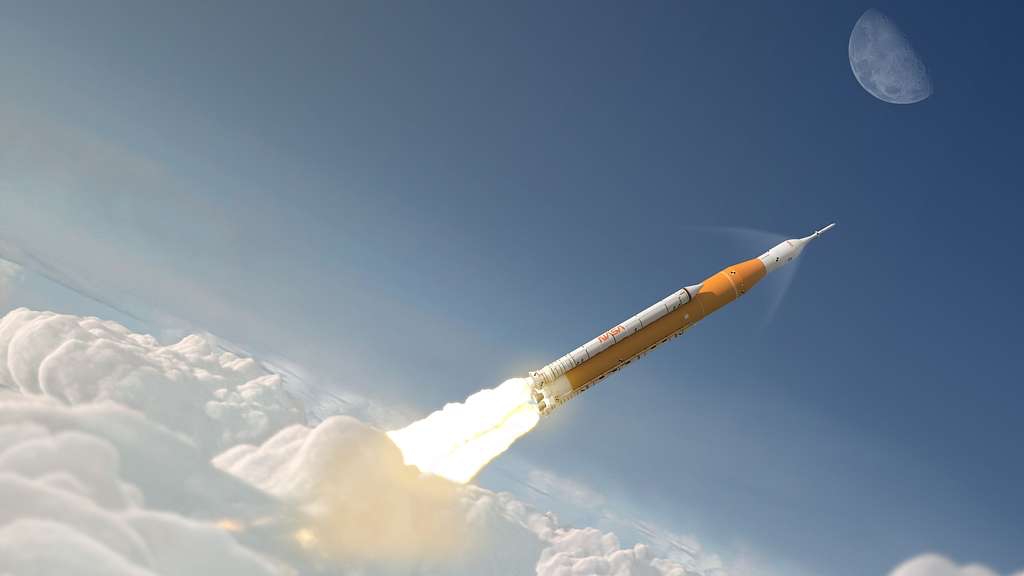
On April 1, 2026, at 6:35 p.m., history was made as the Space Launch System (SLS) rocket lifted off from Florida, carrying the Orion spacecraft and its four-person crew on a critical 10-day mission. This mission serves as a vital precursor to Artemis III, which aims to land humans on the lunar surface once again.
The Artemis II mission represents a milestone for NASA, combining advanced spacecraft technology, human spaceflight expertise, and international cooperation to pave the way for sustainable lunar exploration. From minor technical hiccups to precision orbital maneuvers, every aspect of this mission has been meticulously planned and executed.
Mission Launch and Day 1 Milestones
The first 24 hours of the Artemis II mission were designated as a “shakeout period”, where all critical spacecraft systems were monitored to ensure operational readiness in high Earth orbit. This early phase is crucial because it confirms that the Orion spacecraft and its crew are prepared for the more complex maneuvers required later in the mission.
Key Flight Events
Solid Rocket Booster Separation
The launch of the SLS rocket relied heavily on its two solid rocket boosters (SRBs), which provided approximately 75% of the total initial thrust needed to escape Earth’s atmosphere. These boosters successfully separated at their planned time, demonstrating precision engineering and flawless execution. Booster separation is a critical milestone in any rocket launch, as any deviation could jeopardize the entire mission.
ICPS Maneuvers
After booster separation, the Interim Cryogenic Propulsion Stage (ICPS) took over. The ICPS performed a series of orbit-raising maneuvers, propelling Orion through the upper reaches of Earth’s atmosphere and into the correct trajectory for the Trans Lunar Injection (TLI) burn. These maneuvers are vital to ensuring Orion can escape Earth’s gravity and reach lunar vicinity safely.
Proximity Operations: Docking Rehearsal
In a manual control demonstration, the crew conducted a docking rehearsal with the ICPS. This exercise is particularly significant for Artemis III, where Orion must dock with lunar landers provided by SpaceX or Blue Origin. Successfully mastering these proximity operations is essential to mission success and crew safety, as docking maneuvers in space require extreme precision.
The “Plumbing” Scare
A minor but noteworthy incident occurred shortly after launch: a fan issue in Orion’s waste management system. Yes, the crew experienced a toilet malfunction, likely caused by launch vibrations. NASA quickly confirmed that the issue was resolved, ensuring that crew comfort and health would not be compromised for the rest of the mission. This incident highlights the complexity of human spaceflight, where even small systems like toilets are critical for long-duration missions.
The Road Map: Days 2 through 10
Following the initial Earth-orbit checks, the mission unfolds in three distinct phases, each with unique objectives and critical milestones.
Phase 1: The Outbound Trek (Days 2–5)
During the outbound trek, Orion performs the Trans Lunar Injection (TLI) burn, a key maneuver that allows the spacecraft to escape Earth’s gravity and enter a lunar free return trajectory.
The lunar free return trajectory acts as a safety net. If Orion’s engines fail at any point during the mission, the spacecraft will naturally loop back toward Earth. This trajectory has been a cornerstone of NASA’s lunar mission planning since the Apollo era, emphasizing safety alongside exploration.
Key aspects of this phase include:
- Continuous crew health monitoring and system diagnostics
- Trajectory adjustments to ensure a precise lunar approach
- Science experiments that take advantage of the high Earth orbit
Phase 2: Lunar Flyby (Day 6)
Day 6 marks the main event of Artemis II. Orion will swing around the far side of the Moon, using lunar gravity to slingshot the spacecraft back toward Earth. This phase is expected to deliver the most stunning high-resolution images of the lunar surface ever captured by a crewed mission.
Highlights of the lunar flyby include:
- Observing lunar geological features from multiple angles
- Testing navigation systems in deep space conditions
- Preparing for the docking procedures planned for Artemis III
The lunar flyby is not just a spectacular visual event; it also serves as a critical rehearsal for future crewed landings, enabling NASA to fine-tune trajectory corrections, communication protocols, and spacecraft operations.
Phase 3: The Return Trip (Days 7–10)
After leaving lunar orbit, Orion’s crew module separates from the service module to initiate high-speed atmospheric re-entry. This final phase tests:
- Heat shield performance under extreme re-entry conditions
- Parachute deployment systems for safe splashdown
- Recovery operations coordinated with NASA and allied maritime teams
The mission concludes with a parachute-assisted splashdown in the Pacific Ocean on Day 10, marking the successful completion of the first crewed mission beyond low Earth orbit in decades.
The Shifting Global Space Race
While NASA progresses toward Artemis milestones, other spacefaring nations are rapidly advancing their capabilities. China, in particular, is making significant strides in orbital launches, reusable rockets, and lunar ambitions.
Record-Breaking Targets
China has set ambitious goals for 2026, aiming for 140 orbital launches, a 52% increase over its 92 launches in 2025. These targets indicate the country’s commitment to achieving parity with NASA and SpaceX, and potentially surpassing them in certain areas of space technology.
Private Sector Surge
Chinese companies such as Landspace and Galactic Energy are pushing the boundaries of reusable rocket technology and launch infrastructure development. For instance, CAS Space alone has 13 launches planned for this year. The rise of private space companies in China mirrors the commercialization trend seen in the United States, where firms like SpaceX and Blue Origin are integral to lunar mission plans.
Lunar Ambitions
Looking ahead, China aims to conduct a crewed lunar landing by 2029 or 2030, potentially establishing a permanent base at the lunar south pole in collaboration with Russia. This move could significantly impact the global space race, as the timeline for Artemis III is currently set for no sooner than 2028. The narrowing gap between major space powers underscores the need for precise mission execution and timely technological milestones.
Key Takeaways from Artemis II Mission
The Artemis II mission provides critical insights into human deep space exploration, and the lessons learned will inform the Artemis III lunar landing. Some of the most significant takeaways include:
- Flawless Launch Execution – The SLS rocket and its boosters performed flawlessly, demonstrating NASA’s engineering excellence.
- Advanced Orbital Maneuvers – The ICPS maneuvers and TLI burn prove that Orion can safely navigate Earth-Moon space.
- Human Spaceflight Systems Tested – From life support to proximity docking, all critical systems have been validated for long-duration missions.
- Global Space Competition Intensifies – With China and private companies accelerating space technology, NASA faces increasing pressure to maintain its leadership in lunar exploration.
- Crew Safety and Comfort Ensured – Even minor issues, like the toilet fan scare, were resolved quickly, emphasizing the importance of crew well-being.
Artemis II: A Step Toward Sustainable Lunar Exploration
The success of Artemis II not only reinforces NASA’s technical expertise but also lays the groundwork for international and commercial partnerships in space exploration.
As we look forward to Artemis III, the mission will involve:
- Docking with lunar landers provided by SpaceX or Blue Origin
- Performing surface exploration and scientific experiments on the Moon
- Testing long-duration life support systems essential for future Mars missions
Artemis II is more than a 10-day mission; it represents a critical stepping stone toward humanity’s return to the Moon and the next era of space exploration.
Conclusion
The April 2026 launch of Artemis II marks a historic moment for NASA, the crewed spaceflight community, and the global space race. From overcoming minor technical issues like the toilet fan problem to executing precise orbital maneuvers, the mission demonstrates the readiness of the Orion spacecraft and crew for deep space operations.
As China accelerates its space ambitions, the urgency for timely and successful Artemis missions has never been higher. Artemis II serves as a critical rehearsal for future lunar landings, proving that humanity is ready to return to the Moon—safely, efficiently, and spectacularly.
With a flawless launch, successful TLI burn, and all systems operational, Artemis II sets the stage for Artemis III, bringing humanity one step closer to walking on the lunar surface again.
FAQs
1. What is the NASA Artemis II mission?
The Artemis II mission is NASA’s first crewed lunar mission in decades, designed to test the Orion spacecraft and prepare for a future lunar landing under Artemis III.
2. When did Artemis II launch?
Artemis II launched on April 1, 2026, at 6:35 p.m. from Florida using the Space Launch System (SLS) rocket.
3. How long is the Artemis II mission?
The mission lasts 10 days, including Earth orbit checks, a lunar flyby, and safe return to Earth.
4. How many astronauts are aboard Artemis II?
Four astronauts are on board, testing deep space human spaceflight systems and performing critical mission operations.
5. What is the Orion spacecraft?
The Orion spacecraft is NASA’s crew module designed for deep space travel, capable of supporting astronauts for long-duration missions beyond Earth orbit.
6. What is the Space Launch System (SLS)?
The SLS rocket is NASA’s heavy-lift launch vehicle, designed to carry Orion and crew toward the Moon and beyond.
7. What was the first milestone after launch?
The first 24 hours were a “shakeout period” to ensure all spacecraft systems were functional in high Earth orbit.
8. Did Artemis II experience any technical issues?
Yes, there was a minor issue with a fan in Orion’s toilet, caused by launch vibrations. NASA confirmed the problem was fixed.
9. What are the phases of the Artemis II mission?
The mission has three phases:
- Outbound Trek (Days 2–5)
- Lunar Flyby (Day 6)
- Return Trip (Days 7–10)
10. What is the Trans Lunar Injection (TLI) burn?
The TLI burn is a rocket maneuver that pushes Orion out of Earth’s gravity and onto a lunar free return trajectory.
11. What is a lunar free return trajectory?
It’s a safety path that ensures Orion will naturally loop back to Earth if engines fail during the lunar mission.
12. What happens during the lunar flyby?
On Day 6, Orion swings around the far side of the Moon, using lunar gravity to return toward Earth while capturing high-resolution lunar images.
13. How does Orion return to Earth?
Orion separates from the service module, undergoes high-speed atmospheric re-entry, and lands via a parachute-assisted splashdown in the Pacific Ocean.
14. Why is Artemis II important for Artemis III?
Artemis II tests docking, life support, and orbital maneuvers, all of which are essential for a crew landing on the Moon during Artemis III.
15. How is NASA handling international competition in space?
NASA monitors China’s accelerating space program, including orbital launches and lunar ambitions, to maintain leadership in lunar exploration.
16. What is China’s lunar plan?
China aims for a crewed lunar landing by 2029 or 2030, potentially establishing a permanent lunar base in cooperation with Russia.
17. Are private companies involved in Artemis missions?
Yes, companies like SpaceX and Blue Origin provide lunar landers and other technologies to support Artemis III.
18. What makes Artemis II unique from Apollo missions?
Artemis II features modern spacecraft technology, advanced navigation systems, and integration with commercial lunar landers, unlike Apollo missions.
19. When will humans land on the Moon again?
The next crewed lunar landing is planned under Artemis III, expected no sooner than 2028, following Artemis II’s successful testing of Orion systems.
Read More:
- New Tesla Model 2 ALUMINUM-ION Battery? 10,000 Cycles, Non-Flammable, -25°C Efficiency (2026)
- Starship S39 with Raptor 3 Installed Ready to Firing! NASA Lunar Moonbase
- Tesla hit by Iranian missile debris in Israel and survives
- SpaceX to launch military missile tracking satellites through new Space Force contract
- Elon Musk reveals date of SpaceX Starship v3’s maiden voyage