


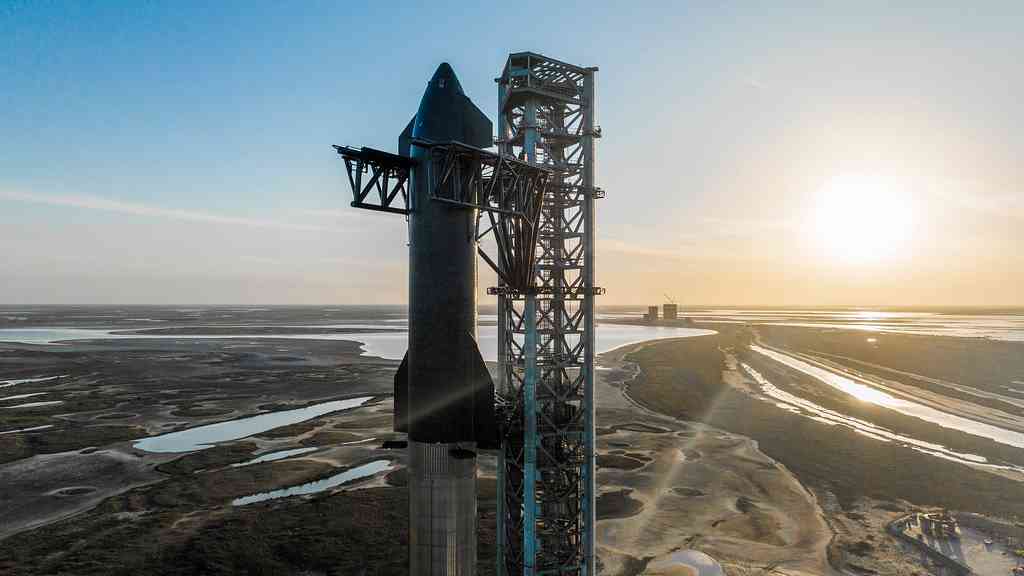
The aerospace world is buzzing after a critical report from the NASA Office of Inspector General revealed growing tensions between NASA and SpaceX. At the heart of the controversy lies the future of the Starship Human Landing System (HLS)—a spacecraft designed to return humans to the Moon under the Artemis program.
This isn’t just a technical disagreement—it’s a fundamental clash of philosophies that could reshape how humans land on other worlds. From automation vs. manual control to the dangers of landing a towering spacecraft on the Moon’s rugged south pole, the stakes couldn’t be higher.
The Growing Rift Between NASA and SpaceX
The 50-page report titled “NASA’s Management of the Human Landing System Contracts” highlights serious disagreements about how Starship should function during critical mission phases.
While SpaceX pushes forward with cutting-edge automation, NASA remains cautious, emphasizing redundancy, human control, and safety certifications. This divide reflects two different eras of spaceflight thinking:
- Old-school NASA philosophy: Human-in-the-loop control for safety
- New-age SpaceX philosophy: Fully autonomous, software-driven missions
This tension is now shaping the trajectory of lunar exploration.
The Control Debate: Automation vs. Human Pilot Overrides
SpaceX’s Vision: Full Automation
SpaceX’s approach is rooted in modern computing power and proven success. Their Crew Dragon already performs automated docking and touchscreen-based operations, eliminating the need for traditional pilot controls.
Here’s why SpaceX believes automation is the future:
- Massive computing advancements:
During the Apollo program, onboard computers had just 4 KB of RAM. Today, Starship systems process billions of calculations per second. - Real-time hazard detection:
Modern systems can simulate landing conditions in 3D, identify hazards, and adjust trajectory instantly. - Human limitations during landing:
Starship’s descent involves a highly precise maneuver known as a “suicide burn.” With powerful Raptor engine systems firing, even milliseconds of delay could result in catastrophic failure.
In short, SpaceX argues that humans simply can’t react fast enough to safely land a spacecraft of this size.
NASA’s Stance: Manual Overrides Are Non-Negotiable
NASA strongly disagrees—and history backs them up.
During multiple Apollo missions, including Apollo 11, astronauts had to override automated systems to avoid dangerous landing zones.
Even in modern missions, such as the Boeing Starliner tests, human intervention proved essential.
NASA’s concerns include:
- Unexpected anomalies: Software can fail in unpredictable ways
- Edge-case scenarios: Humans can improvise when algorithms cannot
- Certification requirements: Manual control is mandatory for Human-Rating Certification
Without manual override capabilities, Starship HLS cannot legally carry astronauts—potentially delaying the Artemis missions significantly.
The 10-Story Elevator Problem
A Design That Raises Serious Concerns
One of the most alarming issues highlighted in the report is Starship’s towering height.
Standing nearly 50 meters tall, the crew cabin sits at the very top. To reach the lunar surface, astronauts must rely on a motorized elevator system.
This introduces a dangerous single point of failure.
What Happens If the Elevator Fails?
Imagine this scenario:
- An astronaut is on the Moon’s surface
- The elevator malfunctions
- There is no backup access route
With only 8 hours of oxygen in their suits, this becomes a life-threatening situation.
NASA’s report explicitly warns:
- There is no secondary ingress system
- Astronauts cannot climb back up due to bulky suits and reduced mobility
- Lunar gravity (1/6th of Earth’s) does not make vertical climbing feasible
This is not just a design flaw—it’s a potential mission-ending risk.
“Test Like You Fly” – A Violated Principle
NASA engineers follow a golden rule: “Test like you fly.”
However, SpaceX plans to omit critical systems—including:
- Elevator
- Airlocks
- Life-support systems
…from early uncrewed test missions.
This means these components won’t face real lunar conditions like:
- Extreme temperature swings
- Abrasive lunar dust
- Vacuum sealing challenges
NASA fears the first real test of these systems could happen with astronauts onboard, which is unacceptable by traditional safety standards.
The Lunar South Pole: A Landing Nightmare
A Hostile and Uneven Terrain
Unlike the relatively flat landing sites of the Apollo era, the Artemis missions target the Moon’s south pole.
This region is:
- Covered in craters
- Filled with steep slopes (up to 20 degrees)
- Shadowed in areas with extreme cold
For Starship, this terrain poses a massive challenge.
The Tipping Risk
To remain stable, Starship must maintain a tilt of less than 8 degrees.
But landing a 400–500 ton vertical spacecraft on uneven ground is incredibly risky.
A recent example highlights the danger:
- The Odysseus lander tipped over during landing due to uneven terrain
- And it was much smaller than Starship
Now imagine scaling that risk to a vehicle 10 times larger.
Proposed Solutions to Reduce Risk
To address these concerns, engineers from both NASA and SpaceX are exploring backup options.
1. Exterior Climbing Holds
Simple, low-tech solutions like ladders or handholds could allow astronauts to climb the spacecraft if systems fail.
Pros:
- Lightweight
- Reliable
Cons:
- Physically demanding
- Difficult in bulky suits
2. Secondary Lower Airlocks
Another idea is placing an airlock closer to the base of Starship.
Advantages:
- Easier access
- Reduces reliance on the elevator
Challenges:
- Must be shielded from engine heat
- Adds complexity to spacecraft design
The Ultimate Curveball: Horizontal Starship Landing
A Radical but Game-Changing Idea
Perhaps the most surprising proposal is landing Starship horizontally instead of vertically.
Yes, sideways.
While unconventional, this concept could solve multiple problems at once.
Key Benefits of Horizontal Landing
1. Immediate Surface Access
With the hatch just a few feet above the ground:
- No elevator needed
- Faster and safer crew movement
2. Unmatched Stability
A horizontal spacecraft has:
- Lower center of mass
- Minimal tipping risk
This could make landings far safer on uneven terrain.
3. Conversion Into a Lunar Base
A horizontal Starship could easily be transformed into a permanent habitat:
- Robots could cover it with lunar soil (regolith)
- This would protect astronauts from solar radiation
But Is It Feasible?
Landing horizontally isn’t simple.
It would require:
- Mid-air rotation using engines and thrusters
- Completely redesigned landing legs
- Structural reinforcement to handle sideways forces
While theoretically possible, this approach would demand major engineering changes.
What This Means for the Artemis Program
The success of the Artemis program depends heavily on resolving these issues.
If NASA and SpaceX fail to align:
- Missions could face delays
- Costs could increase
- Safety risks could escalate
However, this tension isn’t necessarily bad.
In fact, it’s driving innovation at an unprecedented level.
A Clash That Could Define the Future of Space Exploration
At its core, this debate represents something bigger:
- Automation vs. human intuition
- Speed vs. safety
- Innovation vs. proven methods
SpaceX is pushing boundaries, aiming to revolutionize spaceflight with software and scale.
NASA, on the other hand, is ensuring that every risk is accounted for, drawing from decades of experience.
Conclusion: A Turning Point for Lunar Exploration
The disagreement between NASA and SpaceX over Starship HLS is not just a technical dispute—it’s a defining moment in space exploration.
Will the future belong to fully autonomous spacecraft, or will human control remain essential?
Will Starship land vertically as planned, or will a horizontal design rewrite the rules?
One thing is certain: the decisions made today will shape humanity’s return to the Moon—and eventually, our journey to Mars.
As both organizations work to resolve these challenges, the world watches closely. Because the outcome won’t just determine the success of Artemis—it could define the next era of human spaceflight. 🚀
FAQs
1. What is the Starship Human Landing System (HLS)?
The Starship Human Landing System is a modified version of SpaceX’s Starship designed to land astronauts on the Moon as part of the Artemis program.
2. Why did NASA consider Starship landing risky?
NASA raised concerns about automation reliance, landing stability, and crew safety systems, especially the lack of manual overrides and backup access methods.
3. What is the main disagreement between NASA and SpaceX?
The biggest conflict is over automation vs. manual control, with SpaceX favoring full automation and NASA insisting on human override capability.
4. Why does SpaceX prefer full automation?
SpaceX believes modern computers can react faster than humans, especially during complex landing maneuvers involving the Raptor engine.
5. Why does NASA insist on manual controls?
NASA requires manual controls for Human-Rating Certification and points to past missions like Apollo 11 where astronaut intervention was critical.
6. What is a “suicide burn” landing?
A suicide burn is a last-second engine firing that slows a spacecraft just before touchdown, requiring extreme precision and timing.
7. Why is Starship’s height a problem?
At nearly 50 meters tall, the Starship requires astronauts to use a 10-story elevator to reach the lunar surface, creating safety risks.
8. What happens if the elevator fails on the Moon?
If the elevator breaks, astronauts could become stranded, as there is currently no backup access system to return to the spacecraft.
9. What does “Test like you fly” mean?
It’s an engineering principle used by NASA requiring that systems be tested in real mission conditions before being used with astronauts.
10. Why is the Moon’s south pole difficult for landing?
The lunar south pole has steep slopes, craters, and uneven terrain, making it far more dangerous than Apollo-era landing sites.
11. What is the tipping risk for Starship?
Starship must remain under an 8-degree tilt. Uneven terrain increases the risk of tipping, as seen with the Odysseus lander.
12. What backup solutions are being considered?
Engineers are exploring:
- Exterior ladders or climbing holds
- Secondary lower airlocks
- Improved landing stability systems
13. What is the horizontal Starship landing concept?
It’s a proposed design where Starship lands on its side, improving stability and eliminating the need for an elevator.
14. What are the benefits of horizontal landing?
Benefits include:
- Easier astronaut access
- Reduced tipping risk
- Potential conversion into a lunar base
15. Could Starship become a Moon base?
Yes, especially in a horizontal configuration, Starship could be converted into a habitat for long-term missions under the Artemis program.
16. Will these issues delay the Artemis missions?
Potentially yes. If NASA and SpaceX cannot resolve these concerns, mission timelines could be pushed back.
Read More:
- Tesla Model 2 $24,990 Finally Cancelled! Elon Musk REPLACED By A New Model
- Tesla drives drunk owner while he naps, Police still arrest him on DUI
- Tesla makes latest announcement on Model S and Model X
- Tesla Robotaxi gets a small but significant change
- Tesla Semi is already winning over truck drivers