


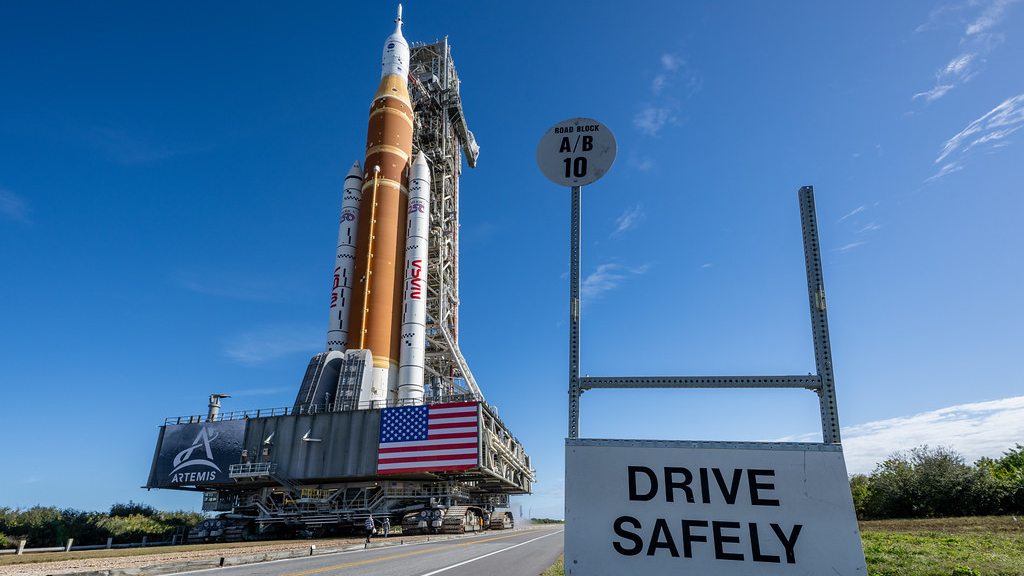
More than half a century after humans last walked on the Moon, a new chapter in space exploration is about to unfold. The upcoming Artemis 2 mission marks a bold step forward, reigniting humanity’s ambition to explore deep space and establish a lasting presence beyond Earth. Spearheaded by NASA, this mission is not just a symbolic return—it represents technological evolution, international collaboration, and a renewed vision for the future of human spaceflight.
When Neil Armstrong first stepped onto the lunar surface in 1969 during the Apollo 11 Moon Landing, it defined an era. Since then, space exploration has advanced dramatically with robotic missions, space telescopes, and planetary probes. However, human exploration beyond low Earth orbit has remained dormant—until now.
Artemis 2 is set to change everything.
What is Artemis 2 Mission?
A New Era of Lunar Exploration
The Artemis 2 mission is the first crewed flight of NASA’s Artemis program, designed to send astronauts around the Moon and safely back to Earth. Unlike past missions, Artemis 2 is not just about reaching the Moon—it is about building the foundation for sustainable lunar exploration.
This mission will carry four astronauts farther from Earth than any humans have ever traveled. It is a crucial stepping stone toward future missions like Artemis 3, which aims to land humans on the lunar surface once again.
Mission Objectives
- Test deep-space human travel systems
- Evaluate spacecraft performance with a crew onboard
- Demonstrate safe travel to and from the Moon
- Gather critical data for future lunar landings
Meet the Artemis 2 Crew
A Diverse and Experienced Team
The Artemis 2 crew represents a blend of experience, innovation, and international collaboration.
1. Commander Reed Wiseman
A seasoned U.S. Navy fighter pilot and former astronaut aboard the International Space Station, Wiseman brings decades of leadership and operational expertise.
2. Pilot Victor Glover
A veteran aviator and pilot of the SpaceX Crew-1 mission, Glover will handle navigation and spacecraft control.
3. Mission Specialist Christina Koch
An electrical engineer and record-holder for the longest single spaceflight by a woman, Koch contributes invaluable experience in long-duration missions.
4. Mission Specialist Jeremy Hansen
Representing Canada, Hansen becomes the first Canadian to travel to the Moon, highlighting the mission’s global significance.
The Orion Spacecraft: A Technological Marvel
Introducing Orion “Integrity”
The Artemis 2 crew will travel aboard the Orion spacecraft, named Integrity. While it resembles the Apollo capsules of the past, Orion is far more advanced.
Key Features of Orion
1. Increased Space and Comfort
- 60% more internal volume than Apollo capsules
- Designed for four astronauts
- Optimized for a 10-day mission
2. Advanced Life Support Systems
Orion includes a modern waste management system, replacing the rudimentary solutions used during Apollo missions.
3. Exercise in Space
To combat muscle and bone loss in microgravity, astronauts will use a compact rowing machine—an essential feature for maintaining health in deep space.
4. Food and Water Systems
Unlike the ISS, Artemis 2 will carry all required water and rely on pre-packaged, rehydrated meals. Waste will be vented into space rather than recycled.
The Space Launch System (SLS): Powering the Mission
The Most Powerful Rocket Ever Built
The Artemis 2 mission will launch aboard the Space Launch System (SLS), a rocket designed to push human exploration beyond Earth orbit.
Key Specifications
1. Massive Thrust
- Produces 3.6 million pounds of thrust
- More powerful than two SpaceX Falcon 9 rockets combined
2. Advanced Engines
The core stage uses four RS-25 engines, originally developed for the Space Shuttle program.
3. Cryogenic Fuel System
The rocket uses super-cooled liquid hydrogen and oxygen, enabling maximum efficiency and power.
Safety First: Launch Abort System (LAS)
Safety is a top priority for Artemis 2. The spacecraft is equipped with a Launch Abort System (LAS) designed to protect astronauts in case of an emergency.
How It Works
- Detects anomalies during launch
- Activates powerful escape motors
- Pulls the crew capsule away from danger
- Deploys parachutes for safe ocean landing
Mission Timeline: Journey to the Moon
Phase 1: High Earth Orbit
After launch:
- Rocket boosters separate
- Orion enters an elliptical orbit
- Crew tests systems and performs docking simulations
Distance range:
- Closest: 185 km
- Farthest: 70,000 km
Phase 2: Trans-Lunar Injection (TLI)
Once systems are verified, Orion performs the Trans-Lunar Injection burn, sending it toward the Moon.
This trajectory is a free-return path, meaning:
- The Moon’s gravity will naturally guide the spacecraft back
- Ensures safety even if propulsion fails
This technique was famously used during the Apollo 13 mission.
Phase 3: Lunar Flyby
On day six:
- Orion reaches the Moon
- Flies around the far side at ~10,000 km altitude
Astronauts will capture stunning visuals using modern cameras, offering humanity a new perspective of the lunar surface.
Science in Deep Space
Understanding Human Survival Beyond Earth
Artemis 2 is not just a flight—it’s a scientific mission.
Biometric Monitoring
Astronauts will wear sensors to track:
- Heart rate
- Radiation exposure
- Physical health changes
Radiation Protection Strategies
Deep space exposes astronauts to dangerous cosmic radiation.
Storm Shelter Technique
In case of solar flares:
- Crew gathers in a protected compartment
- Surround themselves with supplies
- Creates a temporary radiation shield
The Final Challenge: Re-entry to Earth
Extreme Conditions
Returning from the Moon is far more intense than from low Earth orbit.
1. Speed
- Over 40,000 km/h upon re-entry
2. Heat
- Temperatures exceed 2,760°C
Orion’s heat shield is engineered to withstand these extreme conditions.
Splashdown and Recovery
After slowing down:
- Parachutes deploy
- Capsule lands in the Pacific Ocean
Recovery teams from:
- U.S. Navy
- Air Force
- NASA
…will retrieve the astronauts and spacecraft.
Why Artemis 2 Matters
Beyond a Test Flight
Artemis 2 is not just another mission—it is a proof of capability.
Key Impacts
1. Foundation for Lunar Bases
This mission prepares for long-term human presence on the Moon.
2. Gateway to Mars
Deep-space experience gained here will support future missions to Mars.
3. Global Collaboration
The inclusion of international astronauts signals a new era of cooperation.
Artemis Program: The Bigger Picture
What Comes Next?
- Artemis 3: Human landing on the Moon
- Lunar Gateway: Space station orbiting the Moon
- Sustainable Exploration: Permanent lunar infrastructure
The Artemis program represents humanity’s long-term vision for space exploration.
Conclusion: The Dawn of a New Giant Leap
The Artemis 2 mission marks the beginning of a new era—one where humanity is no longer confined to Earth’s orbit. It combines cutting-edge technology, international teamwork, and a bold vision for the future.
From the legacy of Neil Armstrong to the ambitions of today’s astronauts, we are witnessing history in the making. This mission is not merely about revisiting the Moon—it is about staying, building, and expanding human presence into deep space.
As the world watches this groundbreaking journey unfold, one thing is certain:
A new “Giant Leap” has begun—and this time, we’re here to stay.
FAQs
1. What is Artemis 2?
Artemis 2 is the first crewed mission in NASA’s Artemis program, designed to send astronauts around the Moon and safely return them to Earth.
2. Who is leading the Artemis 2 mission?
The mission is led by NASA, which is spearheading the next generation of human space exploration.
3. How many astronauts are on Artemis 2?
Artemis 2 will carry four astronauts, making it one of the most significant crewed missions since the Apollo era.
4. Who are the crew members of Artemis 2?
The crew includes:
- Reid Wiseman
- Victor Glover
- Christina Koch
- Jeremy Hansen
5. What spacecraft will Artemis 2 use?
The astronauts will travel aboard the Orion spacecraft, a modern deep-space capsule designed for long-duration missions.
6. What rocket will launch Artemis 2?
The mission will use the Space Launch System (SLS), the most powerful rocket ever built for human spaceflight.
7. How long will the Artemis 2 mission last?
The mission is expected to last approximately 10 days, including travel to the Moon and back.
8. Will Artemis 2 land on the Moon?
No, Artemis 2 will not land on the Moon. It will orbit and fly around the Moon as a test mission.
9. How far will Artemis 2 travel from Earth?
The mission will take astronauts farther from Earth than any human has ever gone, surpassing previous records set during the Apollo missions.
10. What is a free-return trajectory?
A free-return trajectory is a flight path that naturally loops around the Moon and returns to Earth without needing additional propulsion, ensuring safety.
11. Why is Artemis 2 important?
Artemis 2 is crucial because it tests systems needed for future lunar landings and long-term space missions, including missions to Mars.
12. How fast will the spacecraft travel during re-entry?
During re-entry, Orion will reach speeds of over 40,000 km/h, making it one of the fastest human spaceflight returns ever.
13. How will astronauts deal with radiation in deep space?
Astronauts will use shielding inside the spacecraft and may create a temporary storm shelter using supplies to protect themselves from solar radiation.
14. Where will Artemis 2 land after the mission?
The spacecraft will splash down in the Pacific Ocean, where recovery teams will retrieve the crew.
15. What comes after Artemis 2?
After Artemis 2, the next mission is Artemis 3, which aims to land humans on the Moon for the first time since the Apollo 11 Moon Landing.
Read More:
- SpaceX’s Secret Plan for Starship Flight 12 Revealed! Beyond What We Expected
- Tesla FSD mocks BMW human driver: Saves pedestrian from near miss
- Elon Musk has generous TSA offer denied by the White House: here’s why
- Musk forces Judge’s exit from shareholder battles over viral social media slip-up
- SpaceX finally Installed Rvac Engines on Starship S39! Static Fire test in days