
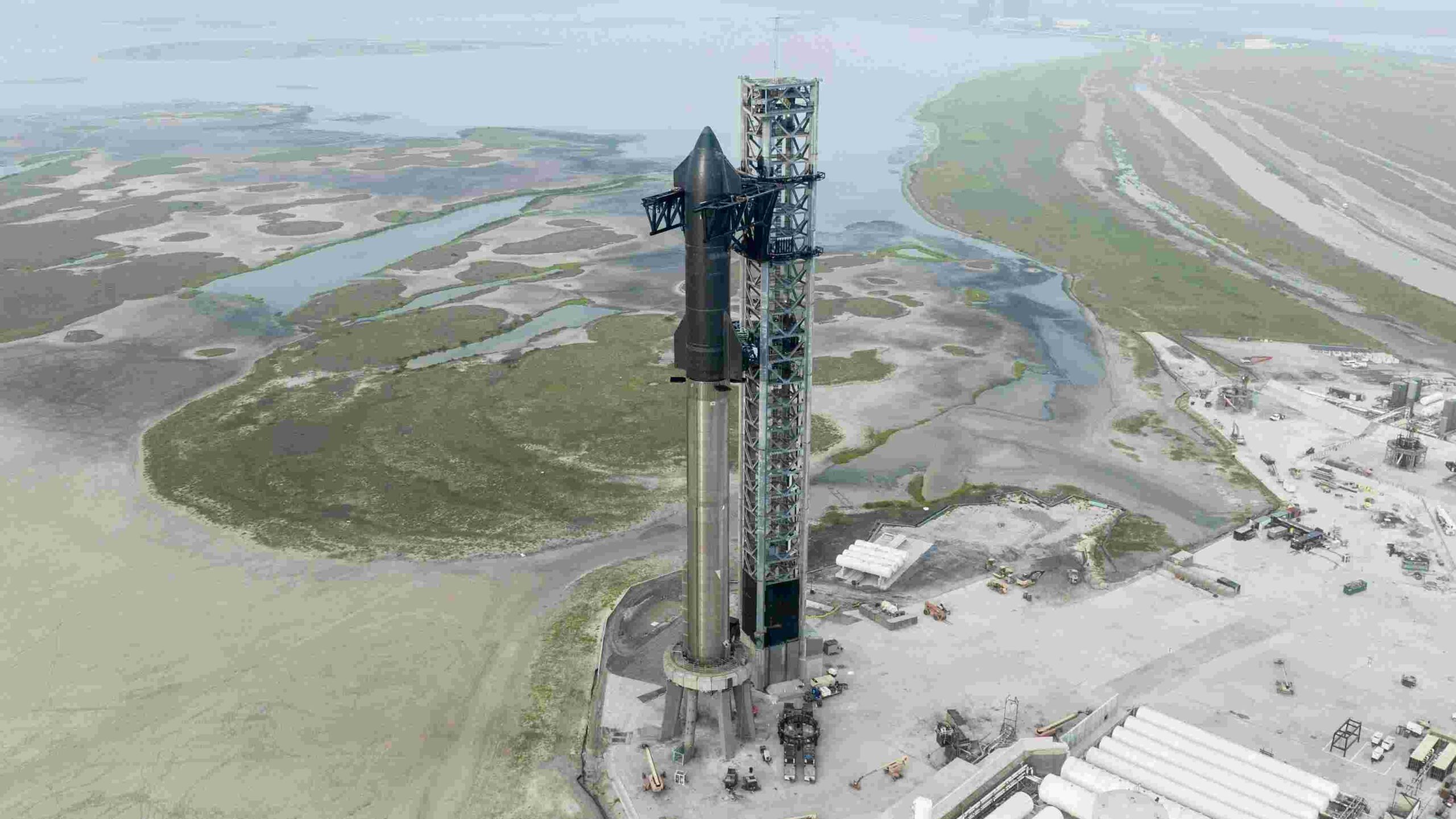
NASA Administrator Jared Isaacman has just made a bold declaration that has rocked the space industry: Starship will land astronauts on the Moon by 2028. This isn’t a guess or a wishful prediction — Isaacman is speaking with confidence, and his certainty comes from firsthand observations and a critical meeting at SpaceX Starbase.
In this post, we’ll break down what the visit revealed, what Starship HLS progress really means, and why NASA’s renewed confidence could reshape the future of lunar exploration.
The Starbase Visit That Changed Everything
On June 14th, Isaacman visited Starbase to meet with SpaceX leadership and the Starship HLS team. His goal was clear:
- Review progress
- Remove roadblocks
- Push Starship HLS development into overdrive
The timing of the visit was also notable — it happened exactly 1,000 days after Starship Flight 1 (April 20th, 2023). This wasn’t a coincidence. It was a strategic alignment, signaling a new phase of urgency for NASA’s lunar ambitions.

What This Visit Really Revealed
Isaacman didn’t visit for a courtesy photo-op. He went to:
- Assess the actual progress
- Understand the technical challenges
- Empower SpaceX to move faster
And the results were shocking.
NASA’s Shift in Strategy: From Bureaucracy to Speed
NASA has long been criticized for slow-moving processes, especially for missions as complex as Artemis 3. The old NASA approach relied heavily on:
- Multiple reviews
- Layers of certification
- Endless paperwork
- Rigid requirements
Even with a fixed-price contract, the HLS program was still bogged down by “cost-plus era oversight,” where NASA had to approve nearly every step.
Isaacman’s New Direction
Isaacman made it clear that this must change.
He posted on X:
“Yesterday, I met with SpaceX and Blue Origin to understand the latest plans to accelerate NASA’s Artemis timeline…
We will challenge every requirement, clear every obstacle, delete every blocker, and empower the team to deliver.”
This message aligns perfectly with Secretary of Defense Pete Hegseth’s recent push to remove bureaucratic barriers that slow innovation.
When Hegseth posted about freeing American innovators from bureaucracy, Isaacman replied with one single American flag emoji — a concise signal of full alignment.
NASA’s Confidence in Starship HLS
After Trump’s new policy calling for a Moon return by 2028, Isaacman’s tone shifted dramatically. Instead of talking in broad terms, he sounded certain, almost confident enough to stake NASA’s reputation on the timeline.
A space news outlet asked Isaacman:
“Do you think American astronauts will return to the lunar surface by 2028?”
His response was a single word:
“Yes.”
That was posted from the official NASA administrator account, not his personal page — meaning NASA officially believes Starship HLS can deliver.
Concrete Progress: Starship HLS Is Advancing Fast
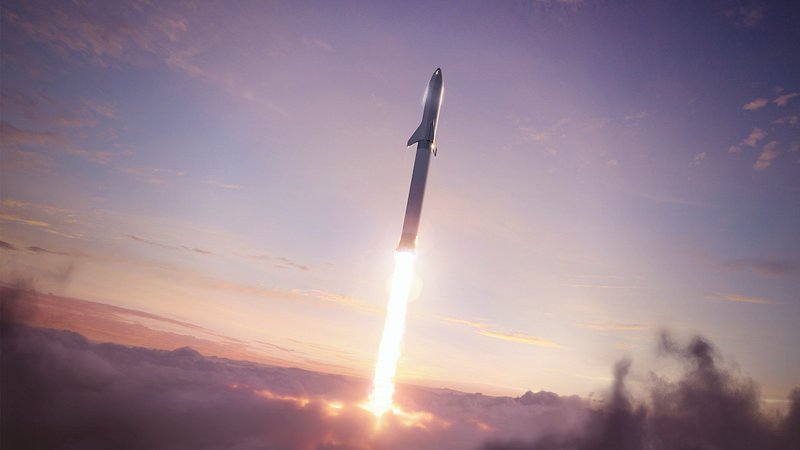
Isaacman’s visit revealed real, tangible progress in the Starship HLS program:
49 Milestones Completed
SpaceX confirmed it has already completed 49 major milestones in the development of Starship HLS subsystems.
These milestones include:
- Full cabin testing of life support
- Structural validation of landing legs
- Docking adapter finalized using Dragon 2 architecture
- Crew cabin design completed and validated
Actual Flight-Ready Crew Cabin Built
Most importantly, SpaceX has started building the actual Flight Article HLS crew cabin — not a mockup, but a real, flyable unit.
This is a major signal that the interior design is mature enough to support:
- Multiple vehicles
- Uncrewed demonstration flights
- Crewed missions
NASA will require at least one uncrewed demonstration flight in 2027 before granting human rating approval.
Starship’s Next Phase: Starship Version 3 and Flight 12
Isaacman also got a firsthand look at Starship Version 3 under construction. With Flight 12 approaching, preparations at Starbase are accelerating fast.
A key sign of progress:
- The static fire stand was moved for ship staging
- This could signal upcoming cryogenic testing
- It may even lead to catcharm crush testing
Why This Matters
One successful Starship launch can cement Starship’s role as the core architecture for:
- Lunar missions
- Mars missions
- Space logistics
- In-orbit refueling
And the key capability is:
On-orbit cryogenic propellant transfer.
The Emergence of Ship S44: A Potential Starship HLS Prototype
Around August 2025, Ship S44 was pulled out of normal production flow.
This sparked speculation — and for good reason.
Why S44 Matters
At the same time SpaceX confirmed the HLS crew cabin was being built, S44 disappeared. When it reappeared, it looked different:
- No heat shield
- No ceramic tiles
- No aerodynamic flaps
That’s consistent with Starship HLS design, because HLS:
- Never re-enters Earth’s atmosphere
- Operates entirely in vacuum
- Needs no heat shield or flaps
What S44 Could Represent
If S39 and S40 handle early test missions, S44 could appear around Flight 17, in the second half of 2026.
This could mark:
- First Starship HLS variant reaching space
- Proof of system maturity
- Validation of life support systems
- Crew training for Artemis astronauts

Starship HLS Design: Why It’s Different and Why It Works
Starship HLS is designed to operate exclusively in space and on the Moon. That means it can strip away components required for Earth reentry.
Key Features of Starship HLS
Six Raptor Engines
- Three Raptor sea-level engines
- Used for control and stability
- Helps during landing and major burns
- Three Raptor vacuum engines
- Larger nozzles for maximum efficiency
- Used for lunar orbit insertion and major burns
Secondary Landing Thrusters
To avoid lunar surface damage from powerful Raptor exhaust, Starship HLS uses:
- 18 to 24 high-thrust gaseous methane-oxygen thrusters
- Activated during the last 100 meters of descent
- Ensures a gentle, controlled landing
No Heat Shield
Removing the heat shield saves approximately 11.6 tons of mass.
This allows Starship HLS to:
- Deliver up to 100 tons of cargo
- Loiter in lunar orbit for up to 100 days
- Act as a logistics platform for sustained Artemis missions
The Future of Lunar Logistics
Starship HLS is not just a lunar lander — it’s a lunar logistics powerhouse.
By stripping away unnecessary mass, it becomes:
- A cargo carrier
- A refueling hub
- A lunar base support vehicle
- A long-term sustainability platform
And this is why NASA’s confidence matters.

Final Thoughts: Why the Industry Is Shocked
NASA’s public confidence in Starship HLS is a major turning point.
What used to be a “maybe” has now become a credible plan.
The Starbase visit revealed:
- Real progress
- Mature design
- Flight-ready hardware
- Strategic alignment
- New NASA leadership priorities
- A bold 2028 Moon landing timeline
SpaceX is moving faster than ever, and NASA is finally removing the bureaucratic obstacles that once slowed progress.
If Starship HLS continues to deliver, 2028 may not be a hope — it may be a reality.
FAQs
1. What did NASA administrator Jared Isaacman announce about Starship HLS?
Jared Isaacman announced that Starship will land astronauts on the Moon by 2028, signaling strong NASA confidence in SpaceX’s lunar lander program.
2. Why did Jared Isaacman visit SpaceX Starbase?
He visited Starbase to review progress, remove roadblocks, and accelerate Starship HLS development ahead of the Artemis mission timeline.
3. What is Starship HLS?
Starship HLS (Human Landing System) is SpaceX’s lunar lander designed to transport astronauts from lunar orbit to the Moon’s surface and back.
4. How many milestones has SpaceX completed for Starship HLS?
SpaceX has completed at least 49 major milestones, and the number is likely higher now due to ongoing progress.
5. Has SpaceX built a real Starship HLS crew cabin yet?
Yes. SpaceX has begun building the actual flight-ready HLS crew cabin, not just a mockup.
6. What is the significance of Starship Flight 12?
Flight 12 is crucial for validating Starship’s capabilities, especially on-orbit refueling and proving Starship as the core architecture for lunar missions.
7. What is Ship S44 and why is it important?
Ship S44 may be the first Starship HLS variant, redesigned without a heat shield or flaps since it won’t re-enter Earth’s atmosphere.
8. Why does Starship HLS not need a heat shield?
Because Starship HLS operates only in space and lunar orbit, it never re-enters Earth’s atmosphere, eliminating the need for a heat shield.
9. How does Starship HLS land on the Moon without blasting lunar soil?
Starship HLS uses secondary landing thrusters that activate in the final 100 meters of descent to prevent exhaust from disturbing lunar regolith.
10. What is the key capability needed for lunar missions?
The most important capability is on-orbit cryogenic propellant transfer, which enables longer missions and lunar landings.
11. Why is NASA’s approval process changing?
NASA is shifting from heavy bureaucracy to faster, more efficient approval, allowing SpaceX to move quickly and meet the 2028 deadline.
12. What did Isaacman mean by “delete every blocker”?
He meant NASA will remove unnecessary requirements and obstacles, empowering teams to deliver faster and more efficiently.
13. What role does Starship HLS play in the Artemis program?
Starship HLS is expected to perform the core lunar landing for Artemis 3 and support future missions with cargo and logistics capabilities.
14. How much cargo can Starship HLS carry to the Moon?
Starship HLS can deliver up to 100 tons of cargo to the lunar surface, supporting long-term lunar operations.
15. Is the Moon landing by 2028 realistic?
Based on NASA’s current confidence and SpaceX’s progress, 2028 is becoming increasingly realistic, especially if Starship HLS continues advancing.
Read More:
- Tesla Robotaxi has a highly-requested hardware feature not available on typical Model Ys
- Tesla starts removing outright Full Self-Driving purchase option at time of order
- Tesla Cybercab vs Amazon Zoox at CES 2026 — Did Elon Musk Just Take the Lead?
- SpaceX’s Genius Solution to send Starship Straight to the Moon! Better than NASA and China
- Tesla begins Cybertruck deliveries in a new region for the first time
1 thought on “NASA just declared SpaceX Starship HLS Progress after visiting Starbase Shocked industry”