
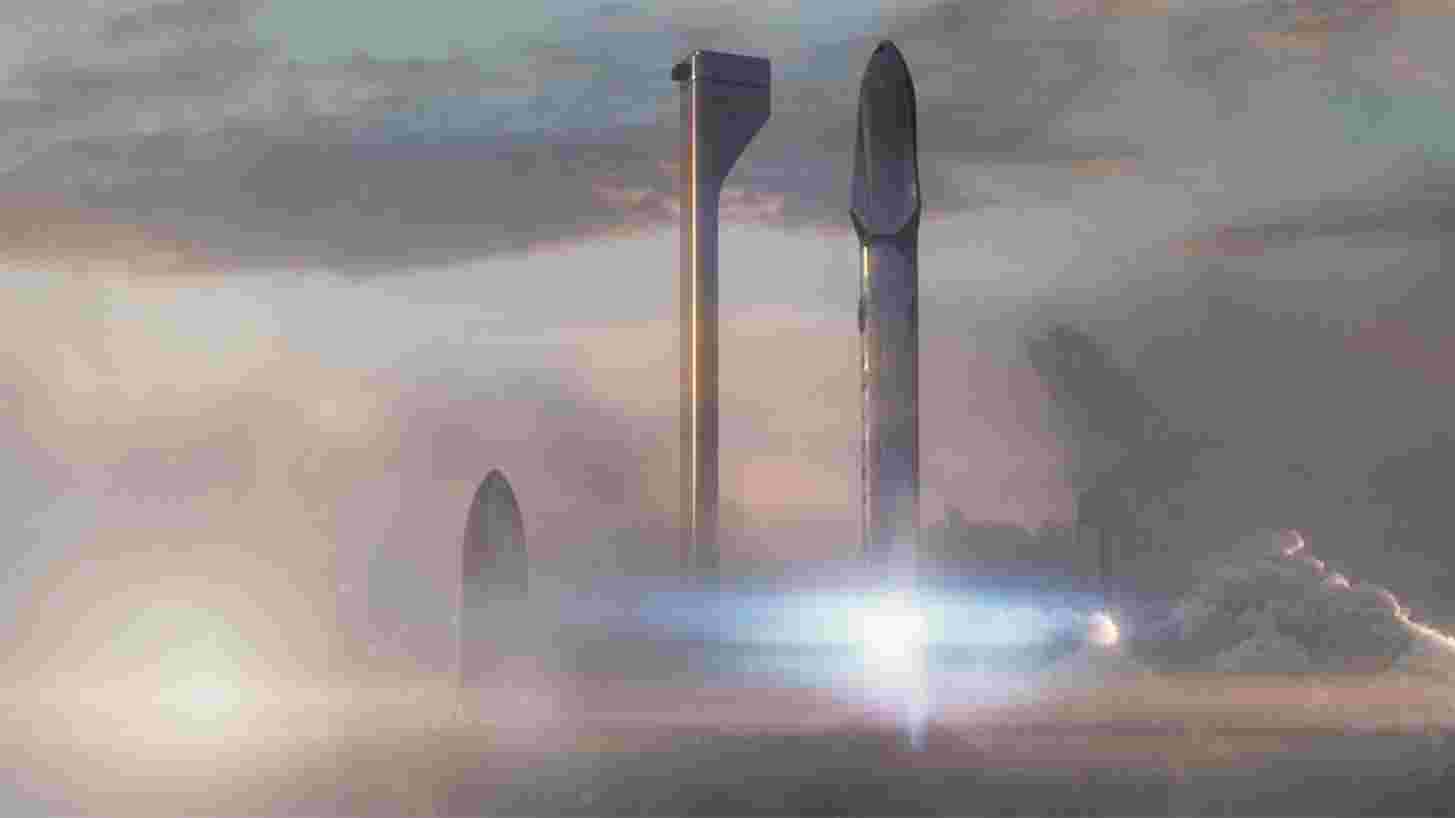
SpaceX’s Starship is not just another rocket. It represents humanity’s most realistic path to becoming a multi-planetary species. Among every spacecraft currently under development, Starship is the only one designed from day one with Mars in mind. No other rocket on Earth combines its sheer size, fuel capacity, payload mass, and engine power into a single system capable of transporting dozens of humans and hundreds of tons of cargo directly to the Martian surface.
But while reaching Mars is difficult, landing on Mars is the true nightmare. This is the phase where missions fail, spacecraft are lost, and decades of planning can disappear in minutes. That is why NASA and SpaceX are quietly practicing Mars landings right now, years before the first official attempt.
And yes—the world is watching, including China.
Starship: The Only Rocket Built for Mars
Why No Other Rocket Comes Close
Starship is the biggest rocket ever built. Taller than the Saturn V, more powerful than anything humanity has launched, and fueled by Raptor engines—the most advanced rocket engines ever created.
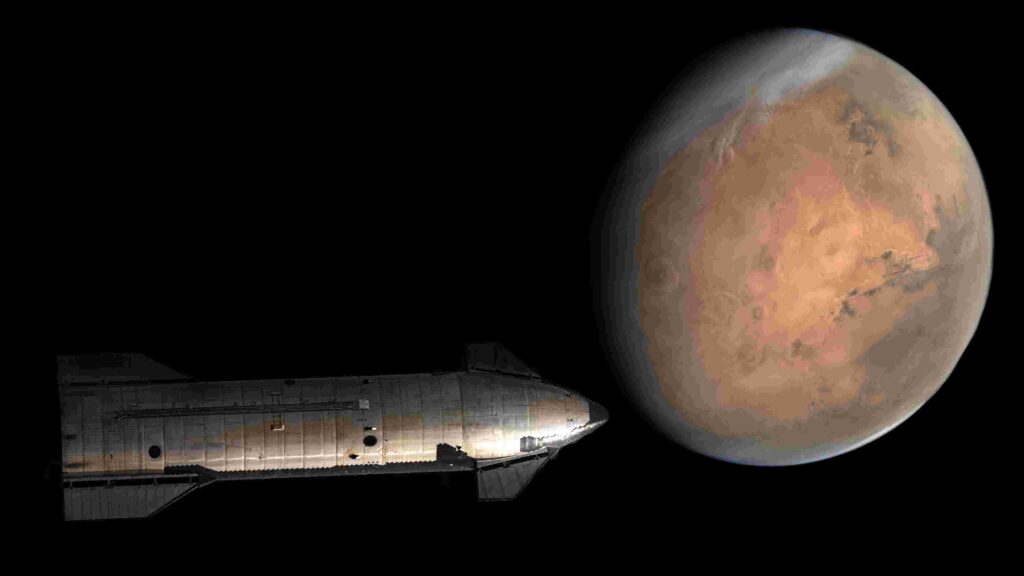
Key advantages include:
- Unmatched payload capacity
- Full reusability
- Orbital refueling capability
- Designed for deep-space travel
- Direct surface landing on Mars
Other rockets can send probes. Some can send astronauts to orbit. Only Starship is built to move civilization itself.
NASA’s Moon-to-Mars Master Plan
Artemis Missions Are Not Just About the Moon
NASA makes it very clear on its official roadmap: the Moon is a stepping stone, not the final destination.
This long-term strategy is known as the Moon to Mars Architecture, a master plan outlining how humanity progresses from lunar missions to full Mars expeditions.
The plan requires:
- At least seven Artemis missions (Artemis I–VII)
- Completion no earlier than 2032
- Testing critical technologies for Mars
Before humans ever step onto Mars, NASA expects several uncrewed Starships to attempt Mars landings first.
Starship HLS: The Lunar Variant That Unlocks Mars
Why the Moon Matters for Mars
In April 2021, NASA awarded SpaceX a $2.89 billion contract to develop Starship HLS (Human Landing System) for Artemis lunar missions.
At first glance, you might ask:
“What does landing on the Moon have to do with Mars?”
The answer: almost everything.
Starship HLS is testing:
- Precision landing
- Engine relight sequences
- Cryogenic fuel management
- Autonomous descent
- Landing leg designs
These systems are directly transferable to Mars.

Elon Musk’s Aggressive Mars Timeline
Elon Musk has openly hinted that:
“If we achieve orbital refilling in time, we will launch the first uncrewed Starship to Mars…”
That timeline is extremely tight. To make it work, SpaceX must simulate and practice Mars landings thousands of times—just like NASA did with previous missions.
NASA’s Landing Playbook: Lessons from Curiosity
The Sky Crane That Changed Everything
Before NASA landed the Curiosity Rover on Mars in 2012, they didn’t just test once or twice. They tested obsessively.
NASA:
- Dropped a full sky crane system from helicopters
- Released rovers from balloons 500 meters high
- Ran thousands of full mission simulations
- Practiced the infamous “7 minutes of terror” endlessly
When Curiosity finally landed, the control room erupted—not because it was unexpected, but because it actually worked.
SpaceX is now following the same philosophy.
Starship Test Flights: Mars Practice in Disguise
What Flight 10 and Flight 11 Really Tested
During Starship V2 test flights, SpaceX achieved something extraordinary:
- Slowed a 100+ ton spacecraft
- From several thousand km/h
- To 1 meter per second
- Using only one or two Raptor engines
Officially, these tests focused on landing near Mechazilla. Unofficially, they were rehearsals for Mars.
Why Earth Tests Translate to Mars
Surprisingly Similar Landing Sequences
Both Earth and Mars landings require:
- Extreme heat shielding
- Controlled belly-flop descent
- Engine relight at low altitude
- Precision touchdown
Once SpaceX gathers real-world data on Earth, AI simulations can translate those results into Martian conditions.
But make no mistake—Mars is far more dangerous.
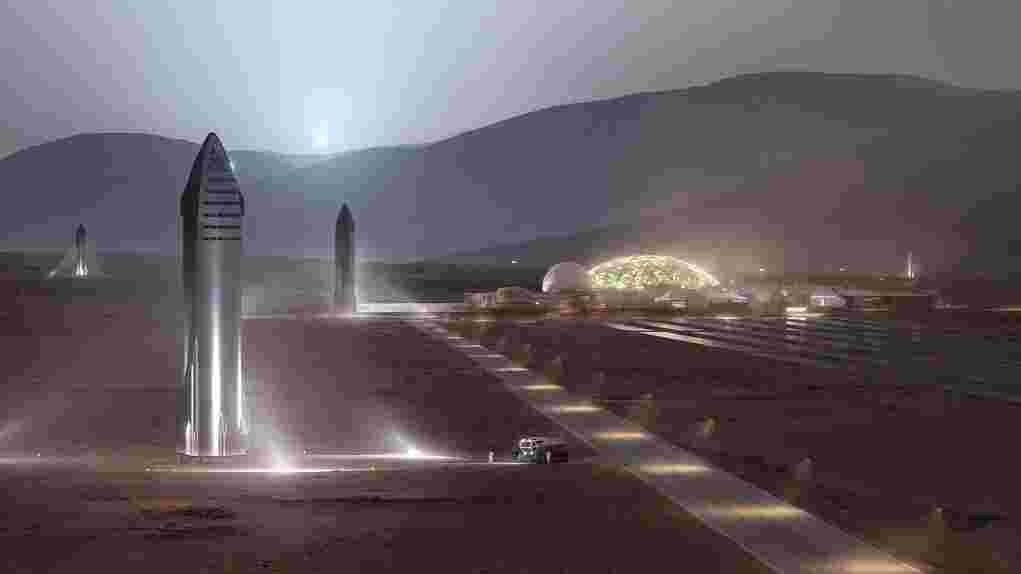
Why Landing on Mars Is Harder Than Earth
Thin Atmosphere, Brutal Physics
Earth’s atmosphere is nearly 100 times thicker than Mars’.
- On Earth: aerodynamic drag does most of the work
- On Mars: engines must do the braking
Starship must ignite engines 6–10 km above the surface, using at least six Raptors simultaneously just to slow down enough to survive.
That’s why Starship Version 4, the Mars-focused variant, is expected to feature:
- 9 Raptor engines
- 6 vacuum Raptors
- 3 sea-level Raptors
Mars demands raw thrust.
The Real Killer: Mars Reentry Heat
Why Mars Is More Dangerous Than Earth
Returning to Earth from orbit:
- Speed: ~7.8 km/s
- Heating duration: ~4–6 minutes
Entering Mars from interplanetary space:
- Speed: 11–12 km/s
- Heating duration: 12–15 minutes
- Peak temperatures: 2,500–2,700°C
That’s hundreds to over a thousand degrees hotter than Earth reentry.
Mars doesn’t slow you down fast—it cooks you slowly.
A New Heat Shield for Mars Starship
The Earth-optimized Starship heat shield focuses on:
- Rapid reuse
- Minimal refurbishment
The Mars version will require:
- Extended thermal endurance
- Higher temperature resistance
- Greater heat load tolerance
SpaceX will almost certainly develop an entirely new heat shield system for Mars.
Landing Legs: Moon vs Mars
Why Mars Is Much Less Forgiving
On the Moon:
- Gravity: 1/6 Earth
- Surface: dry, compact
- Loads per leg: ~70 tons
On Mars:
- Gravity: ~38% of Earth
- Surface: rocky and uneven
- Loads per leg: ~155 tons
Landing legs must be:
- 2–3x thicker
- Much heavier
- Designed to prevent tipping
Scaling lunar legs is not enough.
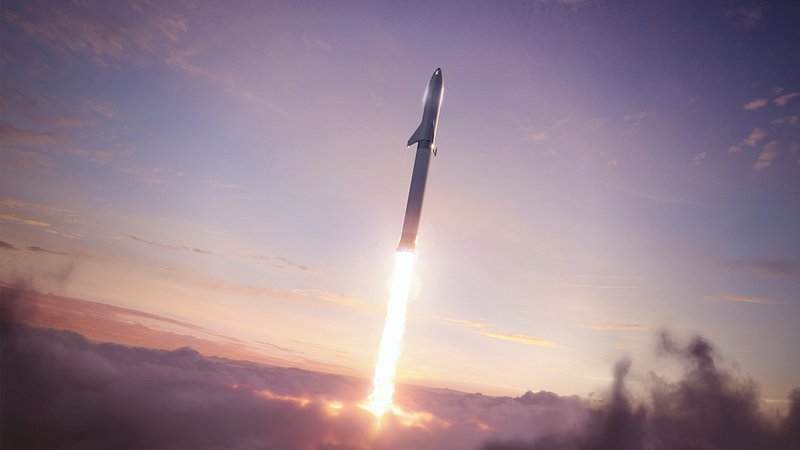
A Radical Idea: Horizontal Landing on Mars
Could Starship Land Like a Spaceplane?
Yes—and it might be brilliant.
Here’s how it could work:
- Starship descends vertically
- Uses all engines to slow to ~2–3 m/s
- At ~100 meters altitude, RCS thrusters activate
- Ship tilts from 90° to 30° in ~10 seconds
- A 50 cm thick composite landing pad deploys
- Touchdown occurs under 3G
Why Horizontal Landing Makes Sense
Mass Distribution Changes Everything
- Contact area: ~160 m²
- Pressure: 0.3 kg/cm²
Compare that to landing legs:
- Pressure: 4 kg/cm²
- High risk of sinking or tipping
It’s like walking on sand—spread the weight, don’t concentrate it.
Instant Mars Base on Day One
A horizontally landed Starship offers massive advantages:
- 100 cubic meters of habitable volume
- Easy astronaut exit via 3-meter ladder
- No elevators or cranes
- Cargo bays allow rovers to roll out directly
- Exterior can be covered with regolith
- Blocks up to 80% of cosmic radiation
One ship becomes a habitat, lab, and logistics hub instantly.
Not One Starship—Hundreds
Elon Musk isn’t planning a visit. He’s planning a civilization.
In his words, humanity must become:
“Sustainably multi-planetary.”
That means:
- Dozens, then hundreds of Starships
- Millions of tons of cargo
- Fully independent Martian society
Massive Expansion on Earth First
To support this vision, SpaceX is scaling rapidly:
And even that may not be enough.
Why the World Is Paying Attention
This isn’t just a space race—it’s a strategic shift.
Whoever masters Mars first gains:
- Technological dominance
- Scientific leadership
- Long-term survival advantage
That’s why China, and every other major power, is watching closely.
Conclusion: Mars Is Brutal, But Humanity Is Persistent
Mars is cold. Mars is hostile. Mars is unforgiving.
But humanity has never chosen the easy path.
With Starship at its core, SpaceX and NASA are methodically solving each impossible problem—heat, speed, gravity, landing, survival—one test at a time.
If Mars ever becomes a second home for humanity, Starship will be the ship that made it possible.
And right now, the practice has already begun. 🚀
FAQs
1. What makes SpaceX’s Starship different from other rockets?
Starship is the only fully reusable spacecraft designed specifically for Mars from day one. It can carry hundreds of tons of cargo, refuel in orbit, land vertically, and return for reuse—capabilities no other rocket currently has.
2. Why is Starship considered humanity’s best hope for Mars colonization?
Because no other spacecraft can transport large numbers of people, habitats, vehicles, and supplies directly to the Martian surface. Starship is built to move civilization, not just astronauts.
3. What is the Starship HLS variant?
Starship HLS (Human Landing System) is a modified version designed for NASA’s Artemis Moon missions. It includes specialized landing systems and is a critical testing platform for future Mars landings.
4. How do Artemis Moon missions help Mars exploration?
The Artemis missions act as stepping stones, testing technologies like deep-space navigation, autonomous landing, fuel management, and life support systems needed for Mars.
5. Why is landing on Mars harder than landing on Earth?
Mars has a much thinner atmosphere, making aerodynamic braking far less effective. Spacecraft must rely heavily on engines, precise timing, and advanced heat shields to survive descent and landing.
6. How hot does Starship get during Mars reentry?
During Mars entry, temperatures can reach 2,500–2,700°C, significantly hotter and longer-lasting than Earth reentry due to higher speeds and thinner atmosphere.
7. Why does Mars require a different heat shield than Earth?
Mars causes longer-duration heating at higher speeds, resulting in a much higher total heat load. This demands a more advanced, durable heat shield than what’s used for Earth returns.
8. How many engines will the Mars version of Starship have?
The Mars-focused Starship is expected to use nine Raptor engines—six vacuum Raptors and three sea-level Raptors—to provide enough thrust for safe landing.
9. What are SpaceX’s Starship test flights practicing right now?
Starship test flights are practicing controlled descent, engine relight, belly-flop maneuvers, heat shield performance, and precision landing—all essential for Mars landings.
10. Why are landing legs such a challenge on Mars?
Mars has stronger gravity than the Moon and rougher terrain, meaning landing legs must handle over twice the load and prevent tipping on uneven surfaces.
11. What is the idea behind horizontal Starship landings on Mars?
A horizontal landing would spread the spacecraft’s weight over a larger area, reducing ground pressure, increasing stability, and allowing Starship to serve as an instant habitat.
12. How would astronauts exit a horizontally landed Starship?
Instead of using long elevators, astronauts could exit via a short ladder, making surface operations safer and faster.
13. How can Starship protect astronauts from radiation on Mars?
Once landed, Starship could be covered with Martian regolith, blocking up to 80% of harmful cosmic radiation and improving long-term habitability.
14. How many Starships does Elon Musk plan to send to Mars?
Elon Musk envisions dozens, then hundreds of Starships, eventually transporting millions of tons of cargo to build a self-sustaining Martian civilization.
15. When could the first Starship land on Mars?
If orbital refueling and testing progress on schedule, uncrewed Starship landings could occur before 2030, with human missions following in the 2030s.
Read More:
- Russian Soyuz is in Big Trouble, NASA Orders SpaceX Dragon To Rescue
- Tesla stock closes at all-time high on heels of Robotaxi progress
- Tesla enters interesting situation with Full Self-Driving in California
- Tesla Cybertruck gets small change that makes a big difference
- Elon Musk takes latest barb at Bill Gates over Tesla short position
- New EV tax credit rule could impact many EV buyers
1 thought on “NASA & SpaceX revealed new Way to Land Starship on Mars and Secretly Practicing SHOCKED China”