


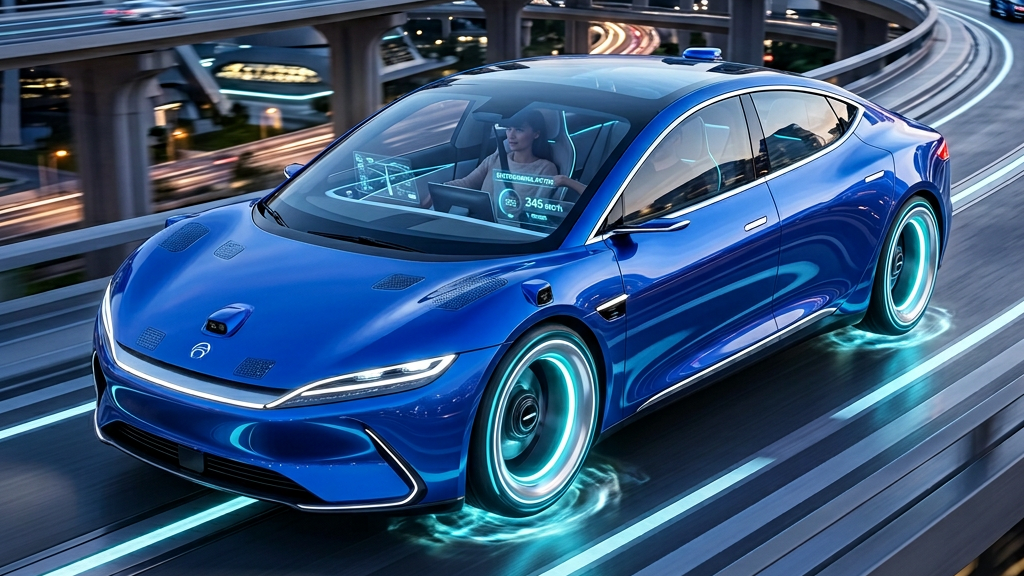
New Tesla Model 2 Exposed With 53 kWh LFP Battery And Cheap Cabin Cuts: Tesla is preparing to redefine the affordable electric vehicle (EV) market with its long-awaited entry-level model, widely referred to as the Tesla Model 2. While the company has yet to officially unveil the vehicle, the recently launched six-seat Tesla Model Y offers valuable clues about what Tesla’s cheapest EV will look like.
Priced at around $61,900, the updated Model Y introduces a longer wheelbase, improved rear passenger comfort, premium materials, and additional cabin features. More importantly, it highlights exactly what Tesla is willing to remove from its lower-cost vehicle in order to hit a target price estimated between $25,000 and $30,000.
The upcoming Model 2 won’t simply be a smaller Model Y. Instead, it will feature an entirely new production philosophy centered on cost efficiency, simplified interiors, and advanced manufacturing.
How The New Model Y Reveals Tesla’s Entry-Level Strategy
Tesla’s premium vehicles showcase the features customers pay extra for. By comparison, the upcoming Model 2 is expected to eliminate many luxury elements while preserving the essentials that matter most.
Larger Cabin vs Compact Design
The refreshed Model Y benefits from an extended wheelbase, creating more rear legroom, better ride comfort, and improved cabin quietness.
The Tesla Model 2, however, is expected to feature:
- Smaller exterior dimensions
- Shorter wheelbase
- Reduced vehicle weight
- Lower battery requirements
- More efficient structural design
This compact approach helps Tesla reduce manufacturing costs while maximizing driving efficiency.
Major Cabin Features Expected To Be Removed
Tesla’s affordable EV will likely adopt a minimalist interior inspired by the upcoming Cybercab.
Simplified Rear Passenger Area
Several premium features found in the Model Y are expected to disappear, including:
- Dedicated rear air vents
- Third-row cupholders
- Ambient interior lighting
- Dark Alcantara headliner
- Premium door trim materials
- Independent rear climate controls
- Rear display screens
- Extra USB charging ports
Instead, Tesla will likely install:
- A single centralized HVAC vent
- Basic fabric seats
- Injection-molded plastic panels
- Simplified wiring
- Fewer interior components
These changes significantly lower assembly complexity while improving production speed.
Tesla’s New Unboxed Manufacturing Process
Perhaps the biggest innovation behind the Tesla Model 2 isn’t the battery or cabin—it’s the way the car will be built.
What Is Tesla’s Unboxed Process?
Traditional automotive production assembles a complete body shell before workers install seats, wiring, dashboards, and interior parts.
Tesla’s new Unboxed Manufacturing Process completely changes that workflow.
Instead of building one vehicle from start to finish, Tesla produces multiple sections simultaneously:
- Front casting
- Rear casting
- Structural battery pack
- Interior floor assembly
Each module is completed independently before everything is joined together near the end of production.
This method allows:
- Faster assembly
- Fewer production steps
- Lower labor costs
- Higher factory efficiency
- Reduced manufacturing expenses
The same manufacturing philosophy is also expected to power Tesla’s future Cybercab platform.
Why Tesla Is Eliminating So Many Parts
Every button, switch, air vent, bracket, and wire adds cost.
Tesla’s engineers are aggressively removing unnecessary components to improve profitability without sacrificing core functionality.
Interior Simplification
Expected design changes include:
- No physical buttons
- No gear stalks
- Software-based controls
- One-piece dashboard assemblies
- Integrated wiring channels
- Seats mounted directly onto the structural battery pack
Reducing part count also improves production consistency and lowers maintenance costs.
The 53 kWh LFP Battery Could Be The Key
Industry reports suggest the Tesla Model 2 may feature a 53 kWh Lithium Iron Phosphate (LFP) battery pack.
Why Tesla Could Choose LFP Batteries
Compared to nickel-based batteries, LFP batteries offer several advantages:
- Lower production costs
- Longer lifespan
- Improved safety
- Excellent charging durability
- Reduced dependence on expensive raw materials
Although LFP batteries typically provide slightly lower energy density, Tesla can compensate through better aerodynamics, lighter construction, and improved efficiency.
For a budget EV, this battery chemistry offers an ideal balance between range, reliability, and affordability.
BYD Is Forcing Tesla To Reduce Costs
Tesla’s biggest challenge no longer comes from traditional automakers.
Chinese EV giant BYD has become one of Tesla’s strongest competitors through:
- Vertical integration
- In-house battery production
- Lower manufacturing costs
- Rapid product launches
- Competitive pricing
To compete globally, Tesla must produce a vehicle that’s both affordable and profitable.
Instead of relying on luxury features, the company is focusing on:
- Efficient engineering
- Manufacturing automation
- Software integration
- Parts reduction
Every dollar saved during production can help Tesla remain competitive against lower-cost EV manufacturers.
Everything Will Be Controlled Through The Center Screen
Tesla has steadily removed physical controls from its vehicles over the years.
The Model 2 is expected to push this concept even further.
Central Touchscreen Functions
The single display will likely control:
- Gear selection
- Climate settings
- Mirror adjustments
- Steering wheel positioning
- Wiper controls
- Lighting
- Vehicle settings
- Navigation
- Entertainment
Because nearly every function depends on the touchscreen, Tesla must ensure:
- Fast response times
- Smooth animations
- Reliable voice controls
- Minimal touch lag
A slow processor could negatively impact everyday usability.
Software Features May Become Optional Upgrades
Tesla may also lower the vehicle’s purchase price by moving certain features behind software unlocks.
Potential optional upgrades include:
- Heated seats
- Heated steering wheel
- Premium audio
- Advanced driver assistance
- Enhanced Autopilot
- Full Self-Driving subscriptions
This strategy allows buyers to purchase a lower-priced vehicle initially while adding features later if desired.
However, shoppers should evaluate the total ownership cost, not just the starting price.
Lessons From Tesla’s Full Self-Driving Hardware
Tesla’s Hardware 3 (HW3) experience demonstrates why buyers shouldn’t rely solely on future software promises.
Some HW3 owners waited years for feature parity before Tesla acknowledged that newer Hardware 4 (HW4) systems may ultimately support capabilities older hardware cannot.
For the Tesla Model 2, the most important consideration will be the hardware available on day one.
Buyers should focus on:
- Cabin quality
- Build quality
- Ride comfort
- Processor performance
- Battery durability
- Practical driving range
Future software updates are valuable, but strong hardware provides the foundation for a better ownership experience.
Tesla’s Bigger Vision Goes Beyond One Car
The affordable Tesla is only one part of the company’s broader strategy.
Tesla continues investing heavily in:
- Cybercab robotaxis
- Optimus humanoid robots
- Tesla Semi
- Megapack energy storage
- Custom AI chips
- Artificial intelligence infrastructure
Because Tesla is managing multiple major engineering projects simultaneously, maintaining quality while producing a high-volume affordable EV will be one of its biggest operational challenges.
Expected Tesla Model 2 Specifications
Predicted Highlights
- Estimated price: $25,000–$30,000
- Battery: 53 kWh LFP battery
- Production: Unboxed Manufacturing Process
- Interior: Minimalist cabin with molded plastics
- Display: Single central touchscreen
- Controls: Software-based interface
- Battery Pack: Structural battery design
- Focus: Low cost, efficiency, and high-volume production
Final Thoughts
The premium Tesla Model Y has unintentionally revealed Tesla’s strategy for its most affordable electric vehicle yet. Rather than simply shrinking an existing model, Tesla appears to be designing the Model 2 from the ground up around manufacturing efficiency, minimalist design, and cost optimization.
With an expected 53 kWh LFP battery, simplified cabin, single-screen interface, and Unboxed manufacturing process, the upcoming Model 2 could become Tesla’s most important vehicle to date. If the company can deliver strong build quality, practical range, and competitive pricing while keeping production costs low, the Model 2 could reshape the global EV market and help Tesla compete more effectively against rapidly growing rivals like BYD.
FAQs
1. What is the Tesla Model 2?
The Tesla Model 2 is Tesla’s rumored affordable electric vehicle (EV), expected to be priced between $25,000 and $30,000. It is designed to make EV ownership more accessible while maintaining Tesla’s core technology and software ecosystem.
2. What battery will the Tesla Model 2 use?
Industry reports suggest the Model 2 could feature a 53 kWh Lithium Iron Phosphate (LFP) battery, offering lower costs, improved durability, and better safety compared to traditional nickel-based battery packs.
3. What is the expected range of the Tesla Model 2?
Although Tesla has not confirmed official figures, experts estimate the Model 2 could deliver 250 to 300 miles (400–480 km) of driving range, depending on the final battery configuration.
4. How much will the Tesla Model 2 cost?
The expected starting price is around $25,000–$30,000, making it Tesla’s most affordable electric vehicle to date.
5. What is Tesla’s Unboxed Manufacturing Process?
The Unboxed Process is Tesla’s next-generation production method that builds major vehicle sections separately before assembling them together. This reduces manufacturing costs, speeds up production, and simplifies vehicle assembly.
6. Will the Tesla Model 2 have a premium interior?
No. To keep costs low, the Model 2 is expected to feature a minimalist cabin with basic fabric seats, molded plastic trim, fewer luxury materials, and a simplified dashboard.
7. What features will be removed from the Tesla Model 2?
Expected cost-cutting measures include:
- Rear climate controls
- Ambient lighting
- Premium Alcantara trim
- Rear display screens
- Multiple USB ports
- Dedicated rear air vents
- Physical buttons and stalks
8. Will the Tesla Model 2 still have Tesla’s large touchscreen?
Yes. The vehicle is expected to use a single central touchscreen to control navigation, climate settings, gear selection, lighting, mirrors, and other vehicle functions.
9. Will Tesla offer Full Self-Driving (FSD) on the Model 2?
The Model 2 is expected to support Tesla’s Full Self-Driving (FSD) technology, although advanced features may require an additional purchase or monthly subscription.
10. Will the Tesla Model 2 support Tesla Superchargers?
Yes. Like other Tesla vehicles, the Model 2 is expected to have full access to Tesla’s extensive Supercharger network, making long-distance travel more convenient.
11. Why is Tesla using an LFP battery instead of a nickel battery?
LFP batteries are more affordable, longer-lasting, safer, and require fewer expensive raw materials. They are ideal for a budget-friendly electric vehicle focused on efficiency rather than maximum range.
12. How will the Tesla Model 2 compete with BYD?
Tesla plans to compete with BYD by reducing manufacturing costs through simplified vehicle design, advanced automation, structural battery packs, and software-driven features instead of expensive luxury components.
13. Will the Tesla Model 2 have physical buttons?
Most reports suggest the Model 2 will eliminate many physical controls, relying primarily on the central touchscreen and voice commands for vehicle operation.
14. When is the Tesla Model 2 expected to launch?
Tesla has not officially announced a launch date. However, industry analysts expect the affordable EV to enter production after Tesla expands its next-generation manufacturing facilities.
15. Is the Tesla Model 2 worth waiting for?
If Tesla successfully delivers a low-cost EV with a 53 kWh LFP battery, competitive range, access to the Supercharger network, and advanced software features, the Model 2 could become one of the best-value electric cars in its price segment.
Read More:
- Tesla stock tumbles after earnings, one of its sharpest single-day declines
- SpaceX Starship Flight 13 faces wrath of the Texas skies
- Tesla door handle saga gets its latest chapter and a big change is coming
- Tesla short sellers win big after shares fall after earnings
- Tesla’s Supercharger Diner probably just secured more locations