



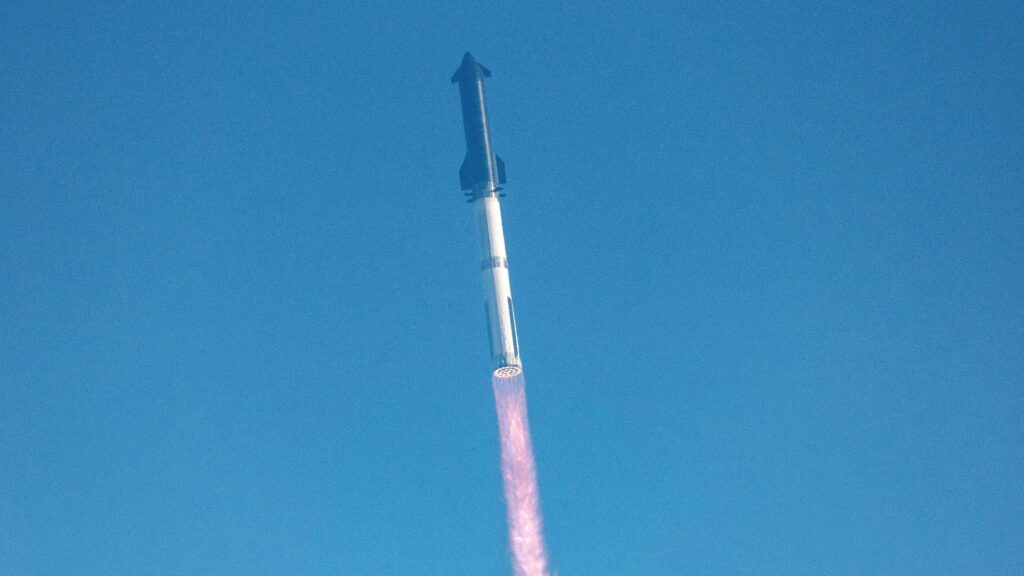
Success! That’s the word most fitting for Ship 37’s latest flight. SpaceX executed the mission flawlessly—from liftoff to a smooth landing. However, right at the very end, viewers noticed something strange: an unusual discoloration on the heat shield. Specifically, a large orange hue not seen in previous missions.
This blog post dives deep into this unusual observation, examines why Ship 37’s heat shield looked different, and what it means for the future of Starship’s reusability.
Why Ship 37 Is So Critical
The Stage That Carries More Responsibility
While the Superheavy booster often gets attention for its massive power, it’s the ship itself—Starship—that carries the heaviest burden. It must complete orbital maneuvers, survive re-entry, and land safely.

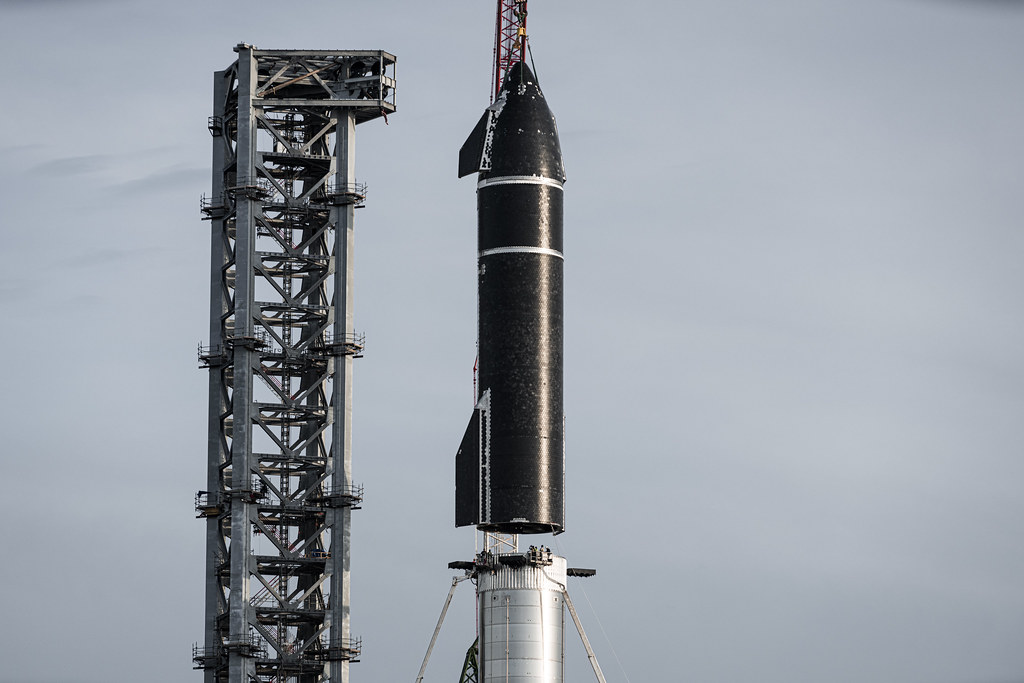
Ship 37 was especially significant because:
- Past missions (3 in a row) ended with failures.
- Issues ranged from engine compartment malfunctions to structural harmonics and methane leaks.
- SpaceX has now resolved these problems, achieving a successful return for the ship.
Still, even in this success, a new challenge emerged—the integrity and behavior of the heat shield.
The Heat Shield—A Critical Line of Defense
The Most Dangerous Phase: Re-entry
The heat shield is Starship’s only protection during the harsh re-entry phase, where it experiences extreme friction, pressure, and temperature. During this mission:
- The heat shield performed well overall.
- There was a small fire near the base of the aft flap, but this issue was pre-existing.
- No major tile loss was observed before the flip maneuver.
Despite these positives, the orange discoloration of the ship’s surface raised serious questions.
What Caused the Orange Discoloration?
Let’s explore the three leading hypotheses for the heat shield discoloration seen after re-entry.
Theory 1 – Tiles Fell Off During Re-Entry
One initial explanation was that tiles had fallen off, exposing the stainless steel structure to intense heat. This would make sense because:
- Stainless steel can oxidize or burn under high heat.
- Discoloration would be the visual aftermath of that exposure.
BUT: There’s a big problem with this theory. Visual footage showed the tiles intact prior to the flip maneuver. It’s highly unlikely that so many tiles fell off all at once without visible evidence.

Theory 2 – Metallic Tiles Failed
Another hypothesis revolves around SpaceX testing metallic tiles, likely made from stainless steel. Supporting evidence includes:
- The distinctive white, inverted V-shaped streaks atop the orange zones.
- These patterns suggest the origin point of newly tested materials.
The theory is that:
- The metallic tiles oxidized or degraded under extreme heat.
- Rust or other oxidized material was carried by supersonic shock waves, leaving the orange trail behind.
However, this theory also has a weak point—the number of metallic tiles installed may not have been enough to cause such a widespread discoloration.
Theory 3 – Coolant Interaction with Re-Entry
This is the most compelling explanation.
It proposes that coolant—most likely liquid oxygen (LOX)—interacted with the heat shield tiles and triggered the orange discoloration. Why is this so convincing?
- Starship carries more LOX than methane.
- LOX is highly reactive and can oxidize materials under extreme heat.
Here’s how it could’ve worked:
- LOX may have leaked from between tiles, especially at metallic tile junctions.
- The supersonic airflow during re-entry kept the LOX concentrated in a specific area.
- This caused a chemical reaction, resulting in the orange color pattern.
Unlike the other theories, this doesn’t point to a failure—it could highlight a successful test of active cooling methods!
What This Means for Starship Development
A Successful Step Forward
If the third theory is correct, this wasn’t a flaw at all. Instead, it could indicate:
- A prototype of an active cooling system is being tested.
- Reactions caused by LOX leaks are part of planned experiments.
- Heat shield resilience is being tested with real-world feedback.
This would mean Ship 37’s unusual appearance marks a key breakthrough in SpaceX’s path to reusability.
Remaining Challenges with the Heat Shield
While the mission was impressive, SpaceX still has work to do.
- The heat shield must survive multiple re-entries with minimal refurbishment.
- Currently, tiles may still need replacing or repair, delaying rapid reuse.
- The ultimate goal is to reach Falcon 9-like turnaround times, which Starship isn’t ready for yet.


What Comes Next—Flight 11 and Ship 38
One More Shot in the V2 Series
Flight 11 will be the last in the V2 series, likely flown by Ship 38. This mission is expected to:
- Test refinements in heat shield design.
- Possibly return the ship directly to the launch site.
- Push for full catching using Mechazilla’s robotic arms.
Already, images of Ship 38 show:
- A new adhesive layer between tiles, likely improving durability.
- Other unseen structural improvements aimed at heat protection.
The Bigger Picture – Starship V3 and Beyond
V3 Will Be a Game-Changer
Starting with Flight 12, SpaceX plans to introduce Starship V3, which will likely feature:
- A fully redesigned heat shield.
- Improved materials, possibly metallic tiles with active cooling.
- Reusability-first designs for Moon and Mars missions.
V3 will benefit directly from the lessons of Flights 10 and 11—including the strange orange discoloration on Ship 37.
The Broader Context: Russia’s Biological Space Mission
While SpaceX works on hardware, Russia is focusing on biology in space. On August 20, Russia launched the Bion M No. 2 biosatellite, which carries:
- 75 mice
- 1000 fruit flies
- Microbes, seeds, and cell cultures
- Simulated lunar soil and rock samples
Why It Matters
- The satellite will spend one month in orbit, exposing organisms to microgravity and radiation.
- The data will help scientists understand biological changes in space, which is crucial for long-term lunar missions.
- Russia is preparing for the International Lunar Research Station, in collaboration with China.
These missions are vital for life support systems, health risk management, and deep-space human exploration.


Conclusion: Two Paths to One Future
Whether it’s SpaceX refining Starship’s heat shield or Russia studying space biology, both paths aim for a common goal—making human life sustainable beyond Earth.
Ship 37’s flight was a milestone, not just for its landing, but for the valuable insights gained into heat shield technology. Whether the discoloration was due to oxidation, tile failure, or coolant interaction, one thing is clear:
SpaceX is closer than ever to achieving full reusability.
And with each new flight, each new test, the dream of interplanetary travel becomes more real.
Final Thoughts: What Do You Think?
- Which explanation for the discoloration do you find most compelling?
- Could SpaceX’s heat shield system be on the verge of a breakthrough?
FAQs
What caused the orange discoloration on Starship Flight 10’s heat shield?
The orange discoloration is believed to be caused by oxidation or reactions involving the metallic thermal protection tiles and possibly liquid oxygen coolant leaking during re-entry.
Did SpaceX’s heat shield fail during Ship 37’s flight?
No, the heat shield successfully protected the ship during re-entry, though some discoloration and a small fire near the aft flap were observed, indicating areas for improvement.
What materials make up Starship’s heat shield tiles?
Starship’s heat shield uses stainless steel tiles, with recent tests including metallic tiles designed to endure extreme re-entry heat.
Why is re-entry the most dangerous part of Starship’s mission?
Re-entry exposes the spacecraft to intense heat, friction, and pressure, which requires a robust heat shield to protect the vehicle and its payload.
What is the significance of the white V-shaped streaks on Ship 37?
The inverted white V-shaped streaks likely indicate locations of metallic tiles or coolant leaks that interacted with heat during re-entry.
How does liquid oxygen contribute to heat shield discoloration?
If liquid oxygen leaks near the heat shield tiles, it can oxidize the metal or intensify combustion, causing visible orange discoloration.
Has SpaceX successfully returned Starship after previous flights?
Ship 37 marks a successful return after three flights with earlier challenges, showing significant progress in Starship’s reusability.
What improvements are expected in the next Starship flight?
Flight 11 and Ship 38 will test stronger tile adhesives, cooling system upgrades, and aim for landing directly at the launch site with Mechazilla’s robotic arms.
What is Mechazilla and how does it relate to Starship?
Mechazilla is SpaceX’s giant robotic catching arms designed to catch and recover Starship during landing to enable rapid reuse.
Why is rapid reuse of Starship important?
Rapid reuse reduces turnaround time and costs, making space travel more economical and sustainable, similar to Falcon 9 booster operations.
What challenges remain for Starship’s heat shield?
The heat shield still requires improvements to withstand multiple re-entries without extensive repairs or tile replacements.
How will Starship V3 improve heat shield technology?
Starship V3 is expected to feature metallic tile systems with active cooling, offering better protection for harsh re-entry environments like Mars.
Why is testing heat shield materials crucial for Mars missions?
Mars’ atmosphere and re-entry conditions are more extreme, so durable heat shields are essential to protect spacecraft during descent.
What role does thermal protection play in Starship’s reusability?
Effective thermal protection ensures the vehicle can survive repeated flights without major refurbishment, a key factor in achieving full reusability.
What was the small fire near the aft flap during re-entry?
It was a pre-existing issue related to heat shield or structural elements, but upgrades tested on Flight 10 helped manage the problem.
How does Ship 37’s heat shield performance compare to previous Starship flights?
Ship 37’s heat shield performed better overall, showing fewer issues and demonstrating progress despite the unusual discoloration.
What biological experiments are Russia conducting in space?
Russia’s Bion M No. 2 mission carries mice, fruit flies, microbes, and plant seeds to study effects of microgravity and radiation on life.
How do SpaceX’s engineering and Russia’s biological research complement each other?
SpaceX advances spacecraft technology and reusability, while Russia’s biosatellites study life support and health risks, both crucial for deep space exploration.
Read More:
- Elon Musk reveals when SpaceX will perform first-ever Starship catch
- SpaceX just Cancelled Starship Flight 10 Launch Again! Elon Musk declared NO LAUNCH Until
- Tesla appears to have teased a long-awaited Model Y trim for a Friday launch
- Elon Musk’s Boring Company begins Tesla FSD testing in Las Vegas tunnels
- Tesla AI6 chips will start sample production at surprising Samsung site