
Rocket Lab Announced Big Progress on Boldest Rocket to Outpace Blue Origin even SpaceX: The global space industry is entering a new era, one defined by reusability, launch cadence, and operational efficiency. For years, one name has dominated nearly every conversation about orbital launches: SpaceX. Its achievements have reshaped expectations, rewritten industry economics, and set a benchmark that few believed could be challenged.
Yet, quietly and steadily, another company has been building momentum. That company is Rocket Lab, now officially the second most active aerospace launch provider in the United States. This distinction alone places significant pressure on long-established players like Blue Origin and United Launch Alliance (ULA). But Rocket Lab isn’t stopping there.
With its ambitious Neutron rocket, Rocket Lab is attempting its biggest leap yet—one that could reshape the balance of power in the medium-lift launch market. Recent milestones show Neutron is no longer just an idea on paper. It is rapidly becoming flight-ready hardware.
So how far has Rocket Lab come, and what could Neutron mean for the future of spaceflight? Let’s dive deep into Rocket Lab’s rise, its bold engineering decisions, and why Neutron could become one of the most disruptive rockets of the decade.
Rocket Lab’s Rise Beyond the Shadow of SpaceX
For much of the past decade, discussions about launch records, rapid turnaround, and reusability have been dominated by SpaceX. Falcon 9’s recovery success and relentless launch cadence transformed the global launch industry.
However, beyond this dominant narrative lies a company that has earned respect through consistency rather than spectacle. Rocket Lab’s story is compelling not because of unlimited funding or political leverage, but because of focused engineering and disciplined execution.
Unlike Blue Origin, backed by Jeff Bezos, or ULA, supported by decades of government contracts, Rocket Lab built its reputation without vast financial cushions. It succeeded by identifying a niche and executing relentlessly within it.
Electron: The Rocket That Built Rocket Lab
Rocket Lab first made its name with Electron, a small orbital launch vehicle purpose-built for the rapidly expanding small satellite market.
Electron was never designed to compete with Falcon 9 or Atlas V. Instead, it focused on:
- Dedicated access to orbit
- Flexible launch schedules
- Rapid response capability
This strategy paid off.
As of this year, Rocket Lab has completed more than 70 orbital launches, with 16 launches in the current year alone at the time of reporting. These numbers firmly place Rocket Lab among the most active launch providers in the United States, second only to SpaceX.
What makes this achievement remarkable is not just the number of launches, but the consistency behind them. Rocket Lab mastered:
- Manufacturing at scale
- Integration efficiency
- Reliable launch operations
Just as importantly, the company embraced iteration.
Pushing Reusability with Electron
Rather than treating Electron as a finished product, Rocket Lab used it as a testbed for innovation. The company began experimenting with recovery and reuse, challenging assumptions about what small launch vehicles could achieve.
These experiments laid the groundwork for something far more ambitious.
That next step is Neutron.

Neutron: Rocket Lab’s Most Ambitious Leap
Neutron represents a fundamental evolution for Rocket Lab. Unlike Electron, Neutron is a medium-lift rocket, designed to carry significantly larger payloads to orbit.
This shift opens the door to:
- Satellite constellation deployments
- National security missions
- Future cargo or crew-adjacent missions
Most importantly, Neutron is designed for reusability from day one—a recognition of the economic realities of modern spaceflight.
Rocket Lab expects Neutron to enter service around 2026, and recent milestones suggest that timeline is becoming increasingly realistic.
From Concept to Hardware: Neutron Becomes Real
For years, Neutron existed primarily as renders and design concepts. That has changed dramatically.
Rocket Lab has recently released images and videos showing real Neutron hardware being rolled out, transported, and tested. These visuals signal a crucial transition: Neutron has moved beyond theory and into execution.
At the center of this progress is one of the most unconventional components ever flown on an orbital rocket.
Meet the “Hungry Hippo” Fairing
One of Neutron’s most eye-catching features is its fixed, reusable fairing, affectionately nicknamed “Hungry Hippo.”
This is not a marketing gimmick. It reflects a radically different design philosophy.
Recently released images showed the fairing being transported by truck and barge, offering a clear sense of its massive scale. Rocket Lab also confirmed that qualification and acceptance testing of the fairing and upper module had been successfully completed.
This is a major milestone.
Why Qualification and Acceptance Testing Matter
Qualification and acceptance testing verify that hardware:
- Meets design requirements
- Survives real-world flight stresses
- Performs reliably under extreme conditions
Completing these tests signals a high level of confidence in Neutron’s design.
Rocket Lab didn’t just claim success—it showed it.
Inside Hungry Hippo’s Rigorous Testing
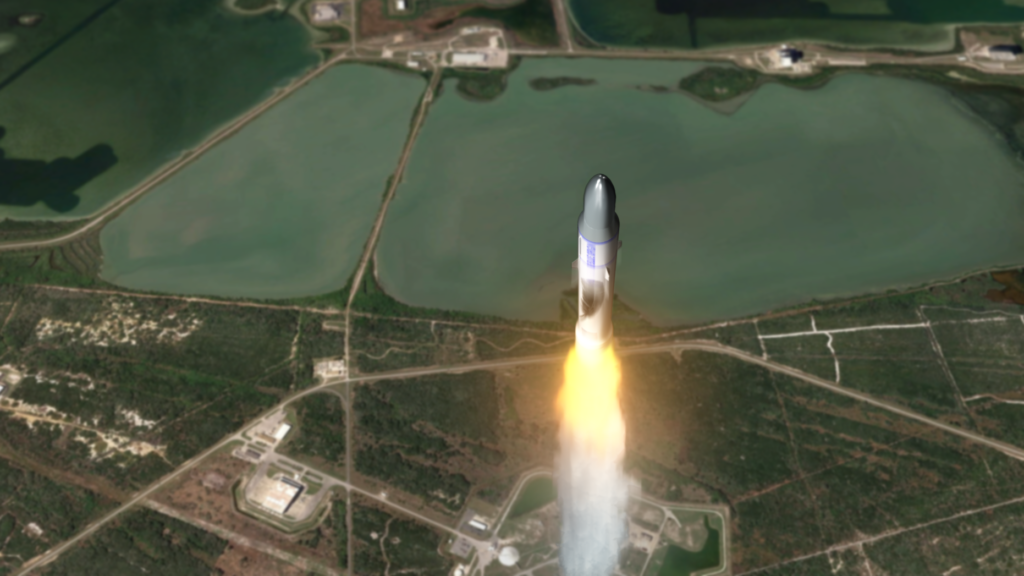
A recently released Rocket Lab video provided unprecedented insight into Hungry Hippo’s testing campaign.
Ultra-Fast Deployment
The fairing repeatedly opened and closed under simulated flight conditions. The entire operation took just 1.5 seconds—less than half the time typically required for stage separation and vehicle reorientation.
This speed minimizes risk during one of the most critical moments of any mission.
Surviving Max Q
Neutron’s fairing endured over 275,000 pounds (113 tons) of force during simulated maximum dynamic pressure tests. Passing this threshold validates the strength of its carbon composite structure.
Canard Load Testing
The fairing’s integrated canards were tested at 125% of expected mechanical loads, confirming a robust safety margin and reliable aerodynamic control.
Together, these results demonstrate that Hungry Hippo is no longer experimental—it is flight-ready hardware.
A Rocket That Redefines Reusability
Neutron’s fairing does something almost no other rocket does.
Instead of jettisoning and discarding the fairing, Hungry Hippo:
- Opens to deploy the payload
- Closes again after deployment
- Remains attached to the booster throughout the mission
This design eliminates the need for:
- Recovery ships
- Fairing refurbishment operations
- Complex logistics
Even SpaceX, the industry leader in reusability, must deploy ships and recovery operations to reuse Falcon 9 fairings. Neutron avoids this entirely.
A First Stage That’s Truly Integrated
In Neutron’s architecture, the visible vehicle on the launch pad is effectively the first stage. The second stage is housed inside the fairing, almost like a payload itself.
This approach offers several advantages:
- Greater first-stage recovery potential
- Additional protection for the second stage
- Reduced aerodynamic and thermal stress
Even if Neutron remains partially reusable, this design still delivers significant cost and operational benefits.
Launch Infrastructure: LC-3 Comes Online
Rocket Lab is not just building rockets—it’s building the infrastructure to support them.
Launch Complex 3 (LC-3) has seen major progress, including recent tests of its water deluge system. This system:
- Suppresses acoustic energy
- Manages heat
- Protects both rocket and launch pad
Unlike SpaceX’s massive Starship deluge system, Neutron’s pipes are integrated directly into the launch mount, spraying water alongside the exhaust plume. Recent tests showed stable and powerful performance, signaling readiness for static fires and launch operations.
Archimedes Engine: The Heart of Neutron
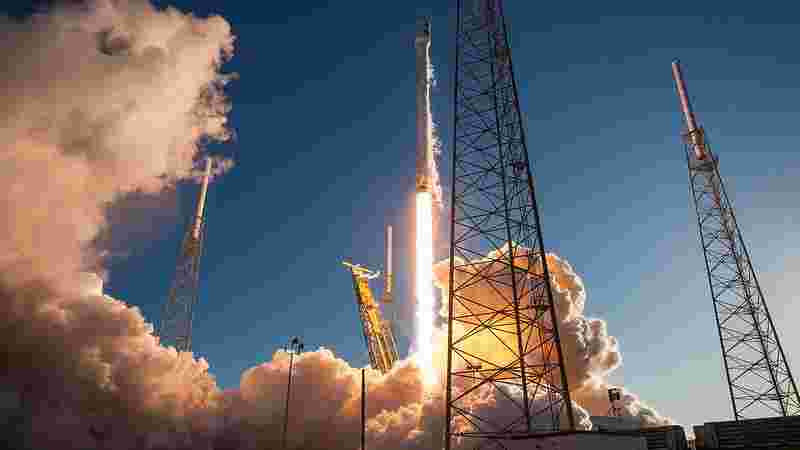
At the core of Neutron is the Archimedes engine, a methalox staged-combustion engine—placing it in the same technical class as SpaceX’s Raptor and Blue Origin’s BE-4.
Performance Highlights
- Sea level thrust: ~164,000 lb
- Sea level ISP: 329 seconds
- Vacuum thrust: ~200,000 lb
- Vacuum ISP: 367 seconds
While Archimedes produces less raw thrust than Raptor or BE-4, it offers higher efficiency than SpaceX’s Merlin engine thanks to its staged-combustion cycle.
As with any new engine, credibility will come through flight heritage, but the early results are highly promising.
Cost, Competition, and Market Impact
Rocket Lab estimates Neutron’s launch cost at around $55 million per mission. This places it squarely in competition with Falcon 9 for missions that do not require maximum payload capacity.
This pricing:
- Undercuts many competitors
- Challenges expendable rockets
- Expands customer choice
ULA remains tied to largely expendable designs, while Blue Origin’s progress toward operational reusability has been slower than expected. Rocket Lab, by contrast, has already proven it can scale operations reliably.
Can Rocket Lab Challenge SpaceX?
The goal is not to surpass SpaceX outright—at least not yet.
Falcon 9’s launch cadence, recovery record, and operational maturity remain unmatched, and Starship represents a leap in scale few can rival.
Neutron’s role is different.
It offers:
- A credible alternative
- Increased competition
- Faster innovation across the industry
Competition benefits everyone—customers, governments, and the future of space exploration itself.
The Road Ahead for Neutron
Neutron’s debut, expected in the near future, will mark:
- Rocket Lab’s entry into the medium-lift market
- A new approach to reusable rocket design
- Increased pressure on legacy launch providers
The challenges ahead are real, but so is Rocket Lab’s momentum.
Final Thoughts: A New Force in the Space Race
Rocket Lab’s journey from Electron to Neutron is a story of vision, discipline, and bold engineering choices. By prioritizing smart reusability, operational simplicity, and focused execution, the company has positioned itself as a serious force in modern spaceflight.
The next few years will determine just how far Neutron can carry Rocket Lab—but one thing is already clear:
The space race is no longer a one-company show.
And as long as curiosity, imagination, and innovation continue to drive progress, the future of space has never looked more exciting. 🚀
FAQs
1. What is Rocket Lab best known for?
Rocket Lab is best known for developing the Electron rocket, a small orbital launch vehicle designed for dedicated small satellite missions. The company has since expanded into medium-lift launches with Neutron.
2. Why is Rocket Lab considered the second most active US launch provider?
Rocket Lab has completed over 70 orbital launches, with a high annual launch cadence that places it second only to SpaceX in the United States.
3. What is the Neutron rocket?
Neutron is Rocket Lab’s upcoming reusable medium-lift rocket designed to serve satellite constellations, national security missions, and commercial payloads.
4. When will Neutron have its first launch?
Rocket Lab expects Neutron’s first flight around 2026, with hardware testing and infrastructure milestones already completed.
5. How much payload can Neutron carry?
Neutron is designed to carry medium-class payloads, making it ideal for constellation launches and government missions, though final payload capacity will vary by orbit.
6. What makes Neutron different from Falcon 9?
Neutron uses a fixed reusable fairing that remains attached to the booster, eliminating separate fairing recovery—an approach even Falcon 9 does not use.
7. What is the “Hungry Hippo” fairing?
The Hungry Hippo fairing is Neutron’s hinged, reusable fairing that opens and closes around the payload while staying attached to the first stage.
8. Why is the Hungry Hippo fairing important?
This design reduces cost, complexity, and turnaround time by removing the need to recover and refurbish separate fairing halves.
9. Has Neutron’s fairing been flight-tested?
The fairing has completed qualification and acceptance testing, meaning it has passed structural, mechanical, and operational validation for flight.
10. How strong is Neutron’s structure?
Neutron successfully withstood over 275,000 pounds of force during simulated max-Q testing, confirming its structural reliability.
11. What role do canards play on Neutron?
Neutron’s canards provide aerodynamic control during ascent, descent, and re-entry, improving guidance and recovery stability.
12. What engine does Neutron use?
Neutron is powered by the Archimedes engine, a methalox staged-combustion engine developed entirely by Rocket Lab.
13. How powerful is the Archimedes engine?
Archimedes produces up to 200,000 pounds of thrust in vacuum, placing it firmly in the modern medium-lift engine class.
14. Why does Neutron use methane fuel?
Methane offers cleaner combustion, lower engine wear, improved reusability, and better performance for long-duration missions compared to traditional fuels.
15. How much will a Neutron launch cost?
Rocket Lab estimates a Neutron launch cost of around $55 million, making it competitive with Falcon 9 for many mission types.
16. Where will Neutron launch from?
Neutron will launch from Launch Complex 3 (LC-3), which has recently completed major infrastructure testing, including its water deluge system.
17. Is Neutron fully reusable?
Neutron is designed to be partially reusable, with full first-stage recovery and a permanently attached reusable fairing.
18. Can Rocket Lab compete with SpaceX?
Rocket Lab is not aiming to replace SpaceX but to provide a credible, competitive alternative that increases choice and drives innovation in the launch market.
19. Why is Neutron important for the future of spaceflight?
Neutron represents a shift toward simpler, smarter reusability, lower launch costs, and increased competition—key factors in the next phase of the global space race.
Read More:
- Where to Buy Tesla Tiny House 2026: Your Complete Guide
- Tesla arsonist who burned Cybertruck sees end of FAFO journey
- Elon Musk’s lawsuit against OpenAI and Microsoft is heading to jury trial
- Tesla wins top loyalty and conquest honors in S&P Global Mobility 2025 awards
- Elon Musk’s X goes down as users report major outage Friday morning
1 thought on “Rocket Lab Announced Big Progress on Boldest Rocket to Outpace Blue Origin even SpaceX”