


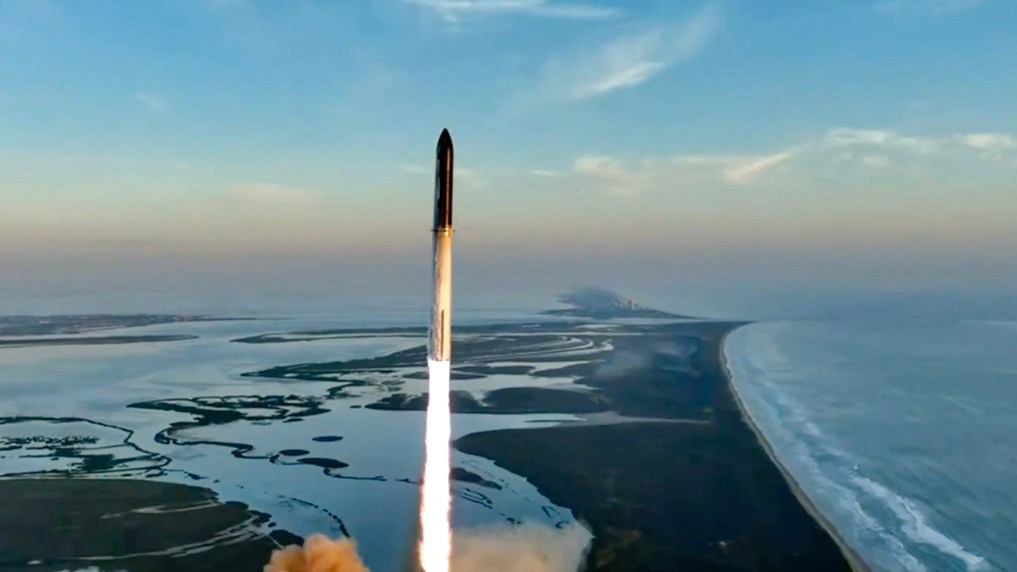
The world of space exploration is moving faster than ever, and few companies drive that momentum like SpaceX. Recently, however, an unusual situation has captured the attention of space enthusiasts and industry experts alike. The Starship Flight 12 booster B19 was rolled out to the launch pad with high expectations for a powerful static fire test—but days passed with no ignition.
At the same time, NASA is preparing its Space Launch System (SLS) rocket for the historic Artemis 2 mission, and a growing rivalry between SpaceX and Amazon is unfolding over satellite megaconstellations in orbit.
In this article, we’ll break down the latest developments, explore why the Starship B19 static fire test has been delayed, and look at what these events mean for the future of space exploration.

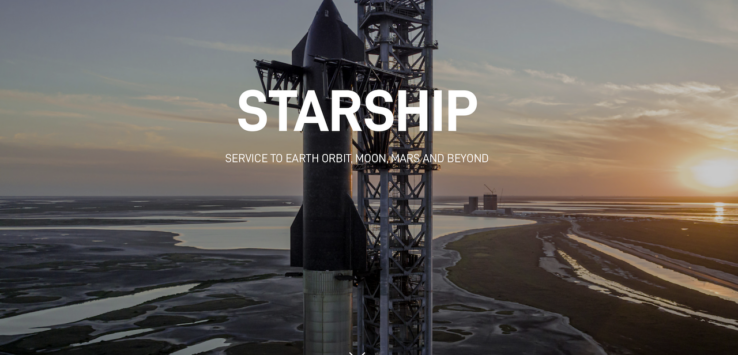
Starship Booster B19 Arrives at the Launch Pad
On March 8, SpaceX rolled out the Starship booster B19 to Pad 2 at Starbase in Texas. The rollout followed weeks of anticipation, as this booster is part of the next major milestone in the Starship Flight 12 program.
The booster arrived equipped with 10 Raptor 3 engines, and everything seemed ready for a static fire test, a crucial step before a launch attempt.
A static fire test typically involves:
- Loading propellants into the rocket
- Igniting the engines while the rocket remains secured to the launch mount
- Evaluating engine performance and launch pad systems
However, despite several opportunities between March 9 and March 12, the test never happened.
The delay quickly sparked speculation within the spaceflight community.
Record-Breaking Fuel Loading Tests
Although the static fire test has yet to occur, SpaceX has not been idle. Over the past few days, the company conducted two major fueling tests that demonstrated impressive improvements in operational speed.
First Fuel Loading Test – March 10
During the first test, engineers filled the liquid oxygen (LOX) tank in approximately 30 minutes.
This marked the fastest loading time ever recorded for a booster at Starbase.
The rapid fueling indicates improvements in:
- Ground support equipment
- Propellant pumping systems
- Pad infrastructure
Speeding up this process is essential for future rapid-launch operations, especially if SpaceX hopes to launch Starship frequently.
Second Fuel Loading Test – March 11
The second fueling test occurred in the evening on March 11.
Observers noted heavy venting across several areas:
- The tank farm
- The launch mount
- The booster itself
Despite the dramatic venting, the test appeared successful.
Most importantly, the fuel loading speed was nearly identical to the first test, suggesting the system is consistent and reliable.
These results support SpaceX’s push toward the Starship V3 design philosophy, which emphasizes faster and more reliable launch operations.

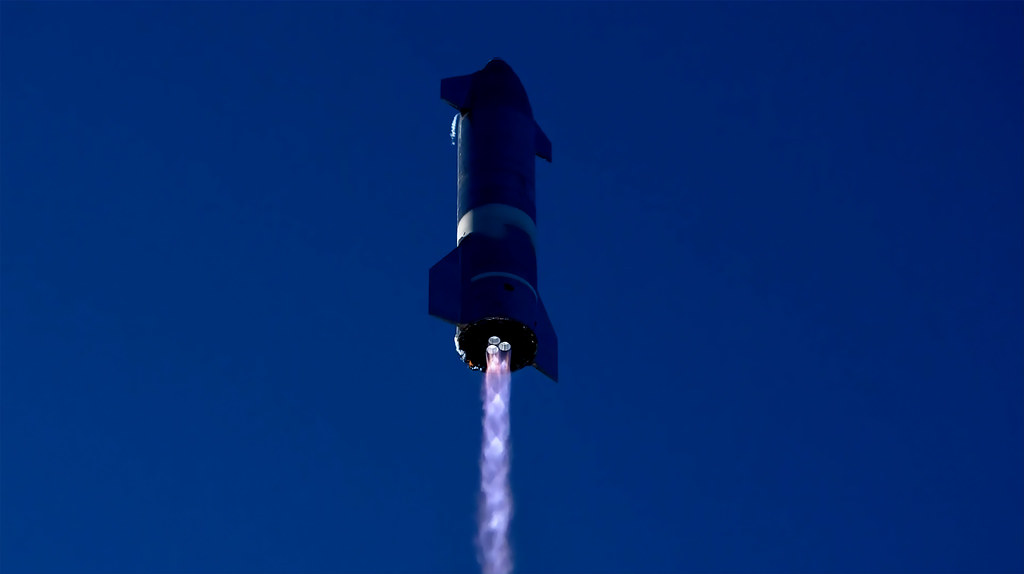
Why Has the Static Fire Test Been Delayed?
Despite successful fueling tests, the main question remains:
Why hasn’t the static fire test happened yet?
Several possible explanations could account for the delay.
1. A Potential Launch Pad Issue
One of the most likely explanations involves the launch pad infrastructure itself.
After two full-capacity fueling operations, the pad may have experienced unexpected stress. Several critical systems could require inspection, including:
- Fuel pumps
- Propellant piping networks
- Booster quick-disconnect (QD) system
- Water deluge system
These systems are essential for safe static fire operations.
If engineers noticed even a minor issue, they would likely remove the booster from the pad rather than risk damage during engine ignition.
Recent footage suggests that Mechazilla’s giant chopstick arms repositioned B19 onto a transport stand, which supports the idea that engineers may be inspecting the launch infrastructure.
If this is the case, the fix may be relatively quick.
Once repairs or adjustments are completed, the booster could return to the pad for the planned March 13 static fire attempt.
2. A Possible Issue with the Booster
Another possibility is that the booster itself experienced a problem during fueling tests.
The Starship V3 booster design includes many upgrades, but testing new hardware can sometimes reveal weaknesses.
Potential issues could involve:
- Internal propellant plumbing
- Tank pressure systems
- Sensor readings
- Thermal stresses
If any anomalies appeared during fueling, engineers might pause testing to conduct further inspections.
However, this explanation seems less likely, since both fueling tests completed successfully.
3. Routine Pad Modifications
There is also a simpler explanation:
Nothing may be wrong at all.
SpaceX frequently modifies launch infrastructure between tests.
The booster may have been temporarily moved to allow crews to:
- Adjust equipment on the pad
- Install new instrumentation
- Improve ground systems
If that’s the case, B19 could return to the launch mount soon for its long-awaited static fire test.

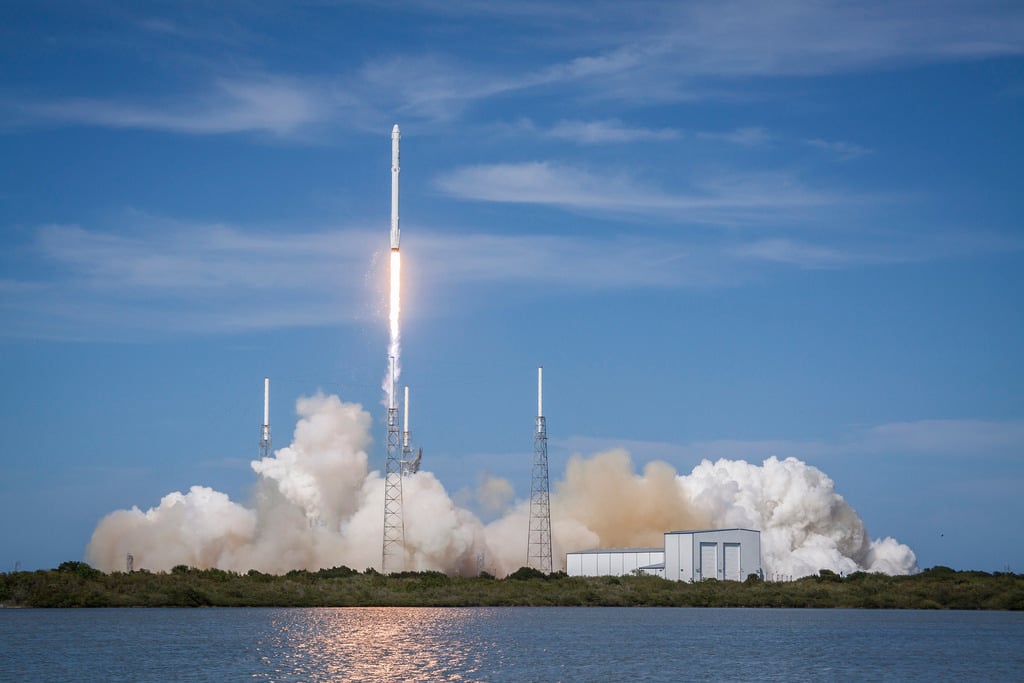
Will B19 Test With All 33 Engines?
Another major question involves the number of engines installed on the booster.
Currently, B19 has 10 Raptor 3 engines installed.
But the full booster configuration includes 33 engines.
Two possible scenarios could play out:
Scenario 1: Static Fire With 10 Engines
SpaceX could perform a partial-engine static fire test with the currently installed engines.
This approach would allow engineers to verify:
- Basic ignition systems
- Pad integration
- Engine performance
It would also allow testing to proceed sooner.
Scenario 2: Full 33-Engine Static Fire
Alternatively, SpaceX might reinstall the remaining 23 engines before conducting the test.
A full 33-engine static fire would generate incredible thrust and provide a more complete system test.
However, installing the remaining engines would delay the test by several days.
Either way, the static fire will be a major step toward Starship Flight 12.
Activity Continues Across Starbase
While attention focuses on booster B19, progress continues elsewhere at Starbase.
The Starship upper stage S39, which will likely pair with B19 for Flight 12, recently returned to Mega Bay 2.
Before returning, the ship completed a cryogenic pressure test at the Massey test site.
This test verifies that the vehicle can safely hold extremely cold propellants.
Next Steps for Ship S39
If everything continues smoothly, the next milestones will include:
- Installing six Raptor 3 engines
- Conducting a static fire test
- Preparing the vehicle for integration with the booster
The static fire test for S39 could occur later this month, possibly during the third or fourth week.
Preparations for Starship Flight 13
Beyond Flight 12, SpaceX is already preparing hardware for Flight 13.
This rapid production cycle highlights how quickly the company is advancing its launch cadence.
Booster Development Progress
Key components have already arrived at the production facility:
- The aft section (arrived in February)
- The liquid oxygen tank section
- The methane landing tank
- The propellant transfer tube
These components indicate that booster stacking operations are nearing completion.
Ship S40 Takes Shape
Meanwhile, development of the next spacecraft—Ship S40—is also progressing.
Recently delivered aft flaps have now been installed on the vehicle.
These aerodynamic control surfaces are essential for atmospheric reentry and landing.
The speed of these developments suggests Flight 13 could follow soon after Flight 12.
NASA’s Artemis 2 Rocket Ready for Launch
While SpaceX pushes forward with Starship, NASA is preparing for its own historic mission: Artemis 2.
This mission will mark the first crewed lunar mission in more than 50 years.
The rocket, SLS (Space Launch System), recently underwent repairs inside the Vehicle Assembly Building (VAB).
Key Repairs Completed
Engineers addressed several issues, including:
- Replacement of flight termination system batteries
- Installation of an upgraded quick disconnect (QD) system
- Replacement of problematic seals
These fixes were implemented after earlier wet dress rehearsal tests revealed a hydrogen leak.
Following a series of flight readiness review meetings, NASA officially declared the rocket “go for launch.”

No More Wet Dress Rehearsals
In a notable decision, NASA confirmed there will be no additional wet dress rehearsal before launch.
A wet dress rehearsal involves fully fueling the rocket without launching.
NASA believes additional testing is unnecessary because:
- The updated QD system has already been tested
- Previous fueling tests were successful
- Repeated fueling can stress the rocket’s propellant tanks
Instead, the next full fueling operation will occur during the actual launch attempt.
Artemis 2 Launch Window
NASA plans to roll the rocket back to the launch pad on March 19.
The primary launch date is April 1, with additional opportunities on:
- April 2–6
- April 30
Amazon vs SpaceX: The Satellite Constellation Battle
Meanwhile, a new rivalry is heating up in orbit.
SpaceX has proposed an ambitious plan to build a massive space-based data network supported by up to 1 million satellites.
The proposal recently received approval from the Federal Communications Commission (FCC).
But the decision quickly drew criticism from Amazon.
Project Kuiper vs Starlink
Amazon is developing its own satellite internet system called Project Kuiper.
The goal is to compete directly with SpaceX’s Starlink network.
However, Amazon argues that SpaceX’s proposal is too ambitious and could take a decade or more to complete.
The company urged the FCC to reconsider the approval.
FCC Responds to Amazon
FCC Chairman Brendan Carr responded publicly to Amazon’s criticism.
His message was clear:
Amazon should focus on meeting its own deployment obligations instead of challenging competitors.
According to Carr, Amazon risks falling hundreds of satellites short of its next milestone.
Amazon’s Launch Challenges
One major reason for Project Kuiper’s slow progress is its choice of launch providers.
Amazon signed launch contracts with:
- Blue Origin’s New Glenn
- ULA’s Vulcan rocket
- Europe’s Ariane 6
Unfortunately, these rockets experienced development delays, slowing Kuiper’s deployment schedule.
As a result, Amazon eventually turned to an unexpected partner:
SpaceX itself.
Today, Falcon 9 rockets are launching some of Amazon’s satellites.
The Cost of Building a Satellite Network
Since launching its first satellites in April last year, Amazon has reportedly spent around $10 billion deploying approximately 200 satellites.
The total cost will likely increase significantly as the constellation grows.
For comparison, SpaceX has already launched thousands of Starlink satellites, giving it a major head start.
What Happens Next?
Several key events are expected soon:
- The Starship B19 static fire test
- The Starship S39 engine installation and testing
- The Artemis 2 launch attempt
- Continued deployment of satellite megaconstellations
Each of these developments will shape the future of space exploration.
Final Thoughts
The delay of the Starship B19 static fire test has sparked curiosity across the aerospace community. Whether the cause is a pad inspection, hardware adjustments, or routine modifications, SpaceX continues pushing forward at an incredible pace.
At the same time, NASA’s Artemis program is preparing to return humans to deep space, and competition in satellite internet technology is intensifying between SpaceX and Amazon.
One thing is certain: the next few weeks will be critical for the future of spaceflight.
As testing continues at Starbase, all eyes remain on Starship Flight 12 and the moment when those powerful Raptor engines finally roar to life. 🚀
FAQs
1. Why was the Starship Flight 12 static fire test delayed?
The Starship Flight 12 static fire test may have been delayed due to potential launch pad inspections, system checks, or routine modifications. After two successful fueling tests, engineers may be verifying the pad infrastructure or booster systems before igniting the engines.
2. What is a static fire test for SpaceX Starship?
A static fire test is when a rocket’s engines are ignited while the vehicle remains secured to the launch pad. This test allows engineers to evaluate engine performance, fuel systems, and launch pad infrastructure before an actual launch.
3. How many engines does the Starship booster B19 have?
The Starship Super Heavy booster B19 can support 33 Raptor engines in total. However, during early testing phases, the booster may operate with fewer engines installed before a full-engine static fire test.
4. What is the Raptor 3 engine used in Starship?
The Raptor 3 engine is SpaceX’s latest methane-powered rocket engine designed for higher efficiency, increased thrust, and improved reliability compared to earlier versions used in the Starship program.
5. Where is SpaceX testing the Starship rockets?
SpaceX tests Starship rockets at Starbase in Boca Chica, Texas, which includes launch pads, production facilities, and testing areas for both the Starship spacecraft and Super Heavy boosters.
6. What is the purpose of the Starship Flight 12 mission?
The Starship Flight 12 mission is part of SpaceX’s ongoing testing program to validate new hardware, upgraded engines, and improved launch systems as the company prepares for future missions to the Moon and Mars.
7. What is the Starship V3 design?
The Starship V3 design refers to the next evolution of SpaceX’s rocket system, focusing on faster fueling, improved reliability, and enhanced launch infrastructure to support rapid and frequent launches.
8. What is NASA’s Artemis 2 mission?
Artemis 2 will be the first crewed mission of NASA’s Artemis program, sending astronauts around the Moon for the first time since the Apollo era and preparing for future lunar landings.
9. When is the Artemis 2 launch scheduled?
NASA is targeting April 1 for the Artemis 2 launch, with additional launch opportunities available between April 2 and April 6, and another window later in the month.
10. Why is NASA skipping another wet dress rehearsal for Artemis 2?
NASA decided not to conduct another wet dress rehearsal because the updated systems have already been tested, and repeated fueling operations could stress the rocket’s propellant tanks and reduce their lifespan.
11. What caused the hydrogen leak during earlier SLS testing?
The earlier hydrogen leak occurred at the quick disconnect system (QD) that connects the launch tower to the rocket. Engineers redesigned and replaced the faulty components before approving the system for flight.
12. What is Amazon’s Project Kuiper?
Project Kuiper is Amazon’s satellite internet initiative designed to provide global broadband coverage using a large constellation of satellites in low Earth orbit.
13. How does Project Kuiper compete with SpaceX Starlink?
Project Kuiper competes with SpaceX’s Starlink network by offering satellite internet services worldwide. However, Starlink currently has a major advantage due to thousands of satellites already in orbit.
14. Why did Amazon criticize SpaceX’s satellite expansion plan?
Amazon raised concerns about SpaceX’s proposal to deploy up to one million satellites, arguing that such a massive constellation could take many years to complete and might create regulatory and orbital challenges.
15. Why is SpaceX leading the satellite internet race?
SpaceX leads the satellite internet market because of its Falcon 9 rocket’s frequent launch capability, allowing the company to rapidly deploy thousands of Starlink satellites and expand global coverage faster than competitors.
Read More:
- Lucid unveils Lunar Robotaxi in bid to challenge Tesla’s Cybercab in the autonomous ride hailing race
- Tesla finally brings a Robotaxi update that Android users will love
- Tesla adds awesome new driving feature to Model Y
- Tesla Cell Phone Release Date (Tesla Pi Phone 2026)! $199 no-bill, Starlink, free units for seniors
- Elon Musk Reveals New Starship Launch Update