


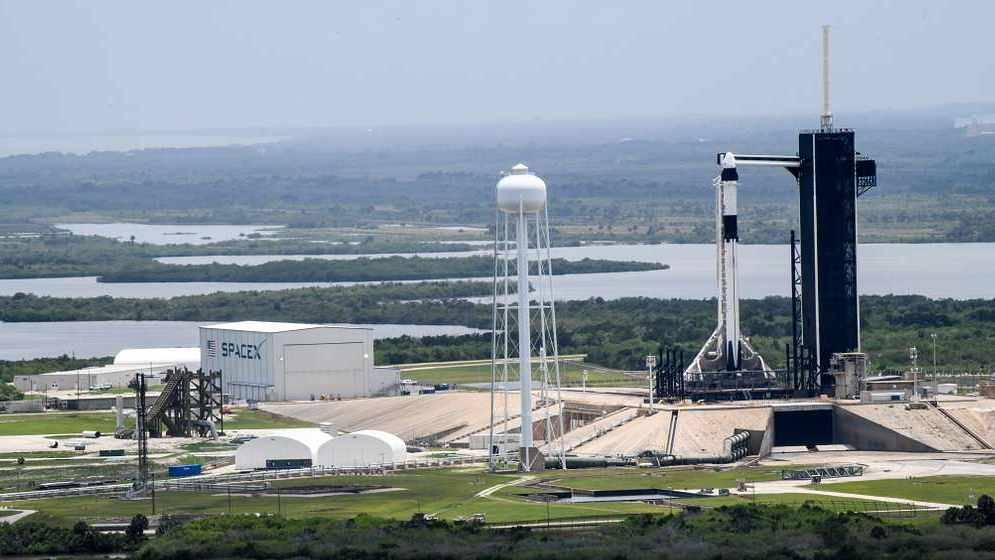
The space industry is evolving faster than ever before. What once took decades is now happening in months, and the competition between private companies and government agencies is pushing innovation to its limits. From fiery rocket tests in Texas to runway trials in Florida, the future of space exploration is unfolding in real time.
In this blog post, we explore three groundbreaking developments shaping the next era of spaceflight: SpaceX’s Super Heavy Booster V3 test campaign, the growing divide between NASA and SpaceX over lunar missions, and the exciting progress of Sierra Space’s Dream Chaser spaceplane.
The New Space Race: A Turning Point in Human Exploration
The modern space race is no longer just about national pride—it’s about sustainability, commercialization, and long-term human survival beyond Earth. Companies like SpaceX and NASA are working alongside emerging players to establish a permanent presence in Low Earth Orbit (LEO) and eventually on the Moon.
This new phase of exploration is defined by:
- Rapid prototyping and testing
- Reusability and cost reduction
- Automation vs. human control debates
- Commercial partnerships and competition
Let’s break down the biggest recent developments.
SpaceX’s Super Heavy Booster V3 Test – A Historic Milestone
What Makes Booster V3 So Important?
SpaceX has been steadily evolving its Starship system, and the introduction of Version 3 (V3) Super Heavy boosters marks a major leap forward. These boosters are designed to be:
- More powerful
- More reliable
- Faster to prepare for launch
At the center of this campaign is Booster 19 (B19)—a vehicle that represents the next phase of SpaceX’s ambition to build a fully reusable rocket system capable of interplanetary travel.
The 10-Engine Static Fire Test Explained
During the latest test at Starbase, SpaceX conducted a 10-engine static fire, a critical step before full launch operations.
Here’s what happened:
- The launch tower arms moved aside
- Cryogenic fuels (liquid oxygen and methane) were loaded
- Engines ignited in a powerful burst
Even with only 10 out of 33 engines firing, the booster generated an estimated 2,500–2,800 tons of thrust.
That’s an enormous amount of power—yet the test lasted less than five seconds, raising immediate questions.
What Went Wrong? Understanding the Anomalies
Observers noticed two key anomalies:
1. Pre-Ignition Sparks
These sparks suggested a possible fuel interaction issue, though such ignition flashes can sometimes be normal.
2. Streaking and Venting
A visible streak along the booster’s body raised concerns about:
- Structural stress
- Potential leaks
- Tank integrity
However, SpaceX quickly clarified that the issue was not with the rocket itself, but with ground support equipment (GSE).
This is a crucial distinction—it means the booster design remains sound.
Why This Test Still Matters
Despite the early shutdown, the test achieved major milestones:
- Successful rapid fuel loading in under 30 minutes
- Validation of tank structure and plumbing
- First real-world test of V3 systems
In aerospace, even a partial success can provide massive engineering insights.
The Next Step – Full 33-Engine Test
The real milestone is still ahead.
SpaceX is preparing for a full 33-engine static fire, which will:
- Generate over 9,000 tons of thrust
- Test structural limits
- Validate engine synchronization
If successful, this could pave the way for Starship Flight 12, potentially launching in the coming months.
NASA vs SpaceX – Automation vs Human Control
The Core Debate in the Artemis Program
As SpaceX pushes forward technologically, a philosophical debate is emerging between it and NASA.
At the center of this debate is the Human Landing System (HLS) for the Artemis Moon missions.
The key question:
👉 Should astronauts control the spacecraft, or should computers handle everything?
SpaceX’s Automation-First Approach
SpaceX believes in full automation.
Their systems are designed to:
- Dock automatically
- Land autonomously
- Require minimal human intervention
This approach builds on the success of:
- Falcon 9 landings
- Crew Dragon missions
Automation allows for:
- Faster response times
- Reduced human error
- Scalable operations
NASA’s Human-Centric Philosophy
NASA, however, strongly believes in manual override capabilities.
Their reasoning includes:
- Human intuition in unpredictable environments
- Lessons from Apollo missions
- Real-world anomalies requiring quick decisions
For example, astronauts during the Apollo 11 Moon Landing had to manually guide the spacecraft to avoid hazards.
NASA argues that computers alone cannot guarantee safety on the Moon’s rugged surface.
The Starship Elevator Problem
One of the most surprising concerns raised is the Starship HLS elevator system.
Because the spacecraft is extremely tall:
- Astronauts rely on an elevator to reach the surface
- If it fails, they could be stranded
NASA is pushing for backup systems such as:
- Climbing mechanisms
- Emergency winches
- Redundant access paths
This highlights how small engineering details can have life-or-death consequences.
Timeline Delays and Artemis Goals
Originally, NASA planned a Moon landing as early as 2025–2026.
Now, expectations have shifted:
- 2028 is the realistic target for a crewed landing
- Earlier missions may focus on orbital demonstrations
This delay reflects the complexity of developing human-rated lunar systems.
Dream Chaser Spaceplane – A Comeback for Runway Landings
What is Dream Chaser?
The Dream Chaser spaceplane, developed by Sierra Space, is one of the most exciting alternatives to traditional capsules.
Unlike vertical rockets, it:
- Launches on a rocket
- Lands like an airplane
This makes it a unique hybrid system in modern spaceflight.
Successful Runway Testing at Kennedy Space Center
Recent tests at Kennedy Space Center demonstrated:
- High-speed towing
- Braking performance
- Structural durability
These tests are essential before actual space missions.
The Innovative Skid Landing System
Dream Chaser uses a hybrid landing system:
- Rear wheels for support
- A front skid for braking
Benefits include:
- Reduced weight
- Increased reliability
- Improved landing stability
This design is both simple and highly effective.
Why Runway Landings Are a Game-Changer
Compared to ocean splashdowns, runway landings offer major advantages:
1. Lower G-Forces
Sensitive cargo experiences less stress during landing.
2. No Saltwater Damage
Avoids corrosion and costly refurbishment.
3. Faster Recovery
Cargo can be accessed within minutes.
This makes Dream Chaser ideal for:
- Scientific experiments
- Commercial payloads
- Future crew missions
Launch Plans and Challenges Ahead
Dream Chaser’s first mission will launch aboard a Vulcan Centaur rocket.
However, challenges remain:
- Schedule delays
- Dependency on rocket availability
- High expectations for first flight success
If successful, it will play a key role in resupplying the International Space Station (ISS).
The Future of Space Exploration – Collaboration and Competition
The current space era is not dominated by a single entity. Instead, it’s a multi-player ecosystem:
- SpaceX → Heavy lift and reusability
- NASA → Safety and mission oversight
- Sierra Space → Innovative transport systems
Each brings a unique philosophy to the table.
What Happens Next? Key Events to Watch
SpaceX
- Full 33-engine static fire
- Starship Flight 12
- Continued rapid testing
NASA
- Artemis program restructuring
- Human landing system decisions
- Timeline updates
Sierra Space
- Dream Chaser Demo-1 mission
- ISS cargo integration
- Expansion into commercial stations
Final Thoughts – The Future is Already Here
The space industry is no longer about distant dreams—it’s about active, real-time progress.
We are witnessing:
- Rockets pushing physical limits
- Debates shaping mission safety
- Spaceplanes redefining how we return to Earth
Whether it’s the thunderous roar of a Super Heavy booster or the silent glide of a spaceplane landing, one thing is clear:
👉 Humanity is entering a new era of space exploration—and it’s happening faster than anyone expected.
FAQs
1. What is SpaceX Booster V3?
SpaceX Booster V3 is the latest version of the Super Heavy rocket booster designed for the Starship system, featuring upgraded engines, improved reliability, and faster launch preparation.
2. What happened during the Booster 19 static fire test?
During the test, 10 out of 33 engines ignited, producing massive thrust, but the test ended early due to a ground support equipment issue, not a problem with the booster itself.
3. Why did the static fire test end early?
The test was automatically shut down due to a malfunction in the ground systems, ensuring safety and preventing damage to the rocket.
4. What is a static fire test?
A static fire test is when rocket engines are ignited while the vehicle is securely held in place to verify performance before an actual launch.
5. How powerful is the Super Heavy booster?
With all 33 engines firing, the booster can generate over 9,000 tons of thrust, making it one of the most powerful rockets ever built.
6. What is Starship Flight 12?
Starship Flight 12 is the upcoming test flight expected to demonstrate improved performance and bring SpaceX closer to full reusability.
7. What is the NASA Artemis program?
The NASA Artemis program aims to return humans to the Moon and establish a sustainable presence for future missions to Mars.
8. What is the Human Landing System (HLS)?
The Human Landing System (HLS) is the spacecraft designed to carry astronauts from lunar orbit down to the Moon’s surface and back.
9. Why are NASA and SpaceX disagreeing?
The disagreement is about automation vs manual control—SpaceX prefers fully automated systems, while NASA insists astronauts must have manual control capabilities.
10. Why is manual control important for lunar landings?
Manual control allows astronauts to respond to unexpected hazards, similar to what happened during the Apollo 11 Moon Landing.
11. What is the Starship elevator issue?
Because Starship is very tall, astronauts use an elevator to reach the surface. If it fails, backup systems are needed to ensure crew safety.
12. When will humans return to the Moon?
Current estimates suggest a crewed lunar landing may happen around 2028, due to technical and safety challenges.
13. What is the Dream Chaser spaceplane?
The Dream Chaser, developed by Sierra Space, is a reusable spaceplane that launches on a rocket and lands on a runway like an aircraft.
14. How is Dream Chaser different from capsules?
Unlike capsules, Dream Chaser performs runway landings, offering smoother returns, faster recovery, and no exposure to ocean saltwater.
15. What rocket will launch Dream Chaser?
Dream Chaser will launch aboard the Vulcan Centaur rocket developed by United Launch Alliance.
16. Why is Dream Chaser important for the future?
Dream Chaser provides a reusable, low-impact way to transport cargo to and from space, adding redundancy and flexibility to space missions.
Read More:
- Elon Musk offers to pay TSA salaries as government shutdown leaves agents without paychecks
- Elon Musk launches TERAFAB: The $25B Tesla-SpaceXAI chip factory that will rewire the AI industry
- SpaceX’s NEW Genius Solution For Starship HeatShield Survive into Earth’s Atmosphere
- Elon Musk’s Tesla Future: 5 New Models, AI Breakthroughs, and the Reality of Flying Cars (2026 Guide)
- Tesla Pi Phone 2026: Release Date, Price, Features & Truth Behind the $199 No-Bill Rumor