


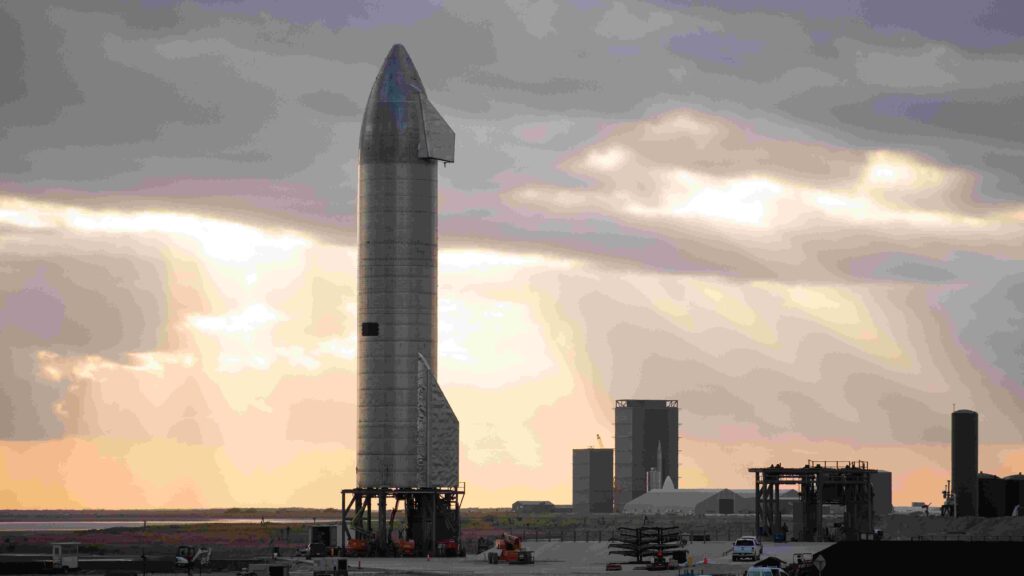
The space industry may be standing on the edge of a major turning point. SpaceX is preparing what could become its most significant Starship mission since Flight 11—and possibly its most operationally meaningful test yet. With fresh authorization from the Federal Communications Commission (FCC), the upcoming mission is shifting from experimental hardware validation toward real mission capability.
At the same time, Starship V3 is introducing a powerful structural upgrade in its hot staging system. And beyond SpaceX, Firefly Aerospace is preparing to return its Alpha rocket to flight after a challenging year.
So what does all this mean for the future of spaceflight?
Let’s dive deep into the next chapter of orbital innovation.
FCC Authorization Signals a Major Shift for SpaceX
A recent authorization from the Federal Communications Commission may not grab headlines at first glance—but its implications are massive.
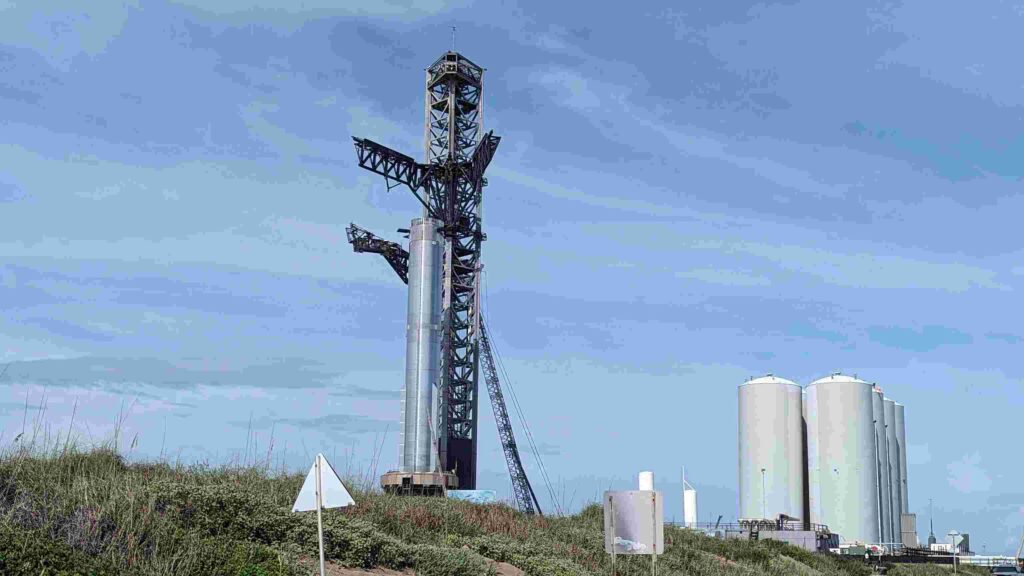
The FCC granted SpaceX approval to launch and operate “space stations” mounted on mass simulators during upcoming Starship Super Heavy test flights. While the documents don’t explicitly mention Flight 12, it clearly falls within the authorized operational window.
This marks a crucial distinction:
- Previous Starship flights tested payload release.
- Flight 12 may test active on-orbit communications.
That’s a huge step forward.
From Passive Payloads to Active On-Orbit Operations
Earlier Starship missions demonstrated mechanical payload deployment. But this time, SpaceX is doing something far more ambitious.
After deployment, these mass simulators will:
- Establish communication links with the Starlink constellation
- Connect to ground-based Earth stations
- Operate actively for approximately one hour
- Re-enter Earth’s atmosphere and intentionally burn up
This is no longer just a drop-and-watch test.
This is a live systems validation exercise.
The simulators won’t be full satellites—but they’ll replicate real-world spacecraft behavior, including:
- Power systems
- Antennas
- Propulsion components
- Communication hardware
- Possible onboard cameras
This brings Starship closer to genuine operational missions.
Mission Profile: Suborbital But Strategically Orbital
The mission will launch from Starbase in Texas, SpaceX’s primary Starship launch facility.
Here’s what we know:
- Maximum altitude: 350 km
- Falls within Low Earth Orbit (LEO)
- Vehicle will not achieve orbital stabilization
- Payloads will intentionally re-enter after 90 minutes
Because the mass simulators are designed to deorbit, the mission remains classified as suborbital—even though it reaches orbital altitudes.
That’s an important technical nuance.
SpaceX is carefully building toward full orbital operations without rushing into long-duration deployments.

Why This Matters for Starlink V3 and Future Missions
These tests are laying the groundwork for next-generation satellite deployment.
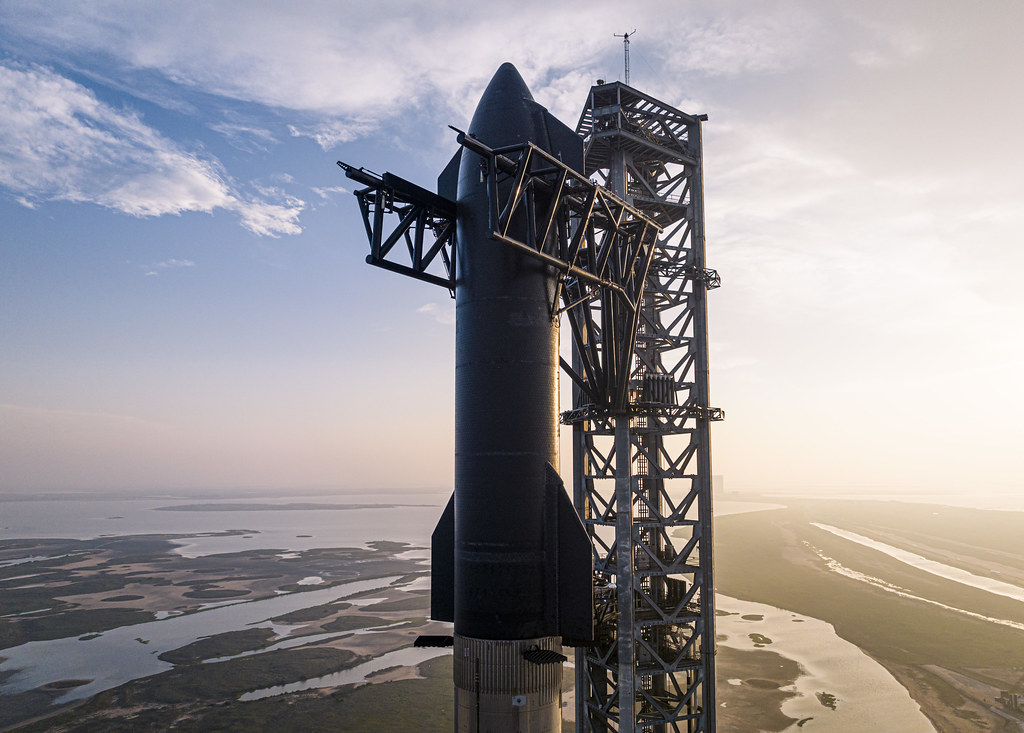
Future missions may deploy Starlink V3 satellites, expected to fly on later Starship flights—possibly around Flight 14. Unlike Falcon 9 launches, Starship will be capable of deploying dramatically larger payload batches.
If Flight 12 successfully demonstrates:
- Controlled deployment
- Network connectivity
- Short-duration orbital operations
- Clean atmospheric re-entry
Then Starship moves significantly closer to becoming a fully operational launch system.
The FCC Timeline: April Window Raises Questions
The FCC authorization covers operations from:
- April 7, 2026
- June 6, 2026
This raises an obvious question.
Earlier public estimates suggested a March launch for Flight 12. So why the April start window?
The answer likely lies in hardware readiness.
Booster 19 and Ship 39: Hardware Status Update
Booster 19 has completed cryogenic testing but still requires a static fire test. Ship 39, however, has progressed more slowly and has yet to complete its full cryogenic campaign.
Each major milestone requires:
- Inspection
- Refurbishment
- Integration
- Pad readiness checks
Each stage can add roughly a week to the timeline.
Given these realities, an April launch window appears technically plausible—even if March remains within possibility.
Starship V3: The Redesigned Hot Staging System
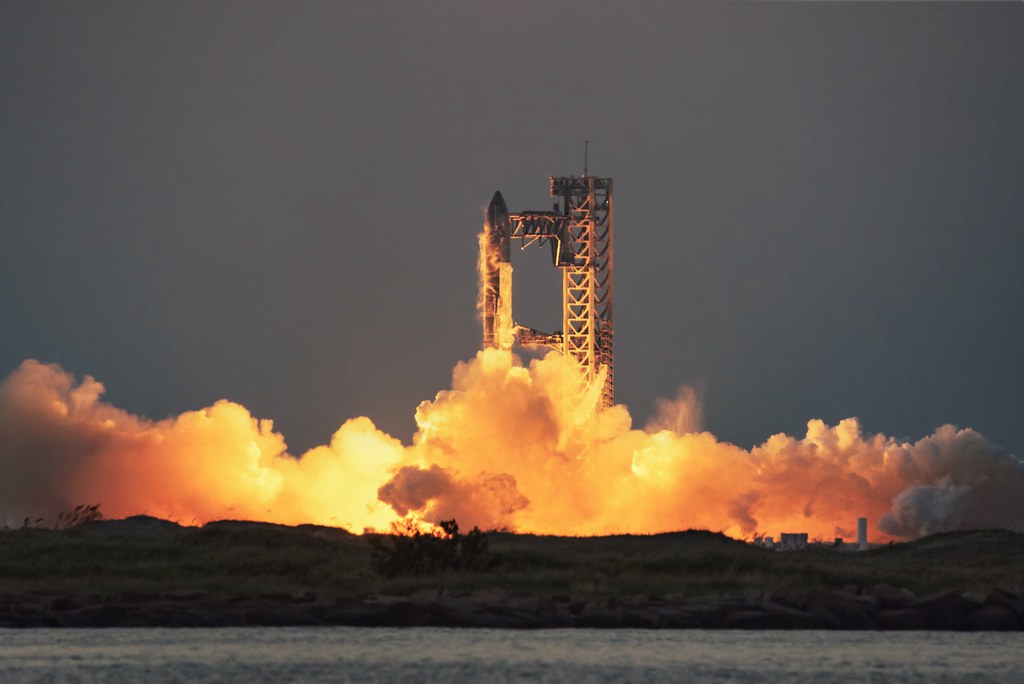
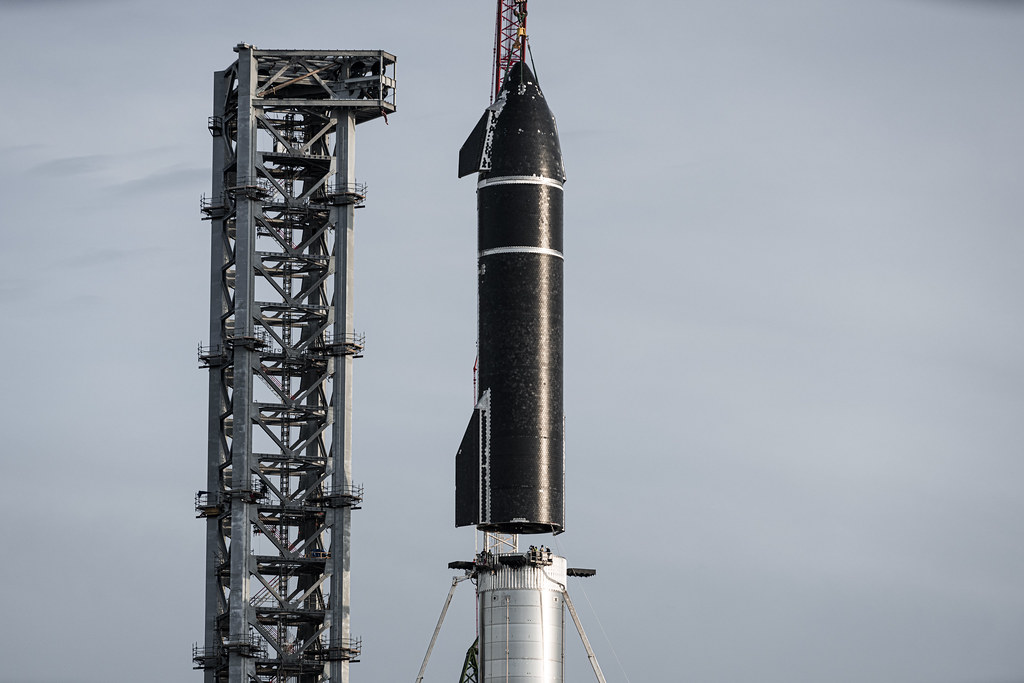
Perhaps the most exciting engineering upgrade debuting on Flight 12 is Starship V3’s hot staging system.
Hot staging occurs when:
The upper stage ignites before full separation from the booster.
This technique preserves momentum and improves overall performance.
The concept dates back to the Soviet N1 rocket, but SpaceX has redesigned it for modern reliability and structural efficiency.

Structural Engineering Breakthrough
Starship is enormous:
- Dry mass: ~100 tons
- Fully fueled mass: Up to 1,300 tons
Supporting that mass during ignition requires extreme structural integrity.
Close-up imagery of the new staging interface reveals:
- Reinforced pin-based attachment systems
- Crossarms integrated into the booster structure
- An angled booster dome to distribute loads laterally
Instead of directing stress vertically through a single ring, the new design spreads forces along the sides of the structure.
Result?
- Reduced localized stress
- Improved load distribution
- Increased propellant capacity
- Enhanced performance margins
This upgrade benefits both stages:
- Starship can carry more propellant
- Super Heavy gains additional internal fuel volume
More fuel means:
- Greater range
- Higher payload capacity
- Improved mission flexibility
Flight 12 will prove whether these upgrades perform under real conditions.
Starship’s Role in NASA’s Artemis Architecture
All of these improvements tie into something even bigger.
SpaceX is developing Starship as NASA’s Human Landing System (HLS) for the NASA Artemis program architecture.
Before an uncrewed lunar landing demonstration can occur, Starship must:
- Achieve stable orbit
- Demonstrate orbital refueling
- Validate two-stage landing capabilities
- Prove deployment reliability
Flight 12 could mark the beginning of that operational transition.
A Shift From Experimental to Operational
Up until now, Starship flights have primarily focused on:
- Structural integrity
- Stage separation
- Engine performance
- Heat shield validation
Flight 12 may represent something different.
It blends:
- Structural upgrades (V3 hot staging)
- Active payload deployment
- Network communication testing
- Controlled deorbit operations
That’s no longer pure experimentation.
That’s operational rehearsal.
Firefly Aerospace Returns With Alpha Flight 7
While SpaceX dominates headlines, another important milestone is approaching.
Firefly Aerospace is preparing to launch the seventh flight of its Alpha rocket, named “Stairway to 7.”
This mission marks:
- A return after a 10-month pause
- A recovery effort following setbacks
- A critical validation before introducing Block 2 upgrades

Alpha’s Challenging Track Record
Out of six previous Alpha flights:
- 2 were full successes
- 2 were complete failures
- 2 were partial successes
The most recent mission ended in payload loss after upper stage failure. A later test stand explosion was traced to hydrocarbon contamination caused by a process error during integration.
Flight 7 is about restoring confidence.
Focus on Vehicle Performance
Originally planned to carry a Lockheed Martin payload, the mission was shifted to a demonstration payload to focus squarely on rocket performance.
Objectives include:
- Nominal first-stage operation
- Nominal second-stage operation
- Testing upgraded in-house avionics
- Thermal protection improvements
- System reliability validation
On February 6, the first stage completed a 22-second static fire of its four Reaver engines at Vandenberg Space Force Base—an important milestone.
The Transition to Alpha Block 2
Flight 7 will be the final Alpha Block One mission.
Starting with Flight 8, Firefly plans to introduce Block 2 upgrades, including:
- 7-foot vehicle length increase
- Consolidated batteries and avionics
- Enhanced thermal protection system
- Stronger carbon composite structures
- Automated manufacturing processes
These upgrades aim to improve:
- Reliability
- Manufacturability
- Launch cadence
In the competitive small-launch market, consistency is everything.
What These Developments Mean for the Future of Spaceflight
Taken together, these developments signal a broader industry evolution.
For SpaceX:
- Transition from test vehicle to operational launch system
- Integration of payload deployment and communications
- Structural refinements increasing payload capability
- Acceleration toward lunar and deep-space missions
For Firefly:
- Opportunity to restore market confidence
- Technical validation before major redesign
- Strengthening position in small satellite launch sector
The Bigger Picture
The coming months could define how quickly Starship matures from a developmental platform into a backbone of orbital infrastructure.
If Flight 12 succeeds, it will demonstrate:
- Controlled deployment
- On-orbit communications
- Reliable hot staging
- Structural performance under load
- Operational mission integration
That’s not incremental progress.
That’s a generational leap.
Final Thoughts
The space industry rarely moves in straight lines. Delays, redesigns, and regulatory hurdles are part of the process. But what we’re seeing now is something more profound.
SpaceX is quietly shifting Starship into operational mode.
With FCC approval, active payload simulators, upgraded hot staging, and communications validation through Starlink, Flight 12 may become one of the most important Starship missions yet.
At the same time, Firefly Aerospace’s Alpha return reminds us that resilience and iteration define success in modern rocketry.
The next phase of spaceflight isn’t just about reaching orbit.
It’s about building sustainable infrastructure once we get there.
FAQs
1. What makes Starship Flight 12 so important?
Starship Flight 12 could mark the transition from experimental testing to operational capability. With authorization from the Federal Communications Commission, the mission may include active payload simulators that communicate with the Starlink network—moving beyond simple deployment tests.
2. Is Flight 12 an orbital mission?
No. Although the vehicle may reach approximately 350 km altitude (within Low Earth Orbit), the payload simulators are designed to re-enter after about 90 minutes. Therefore, it remains classified as a suborbital test flight.
3. What are “mass simulators” on Starship?
Mass simulators are test payloads designed to replicate the weight, geometry, and some functional behavior of real satellites. For Flight 12, they are expected to actively communicate with Starlink before controlled re-entry.
4. Why is FCC approval necessary for this mission?
The FCC regulates communication systems. Because the payload simulators will transmit signals and connect to satellite networks, SpaceX requires authorization from the Federal Communications Commission to legally operate those communication systems during the mission.
5. What is Starship V3?
Starship V3 is the newest upgraded version of SpaceX’s fully reusable launch system. It introduces structural refinements, improved propellant capacity, and a redesigned hot staging system to enhance performance and reliability.
6. What is hot staging and why is it important?
Hot staging is when the upper stage ignites before fully separating from the booster. This preserves momentum and increases efficiency. The concept dates back to the Soviet N1 rocket, but SpaceX has modernized it for Starship V3.
7. How does the new hot staging system improve performance?
The redesigned staging interface distributes loads laterally instead of vertically, reducing structural stress. This allows better propellant capacity and overall improved payload performance.
8. When is Starship Flight 12 expected to launch?
The FCC authorization window runs from April 7 to June 6, 2026. While earlier estimates suggested March, hardware readiness could shift the launch into April.
9. Where will Flight 12 launch from?
The mission will launch from Starbase, SpaceX’s primary Starship development and launch site in Texas.
10. How does Flight 12 support NASA’s Artemis program?
Starship is being developed as NASA’s Human Landing System for the NASA Artemis program. Demonstrating payload deployment, communications, and structural reliability is essential before lunar missions can proceed.
11. Will Starship deploy operational Starlink satellites on Flight 12?
Flight 12 is expected to use test simulators rather than full operational satellites. However, future flights—potentially around Flight 14—may deploy next-generation Starlink V3 satellites.
12. What improvements does Starship V3 bring over previous versions?
Starship V3 introduces:
- Reinforced hot staging interface
- Improved propellant load capacity
- Enhanced structural load distribution
- Greater mission flexibility
These upgrades aim to move Starship closer to operational readiness.
13. What is Firefly Aerospace’s Alpha Flight 7 mission?
Firefly Aerospace is preparing the seventh flight of its Alpha rocket, called “Stairway to 7.” It marks the company’s return after a 10-month pause following technical setbacks.
14. Why is Alpha Flight 7 critical for Firefly?
Out of six previous Alpha launches, only two achieved full success. Flight 7 is focused on restoring confidence, validating corrective actions, and proving system reliability before introducing Block 2 upgrades.
15. What upgrades are coming with Alpha Block 2?
Future Alpha rockets will feature:
- Increased vehicle length
- Improved avionics systems
- Enhanced thermal protection
- Stronger composite structures
- Streamlined manufacturing
These improvements aim to increase reliability and competitiveness in the small launch market.
16. What does all this mean for the future of spaceflight?
If successful, Starship Flight 12 could mark the beginning of routine operational deployments, integrated satellite communications testing, and scalable orbital infrastructure. Meanwhile, Firefly’s return strengthens competition in the small-launch sector—accelerating innovation across the industry.
Read More:
- Tesla seeks approval to test FSD Supervised in new Swedish city
- SpaceX targets 150Mbps per user for upgraded Starlink Direct-to-Cell
- Tesla Cybertruck Dual Motor AWD estimated delivery slips to early fall 2026
- Tesla Model S and X customization options begin to thin as their closure nears
- Tesla set to activate long-awaited Cybertruck feature