
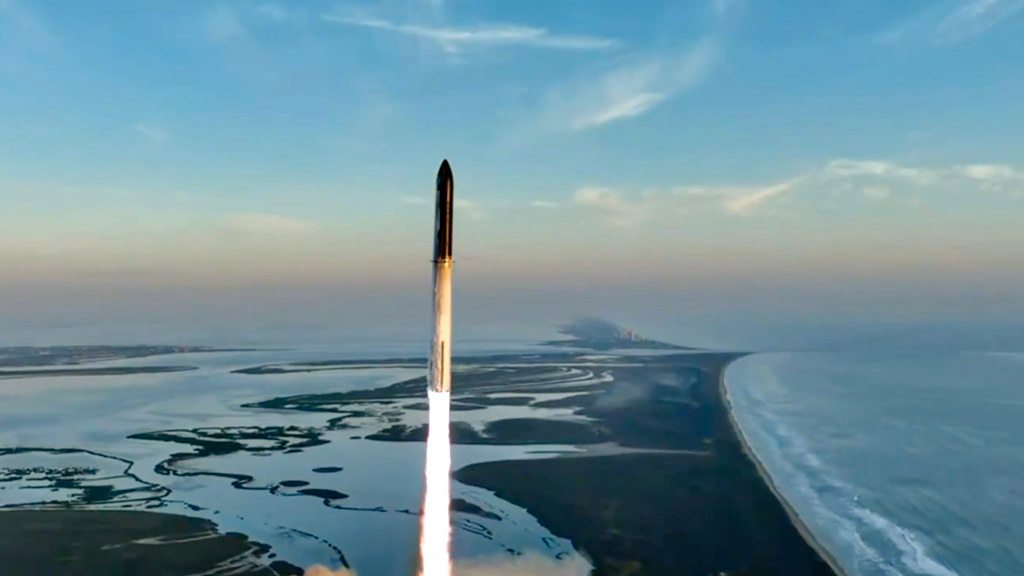
The global spaceflight community is once again turning its attention toward SpaceX as the company enters a decisive phase ahead of Starship Flight 12, expected as early as April 2026. This mission is not just another test—it marks the first flight of the upgraded Starship Version 3 (V3), a major leap toward making Starship a fully operational launch system.
After months of groundwork, testing, and redesign, SpaceX is now aligning all elements—from propulsion systems to booster aerodynamics—to ensure that this mission delivers meaningful progress. In this blog, we’ll explore everything from Raptor Vacuum engine installations on Starship S39 to Super Heavy booster innovations and what it all means for the future of space exploration.
Starship Flight 12: Why This Mission Matters
Starship Flight 12 represents a critical turning point for SpaceX. Unlike earlier missions that focused heavily on experimental testing, this flight signals a transition toward operational reliability and consistency.
The stakes are high. The success of this mission will determine how quickly SpaceX can:
- Increase launch cadence
- Meet NASA deadlines
- Prove Starship’s readiness for complex missions
With more than five months since the last Starship launch, this gap is unusual for a company known for rapid iteration. However, this pause reflects a strategic shift toward maturity rather than speed.
Starship S39: The Centerpiece of Flight 12
At the heart of this mission is Starship S39, the upper-stage vehicle that has undergone extensive testing and upgrades.
Cryogenic Testing Success
On March 8, Starship S39 returned to the Mega Bay after completing full cryogenic proof testing at Massey’s test site. This test validated the vehicle’s ability to handle extremely low-temperature propellants, a crucial requirement for orbital missions.
After a two-week inspection phase, engineers gave the green light to begin engine integration, marking a major milestone.
Raptor Vacuum Engine Installation: A Major Breakthrough
What Are Raptor Vacuum (RVac) Engines?
The Raptor Vacuum engine is a specialized version of SpaceX’s Raptor engine, optimized for operation in the vacuum of space. These engines feature larger nozzles, allowing for higher efficiency outside Earth’s atmosphere.
Installation Progress
On March 22, heavy machinery was observed transporting massive engine components into Mega Bay 2. Based on their size and geometry, these were clearly RVac engine bells, confirming that SpaceX has officially begun installing the vacuum-optimized engines on S39.
This step is critical because:
- It completes the propulsion architecture of the upper stage
- It prepares the vehicle for full-engine testing
- It validates the Version 3 configuration
Static Fire Test: The Next Big Milestone
Full Six-Engine Static Fire
Unlike previous campaigns, Starship S39 is expected to perform a full-strength static fire using all six Raptor engines simultaneously.
This is a significant upgrade over earlier tests that used only partial engine configurations.
Why This Test Is So Important
The static fire will:
- Validate engine synchronization
- Test fuel flow and ignition systems
- Confirm structural integrity under full thrust
Mind-Blowing Power Output
Even without the Super Heavy booster, Starship S39 alone generates over 1,700 tons of thrust.
To put that into perspective:
- This exceeds the liftoff thrust of many modern commercial rockets
- It demonstrates Starship’s immense standalone capability
A successful static fire—expected in late March or early April—will clear S39 for final stacking with the booster.
Super Heavy Booster Innovations: Testing Never Stops
While Starship S39 gets much of the spotlight, SpaceX continues to innovate aggressively on the Super Heavy booster side.
Meet Test Tank B18.3
The upgraded B18.3 test tank has returned to Massey’s test site with structural reinforcements. This hardware previously underwent intentional stress testing, pushing it to failure to understand its limits.
Now, it’s being used to test next-generation design improvements.
Redesigned Grid Fins: A Game-Changer
What Are Grid Fins?
Grid fins are aerodynamic control surfaces used during a booster’s descent to steer and stabilize it as it returns to Earth.
The New Design Approach
On traditional boosters like B19, grid fins sit flush against the rocket body. However, on B18.3, SpaceX has extended the mounting points outward.
Key Advantages
1. Greater Control Authority
By placing the fins further from the rocket body, they gain better leverage, allowing for more precise steering.
2. Increased Rotational Freedom
The added spacing enables fins to rotate more aggressively without colliding with the fuselage.
3. Improved Aerodynamic Performance
This redesign enhances stability during high-speed atmospheric descent.
Engineering Challenges
However, this innovation comes with risks:
- Increased exposure to extreme heat
- Greater vibration stress
- Higher susceptibility to plasma effects during re-entry
To address this, B18.3 will undergo hydraulic bending and compression tests to simulate real mission conditions.
If successful, this design could become standard on future boosters like B20.
Version 3 Starship: From Prototype to Operational System
What Makes V3 Different?
Version 3 (V3) of Starship represents a shift from:
- Experimental prototypes → Standardized architecture
- Rapid testing → Operational reliability
This evolution is necessary for SpaceX to meet its ambitious goals, including deep space missions and human spaceflight.
The Bigger Picture: NASA and Artemis III
One of the biggest drivers behind Starship’s development is its role in NASA Artemis Program, particularly the Artemis III mission.
Key Requirements for Starship
To meet NASA’s mid-2027 deadlines, Starship must demonstrate:
1. Orbital Reliability
Consistently launching payloads into Low Earth Orbit (LEO) without failure.
2. In-Orbit Refueling
A complex maneuver where two Starships dock in space to transfer cryogenic fuels.
3. Lunar Landing Capability
Safe descent, landing, and ascent from the Moon’s surface.
4. Human Rating Certification
Meeting NASA’s strict safety standards for carrying astronauts.
Why the Launch Gap Actually Makes Sense
At first glance, a five-month gap between launches might seem like a slowdown. But in reality, it reflects a deliberate engineering strategy.
SpaceX is:
- Refining designs
- Improving reliability
- Reducing risk for future missions
This approach ensures that when launches resume, they do so with greater success rates and scalability.
What Happens If Flight 12 Succeeds?
A successful launch of B19 and S39 will:
- Validate the V3 architecture
- Prove that upgrades are working
- Enable faster launch cadence
This could lead to:
- More frequent Starship missions
- Faster progress toward lunar and Mars goals
- Increased confidence from NASA and commercial partners
The Road Ahead for SpaceX
Looking beyond Flight 12, SpaceX is positioning Starship as the backbone of future space exploration.
Potential Future Milestones
- Regular orbital launches
- Satellite deployment missions
- First successful in-orbit refueling
- Crewed lunar missions
The long-term vision includes making humanity a multi-planetary species, with Starship playing a central role.
Conclusion
The installation of Raptor Vacuum engines on Starship S39 marks a defining moment in SpaceX’s journey. Combined with upcoming full-engine static fire tests and continuous Super Heavy innovations, all signs point toward a highly significant Flight 12.
While the recent launch gap may have seemed unusual, it’s clear that SpaceX has been using this time to build a more robust, reliable, and capable Starship system.
If everything goes according to plan, April 2026 could mark the beginning of a new era in spaceflight, where Starship transitions from experimental rocket to fully operational spacecraft.
The countdown has begun—and the world is watching. 🚀
FAQs
1. What is Starship Flight 12?
Starship Flight 12 is the upcoming launch mission by SpaceX, expected in April 2026, and it will be the first flight of the upgraded Version 3 (V3) Starship.
2. What is special about Starship Version 3 (V3)?
Version 3 represents a shift from experimental prototypes to a more standardized and operational spacecraft design, focused on reliability and repeatability.
3. What is Starship S39?
Starship S39 is the upper-stage vehicle designated for Flight 12, responsible for reaching orbit and carrying payloads.
4. What are Raptor Vacuum (RVac) engines?
The Raptor Vacuum engine is a space-optimized engine with a larger nozzle designed for maximum efficiency in vacuum conditions.
5. How many engines does Starship S39 have?
Starship S39 is equipped with six Raptor engines, including vacuum-optimized variants for space operations.
6. What is a static fire test?
A static fire test is when rocket engines are ignited while the vehicle remains anchored to the ground to verify performance, stability, and safety.
7. Why is the six-engine static fire important?
It will be the first time S39 ignites all engines simultaneously, proving full thrust capability and system integration.
8. How powerful is Starship S39 alone?
The upper stage produces over 1,700 tons of thrust, making it more powerful than many currently operational rockets.
9. What is the Super Heavy booster?
The Super Heavy booster is the first stage of Starship, designed to lift the spacecraft off Earth before separating.
10. What is the B18.3 test tank?
B18.3 is a specialized test vehicle used by SpaceX to experiment with structural improvements and new design concepts.
11. What are grid fins used for?
Grid fins are aerodynamic control surfaces that help guide the booster during descent and landing.
12. What is new about the redesigned grid fins?
The new design extends them outward from the rocket body, improving control, rotation, and aerodynamic efficiency.
13. What challenges come with extended grid fins?
They face increased exposure to heat, vibration, and plasma stress during re-entry.
14. Why has there been a gap between Starship launches?
The gap allowed SpaceX to focus on major upgrades and improving reliability for the V3 system.
15. What is the NASA Artemis Program?
The NASA Artemis Program is a mission initiative aimed at returning humans to the Moon and eventually enabling missions to Mars.
16. What role will Starship play in Artemis III?
Starship will act as a lunar lander, transporting astronauts from lunar orbit to the Moon’s surface.
17. What is in-orbit refueling?
It’s a process where two Starships dock in space to transfer cryogenic fuel, enabling long-duration missions.
18. What happens if Flight 12 is successful?
A successful mission will validate Starship V3, increase launch frequency, and bring SpaceX closer to human spaceflight and deep space exploration goals. 🚀
Read More:
- Elon Musk’s New GIGA Press 2026 On “Cybercab Production Line”, Welding Deleted
- Tesla Bot Gen 3 FULL Specs Revealed | Elon Musk BEAT Figure 03?
- Jay Leno’s Review Tesla Semi 2.0! Cut Out 1000 lbs, 1 Million Miles & Features
- NASA Declared Starship Landing Too Risky… But SpaceX’s New HLS Design Changed Everything
- Tesla Model 2 $24,990 Finally Cancelled! Elon Musk REPLACED By A New Model