


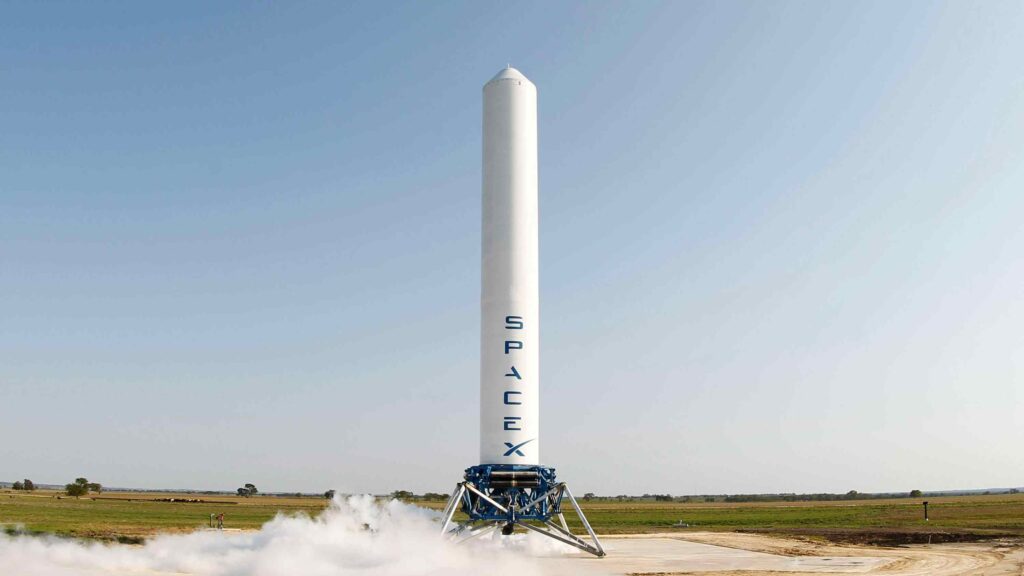
The aerospace industry is entering what many experts are calling a “New Golden Age of Space Exploration.” With private companies accelerating innovation and governments supporting ambitious missions, the pace of development has reached unprecedented levels. This week alone highlights the intensity of this new era, with major developments unfolding simultaneously in Texas and Florida.
From SpaceX’s unexpected technical hurdles with Booster 19 (B19) to Blue Origin’s long-awaited New Glenn rocket finally reaching the launch pad, and critical cargo deliveries to the International Space Station (ISS), the global space race is heating up like never before.
In this comprehensive breakdown, we’ll explore what’s happening, why it matters, and what it means for the future of spaceflight.
The New Golden Age of Aerospace Innovation
The current moment in aerospace history is defined by rapid iteration, bold engineering, and fierce competition. Unlike the government-dominated space race of the 20th century, today’s progress is being driven by private companies pushing technological boundaries at record speed.
Key characteristics of this new era include:
- Reusable rocket systems
- Mega-constellation satellite deployments
- Deep space ambitions (Moon, Mars, and beyond)
- Commercial cargo and crew missions
This week’s events perfectly capture this transformation, showcasing both the challenges and triumphs of cutting-edge space engineering.
SpaceX: Booster 19 Faces “Gremlins” at Starbase
High Expectations for B19 and Ship 39
At Starbase, Texas, anticipation was sky-high. SpaceX was preparing for a static fire test of Booster 19 (B19) paired with Ship 39 (S39)—a critical milestone before any orbital launch attempt.
A static fire test involves igniting the rocket’s engines while it remains secured to the ground. For B19, this means firing up 33 Raptor engines simultaneously, producing an earth-shaking spectacle and validating the booster’s readiness.
However, things didn’t go as planned.
The Igniter Test: A Small Spark with Big Importance
On April 13th, SpaceX conducted:
- Two detonation suppression system tests
- A dedicated igniter test
While spectators expected a dramatic explosion of fire and sound, what they saw instead was a brief flare. But don’t be fooled—this was a crucial technical milestone.
Why Igniters Matter
Igniters act like spark plugs in a car engine, but on a much more complex scale. For a Super Heavy booster:
- All 33 engines must ignite in perfect sequence
- Even a slight timing error could cause catastrophic structural stress
- Reliable ignition is essential for mid-flight restarts during landing
If igniters fail, the booster risks becoming nothing more than an “expensive lawn dart.”
Unexpected Rollbacks Raise Questions
Despite passing initial checks, observers noticed the arrival of the booster transport stand, often nicknamed the “Grim Reaper” by the space community.
This strongly that:
- The static fire test objective was not achieved
- A rollback to the production site was likely necessary
Possible Causes of the Delay
There are two primary suspects behind the issue:
1. Pad 2 Infrastructure Challenges
SpaceX’s Pad 2 has been undergoing intense testing, including:
- High-pressure venting
- Water deluge system trials
These systems are designed to handle the immense of rocket launches. However:
- A valve malfunction
- Or a leak under pressure
could easily force engineers to halt operations.
2. Rocket Sensitivity to Environmental Conditions
Another possibility involves the rocket itself:
- B19 was seen without full protective covers
- During water deluge tests, moisture may have entered sensitive systems
This could affect:
- Electronics
- Valves
- Sensor reliability
Even minor contamination can cause major failures in aerospace systems.
Is a Quick Fix Possible?
Despite the setback, SpaceX appears optimistic:
- Road closures remain scheduled for April 14th and 15th
- This suggests the issue may be minor and quickly repairable
Engineers may only need a “quick wrench turn” to get things back on track.
Ship 39: A Bright Spot for SpaceX
While Booster 19 struggles, Ship 39 (S39) is performing exceptionally well.
Successful Testing at Massey’s Facility
At the Massey’s test site:
- Ship 39 underwent fuel loading tests
- Frost formation was observed on the Vehicle
Why Frost Matters
Frost indicates:
- Cryogenic fuel is successfully loaded
- Systems are functioning correctly under extreme temperatures
This is a strong sign of reliability for the next-generation Starship V3 design.
Growing Confidence in Starship V3
Ship 39’s performance suggests that:
- SpaceX is making significant progress in upper-stage reliability
- The focus may now shift toward resolving booster-side challenges
Blue Origin: New Glenn Finally Reaches the Launch Pad
From “Myth” to Reality
After years of development—and plenty of skepticism—Blue Origin’s New Glenn rocket has finally arrived at:
- Launch Complex SLC-36 in Florida
This marks a historic milestone for the company.
A Stunning Vertical Rollout
The rocket was:
- Transported horizontally
- Carefully put it into a vertical launch position
This moment symbolizes:
- The transition from development to operational readiness
- Blue Origin’s entry into heavy-lift competition
The Billionaire Rivalry: Respect or Competition?
In an interesting moment, Elon Musk responded to Jeff Bezos’s post about New Glenn with:
“Looks good.”
This sparked debate:
- Is it a genuine compliment?
- Or a subtle nod from a seasoned leader to a newcomer?
Regardless, the competition is undeniable.
A Crowded Sky
With multiple heavy-lift rockets in development:
- Starship
- New Glenn
- Government-backed systems
The aerospace sector is becoming more competitive than ever.
Blue Origin’s Hot Fire Strategy
Testing Before Launch
Blue Origin has confirmed that New Glenn will undergo a hot fire test before launch.
Key Details:
- The booster is refurbished
- The seven BE-4 engines are brand new
This creates a unique scenario where:
- Proven hardware meets untested propulsion systems
Cautious but Strategic Approach
Blue Origin is taking a methodical path, including:
- Testing thermal protection upgrades
- Evaluating engine nozzle performance
This approach prioritizes:
- Safety
- Reliability
- Long-term success
A Historic Possibility: Dual Hot Fires
There is a chance that:
- SpaceX and Blue Origin could conduct hot fire tests on the same day
If this happens, it would mark a symbolic moment in spaceflight history.
Thrust Comparison: Starship vs New Glenn
Let’s put things into perspective:
| Rocket | Approximate Thrust |
|---|---|
| New Glenn | ~1,750 tons |
| Starship | 7,500+ tons |
While New Glenn is powerful, Starship operates on an entirely different scale.
Orbital Operations: Cygnus SS Steven R. Nagel Arrives at ISS
While rockets are being tested on Earth, critical missions continue in orbit.
Successful Docking at the ISS
Northrop Grumman’s Cygnus XL spacecraft has successfully reached the International Space Station.
- Captured using the Canadarm2 robotic arm
- Securely attached for long-term operations
A Massive Cargo Delivery
The spacecraft delivered:
- 11,000 pounds of supplies
What’s Inside?
1. Advanced Scientific Research
- Quantum experiments aimed at detecting dark matter
- Cutting-edge for space-based physics
2. Medical Breakthroughs
- Equipment for stem cell therapy research
- Potential advancements in cancer treatment
3. Human Health Studies
- Gut microbiome experiments
- Understanding how space affects the human body
A Unique Role: Space Garbage Disposal
Cygnus will remain docked until October, after which:
- It will be filled with waste materials
- Sent to burn up in Earth’s atmosphere
This makes it:
“The world’s most expensive garbage disposal system.”
What This Means for the Future of Spaceflight
This week’s developments highlight several important trends:
1. Rapid Iteration Comes with Setbacks
- SpaceX’s delays show that failure is part of innovation
- Testing uncovers issues before they become disasters
2. Competition Drives Progress
- Blue Origin entering the arena increases pressure
- More players = faster technological advancement
3. Space is Becoming Operational, Not Experimental
- Regular cargo missions
- Scientific research in orbit
- Increasing reliability
Conclusion: A Defining Moment in Aerospace History
From the brief spark of SpaceX’s igniter test to the towering presence of New Glenn on the launch pad, and the steady rhythm of orbital missions, the aerospace industry is evolving at breakneck speed.
Even though setbacks like the B19 delay may slow things temporarily, they are essential steps toward long-term success.
We are witnessing:
- The refinement of reusable super-heavy rockets
- The emergence of new competitors
- The expansion of human activity in space
Whether the next milestone is a successful static fire, a hot fire test, or a full orbital launch, one thing is certain:
The future of space exploration is being built right now—and it’s happening faster than ever before.
FAQs
1. What is meant by the “New Golden Age of Space Exploration”?
It refers to the current era of rapid advancements in aerospace driven by private companies and government support, leading to faster innovation and ambitious missions.
2. What are the key features of this new aerospace era?
Major characteristics include reusable rockets, mega-constellation satellites, deep space missions (Moon and Mars), and commercial crew and cargo flights.
3. What is SpaceX’s Booster 19 (B19)?
Booster 19 is a Super Heavy rocket booster designed to work with Starship for orbital launches and future deep space missions.
4. What is a static fire test?
A static fire test involves igniting a rocket’s engines while it is secured to the ground to verify performance before launch.
5. What issue did Booster 19 encounter?
Booster 19 faced unexpected technical problems (“gremlins”) during testing, preventing it from completing its static fire test.
6. Why are igniter tests important in rocket systems?
Igniters ensure engines start in the correct sequence. Any failure can lead to severe damage or mission failure.
7. What could have caused the delay in Booster 19 testing?
Possible causes include launch pad infrastructure issues (like valve leaks) or environmental factors such as moisture affecting sensitive components.
8. What is meant by a “rollback” in rocket testing?
A rollback refers to moving the rocket back to the production or inspection facility for repairs or further evaluation.
9. How is Ship 39 (S39) performing compared to Booster 19?
Ship 39 is performing well, successfully completing fuel loading tests and showing strong reliability indicators.
10. Why is frost formation on Ship 39 significant?
Frost indicates proper loading of cryogenic fuel, confirming that systems are functioning correctly under extreme temperatures.
11. What is Blue Origin’s New Glenn rocket?
New Glenn is a heavy-lift rocket developed by Blue Origin to compete in the commercial and government launch market.
12. Why is New Glenn’s arrival at the launch pad important?
It marks the transition from development to operational readiness, signaling Blue Origin’s entry into heavy-lift space competition.
13. What is a hot fire test?
A hot fire test involves firing a rocket’s engines while the rocket remains on the launch pad to validate engine performance and system integration.
14. How does New Glenn compare to Starship in terms of thrust?
New Glenn produces about 1,750 tons of thrust, while Starship exceeds 7,500 tons, making it significantly more powerful.
15. What role does the Cygnus spacecraft play at the ISS?
Cygnus delivers supplies, supports scientific research, and later disposes of waste by burning up in Earth’s atmosphere.
Read More:
- Tesla 2026 Spring Update drops 12 new features owners have been waiting for
- Tesla parked 50+ Cybercabs outside its Texas Factory with some crash tested
- Tesla utilizes its ‘Rave Cave’ for new awesome safety feature
- Tesla launches 200mph Model S “Gold” Signature in invite-only purchase
- Tesla launches new Model Y interior option