


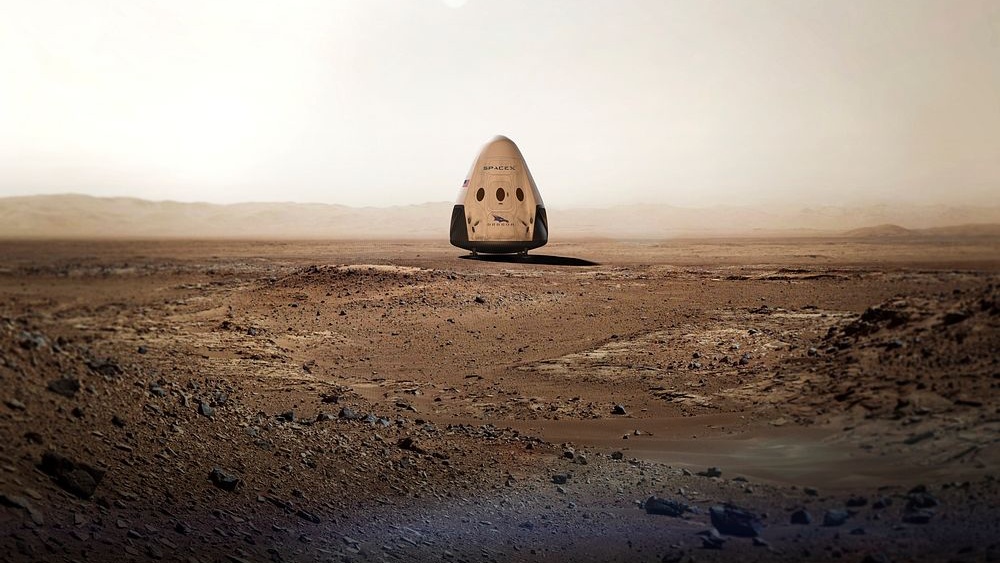
The race to Mars is no longer a distant dream — it’s actively happening. And at the center of it all stands SpaceX, boldly leading the charge toward interplanetary exploration. But Elon Musk’s aerospace juggernaut isn’t the only one eyeing the Red Planet.
Nations like China are rapidly developing their own Mars programs, intensifying global competition. Meanwhile, Gwynne Shotwell, SpaceX’s President and COO, just dropped a bombshell announcement that changes everything: the first-ever Starship mission to Mars now has a confirmed international customer — and it’s Italy.
This breakthrough partnership is not just symbolic; it marks a pivotal moment in space history and has stunned China’s space ambitions. So, how close are we really to humans walking on Mars? How far has Starship come? And what does this bold contract mean for the future of space travel?
Let’s break it all down.
SpaceX’s Mars Contract With Italy: A Historic First
In mid-2025, Shotwell took to the platform X (formerly Twitter) to make a major announcement:
“Get on board. We are going to Mars. SpaceX is now offering Starship services to the Red Planet. We’re excited to work with the Italian Space Agency on its first-of-its-kind agreement. More to come.”
This post set the space world ablaze. Why? Because SpaceX officially signed its first Mars customer.
The deal involves flying scientific payloads aboard Starship, aimed at collecting valuable data on Mars’ surface and environment. These are not just robotic instruments. They’ll fly alongside Optimus, the humanoid robot developed by SpaceX, ready to perform complex tasks in extreme Martian conditions.
This is the first concrete step toward turning Mars from a vision into a destination.
More Than Just a Contract: The Start of Global Collaboration
Shotwell’s phrase “more to come” wasn’t just a tease — it’s a signal that SpaceX is opening the door to international collaborations.
Why It Matters
- Countries investing in early payload slots will be the first to study Mars up close.
- Scientific experiments in early Starship missions will shape how we design future Mars bases.
- International support builds credibility, momentum, and funding for SpaceX’s long-term Mars vision.
This initial Italian partnership could be followed by similar deals with agencies in Japan, UAE, India, Canada, or even private space organizations.
Musk’s Mars Timeline — Closer Than You Think
Elon Musk has never been shy about his ambitions — and his Mars timeline is evolving fast.
The Short-Term Goal: Late 2026
According to Musk, there’s a slim but real chance that Starship could reach Mars in November or December 2026 — just over a year away.
- This mission would not carry humans, but Optimus and scientific payloads.
- It would be a demonstration of capability — not just reaching Mars, but delivering cargo at scale.
- The launch window in 2026 aligns with one of the most optimal planetary transfer windows, making it a critical date.
Even if it doesn’t launch in 2026, the planning shows that SpaceX is targeting tangible milestones, not vague dreams.
Mid-Term Vision: Crewed Mission in 2031
Musk outlined a more realistic roadmap:
- Uncrewed Mars flight by early 2029.
- First human mission by 2031.
What That Means
By that time, SpaceX aims to:
- Prove out orbital refueling, landing, and reusability.
- Build infrastructure to sustain human crews.
- Deliver multiple heavy payloads, including rovers, solar arrays, water processing units, and habitat modules.
This timeline also pits SpaceX head-to-head with China, whose Tianwen-3 sample return mission plans a 2031 return. If Starship lands humans while China is still bringing back rocks, the world will be watching — and shocked.
China’s Mars Plans: Surprised and Outpaced
China is working fast on its Tianwen-3 Mars mission. It aims to:
- Launch a Mars sample return mission by 2028.
- Retrieve samples and return them to Earth by 2031.
However, China’s program is:
- Slower than SpaceX in innovation cycles.
- More government-regulated, limiting flexibility.
- Facing intense scrutiny from both the U.S. and international observers.
NASA’s Struggles Leave the Door Open
While China advances, NASA’s Mars Sample Return program is over-budget and delayed.
- Current costs have surpassed $11 billion.
- Timeline has slipped to 2040, if not canceled.
This leaves a massive leadership gap — one that SpaceX is rapidly filling.
Starship’s Capabilities Are a Game-Changer
It’s not just about dates — it’s about what you can carry to Mars. That’s where Starship crushes the competition.
Massive Payload Capacity
Even in its early test flights, Starship is expected to:
- Carry 100+ tons per launch to Low Earth Orbit (LEO).
- Deliver significant cargo to Mars, even without full refueling systems.
Reusability = Lower Costs
SpaceX is pursuing full reusability with:
- Mechazilla tower arms to catch both the Super Heavy booster and Starship.
- Rapid turnaround launches — similar to how airliners operate.
Orbital Refueling: The Key to Mars
To reach Mars effectively, Starship will need on-orbit refueling. SpaceX is:
- Testing in-space cryogenic propellant transfer.
- Developing tanker Starships to support long-range missions.
Without this, Mars is nearly impossible. With it, routine interplanetary travel becomes viable.
The Next Steps: What Comes Between Now and 2031
SpaceX is not waiting. Here’s what will happen in the next 6 years:
2025-2026
- Launches from Starbase and Cape Canaveral ramp up.
- Final version of Starship V2 is completed.
- Cargo test flights with robotic payloads to Mars begin.
- First orbital refueling demonstrations take place.
2027-2029
- Full Starship missions with Optimus robot land on Mars.
- Deliver equipment for future human habitats.
- Work with international partners to launch multiple payloads.
2030-2031
- First human crew lands on Mars.
- Begin construction of a permanent base.
- Test ISRU (In-Situ Resource Utilization): producing water, methane, and oxygen on Mars.
Long-Term Goal: Building a Martian City
Elon Musk’s ultimate goal is nothing short of a self-sustaining city on Mars.
The Numbers Behind It
To support 1 million people on Mars, SpaceX estimates it will need:
- 1 million tons of supplies.
- Multiple launches every 26 months (when Earth and Mars align).
- 10 launches per window, each carrying up to 250 tons.
Realistic Timeline
- Best case: 8–10 years.
- More likely: 20–30 years, as acknowledged by Musk himself.
Life on Mars: From Domes to Cities
In the early years:
- People will live in enclosed habitats or protective domes.
- They’ll wear custom suits for surface exploration.
- Power will come from solar farms, while water is extracted from underground ice.
Over time:
- Construction robots, 3D printing, and ISRU will evolve.
- Cities will grow — with roads, labs, and homes.
- Mars will transform from a barren outpost to a living, breathing world.
SpaceX vs China: The Race for Martian Leadership
With the Tianwen-3 mission, China has made it clear: it wants dominance in space. But SpaceX is moving faster, smarter, and with less bureaucracy.
Every successful Starship mission to Mars:
- Proves the U.S. is leading.
- Undercuts China’s prestige in space.
- Builds a global coalition of space partners.
Conclusion: Get On Board — The Countdown Has Begun
We’re no longer asking if we’ll go to Mars. The question is when, and who gets there first.
SpaceX’s partnership with Italy is a historic first step. But it’s only the beginning. With each new payload, each test flight, and each announcement, we inch closer to the next giant leap for humankind.
If you’re as inspired as we are, remember Shotwell’s words:
Get on board.
FAQs
1. What is SpaceX’s goal with the Mars mission?
SpaceX’s ultimate goal is to build a self-sustaining city on Mars with up to one million people, making humanity a multi-planetary species.
2. What was the big announcement made by Gwynne Shotwell?
Gwynne Shotwell announced that SpaceX has signed a contract with the Italian Space Agency to carry scientific payloads on a future Starship mission to Mars — the first official customer for a Mars-bound flight.
3. When is SpaceX planning its first Mars mission?
Elon Musk mentioned a possible uncrewed flight to Mars in late 2026, with more likely uncrewed missions by 2029 and a crewed mission by 2031.
4. What will the first Starship to Mars carry?
The mission will carry scientific payloads, likely robotic instruments, and Optimus, the humanoid robot SpaceX is developing to assist in surface tasks.
5. Why is the Italy partnership so significant?
It marks the first international customer for a Mars mission, showing global confidence in SpaceX’s plans and starting what could become a collaborative international Mars program.
6. How is China responding to SpaceX’s Mars ambitions?
China is developing its Tianwen-3 mission to return Mars samples by 2031, but the rapid progress by SpaceX has surprised and potentially outpaced China’s plans.
7. How does Starship compare to other Mars-bound spacecraft?
Starship has unmatched payload capacity, reusability, and will eventually support orbital refueling, making it more powerful and cost-effective than any other Mars mission platform.
8. What is the importance of orbital refueling for Mars travel?
Orbital refueling allows Starship to carry more fuel after reaching Earth orbit, enabling it to complete interplanetary travel like a round trip to Mars.
9. What is Mechazilla, and why is it important?
Mechazilla is SpaceX’s robotic launch tower system designed to catch and re-stack Starship and its booster for rapid reuse, a key feature for lowering costs and increasing launch frequency.
10. What is Optimus, the robot SpaceX plans to send to Mars?
Optimus is a humanoid robot being developed by SpaceX (also known as Tesla Bot) to perform dangerous or repetitive tasks, such as base setup and equipment maintenance on Mars.
11. Will NASA be involved in SpaceX’s Mars missions?
As of now, SpaceX’s Mars plans are independent, although future collaborations with NASA are likely. NASA is currently focused on its Artemis lunar program and a delayed Mars Sample Return mission.
12. What challenges still face SpaceX’s Mars plans?
Major technical hurdles include:
- Heat shield reliability
- Orbital refueling
- Precision landing on Mars
- Safe return to Earth
- Catching vehicles with Mechazilla
13. How often can we launch missions to Mars?
The optimal launch window between Earth and Mars opens roughly every 26 months, when the two planets are closest in orbit.
14. How long does it take to travel from Earth to Mars?
A mission from Earth to Mars using current propulsion tech, like Starship, takes about 6 to 9 months, depending on the trajectory and launch window.
15. When will humans actually land on Mars?
If SpaceX’s timeline holds, the first human landing could happen around 2031, making it the first crewed interplanetary mission in human history.
16. How will humans survive on Mars long-term?
Humans will live in enclosed habitats, use solar power, extract water from Martian ice, and rely on in-situ resource utilization (ISRU) to produce oxygen, water, and fuel.
17. How much cargo is needed to build a Martian city?
Elon Musk estimates at least 1 million tons of cargo must be delivered to Mars to support a self-sustaining city of around 1 million people.
18. How can other countries join the Starship Mars program?
SpaceX appears open to international partnerships, as shown by Italy’s involvement. Other countries can join by submitting scientific payloads, funding missions, or collaborating on infrastructure and research.
Read More:
- SpaceX revealed Starship Flight 10 Delayed as S37 Static Fires THIRD! No Launch Until
- 2026 Tesla Model 2 $15,990 Pre-Orders Start! Why Elon Musk Stayed Silent?
- Tesla Model Y L reportedly entered mass production in Giga Shanghai
- Tesla’s new upgrade makes the Cybertruck extra-terrestrial
- Elon Musk confirms Tesla AI6 chip is Project Dojo’s successor