


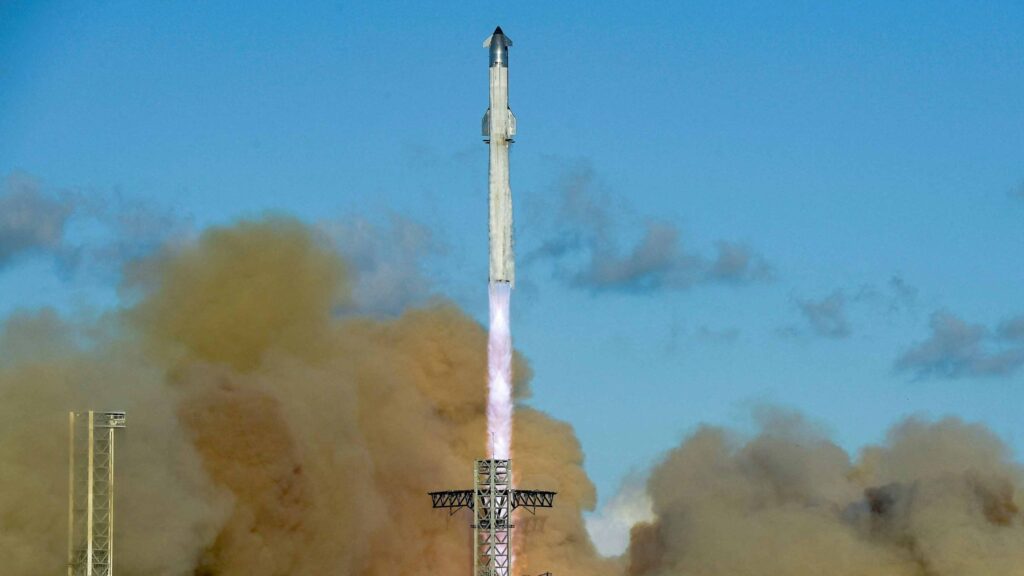
SpaceX is entering one of the most turbulent and crucial phases in its history. With the highly anticipated Starship Flight 12 finally receiving an updated launch timeline—after a dramatic and unexpected hardware failure—many space enthusiasts and experts are asking a simple but important question:
Is this new launch schedule realistic?
The answer is complicated, and the implications reach far beyond a single test flight. Delays now could ripple across multiple mission milestones, including the 2027 lunar landing, refilling demonstrations, orbital tests, and much more.
In this comprehensive breakdown, we explore the latest updates about Flight 12, the recent explosion of Booster 18, the push toward Starship V3, and a major reveal from the FCC licensing leak. Then we shift to Boeing’s struggling Starliner program, which has just received a crushing update from NASA.
Let’s dive deep into everything that’s happening right now in the spaceflight world.
Understanding the Turbulent Moment SpaceX Is Facing
SpaceX’s roadmap for Starship has always been bold, but 2026 and 2027 represent an even greater set of challenges.

Why 2026 Matters More Than Ever
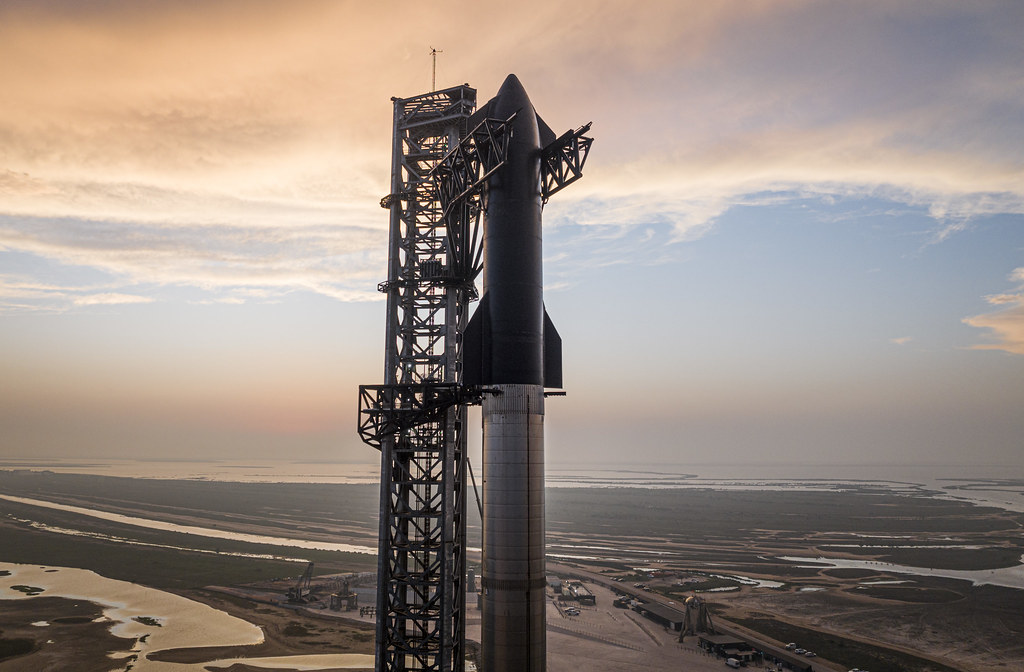
The 2027 moon mission is still officially on the books, making 2026 a do-or-die preparation year. Meanwhile, competitors like Blue Origin are accelerating New Glenn and their lunar lander development. As a result, SpaceX must execute Starship tests with both speed and precision, leaving very little room for delays.
Yet delays have now become unavoidable.
Booster 18 Explosion: A Sudden and Costly Setback
In a significant blow to SpaceX’s progress, Starship Booster 18 (B18) violently exploded during a pressure test at the Massey test site.
This failure wasn’t just another test anomaly—it knocked SpaceX back several crucial steps because:
- B18 was one of the few ready-to-test V3 hardware units
- No spare booster was immediately available
- The setback impacts the Flight 12 test campaign
For many, the explosion raises concerns:
Will Flight 12 need to be pushed back—and if so, how far?
Flight 12: What SpaceX Says About the New Launch Date
SpaceX responded publicly on X (formerly Twitter), assuring followers that Flight 12 remains targeted for Q1 2026. Notably, the company emphasized the word “remains,” signaling that previous internal expectations have shifted.
Earlier, SpaceX VP of Launch Kiko Donav had mentioned a January 2026 launch. But now, that confidence appears to have softened considerably.
FCC License Leak Reveals New, Critical Launch Details
Interestingly, the FCC—which oversees communications, not launch approvals—provided crucial hints about the actual timeframe. A leaked update to the Flight 12 license revealed:
- A six-month launch window
- Earliest allowable operations: January 23, 2026
- Flight 12 cannot launch before this date
While the FCC is not the FAA, Starship’s previous flights have historically launched close to their FCC license windows, offering a reliable signal of intent.

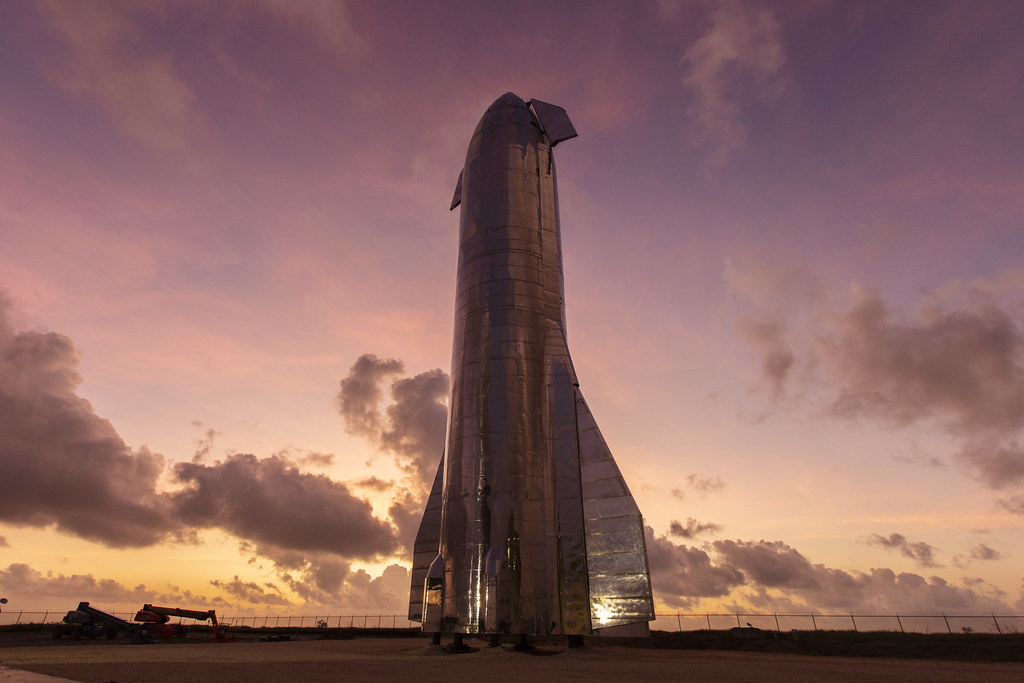
What This Means for the Launch Date
Although January remains possible, the data suggests:
- A January launch is now unlikely
- February or March 2026 are far more realistic windows
Flight 12 Mission Profile Confirmed
The FCC documentation also reveals the expected mission architecture:
Suborbital Flight Only
Just like Flight 10 and Flight 11, this mission will:
- Run both stages suborbitally
- Use water landings or return-to-launch-site (RTLS) options
- Prioritize safety and controlled testing
This aligns with the cautious approach required for the first V3 test flight.
Why Suborbital Again?
V3 involves significant upgrades across:
- Raptors
- Thermal protection
- Propellant flow systems
- Avionics
- Ascent/descent control
Suborbital profiles allow these improvements to be evaluated without excessive mission complexity.
Hardware Readiness: The Real Constraint for a January Launch
After losing B18, SpaceX announced that the next booster, B19, is expected to be fully stacked in December. While rapid, this still creates a bottleneck.
Realistic Timeline for B19 Testing
- December: Stacking
- Early January: Cryogenic testing
- Mid-January: Inspections and installations
- Late January: Earliest static fire window
This schedule strongly suggests:
➡ Flight 12 cannot fly before February.
Even in the most optimistic scenarios, a January launch appears nearly impossible.
The Domino Effect: What Flight 12 Delays Mean for Future Milestones
A delay to February or later has severe consequences for SpaceX’s ambitious agenda.
1. Refilling Demonstrations Will Likely Slip Past June 2026
Earlier leaks indicated a June 2026 goal for the first orbital refilling test, a cornerstone of making lunar and Mars missions viable.
But for refilling to occur, SpaceX must achieve:
- V3 validation
- Orbit with payload
- Successful landing/recovery
- Back-to-back high-frequency flights
With Flight 12 slipping, hitting all of these rapidly becomes extremely unlikely.

2. The Moon Mission May Slide to 2028
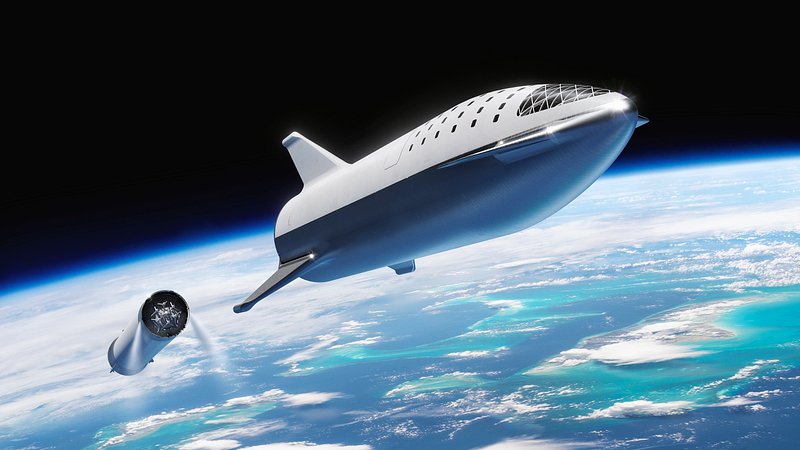
Recent internal leaks hinted that NASA and SpaceX may already be quietly acknowledging that the 2027 lunar landing is slipping toward 2028.
The Flight 12 delay only reinforces that trend.
3. Production Rate Constraints Will Get Worse
Hardware availability—especially boosters—is tight. SpaceX is producing:
- Nose cones
- Ship segments
- Booster parts
…but building and testing complete vehicles requires months, not weeks.
4. Launch Infrastructure Still Isn’t Ready for Rapid Cadence
Starbase is improving, but not yet at the readiness level required to:
- Test
- Reiterate
- Launch
- Recover
every 30–45 days.
SpaceX might combine mission goals into fewer flights, but that has limitations too.
Could SpaceX Still Catch Up? Yes—History Says So
Despite the enormous challenges, SpaceX is known for:
- Rapid iteration
- Engineering breakthroughs
- Working around delays by bundling tests
- Scaling manufacturing exponentially
If any company can turn a setback into a leap forward, it’s SpaceX.
Still, Flight 12 is now shaping up to be:
One of the most important flights in Starship’s history.
The Major Boeing Starliner Update: A Serious Blow from NASA
While SpaceX is racing to stay ahead, Boeing is trying to avoid falling further behind—and the latest news from NASA is not pretty.
NASA Has Officially Reduced Starliner Missions
NASA just amended its Commercial Crew Transportation Capability (CCtCap) contract with Boeing.
Original Plan:
- 6 crewed missions
Revised Plan:
- Only 4 missions remain
- 2 are optional, not guaranteed
- The first mission, Starliner-1, will be cargo-only
This effectively means:
➡ Boeing may fly fewer crewed missions—or possibly none at all.
Why Starliner-1 Is Now Cargo Only
NASA stated that Starliner-1 will fly uncrewed because:
- More thruster testing is required
- Boeing needs in-flight validation before risking astronauts
- The CFT mission exposed serious issues, including thruster failures
Earliest Launch for Starliner-1: April 2026
This is yet another delay, and NASA made it clear:
- Crewed flights will only occur if Starliner earns certification
- Certification depends entirely on Starliner-1 success
NASA’s Steve Stich explained that two flights are possible next year, but only if everything goes perfectly—which has historically not been the case for Starliner.

The $4.2 Billion Problem: Boeing’s Embarrassing Lack of Progress
Boeing received:
- $4.2 billion in 2014
- Plus another $300 million in later adjustments
Compare that to SpaceX’s $2.6 billion, which has already produced:
- Dozens of crewed and cargo missions
- 100% success rate
- Backups for NASA during Starliner delays
Starliner, on the other hand:
- Has yet to fly astronauts successfully
- Has caused NASA to purchase more Crew Dragon missions
- Is draining Boeing financially
- Now risks contributing zero crewed missions before ISS retirement
Should NASA Demand Refunds From Boeing?
This question is now circulating widely:
Should Boeing be required to return some of the money if it cannot deliver the promised crewed flights?
Some argue yes, because:
- Taxpayer money is at stake
- Boeing under-delivered after receiving the highest award
- NASA had to rely entirely on SpaceX
- The ISS only has ~5 years left
Others argue that refunds could jeopardize Boeing’s ability to complete even the reduced mission set.
Let me know your opinion in the comments:
Yes or No—Should NASA reclaim part of Boeing’s Starliner funding?
Conclusion: A Pivotal Moment for U.S. Spaceflight
Both SpaceX and Boeing are facing defining challenges:
SpaceX
- Flight 12 is delayed but crucial
- Booster failures strain the timeline
- V3 vehicles are necessary for lunar ambitions
- Refilling may slide beyond 2026
- The 2027 mission may quietly be shifting to 2028
Boeing
- Starliner program is shrinking
- Missions have been cut
- The first flight is cargo-only
- Crewed missions are uncertain
- NASA confidence appears shaken
The next 6–12 months will shape the future of American space exploration—for both companies. SpaceX must prove that Starship V3 can fly and iterate faster than ever, while Boeing fights to keep Starliner alive at all.
FAQs
1. What is the newly announced launch date for SpaceX Starship Flight 12?
SpaceX currently targets Q1 2026 for Flight 12, but recent updates suggest the launch will likely occur in February or March, not January.
2. Why was Starship Flight 12 delayed?
The delay is largely due to the Booster 18 explosion, hardware shortages, and extended testing requirements for the first Starship V3 vehicle.
3. Did the FCC leak the earliest possible launch date?
Yes. The FCC license update indicates that operations cannot begin before January 23, 2026, making a January launch extremely unlikely.
4. Is the FCC license the same as a launch authorization?
No. The FCC license covers communications and telemetry, while the FAA provides launch authorization. Still, FCC dates often align closely with real launch windows.
5. Will Starship Flight 12 be orbital or suborbital?
Flight 12 will be entirely suborbital, similar to Flights 10 and 11, allowing SpaceX to safely test new V3 upgrades.
6. Will Starship or the booster attempt a landing during Flight 12?
Both stages have options for RTLS (return to launch site) or water landings, with water landings being the more likely choice for safety.
7. What makes Starship V3 different from previous versions?
V3 introduces improvements in Raptor engines, thermal protection, avionics, fuel systems, and structural design, marking the most significant upgrade yet.
8. How did the Booster 18 explosion impact the schedule?
The explosion eliminated SpaceX’s spare test hardware and forced the company to accelerate work on Booster 19, pushing the testing timeline back.
9. When will Booster 19 be ready for testing?
Booster 19 is expected to complete stacking in December, with cryo testing in early January and static fire by late January.
10. Does the Flight 12 delay affect the lunar mission timeline?
Yes. Delays may push back essential milestones like orbital refilling tests, which could shift the lunar mission from 2027 to potentially 2028.
11. What is the biggest challenge SpaceX faces before refilling tests?
SpaceX must first achieve consecutive successful flights, orbital missions with payloads, and stage recoveries—none of which can slip if refilling is to begin in 2026.
12. What did NASA change about Boeing’s Starliner contract?
NASA reduced Boeing’s commitments from six crewed missions to four total missions, with two optional missions not guaranteed.
13. Will Starliner-1 carry astronauts?
No. Starliner-1 will be a cargo-only flight, intended to validate upgrades and reduce risk after issues during the CFT mission.
14. When is Starliner-1 scheduled to launch?
NASA states that Starliner-1 will launch no earlier than April 2026.
15. Could Boeing still fly crewed missions to the ISS?
Possibly—but only if Starliner-1 succeeds and the spacecraft achieves NASA certification. Given the ISS’s remaining lifespan, the window is shrinking.
16. Should NASA reclaim some funding from Boeing?
Many observers think NASA should, because Boeing received over $4.2 billion yet has not delivered a single operational crewed flight. NASA has not indicated whether it will reclaim funds.
Read More:
- Tesla starts rolling out FSD V14.2.1 to AI4 vehicles including Cybertruck
- Tesla Model 3 named New Zealand’s best passenger car of 2025
- Czech Deputy excited for Tesla FSD, hints at Transport Committee review
- Swedish union rep pissed that Tesla is working around a postal blockade they started
- Tesla FSD Supervised ride-alongs in Europe begin in Italy, France, and Germany