


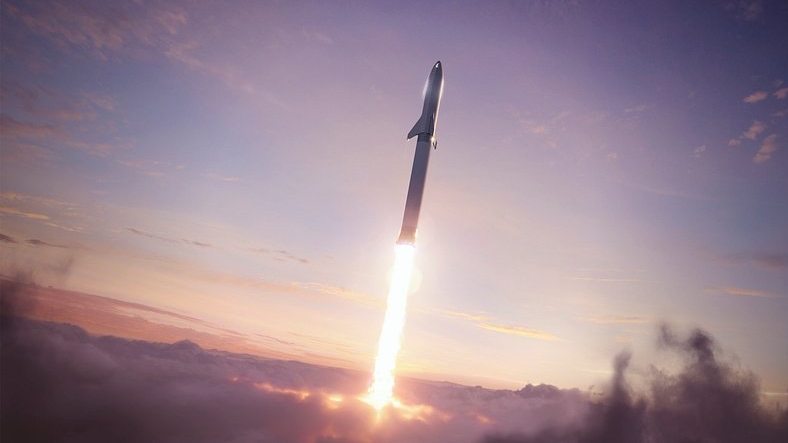
The global space industry is entering a defining moment as April 2026 unfolds with unprecedented intensity. After months of technical preparation, delays, and behind-the-scenes engineering, three of the most ambitious aerospace programs in history are aligning within a single launch window. This convergence marks not just a busy schedule—but a transformational shift in how humanity approaches deep space exploration.
From SpaceX’s rapidly evolving Starship program to NASA’s historic Artemis II crewed lunar mission, and Blue Origin’s long-awaited New Glenn debut, the coming weeks could redefine the trajectory of spaceflight for decades. Let’s break down everything happening, why it matters, and what to expect.
The April 2026 Space Race: A Historic Convergence
April 2026 is not just another month in aerospace—it represents a rare alignment of innovation, ambition, and execution. Three major launch systems, each representing different philosophies and strategies, are preparing to take flight almost simultaneously.
- Starship Flight 12 aims to push full reusability closer to reality
- Artemis II will send humans beyond low Earth orbit for the first time in over 50 years
- New Glenn seeks to establish a new commercial heavy-lift competitor
This concentration of launches signals a powerful return of momentum after years of incremental progress.
SpaceX Starship Flight 12: The S39 Raptor Test Campaign
Rapid Progress at Starbase
After a relatively quiet period following its last major test in October, SpaceX has dramatically accelerated operations at Starbase. The focus is now firmly on preparing for Flight 12, which could become one of the most important Starship missions to date.
The test campaign revolves around two critical components:
- Booster 19 (B19)
- Ship 39 (S39)
Both are undergoing rigorous testing to validate upgrades and ensure mission readiness.
Booster 19: Preparing for Full Static Fire
Booster 19 has already completed several key milestones:
- Cryogenic testing to validate tank integrity
- Initial static fire tests
- Transfer to the Mega Bay for final integration
The next major step is the 33-engine full static fire, a critical demonstration of thrust, coordination, and reliability. This test alone represents one of the most complex rocket engine firings ever attempted.
Ship 39: Raptor Engine Testing Intensifies
Ship 39 has now entered its primary testing phase, with major developments pointing toward an imminent static fire event.
Recent indicators include:
- Delivery of Raptor vacuum engines to the test site
- FAA-issued NOTAM (Notice to Airmen) restricting airspace from April 3 to April 14
- Preparation for a multi-engine firing sequence
S39 Raptor Firing Configuration
The upcoming test is expected to involve a six-engine configuration, a critical step toward orbital readiness:
Engine Breakdown:
- 3 Sea-Level Raptors
- Designed for atmospheric performance
- 3 Vacuum Raptors
- Optimized for space operations
Test Objectives:
- Validate structural durability under sustained thrust
- Assess propellant flow and pressure stability
- Test engine gimbal control for maneuverability
- Evaluate thermal and vibration limits
The firing could last up to one minute, pushing the vehicle closer to real flight conditions.
Launch Timeline for Flight 12
If testing proceeds successfully:
- Mid-April: Completion of static fire campaigns
- Late April (around April 20): Potential launch window
This would mark another major step toward making Starship a fully reusable, orbital-class vehicle.
NASA Artemis II: Humanity Returns Beyond Low Earth Orbit
A Mission Decades in the Making
While SpaceX focuses on rapid iteration, NASA is preparing for a historic milestone: the Artemis II mission, the first crewed journey beyond low Earth orbit since the Apollo era.
This mission will send four astronauts on a lunar flyby, laying the groundwork for future Moon landings.
Space Launch System (SLS) Readiness
The SLS rocket has returned to the launch pad following repairs addressing:
- Liquid hydrogen leaks
- Helium system irregularities
NASA has expressed strong confidence in the vehicle’s readiness and has chosen to skip additional major testing to preserve hardware integrity.
Astronaut Crew Preparations
On March 27, the Artemis II crew arrived at Kennedy Space Center and began final preparations:
- Entry into pre-launch quarantine
- Comprehensive medical evaluations
- Mission simulations and readiness checks
The countdown sequence is expected to begin 48 hours before launch, with liftoff scheduled later this week.
Why Artemis II Matters
This mission represents more than just a test flight:
- First human mission beyond LEO in 50+ years
- Critical validation of Orion spacecraft systems
- Foundation for future lunar landings under Artemis III
It is a symbolic and technical leap forward in human space exploration.
Blue Origin New Glenn: A High-Stakes Debut
Years of Development Come to a Head
Blue Origin is preparing for the first orbital launch of its New Glenn rocket, targeting a “no earlier than” April 10 liftoff.
After years of delays, this mission carries enormous weight for the company’s future.
Mission Overview
The debut flight will:
- Deploy a Bluebird satellite
- Deliver payload to low Earth orbit
- Demonstrate heavy-lift capability
Recent visuals show both rocket stages fully assembled, with the second stage powered by BE-3U engines.
Strategic Importance of New Glenn
This launch is pivotal for several reasons:
Market Competition
- Positions Blue Origin against other heavy-lift providers
- Offers an alternative to existing launch systems
Reusability Goals
- Aims to validate first-stage recovery
- Supports long-term cost reduction
Risk Factor
- Success could fast-track commercial contracts
- Failure may result in cascading delays
In short, this is a make-or-break moment.
Transporter-16: The Ride-Share Revolution Continues
A Different Kind of Space Mission
While major rockets dominate headlines, SpaceX continues its high-frequency commercial launches. The Transporter-16 mission, scheduled for April 30, showcases a different aspect of the space economy.
Key Highlights
Massive Payload Capacity
- Up to 119 satellites on a single flight
Diverse Customer Base
- Startups
- Research institutions
- International space agencies
Cost Efficiency
- Shared launch dramatically reduces expenses
- Enables smaller players to access orbit
A Proven Model
The ride-share approach has already delivered:
- Over 1,600 payloads
- Multiple successful missions across Transporter and Bandwagon series
This model is reshaping access to space, making it more affordable and scalable.
The Future of Lunar Exploration: Gateway Strategy Shift
NASA’s Strategic Pivot
As launch systems near readiness, NASA is also rethinking its long-term infrastructure plans. The Lunar Gateway program is being simplified to:
- Reduce costs
- Minimize complexity
- Accelerate deployment timelines
One major change includes removing certain docking architecture elements.
Impact on International Partners
This shift has significant implications, particularly for Europe.
European Contributions at Stake
- I-HAB module development
- Refueling systems
- Lunar communication infrastructure
ESA’s Critical Decision
The European Space Agency is currently reviewing its role in the Artemis program. A final decision is expected in June.
Key considerations include:
- Continue investment in Gateway
- Redirect funding to alternative technologies
- Explore nuclear propulsion concepts
This decision could reshape international collaboration in space exploration.
What Makes April 2026 So Important?
This moment stands out because of the simultaneous advancement of three different spaceflight philosophies:
1. Rapid Iteration (SpaceX)
- Fast development cycles
- Frequent testing
- Emphasis on reusability
2. Government-Led Exploration (NASA)
- Long-term planning
- Human spaceflight focus
- International collaboration
3. Commercial Expansion (Blue Origin)
- Private investment
- Infrastructure building
- Market competition
Together, they represent a complete ecosystem for the future of space.
Challenges Ahead
Despite the excitement, significant risks remain:
- Technical failures during testing
- Launch delays due to weather or system issues
- Budget constraints and political pressures
- Coordination challenges across multiple missions
Each program faces its own hurdles, and success is far from guaranteed.
Conclusion: A Defining Month for Humanity’s Future in Space
April 2026 is shaping up to be a watershed moment in the history of space exploration. The simultaneous push from SpaceX, NASA, and Blue Origin signals a renewed era of ambition and capability.
- Starship is pushing the boundaries of reusability
- Artemis II is reigniting human deep-space exploration
- New Glenn is expanding commercial possibilities
Over the next 30 days, the outcomes of these missions will influence everything from lunar exploration strategies to the economics of space access.
For the first time in decades, the world is not just watching space—it’s actively moving toward it at full speed.
The countdown has begun, and the sky is no longer the limit.
FAQs
1. What is SpaceX Starship Flight 12?
SpaceX Starship Flight 12 is the next major test mission of the Starship system, designed to validate upgrades in engine performance, structural durability, and reusability for future orbital flights.
2. What is the purpose of the S39 Raptor firing test?
The S39 Raptor firing test aims to evaluate a six-engine configuration, testing thrust stability, propellant flow, and overall system performance under near-flight conditions.
3. How many engines will be tested on Ship 39 (S39)?
Ship 39 is expected to fire six Raptor engines:
- 3 sea-level Raptors
- 3 vacuum Raptors
4. When is the Starship Flight 12 launch expected?
If testing goes as planned, the launch could take place in late April 2026, with a possible target around April 20.
5. What is Booster 19’s role in Flight 12?
Booster 19 (B19) is the Super Heavy rocket that will provide the thrust needed to lift Starship into space during Flight 12.
6. What is NASA Artemis II?
NASA Artemis II is a crewed lunar mission that will send four astronauts around the Moon, marking the first human journey beyond low Earth orbit in over 50 years.
7. When will Artemis II launch?
Artemis II is expected to launch this week, with the final countdown beginning approximately 48 hours before liftoff.
8. Why is Artemis II historically important?
It is the first crewed deep-space mission since the Apollo era, paving the way for future lunar landings and long-term human presence on the Moon.
9. What rocket will be used for Artemis II?
The mission will use NASA’s Space Launch System (SLS), the most powerful rocket developed for human space exploration.
10. What is Blue Origin’s New Glenn rocket?
New Glenn is a heavy-lift orbital rocket developed by Blue Origin, designed to compete in commercial and government launch markets.
11. When is the New Glenn launch scheduled?
The first launch is targeted for no earlier than April 10, 2026.
12. What payload will New Glenn carry on its first mission?
The debut mission is expected to carry a Bluebird satellite into low Earth orbit.
13. What is the Transporter-16 mission?
Transporter-16 is a SpaceX rideshare mission that will carry up to 119 satellites from multiple customers into orbit on a single Falcon 9 rocket.
14. Why are rideshare missions important?
They significantly reduce the cost of access to space, allowing startups, universities, and smaller organizations to launch satellites affordably.
15. What is the Lunar Gateway program?
The Lunar Gateway is a planned space station orbiting the Moon, intended to support long-term lunar exploration missions.
16. Why is NASA changing the Gateway strategy?
NASA is simplifying the program to reduce costs, lower complexity, and accelerate mission timelines.
17. Why is April 2026 a crucial month for space exploration?
Because multiple major missions—Starship Flight 12, Artemis II, and New Glenn—are all scheduled within the same timeframe, making it one of the most significant periods in modern space history.
Read More:
- Tesla Optimus Gen 3 is coming to the Tesla Diner with new ambitions
- Elon Musk debunks latest rumors about SpaceX IPO
- Countdown: America is going back to the Moon and SpaceX holds the key to what comes after
- NASA is Launching People to The Moon Tomorrow
- SpaceX’s Secret Plan for Starship Flight 12 Revealed! Beyond What We Expected