


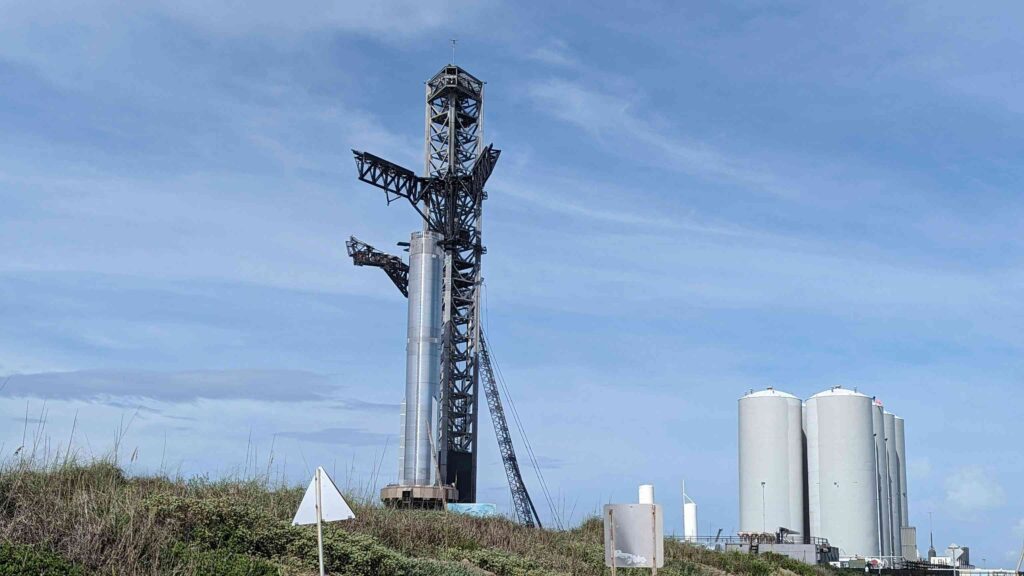
The spaceflight community was gearing up for another explosive milestone. After months of anticipation, Starship Flight 12 was widely expected to fly in March. Even Elon Musk himself confidently stated that Starship would launch “next month,” clearly pointing to a March timeline.
Then something changed.
The Federal Communications Commission (FCC) quietly granted SpaceX a Special Temporary Authority (STA) for experimental Starlink payload operations aboard Starship — but with one critical detail: the authorization does not take effect until April 7, 2026.
That single line has sparked widespread speculation.
Does this mean Starship V3 will not launch in March after all?
Is this simply regulatory timing?
Or is SpaceX deliberately slowing down for strategic reasons?
Let’s break down what’s really happening.

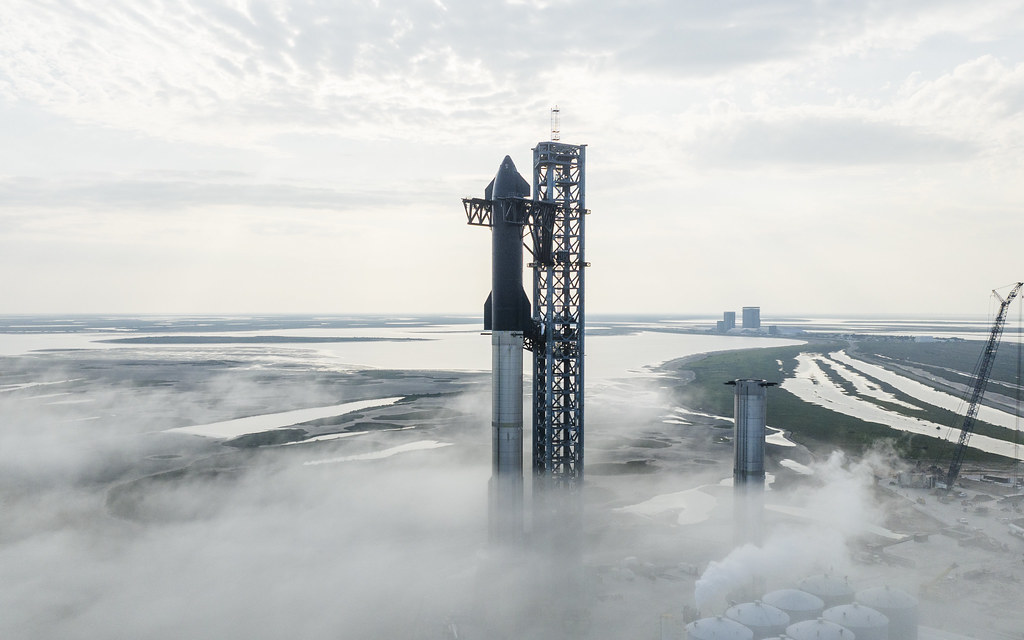
Starship’s Next Leap: Why Flight 12 Matters More Than Ever
It’s been over four months since Starship Flight 11 concluded. That mission delivered the usual rollercoaster of emotions — tension, exhilaration, relief, and a reminder that Starship remains the most ambitious rocket ever attempted.
But Flight 12 isn’t just another test.
This will likely be the first Starship flight incorporating dozens of major upgrades, including:
- Hardware refinements
- Structural improvements
- Performance enhancements
- Reliability-focused system redesigns
Most importantly, it is expected to showcase Version 3 hardware, including:
- Raptor 3 engines
- Stretched propellant tanks
- Improved catch systems
- Enhanced flap control mechanisms
Expectations are sky-high. The goal is no longer just “see it fly.”
Now, the goal is demonstrated reliability and operational readiness.
And that’s where things get interesting.
The FCC Filing That Changed Everything
A Special Temporary Authority request filed by SpaceX recently appeared on the FCC website. It authorizes the company to:
- Launch and operate up to 10 experimental space stations
- Mount them on mass simulators
- Deploy them during suborbital Starship Super Heavy test flights
- Allow communication with the existing Starlink network
- Operate within familiar Starlink frequency bands
- Support modulation up to 64-QAM
- Use transmit power between 1.1W and 37.15W
- Re-enter and burn up within roughly 90 minutes
These are not passive dummy payloads.
They are active communication systems designed to validate Starship’s payload deployment mechanism.
And here’s the key:
The authorization window runs from April 7, 2026, through June 6, 2026.
That April 7 start date is what triggered the speculation.

Why the April Timeline Matters
The FCC does not issue open-ended approvals “just in case.”
A Special Temporary Authority is:
- Targeted
- Time-limited
- Operationally specific
SpaceX filed the request in late February 2026. It is highly unlikely they would secure regulatory clearance and then let it expire unused.
The wording in the filing is also telling:
“Launch and operate space stations on mass simulators for upcoming Starship Super Heavy test flights.”
Notice the plural — test flights.
There is no direct mention of “Flight 12.”
This opens two realistic scenarios.
Scenario 1: March Launch Still Happens
Under this interpretation:
- Flight 12 flies in March.
- The FCC STA applies to a later mission (Flight 13 or beyond).
- The April–June window supports follow-up suborbital tests.
This would align with Elon Musk’s public March statement on X (February 21, 2026).
It would also be unusual for the CEO to publicly contradict internal planning.
However, this scenario assumes Flight 12 will not include active RF hardware deployment testing.
Scenario 2: Flight 12 Moves to April
This scenario makes strong technical sense.
If Flight 12 includes:
- Live Starlink communication hardware
- Active deployment systems
- Real RF transmission
Then SpaceX must wait until April 7 to remain compliant with spectrum regulations.
Regulatory filings reflect operational reality far more reliably than optimistic public statements.
Historically, previous Starship flights have slipped due to regulatory review:
- Environmental assessments
- FAA approvals
- FCC spectrum authorizations
Delays of 1–2 months have not been uncommon.
Community consensus and prediction markets now estimate a 50–70% probability of an April launch.

Ship 39: Another Clue in the Timeline Puzzle
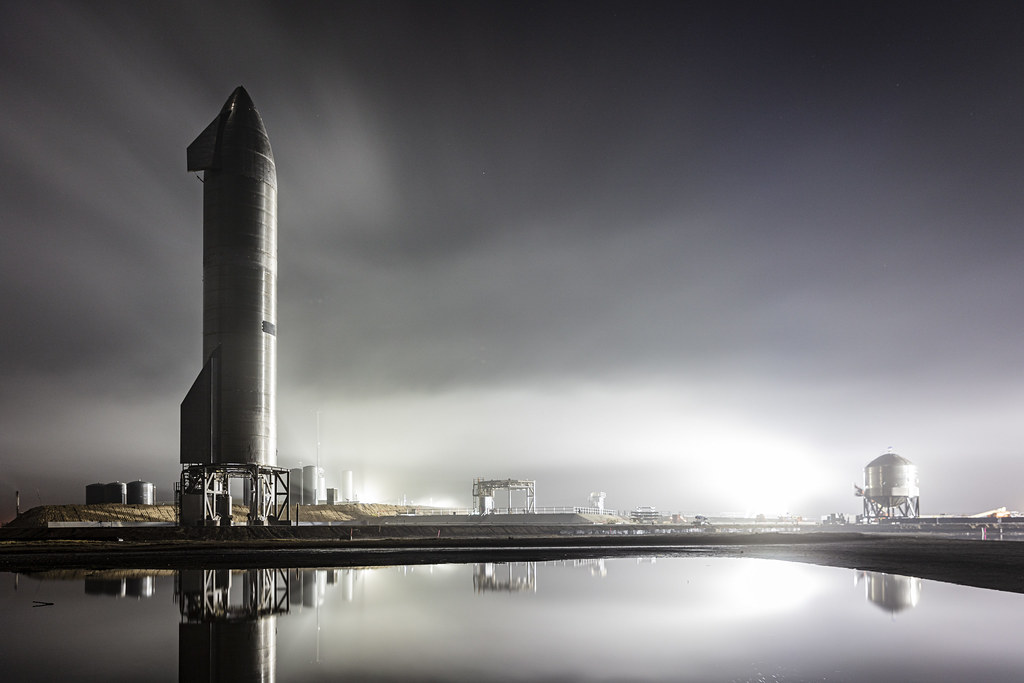
Ship 39, the upper stage assigned to Flight 12, has not yet rolled out to Massey’s test site for cryogenic proof testing.
Instead, SpaceX recently transported:
- Massive cylindrical stainless steel structures
- Large metallic sections similar to Starship’s structure
- Likely test articles rather than the full vehicle
Speculation suggests these could relate to:
- Flap actuator testing
- Ground support infrastructure validation
- Version 3 hardware refinements
This signals something important:
SpaceX may be prioritizing subsystem validation before committing to a full rollout.
That’s not the behavior of a company racing toward a March launch.
Pad 2 Modifications Raise More Questions
At Launch Pad 2, another unexpected development occurred.
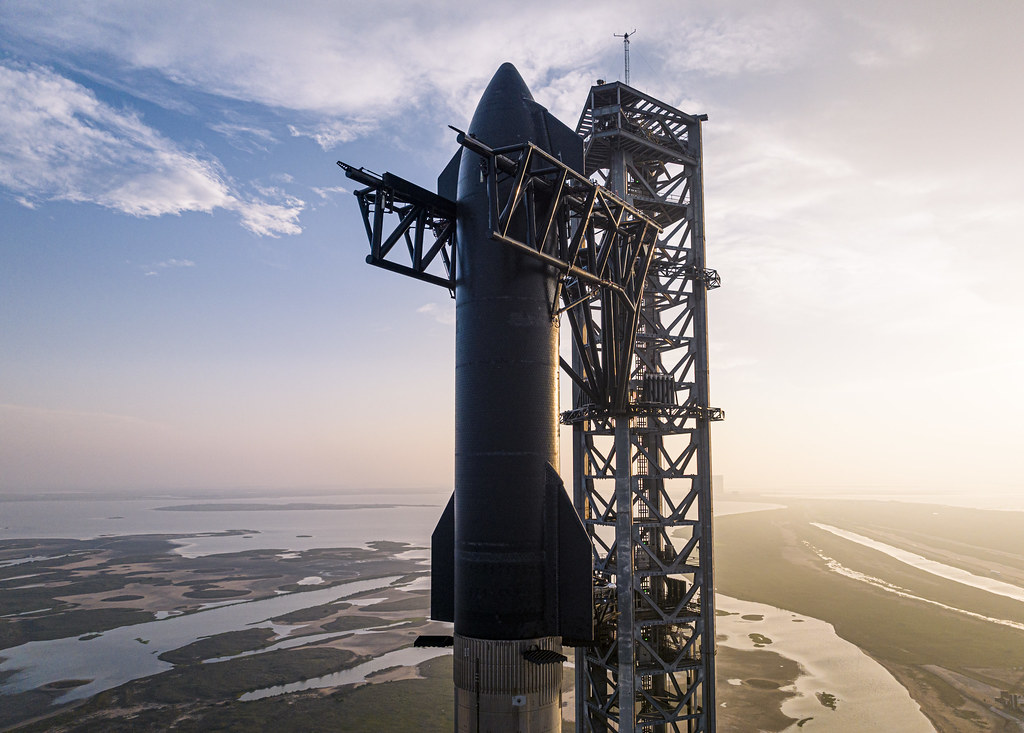
SpaceX removed the left stabilizer arm from Mechazilla’s chopsticks.
Why does that matter?
These stabilizers:
- Dampen vibration
- Improve alignment
- Absorb massive catch forces
- Prevent excessive structural stress
After a short upward movement test, crews immediately inspected both stabilizers.
Shortly after, the left arm was removed.
This suggests:
- Targeted maintenance
- Component inspection
- Incremental upgrades
- Possible hinge or actuator refinements
It does not necessarily indicate failure.
But it does indicate caution.
And caution takes time.
Why SpaceX Might Intentionally Delay
There’s another layer here: financial strategy.
Reports indicate:
- A potential IPO around mid-2026 (June/July window)
- Target valuation near $1.5 trillion
- Plans to raise approximately $50 billion
Flight 12 would likely be the first major public demonstration of full Version 3 capability.
A failure could:
- Damage investor confidence
- Lower valuation targets
- Create negative headlines
From a strategic perspective, a deliberate April delay to ensure success makes sense.
Reliability > speed.
Especially when billions are at stake.
Raptor 3: The Engine at the Center of It All
The debut of SpaceX’s Raptor 3 engine configuration could be one of the most important elements of Flight 12.
Improvements are expected in:
- Thrust performance
- Simplicity
- Reduced plumbing complexity
- Increased chamber pressure
Version 3 is not just iterative — it is foundational for:
- Lunar missions
- Mars cargo flights
- High-volume Starlink deployments
Rushing such a critical configuration would contradict SpaceX’s increasingly reliability-focused posture.
Regulators vs Optimism: Who Wins?
History suggests this pattern:
- Elon Musk provides aggressive targets.
- Regulatory approvals define operational windows.
- Actual launch dates tend to follow the paperwork.
The FCC authorization is hard documentation.
It begins April 7.
If active deployment hardware is part of Flight 12, March becomes extremely unlikely.
What the STA Actually Enables
The experimental deployment will allow Starship to:
- Validate payload release mechanics
- Test communication links in real time
- Simulate Starlink 53-class satellite deployment
- Measure RF performance during suborbital flight
This is essential before Starship becomes the heavy-lift workhorse SpaceX envisions.
Without this validation, large-scale next-generation Starlink launches cannot proceed safely.
And that milestone is far more important than hitting a March headline.
Momentum vs Precision
In rapid iteration culture, delays can feel like hesitation.
But there’s a difference between:
- Losing momentum
- Building reliability
SpaceX appears to be choosing the latter.
Small inspections.
Subsystem validation.
Pad upgrades.
Regulatory alignment.
This doesn’t look like a setback.
It looks like tightening margins before a major leap.
So… No Starship V3 Launch in March?
Based on:
- The April 7 FCC authorization start date
- Ship 39’s delayed rollout
- Pad 2 stabilizer removal
- Version 3 integration complexity
- Financial timing considerations
An April launch now appears more likely than March.
That doesn’t mean something is “wrong.”
It likely means:
SpaceX is preparing for a higher-stakes mission than any previous Starship test.
Final Verdict: What’s REALLY Going On
The headline “NO Starship V3 Launch in March” may sound dramatic.
But the evidence suggests something more nuanced:
- The mission complexity has increased.
- Regulatory timing matters.
- Hardware upgrades require validation.
- Investor optics are significant.
When a launch vehicle is meant to redefine space transportation — and eventually carry humans to Mars — rushing is not an option.
If Flight 12 slips into April, it may be the clearest signal yet that Starship is transitioning from experimental prototype to operational system.
And that transition demands precision.
FAQs
1. Did SpaceX officially cancel the March Starship V3 launch?
No formal cancellation has been announced by SpaceX. However, regulatory filings suggest that a March launch is becoming less likely if the mission includes active payload deployment testing.
2. What is the FCC Special Temporary Authority (STA)?
The Federal Communications Commission (FCC) Special Temporary Authority is a short-term approval allowing SpaceX to operate experimental communication hardware on upcoming Starship test flights within a defined time window.
3. When does the FCC authorization for Starship take effect?
The authorization window begins on April 7, 2026, and runs through June 6, 2026.
4. Why does the April 7 start date matter?
If Flight 12 includes active Starlink communication hardware, SpaceX must wait until the authorization becomes active to remain compliant with U.S. spectrum regulations.
5. What exactly will SpaceX test under the FCC authorization?
SpaceX plans to deploy up to 10 experimental “mass simulators” equipped with communication hardware to validate Starship’s payload deployment system during suborbital flights.
6. Are these real Starlink satellites?
No. These are test articles designed to simulate satellite deployment and communicate with the Starlink network before re-entering and burning up.
7. Did Elon Musk say Starship would launch in March?
Yes. On February 21, 2026, Elon Musk posted that Starship would fly “next month,” implying a March timeline.
8. Could the FCC authorization apply to a later flight instead of Flight 12?
Yes. The filing references “upcoming test flights” (plural) and does not specifically mention Flight 12. It could apply to Flight 13 or another mission within the April–June window.
9. Why hasn’t Ship 39 rolled out yet?
Ship 39, the upper stage assigned to Flight 12, has not yet moved to the Massey test site for cryogenic testing. This suggests additional subsystem checks or upgrades may still be underway.
10. What happened with the chopstick stabilizer arm at Pad 2?
SpaceX removed the left stabilizer arm from Mechazilla’s chopsticks after a movement test. This likely indicates inspection, maintenance, or incremental upgrades rather than a major failure.
11. What is Starship Version 3 (V3)?
Starship V3 refers to the upgraded configuration expected to debut new hardware, including improved engines, structural refinements, and enhanced catch systems.
12. Why is Raptor 3 important for Flight 12?
The upgraded engine configuration is expected to improve performance, simplify plumbing, and enhance reliability — all critical for future lunar and Mars missions.
13. Have previous Starship flights been delayed before?
Yes. Earlier flights experienced delays due to environmental reviews and regulatory approvals, sometimes slipping by one to two months.
14. Could financial considerations influence the timing?
Possibly. If SpaceX is preparing for a major financial event in mid-2026, demonstrating reliability with Version 3 hardware could be strategically important.
15. Is an April launch more likely than March now?
Based on the FCC authorization timing, hardware readiness signals, and historical precedent, many observers believe an April launch window is increasingly probable — though no official date has been confirmed.
Read More:
- Elon Musk hints Tesla investors will be rewarded heavily
- How NASA Changed Everything We Know About Mars
- Elon Musk Drops Price 2026 Tesla Model Y | All-New Updated Features LEAKED
- Tesla Cybercab coming next to Giga Berlin, Optimus possibly after
- Elon Musk estimates Tesla Semi could reach Europe next year